split system installation course: Best Guide to HVAC Skills
Heating and air conditioning systems are essential for maintaining comfortable homes, offices, and commercial buildings. As modern heating and cooling […]
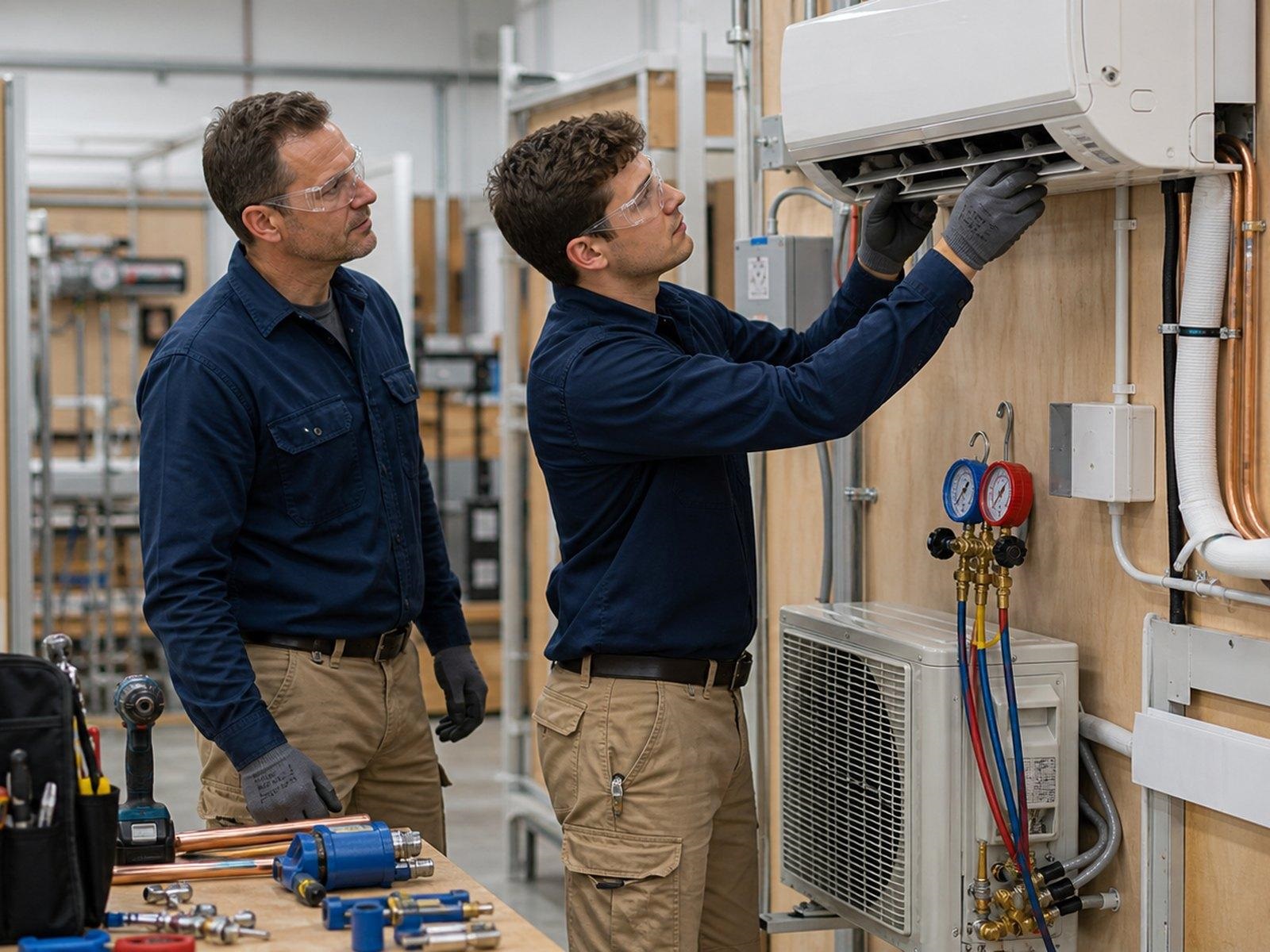
Heating and air conditioning systems are essential for maintaining comfortable homes, offices, and commercial buildings. As modern heating and cooling technology continues to develop, technicians need specialized knowledge to install equipment correctly, work safely, and meet industry requirements.
A split system installation course provides focused training for people interested in installing split air conditioners and heat pump systems. These courses generally combine technical theory with practical learning, helping students understand equipment components, refrigerant piping, installation procedures, and system testing.
For aspiring HVAC professionals in the United States, choosing the right training program is an important step toward developing practical skills and meeting applicable certification requirements.
However, not all training courses provide the same qualifications. Some programs focus on experienced electricians, while others are designed for HVAC apprentices or beginners. Courses delivered overseas may also follow different licensing systems.
This guide explores what split system installation training involves, the skills students can develop, certification requirements, career opportunities, and how to select a suitable program.
What Is a Split System Installation Course?
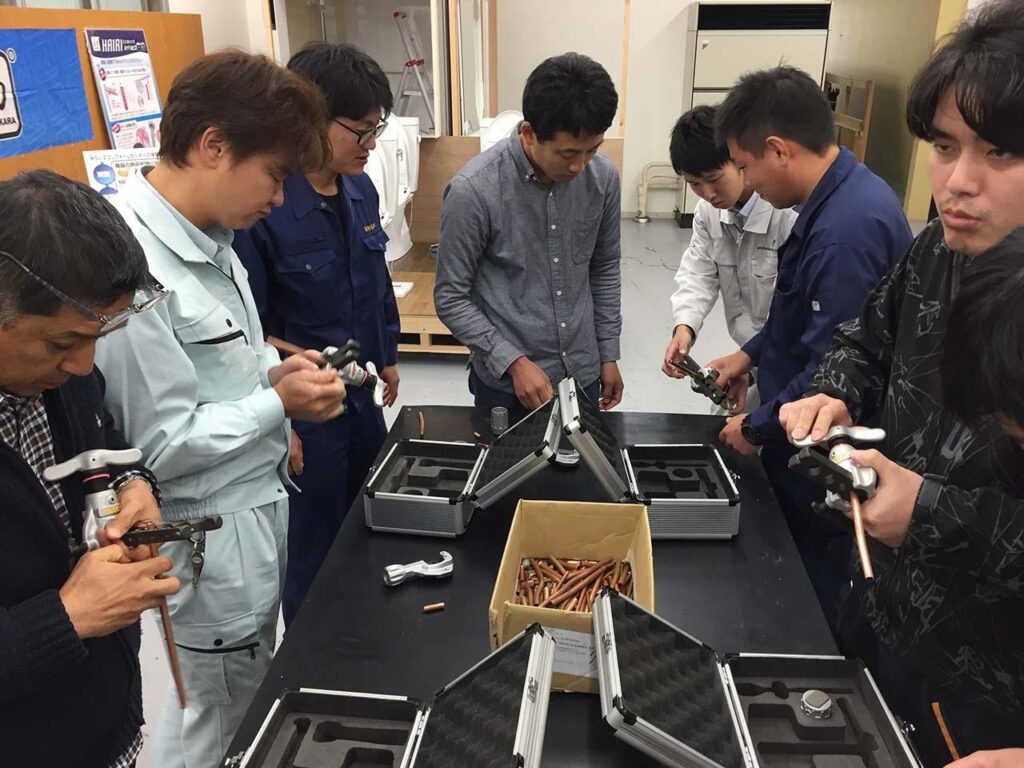
A split system installation course is a technical training program focused on installing air conditioning and heat pump equipment with separate indoor and outdoor components.
The indoor unit distributes conditioned air, while the outdoor unit contains equipment involved in transferring heat.
These components are connected through refrigerant lines, electrical connections, and other required installation materials.
Understanding Split Air Conditioning Systems
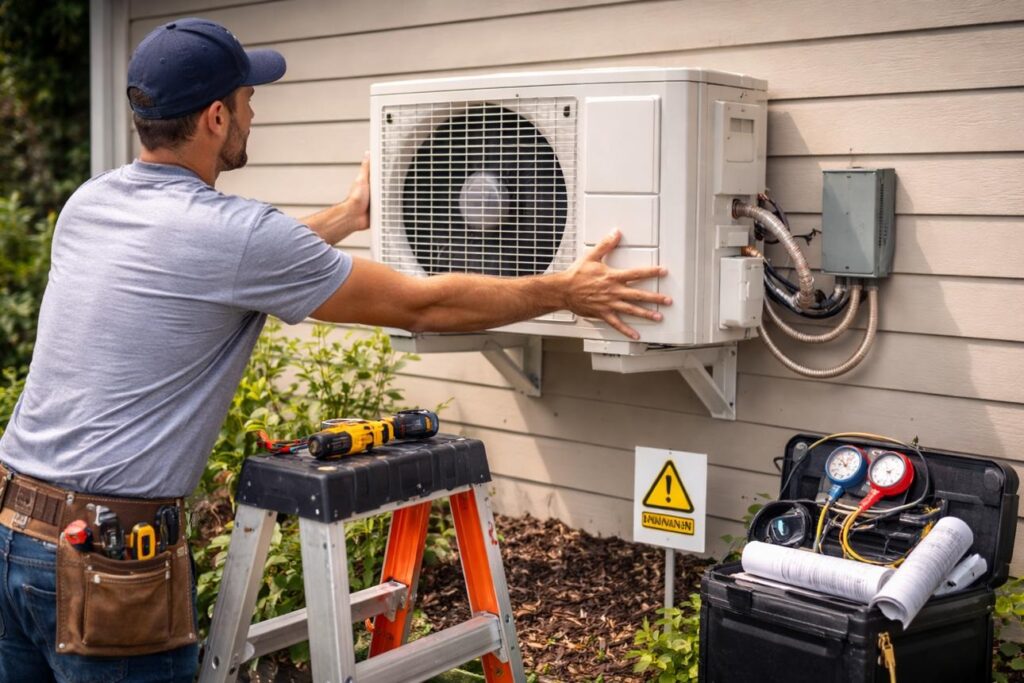
Split systems are commonly installed in residential and commercial buildings.
A typical system includes an indoor air-handling unit and an outdoor condenser or heat pump unit.
Some systems use ductwork to distribute air throughout a building, while ductless mini-split systems provide targeted heating or cooling.
Heat pump versions can provide both heating and cooling by transferring heat in different directions.
Understanding these operating principles helps technicians select appropriate installation methods and identify potential performance problems.
Why Specialized Training Matters
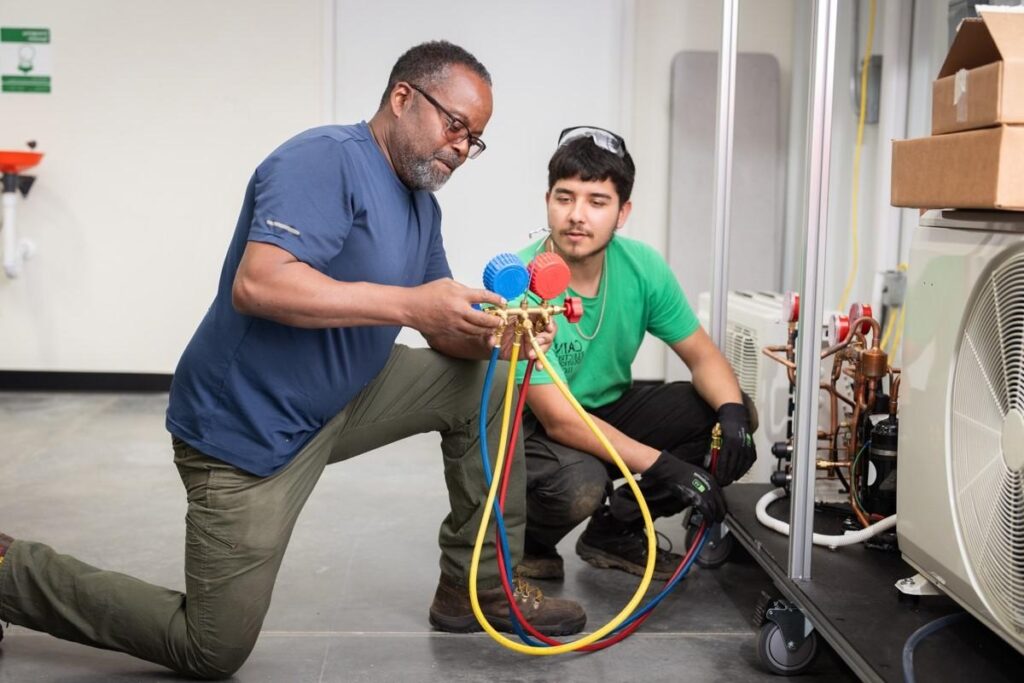
Split-system installations involve electrical hazards, pressurized refrigerants, mechanical equipment, and building requirements.
Improper installation can contribute to refrigerant leaks, poor airflow, reduced efficiency, and equipment failures.
Professional training introduces students to established safety practices, manufacturer instructions, and equipment testing procedures.
Why Enroll in a Split System Installation Course?
Technical training can help electricians, apprentices, and HVAC professionals expand their practical knowledge.
Develop Industry-Relevant Skills
Students learn about equipment components, installation planning, refrigerant piping, system connections, and commissioning procedures.
These skills are useful when working on modern air conditioners and heat pumps.
Hands-on training also provides opportunities to become familiar with professional tools in a supervised environment.
Improve Installation Quality
Correct installation is essential for efficient system operation.
The U.S. Department of Energy highlights equipment sizing, refrigerant charging, airflow, and commissioning as important elements of HVAC installation quality.
Training helps students understand why each of these factors matters.
Expand Professional Knowledge
Experienced electricians may want to develop refrigeration-related competencies, while HVAC apprentices may need additional practical experience.
A focused course can complement broader occupational education.
However, completing a short course does not automatically qualify someone to perform every type of HVAC work independently.
What Will You Learn During Split System Installation Training?
Course content differs between providers, but several technical subjects are particularly important.
Refrigerant Tubing and Connections
Refrigerant lines connect system components and allow refrigerant to circulate through the equipment.
Training may introduce copper tubing preparation, measuring, bending, cutting, and connection methods.
Students also learn why properly constructed connections are essential for reliable operation.
Improper joints can cause refrigerant leakage and expensive equipment problems.
Equipment Positioning and Mounting
Both indoor and outdoor units must be positioned according to manufacturer specifications and applicable building requirements.
Training covers location selection, supporting structures, required clearances, and installation planning.
Technicians must consider accessibility, airflow, condensate drainage, and future maintenance needs.
Pressure Testing and Leak Detection
Leak testing helps identify problems within a refrigeration system.
Students may learn about approved testing equipment, pressure-related hazards, and inspection procedures.
These activities should occur under qualified supervision and in accordance with applicable regulations.
Evacuation and Refrigerant Handling
Evacuation removes unwanted air and moisture from the refrigeration circuit before operation.
Courses may explain vacuum equipment, refrigerant recovery, environmental responsibilities, and appropriate system charging procedures.
Because refrigerants can create safety and environmental hazards, these skills require proper training and authorization.
System Startup and Commissioning
Commissioning confirms that an installed system operates according to its intended specifications.
Technicians may examine airflow, temperatures, electrical performance, and other manufacturer-defined operating conditions.
Successful commissioning helps identify installation problems before the equipment enters regular service.
Hands-On Training vs. Classroom Learning
A well-designed split system installation course should explain technical principles while providing suitable opportunities for practical learning.
Classroom-Based Technical Education
Theory lessons introduce refrigeration principles, heat transfer, equipment components, safety procedures, and technical documentation.
Students may also study installation diagrams and learn how to interpret manufacturer instructions.
This background supports better decisions during practical work.
Practical Workshop Training
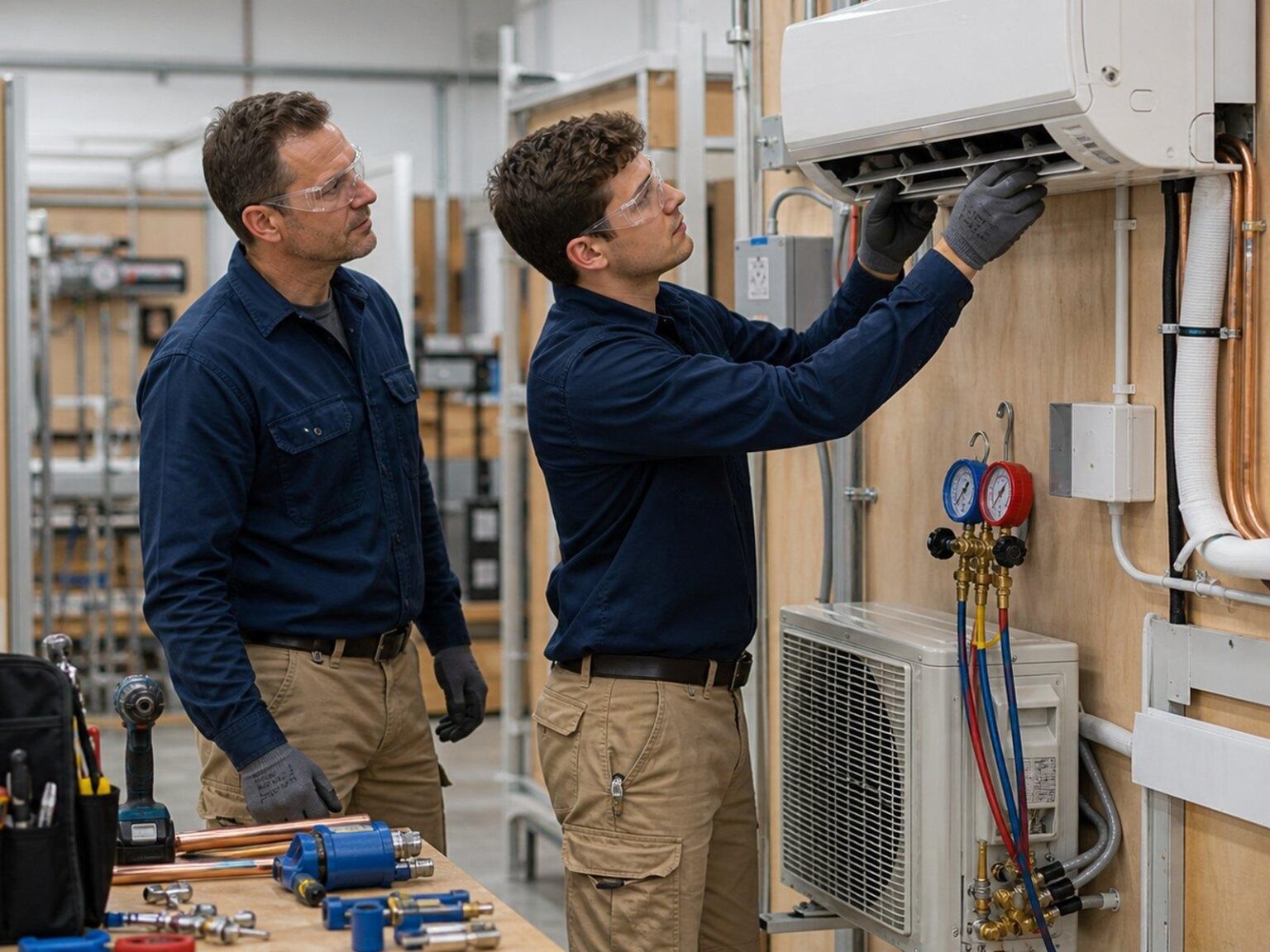
Workshops allow learners to handle equipment and observe installation activities.
Depending on the course, students may practice preparing tubing, mounting components, conducting supervised tests, and checking system operation.
Practical assessments can help instructors evaluate whether learners understand procedures and safety requirements.
Why Both Approaches Matter
Technical knowledge without supervised practice may leave gaps in practical competence.
Likewise, hands-on experience without understanding underlying principles can lead to preventable mistakes.
Combining both approaches provides a stronger foundation for further training and workplace development.
Split System Installation Training in Australia: Electro-Training
One example of specialized training is the split system installation course offered by Electro-Training in Australia.
The program is officially titled Certificate II in Split Air Conditioning and Heat Pump Systems (UEE20120).
It is designed primarily for electricians seeking competencies related to installing and commissioning eligible split air conditioning and heat pump systems.
Course Structure and Duration
Electro-Training describes its program as a three-day, face-to-face course.
The first two days focus on theory, while the third day includes practical assessment.
The provider also uses a recognition of prior learning process before course commencement.
This condensed delivery is intended for learners with relevant electrical trade backgrounds rather than complete HVAC beginners.
Practical Competencies Covered
The provider identifies several nationally recognized competency units:
- UEERA0059: Prepare and connect refrigerant tubing and fittings.
- UEERA0049: Install and start up single-head split air conditioning and water heating heat pump systems.
- UEERA0064: Recover, pressure test, evacuate, charge, and leak test refrigerants in split systems.
Training includes practical activities such as flaring, brazing, pressure testing, leak detection, and commissioning.
Entry Requirements and Licensing
Electro-Training requires applicants to meet its electrical qualification or trainee licensing conditions and applicable CPR and low-voltage rescue prerequisites.
The qualification supports applications for restricted refrigerant-handling authorization through the Australian Refrigeration Council.
Importantly, this is an Australian qualification. It does not automatically provide U.S. EPA certification or permission to work as an HVAC contractor in an American state.
Prospective students should verify eligibility, course schedules, fees, and licensing requirements with the provider.
HVAC Certification Requirements in the United States
American readers should understand that U.S. certification rules differ from Australia’s vocational licensing framework.
EPA Section 608 Certification
The U.S. Environmental Protection Agency requires qualifying technicians who work on equipment involving regulated refrigerants to hold the appropriate Section 608 certification.
Activities involving refrigerant circuit access, such as attaching certain service hoses or adding refrigerant, can trigger certification requirements.
Technicians must pass an EPA-approved examination.
Types of EPA Certification
The EPA recognizes several certification categories.
Type I covers small appliances, Type II generally covers high- and very-high-pressure appliances, and Type III covers low-pressure equipment.
Universal certification covers all three equipment categories.
For many common residential mini-split servicing activities, Type II or Universal certification is relevant.
State and Local Licensing
EPA certification is not the same as a state HVAC contractor license.
Depending on the jurisdiction, additional occupational licensing, electrical authorization, experience, insurance, or permits may be necessary.
Prospective technicians should review their state’s licensing board requirements before accepting independent installation work.
How to Choose the Best Split System Installation Course
Choosing a training provider requires careful comparison.
Check Course Recognition
Confirm whether the program offers an accredited qualification, an industry certificate, continuing education, or a certificate of attendance.
These credentials have different purposes.
For American learners, check whether the program supports EPA exam preparation and applicable state training requirements.
Review Practical Training Opportunities
Ask whether students work with real training equipment or primarily watch demonstrations.
Find out how practical assessments are conducted and whether qualified instructors supervise potentially hazardous activities.
Hands-on experience is especially valuable when learning technical trade skills.
Understand Entry Requirements
Some courses accept beginners, while others require previous electrical or mechanical training.
Review minimum qualifications before paying enrollment fees.
For learners without trade experience, a broader HVAC certificate or apprenticeship may be more appropriate.
Compare Course Costs
Training expenses may include tuition, examination fees, protective equipment, textbooks, and transportation.
Request a written explanation of what the advertised price includes.
Avoid assuming a short course provides every certification needed for employment.
Career Opportunities After Split System Training
Relevant technical training can contribute to several career pathways.
HVAC Installation Technician
Installation technicians assist with positioning equipment, connecting components, and preparing systems for operation.
Responsibilities depend on qualifications, supervision, and local regulations.
Heat Pump Installation Specialist
Heat pump installation work involves equipment designed to provide energy-efficient heating and cooling.
Technicians benefit from understanding different system configurations, airflow requirements, and equipment selection.
HVAC Service Technician
Some professionals pursue further education in maintenance, troubleshooting, and equipment repair.
However, installation-only training is not a substitute for broader diagnostic and service qualifications.
Electrical and Mechanical Trades
Electricians and mechanical tradespeople may use additional HVAC training to expand their understanding of building systems.
Independent work must still comply with relevant electrical, refrigeration, and contractor licensing rules.
Common Mistakes When Selecting an HVAC Training Course
Students sometimes focus too heavily on course duration or price.
Assuming Every Certificate Is Equivalent
A certificate issued in one country may not satisfy licensing requirements elsewhere.
Always confirm the qualification’s recognition in your intended work location.
Ignoring Practical Assessment
A program consisting entirely of presentations may not provide sufficient opportunities to demonstrate practical skills.
Look for supervised workshop activities and meaningful competency assessments.
Overlooking Refrigerant Safety
Refrigerant handling requires appropriate training, equipment, and legal authorization.
Choose programs that teach environmental responsibilities and safe working practices.
Expecting Immediate Independent Employment
Completing introductory training does not necessarily make someone fully qualified to operate independently.
Apprenticeships, workplace experience, certification, and local licensing may still be required.
Frequently Asked Questions About Split System Installation Courses
1. What is a split system installation course?
It is a training program focused on the technical knowledge and practical skills required to install split air conditioning and heat pump equipment.
2. Can beginners enroll in split system installation training?
Some introductory HVAC programs accept beginners. Other courses, including Electro-Training’s Australian Certificate II delivery, have specific trade and licensing prerequisites.
3. How long does split system installation training take?
Duration depends on the provider and qualification. Electro-Training advertises a three-day course for eligible applicants, while broader American HVAC programs may last considerably longer.
4. Do I need EPA certification to install mini-split air conditioners in the USA?
EPA Section 608 certification is required when installation activities involve regulated refrigerant circuit work that meets the EPA’s certification criteria. Other state and local requirements may also apply.
5. Can I complete split system training online?
Some theoretical subjects can be studied online. However, installation skills generally benefit from practical training and supervised assessment.
6. What tools are covered in split system installation training?
Depending on the curriculum, students may learn about tubing tools, gauges, leak detection equipment, vacuum pumps, and other professional HVAC installation equipment.
7. Is an Australian Certificate II valid as an American HVAC license?
No. An Australian vocational qualification does not automatically replace U.S. EPA certification or state and local licensing requirements.
8. Is split system installation training useful for electricians?
Yes. Appropriate training can help qualified electricians understand split-system equipment, refrigerant-related procedures, and installation coordination within their legally permitted scope of work.
Conclusion
A split system installation course can provide valuable technical knowledge for electricians, HVAC apprentices, and professionals interested in modern air conditioning and heat pump technology.
The most useful programs combine theoretical education, supervised practical activities, technical assessments, and clear safety guidance.
Students can develop skills related to equipment positioning, refrigerant piping, system testing, and commissioning while learning the importance of professional installation standards.
Before enrolling, consider your existing qualifications, intended career path, and the licensing requirements of the country or state where you plan to work.
Australian programs such as Electro-Training’s Certificate II offer specialized learning for eligible electricians, while American technicians must follow relevant EPA certification and state licensing rules.
With suitable education, practical experience, and recognized credentials, split system training can become an important step toward developing professional HVAC installation skills and supporting a long-term technical career.

Written by Twastia Editorial Team
Twastia Editorial Team shares practical insights about website design, SEO services, Google Ads, content marketing, social media, conversion rate optimization, and digital marketing strategy.
Last updated: Oct 27, 2026
Related posts from Twastia
Explore more useful articles from twastia.com about digital marketing, SEO, websites, ads, content, and growth strategy.