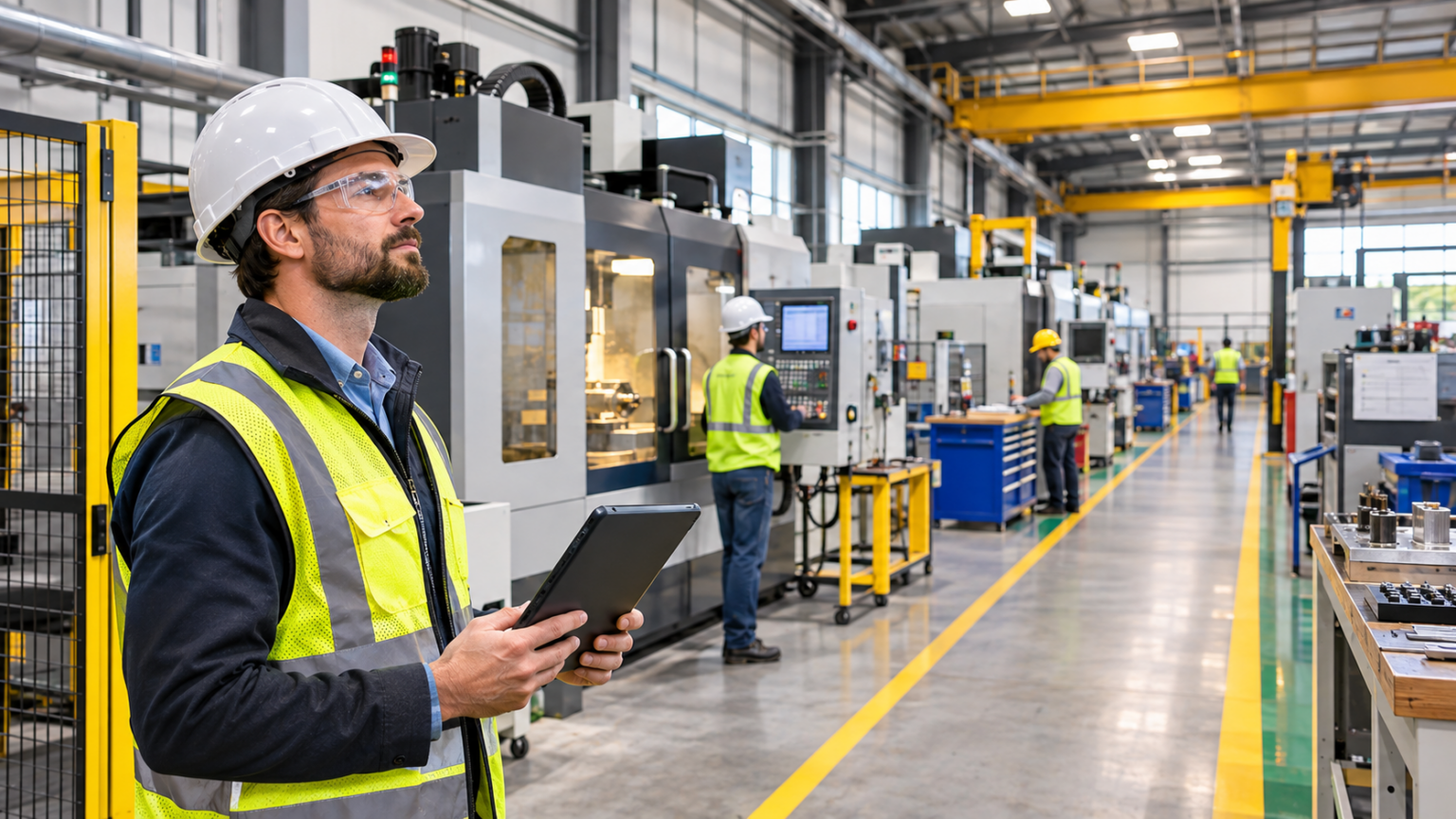
5 Industrial Safety Tips for Your Engineering Company: Best Workplace Practices
Engineering companies work with technologies, materials, and processes that can create serious occupational hazards. Manufacturing machinery, electrical systems, compressed air, […]
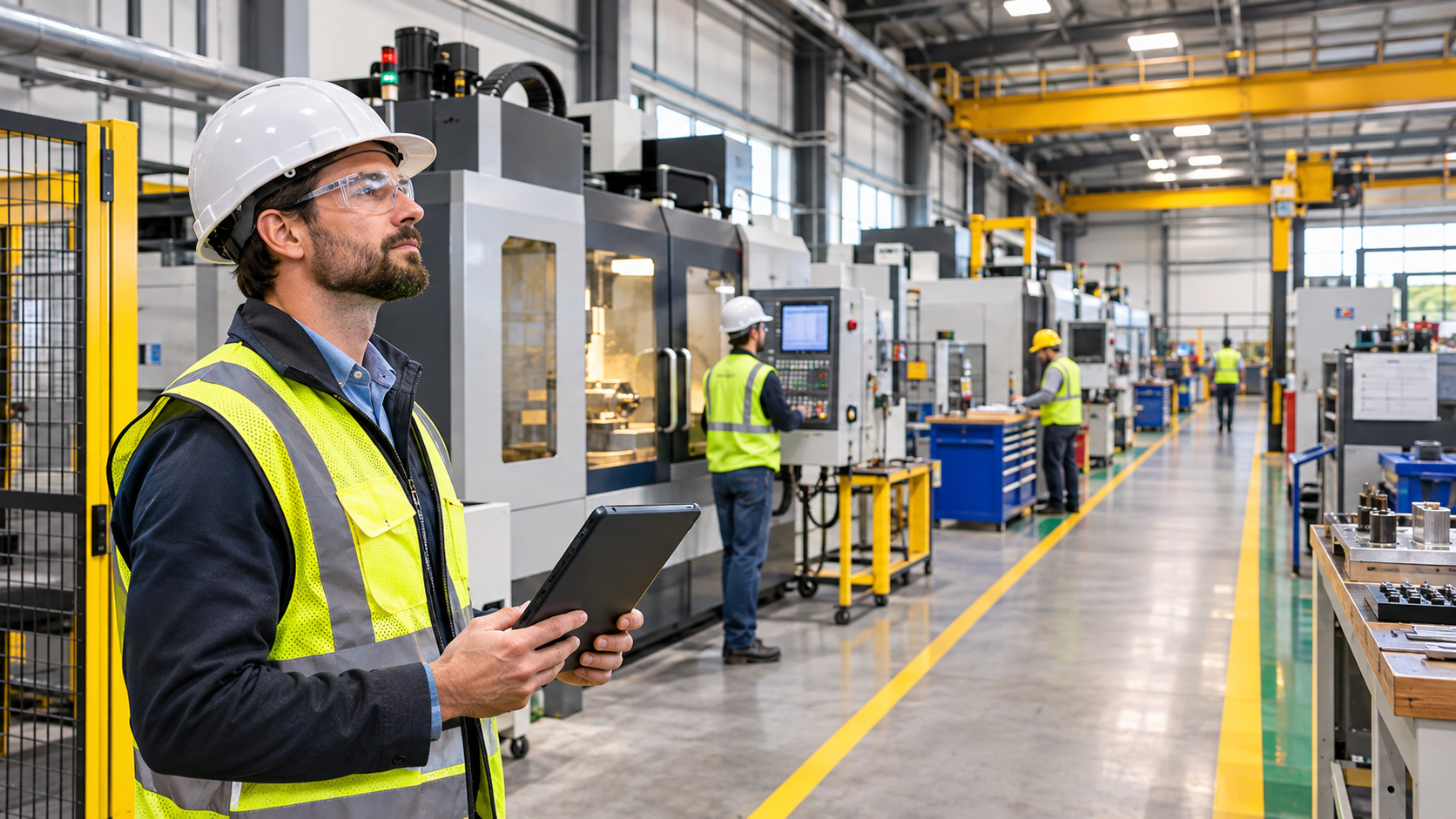
Engineering companies work with technologies, materials, and processes that can create serious occupational hazards. Manufacturing machinery, electrical systems, compressed air, moving components, welding equipment, and heavy materials all require carefully managed operating procedures.
A successful engineering business must protect employees while maintaining dependable production. Safety should therefore be part of equipment design, daily operations, supervision, maintenance, and organizational planning.
The 5 Industrial Safety Tips for Your Engineering Company presented in this guide focus on practical prevention methods that can help organizations identify risks, strengthen machine safety, provide appropriate worker protection, and prepare for emergencies.
These recommendations draw on guidance from the U.S. Occupational Safety and Health Administration (OSHA) and the National Institute for Occupational Safety and Health (NIOSH). They provide a general framework rather than replacing a facility-specific risk assessment or applicable regulatory requirements.
OSHA emphasizes that effective safety management requires an ongoing process of recognizing hazards, evaluating risks, and implementing preventive measures. Occupational Safety and Health Administration
Understanding 5 Industrial Safety Tips for Your Engineering Company begins with recognizing that safety is not simply a collection of posters, warning signs, or annual training sessions. It depends on systems that help people identify dangerous conditions and take corrective action before an injury occurs.
1. Identify Hazards Before They Cause Injuries
Every engineering facility has its own risk profile. A machine shop may face cutting, crushing, and metalworking fluid exposures, while an electrical testing laboratory may encounter stored energy and arc-flash hazards. Safety planning should begin with the equipment, processes, materials, and people actually present, rather than a generic checklist copied from another company.
The first of 5 Industrial Safety Tips for Your Engineering Company is to perform systematic hazard identification. Walk through work areas with operators and maintenance personnel. Review equipment instructions, safety data sheets, previous incidents, inspection findings, and near-miss reports. Include unusual activities such as equipment installation, cleaning, breakdown repair, and contractor work, not just routine production.
Turn Observations Into a Useful Risk Assessment
For each identified hazard, consider how exposure could occur, the potential severity of harm, and which employees might be affected. Assess existing safeguards and prioritize corrective action. An exposed rotating shaft, for example, calls for direct protection; simply reminding operators to be careful is insufficient.
OSHA recommends periodic inspections, incident investigations, and consideration of nonroutine and emergency tasks as part of ongoing hazard assessment. A sound approach to 5 Industrial Safety Tips for Your Engineering Company also includes documenting who will resolve a problem and how completion will be verified. Occupational Safety and Health Administration
Encourage Near-Miss Reporting
A near miss is an opportunity to learn before someone is hurt. Make reporting straightforward and nonpunitive, investigate underlying causes, and explain what changed. Workers who regularly use equipment often recognize weaknesses that are less visible to managers.
2. Protect Workers From Machinery and Hazardous Energy
Machines can expose people to moving gears, rotating parts, cutting tools, nip points, ejected material, and unexpected startup. The strongest prevention measures keep workers physically separated from dangerous motion through correctly designed guards, interlocks, and other engineered controls.
A central lesson of 5 Industrial Safety Tips for Your Engineering Company is that safe machinery must remain safe during cleaning, adjustment, and servicing.
Maintain Guards and Verify Their Function
Inspect guards for damage, improper adjustment, or removal. Confirm that protective devices work as intended and that employees know how to report defects. Never bypass a guard to save time. If a procedure routinely requires defeating a safeguard, review the equipment design and task with competent specialists.
Machine guarding requirements depend on the equipment and relevant standards. OSHA’s general machinery standard, 29 CFR 1910.212, addresses hazards involving moving parts, points of operation, and flying material. Occupational Safety and Health Administration
These details make 5 Industrial Safety Tips for Your Engineering Company more effective than relying on warning labels alone.
Control Energy Before Maintenance
Electrical energy is not the only concern. Pneumatic pressure, hydraulics, springs, elevated machine components, thermal energy, and stored mechanical forces may remain hazardous after a machine is switched off. Under OSHA’s general-industry lockout/tagout standard, covered servicing and maintenance require an energy-control program with appropriate procedures, employee training, and periodic inspections.
Qualified, authorized employees must follow the equipment-specific process for shutdown, isolation, securing stored energy, and verification before work begins. The requirements and any exceptions are technical; consult the applicable OSHA standard and a competent safety professional rather than relying on a brief online checklist. Occupational Safety and Health Administration
This is one of 5 Industrial Safety Tips for Your Engineering Company where improper shortcuts can have severe consequences.
Address Shift Changes and Contractors
When work crosses shifts or involves multiple employers, clarify responsibility for energy controls and safe handover. Never assume another crew has isolated equipment correctly. Documented coordination prevents dangerous misunderstandings.
3. Choose Appropriate Protective Equipment and Controls
Personal protective equipment is important, but it is not the first or only safety measure. Removing a hazard, replacing a dangerous process, or isolating people through engineering controls generally offers more reliable protection than asking workers to wear equipment while the hazard remains unchanged.
The third of 5 Industrial Safety Tips for Your Engineering Company is to use the hierarchy of controls. NIOSH ranks elimination and substitution ahead of engineering controls, administrative measures, and finally PPE. CDC
For example, enclosed cutting equipment or effective local exhaust ventilation may reduce exposure at its source; protective eyewear or respirators may still be required for remaining risks.
Match Protection to the Hazard
Select protective equipment based on a documented assessment of the task. Depending on the exposure, protection might include safety glasses or face shields, hearing protection, protective footwear, appropriate gloves, or respiratory protection. Gloves near rotating machinery can introduce entanglement hazards, so selection requires task-specific judgment.
OSHA’s general-industry PPE rules include hazard assessment and equipment selection requirements. Respirators have additional program requirements when their use is mandatory. Occupational Safety and Health Administration
Applying 5 Industrial Safety Tips for Your Engineering Company means confirming fit, limitations, maintenance needs, and employee understanding rather than merely distributing gear.
Inspect and Replace Defective Equipment
Train workers to inspect PPE before use and report damaged or unsuitable items. Keep replacement supplies accessible.
Reassess Controls After Process Changes
A new material, machine tool, chemical, or production rate can change exposure. Repeat relevant assessments when operations change and seek qualified industrial hygiene or engineering input where needed. The best 5 Industrial Safety Tips for Your Engineering Company are updated as the workplace evolves.
4. Train Employees and Build a Reporting Culture
Safety training should prepare workers to recognize hazards and perform their actual tasks safely.
Another of 5 Industrial Safety Tips for Your Engineering Company is to make instruction relevant to each employee’s role. Machine operators, welders, electrical technicians, maintenance teams, supervisors, and visiting contractors do not all face the same hazards. Training should reflect the responsibilities and exposure of each group.
Make Learning Practical and Accessible
Explain procedures in language workers understand. Demonstrate safe operating boundaries, warning signs, stop-work expectations, and how to request assistance. Ask employees to show what they have learned instead of treating attendance as proof of competence.
Refresh training when equipment or procedures change, after problems reveal a knowledge gap, and whenever applicable standards require it. With 5 Industrial Safety Tips for Your Engineering Company, training becomes an ongoing conversation supported by supervision and feedback.
Listen to Frontline Employees
Encourage employees to raise concerns without retaliation. Respond promptly, share the reason for decisions, and invite suggestions about safer equipment or workflows.
OSHA’s safety management guidance encourages worker participation in identifying hazards and evaluating solutions. Leadership should provide the time, authority, and resources needed to address genuine risks. Occupational Safety and Health Administration
5 Industrial Safety Tips for Your Engineering Company will not succeed if production targets consistently override recognized safety concerns.
Include Temporary and Contract Workers
Clearly explain site rules, emergency arrangements, restricted areas, and task responsibilities. Coordinate procedures between employers, especially when several contractors work near operating machinery or shared energy systems.
5. Prepare for Emergencies and Test Your Response
Even well-controlled facilities must plan for foreseeable emergencies. Fires, chemical releases, serious injuries, loss of power, and equipment failures can develop quickly. A useful response plan tells employees how to report an event, leave dangerous areas, and obtain assistance.
The fifth of 5 Industrial Safety Tips for Your Engineering Company is to develop emergency arrangements suitable for the location’s real hazards. Identify exits, communication methods, evacuation routes, assembly areas, and assigned responsibilities. Keep routes accessible and verify that alarm signals can be recognized throughout occupied work areas.
Build a Facility-Specific Emergency Plan
OSHA’s emergency action plan standard describes minimum elements where such a plan is required, including emergency reporting, evacuation procedures, and employee responsibilities. Requirements depend on the applicable standards and the workplace. Occupational Safety and Health Administration
Consider whether the operation also needs specialized procedures for chemical spills, confined spaces, or other high-risk situations.
A practical application of 5 Industrial Safety Tips for Your Engineering Company includes coordinating with emergency services when appropriate and ensuring staff know when to evacuate rather than attempt intervention. Hazardous situations should only be handled by personnel who have the required training, equipment, and authorization.
Conduct Drills and Improve the Plan
Practice realistic scenarios and review what worked. Could everyone hear the alarm? Were visitors accounted for? Did workers understand alternate exits? Correct shortcomings, update contact details, and repeat exercises on a schedule appropriate to the facility.
Keep Equipment Accessible
Inspect emergency lighting, first-aid supplies, alarms, and any other required emergency systems. Designated responders need appropriate training. The purpose of 5 Industrial Safety Tips for Your Engineering Company is to reduce confusion before the unexpected happens.
Turn Safety Recommendations Into Everyday Management
A successful safety program needs ownership and measurement. Assign responsibility for inspections, corrective actions, training, maintenance, and contractor coordination. Review open issues during management meetings instead of waiting for an incident to expose problems.
For smaller engineering companies, 5 Industrial Safety Tips for Your Engineering Company can begin with a manageable action plan. Identify the highest-consequence hazards, fix immediate dangers, appoint responsible people, and establish realistic follow-up dates.
| Focus area | Useful management check | Evidence of follow-through |
|---|---|---|
| Hazard assessment | Have new and nonroutine tasks been reviewed? | Updated assessments and closed actions |
| Machine safety | Are guards and energy controls effective? | Inspection and maintenance records |
| PPE and engineering controls | Are exposures controlled appropriately? | Verified controls and task assessments |
| Training | Can workers demonstrate safe procedures? | Competency checks and refresher records |
| Emergency readiness | Can employees respond correctly? | Drill observations and corrective actions |
Measure leading indicators such as overdue hazard corrections and completed inspections alongside injury data. An absence of recorded injuries does not prove that hazards have disappeared.
Frequently Asked Questions
What is the first step in improving industrial safety?
Identify significant hazards through workplace inspections, worker input, incident reviews, and assessment of unusual tasks. Address serious risks promptly using effective controls rather than waiting for a lengthy administrative process.
Why are machine guards so important?
Guards help prevent contact with moving parts and other dangerous machine areas. They must be suitable for the equipment, maintained, and not bypassed. Servicing can require additional hazardous-energy protections.
Is personal protective equipment enough?
No. PPE can reduce exposure, but elimination, substitution, and engineering controls should be considered first. The correct combination depends on the specific workplace hazard.
How often should employees receive safety training?
Training frequency depends on the hazards, task, and applicable standards. Provide relevant instruction before hazardous work and update it when processes change, competency needs improvement, or a regulation requires retraining.
What should an industrial emergency plan include?
Where required, it should address reporting, evacuation procedures, responsibilities, and other applicable elements. Facilities may also need specialized arrangements based on chemicals, equipment, and site hazards.
How can a small engineering business improve safety affordably?
Start with employee walkthroughs, prompt correction of serious hazards, preventative equipment care, clear procedures, and targeted training. Seek expert help for complex hazards rather than assuming low cost means low risk.
Conclusion
Industrial safety is most effective when it becomes part of engineering design and daily decision-making. Identify hazards before they cause harm, protect machinery from dangerous contact and unexpected startup, choose controls according to risk, train employees for real tasks, and prepare for emergencies that could occur at your facility.
Ultimately, 5 Industrial Safety Tips for Your Engineering Company provides a practical starting point rather than a complete compliance manual. Each business must evaluate its own processes, follow the applicable rules, and involve qualified professionals where necessary. Consistent leadership, worker participation, and verified corrective action help create a safer environment for everyone.

Written by Twastia Editorial Team
Twastia Editorial Team shares practical insights about website design, SEO services, Google Ads, content marketing, social media, conversion rate optimization, and digital marketing strategy.
Last updated: Nov 6, 2026
Related posts from Twastia
Explore more useful articles from twastia.com about digital marketing, SEO, websites, ads, content, and growth strategy.