Alberta Trucking Companies: Heavy Haul & Freight Guide
Alberta is built around industries that move big things. Construction equipment has to reach job sites. Agricultural machinery travels between […]
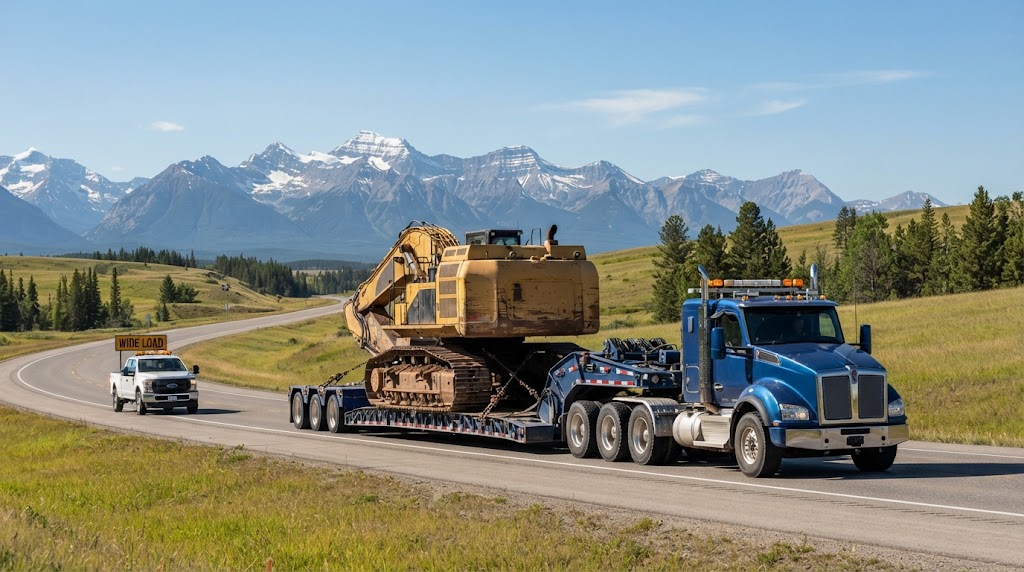
Alberta is built around industries that move big things.
Construction equipment has to reach job sites. Agricultural machinery travels between farms and dealerships. Energy projects require large industrial components. Mining, forestry, infrastructure, and manufacturing companies regularly need freight moved across long distances and sometimes across international borders.
That makes choosing among Alberta trucking companies more complicated than simply finding the lowest freight quote.
A standard shipment may fit easily inside a dry van. Heavy machinery, oversized equipment, high-value cargo, or a time-sensitive industrial load can require specialized trailers, route planning, permits, loading expertise, pilot vehicles, and coordination across multiple jurisdictions.
Vectra Heavy Haulers operates an Alberta office in Calgary and specializes in heavy, oversized, overweight, and specialized freight. The company says its service network supports transportation throughout Canada and the United States and includes equipment hauling, flatbed transport, heavy haul, oversized loads, and logistics coordination.
For American businesses buying equipment in Alberta, delivering machinery into Western Canada, or managing cross-border projects, understanding how specialized trucking works can help reduce delays, unexpected costs, and transportation risk.
Why Alberta Has a Strong Heavy-Haul Market
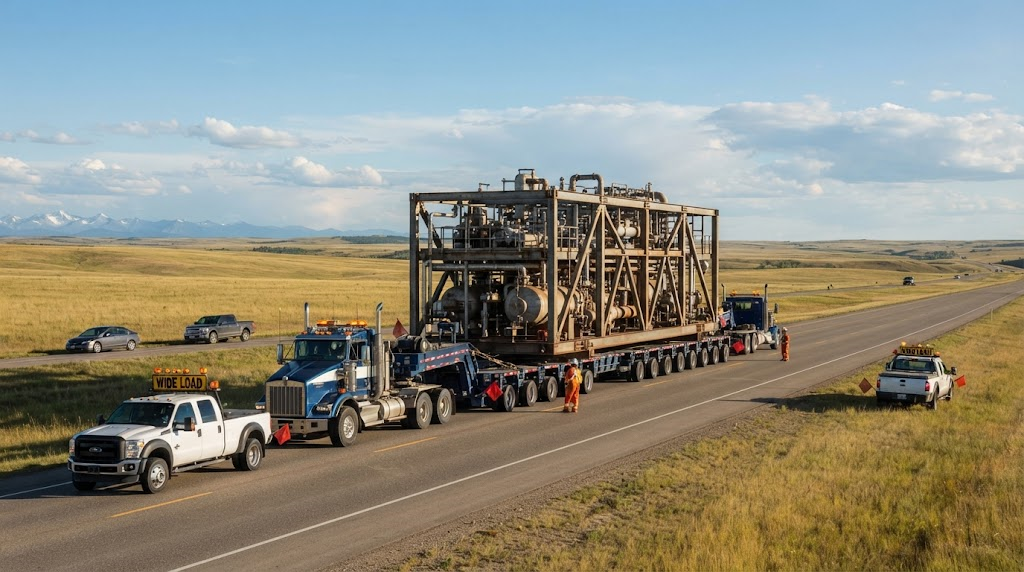
Alberta’s economy depends heavily on industries that generate substantial freight movements.
Energy production, construction, manufacturing, agriculture, forestry, infrastructure development, and wholesale trade all rely on transportation networks.
The Government of Alberta’s latest Activity Index continues to track indicators such as manufacturing shipments, wholesale trade, drilling activity, oil production, and new truck sales because these areas are closely connected with overall provincial economic activity.
Many loads associated with these industries are not ordinary palletized freight.
Examples include:
- Excavators
- Bulldozers
- Graders
- Forklifts
- Loaders
- Cranes
- Industrial modules
- Oilfield equipment
- Construction machinery
- Agricultural equipment
- Large tanks
- Structural components
These shipments often require companies with specialized heavy-haul experience.
What Makes Alberta Trucking Companies Different?
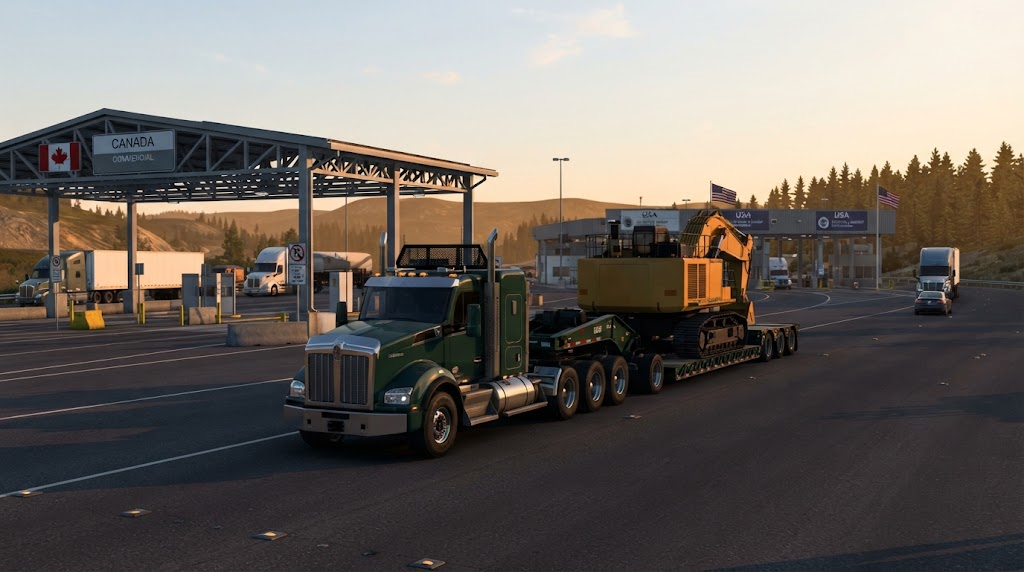
Not every trucking company provides the same services.
A carrier focused on standard dry-van freight may be excellent at moving packaged goods but may not have the equipment or experience needed to haul a 100,000-pound excavator.
Heavy-haul companies need to consider far more variables.
These can include:
- Cargo weight
- Overall height
- Overall width
- Length
- Axle configuration
- Trailer deck height
- Route restrictions
- Bridge limits
- Loading method
- Permits
- Weather
- Seasonal road restrictions
- Border requirements
Vectra Heavy Haulers says it works with oversized and overweight freight across North America and uses different equipment configurations depending on the dimensions and weight of the cargo.
Heavy Equipment Hauling in Alberta
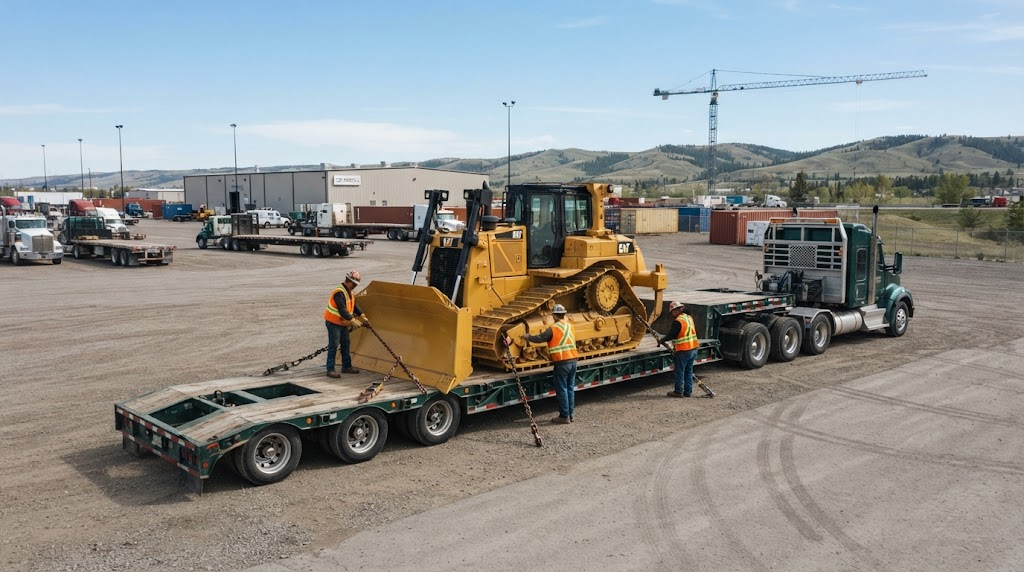
Construction and industrial equipment are among the most common reasons businesses need specialized transportation.
Moving an excavator is very different from moving packaged consumer products.
Before the truck leaves, the transportation company may need to evaluate:
- Machine dimensions
- Actual weight
- Loading and unloading requirements
- Trailer configuration
- Route
- Permit requirements
- Delivery-site access
Vectra’s Calgary operation specifically markets transportation for equipment such as graders, forklifts, track loaders, bulldozers, and excavators.
Why Accurate Dimensions Matter
A small measurement difference can completely change a transportation plan.
If the loaded equipment exceeds legal width, height, length, or weight limits, special permits and operating conditions may apply.
That is why shippers should provide accurate specifications before requesting a final quote.
Useful information includes:
- Make and model
- Weight
- Length
- Width
- Height
- Pickup address
- Delivery address
- Whether the machine runs
- Available loading equipment
Photos are also helpful when unusual attachments or configurations are involved.
Oversized and Overweight Load Transportation
Alberta regulates commercial vehicle dimensions and weights to protect road users and transportation infrastructure.
The provincial government states that commercial vehicles exceeding normal legal limits may require special weight or dimension permits. Alberta uses its Transportation Routing and Vehicle Information System, known as TRAVIS, for oversize and overweight permit applications and related routing programs.
For shippers, this means choosing an experienced carrier is important.
The transportation provider may need to coordinate:
- Permit applications
- Approved travel routes
- Axle loading
- Travel-time restrictions
- Warning signs
- Lights
- Pilot vehicles
- Seasonal road conditions
Route Planning Is Critical
The shortest route is not always the legal or safest route.
A large load may encounter:
- Low bridges
- Restricted roads
- Construction zones
- Weight-limited structures
- Utility lines
- Tight turns
- Urban restrictions
Some high or extremely large loads may require specialized routing through Alberta’s High Load Corridor system. Alberta’s special permit programs specifically include the High Load Corridor alongside overweight and long-combination vehicle programs.
Proper route planning should happen before the equipment is loaded.
Seasonal Conditions Matter in Alberta
One of the unique challenges facing Alberta trucking companies is climate.
Winter temperatures, snow, ice, spring thaw, and changing road conditions can all affect transportation.
Alberta maintains seasonal weight programs that respond to changing frost and thaw conditions. The province monitors frost information at numerous locations and adjusts heavy-haul seasonal weights accordingly.
That matters when moving particularly heavy equipment.
A route that supports a certain weight in winter may face different restrictions during spring thaw.
Build Weather Flexibility Into the Schedule
For American companies coordinating projects in Alberta, adding schedule flexibility can be valuable.
Heavy equipment transportation should account for:
- Winter storms
- Reduced visibility
- Highway closures
- Extreme cold
- Spring road restrictions
A carrier familiar with Alberta conditions can help identify these risks during planning.
Flatbed and Step-Deck Transportation
Not every specialized shipment requires the most complex heavy-haul trailer.
Flatbeds and step decks can handle many large industrial items.
Flatbed Trailers
Flatbeds are useful for freight that can be loaded from the top, rear, or sides.
Common examples include:
- Steel
- Lumber
- Machinery
- Building materials
- Industrial equipment
Their open design provides flexible loading.
Step-Deck Trailers
A step deck lowers part of the trailer deck, allowing taller cargo to remain within overall height limits more easily.
Vectra lists flatbed, step-deck, detachable double-drop, and specialized equipment among the trailer choices available through its online freight quoting process.
The correct choice depends on cargo dimensions, weight, loading conditions, and route.
Lowboy and Specialized Heavy-Haul Equipment
Extremely heavy or tall equipment may require lowboy-style or other specialized trailers.
Lower deck height provides additional vertical clearance.
Multi-axle configurations can distribute weight across more axles, which is critical when transporting unusually heavy cargo.
Vectra notes that specialized trailers may be required when cargo is too large or heavy for conventional configurations.
This is another reason buyers should provide complete specifications before booking.
Cross-Border Trucking Between Alberta and the USA
Cross-border capability is especially relevant for American companies.
Industrial equipment may move between Alberta and:
- Washington
- Idaho
- Montana
- Texas
- Michigan
- Ohio
- Illinois
- New York
- Other U.S. markets
Vectra describes its operating area as Canada and the United States and lists service coverage in numerous U.S. states. The company also says its owner-operators are TWIC-certified, allowing access to secure areas of participating maritime facilities and ports.
Cross-Border Loads Require More Planning
A shipment crossing the border may require coordination involving:
- Customs documentation
- Broker information
- Commercial invoices
- Equipment ownership documents
- Carrier documentation
- Import/export requirements
- U.S. and Canadian transportation permits
For oversized loads, the complexity increases because permit rules may change when the truck crosses from one province or state into another.
Vectra states that its heavy-haul drivers work with the rules governing oversized and overweight freight in Canadian provinces and U.S. states.
Alberta Carrier Safety Requirements
Heavy trucking is highly regulated.
The Government of Alberta requires qualifying commercial carriers to hold a Safety Fitness Certificate.
For carriers operating only inside Alberta, the requirement generally applies to trucks or combinations registered at 11,794 kilograms or more. For carriers operating outside Alberta, the threshold is more than 4,500 kilograms.
Commercial vehicles also face inspection requirements.
Alberta states that qualifying trucks, trailers, truck tractors, and combinations must undergo commercial vehicle inspections based on their operating status and registered weight.
When comparing trucking providers, asking about safety, inspections, insurance, and compliance should be part of the selection process.
Logistics Matters as Much as the Truck
Specialized transportation is not simply about having a powerful tractor and the right trailer.
The logistics surrounding the shipment can determine whether the move succeeds.
Imagine a crane is scheduled at the delivery site for 8 a.m.
If the truck arrives six hours late, the customer may still have to pay for:
- Crane standby
- Site crews
- Equipment rental
- Lost production
Vectra emphasizes logistics coordination as a major part of its heavy-haul service and says it maintains relationships with hundreds of carriers, providing access to thousands of operators and multiple truck/trailer configurations throughout North America.
That network can be useful when one company’s own equipment is not positioned close enough to meet a project schedule.
Moving Equipment to and From Ports
Ports are another important part of North American heavy-haul logistics.
Imported equipment arriving from Europe or Asia may need inland transport after being unloaded.
Similarly, machinery manufactured in North America may need transportation to a port before export.
Vectra currently lists access to ports including:
- Vancouver
- Montreal
- Halifax
- Houston
- Los Angeles
- Newark
- Savannah
- Charleston
- Baltimore
- Norfolk
- New Orleans
and others across Canada and the United States.
For project cargo, the trucking company may need to coordinate with port terminals, customs brokers, cranes, and receiving facilities.
Industries That Need Alberta Heavy-Haul Trucking
Construction
Construction companies regularly transport excavators, graders, loaders, cranes, and other equipment between projects.
Energy
Alberta’s energy industry creates demand for large modules, tanks, machinery, and oilfield equipment.
Agriculture
Large tractors, combines, and agricultural implements often require open-deck or specialized trailers.
Mining
Mining operations depend on heavy machinery that may be too large or heavy for ordinary transportation.
Forestry
Forestry operations require both machinery transportation and specialized freight movements.
Manufacturing
Industrial manufacturers may need to move fabricated components, machinery, or project cargo across Canada or into the United States.
How to Compare Alberta Trucking Companies
Price is important, but it should not be the only factor.
Heavy-Haul Experience
Ask whether the provider regularly moves cargo similar to yours.
An oversized excavator requires different knowledge from standard pallet freight.
Equipment Availability
Confirm that the company can provide the right trailer configuration.
Permit Knowledge
Oversized freight may cross several jurisdictions.
The provider should understand how permits and routes affect the shipment.
Communication
Heavy haul rarely goes perfectly according to the first plan.
Road closures, weather, loading delays, and permit restrictions can create changes.
A reliable carrier should communicate those changes quickly.
Safety
Ask about inspections, maintenance, driver experience, securement, and safety procedures.
Vectra says its trucks and equipment are inspected monthly as part of its heavy-haul operations.
Information to Provide When Requesting a Quote
You can receive a much more useful quote when you provide complete information.
Prepare:
- Pickup city and address
- Delivery location
- Cargo type
- Exact weight
- Length
- Width
- Height
- Desired pickup date
- Delivery deadline
- Loading method
- Unloading method
- Photos
- Cargo value
Vectra’s own online quote form requests many of these same details, including dimensions, weight, origin, destination, equipment type, timing, accessorial services, and cargo value.
Incomplete information can lead to inaccurate pricing or delays later.
Frequently Asked Questions About Alberta Trucking Companies
What services do Alberta trucking companies provide?
Services vary, but specialized carriers may provide standard freight, flatbed trucking, equipment hauling, oversized loads, overweight freight, heavy haul, logistics coordination, and cross-border transportation.
Can Alberta trucking companies ship into the United States?
Yes. Some carriers specialize in cross-border transportation. Vectra Heavy Haulers currently provides services throughout Canada and multiple U.S. states.
Do oversized loads require permits in Alberta?
Loads exceeding applicable legal weight or dimensional limits may require special permits. Alberta uses TRAVIS for oversize and overweight permit applications.
Can a trucking company move construction equipment?
Yes. Heavy-haul carriers transport excavators, graders, bulldozers, forklifts, loaders, and other machinery.
What trailer is needed for heavy equipment?
It depends on weight, width, height, length, and loading method. Options can include flatbeds, step decks, detachable double drops, lowboys, and specialized multi-axle configurations.
Where is Vectra Heavy Haulers’ Alberta office?
Vectra currently lists its Alberta office at 1801 10th Ave SW, Calgary, Alberta T3C 0K2.
Where can I find a specialized Alberta heavy-haul company?
Businesses comparing Alberta trucking companies can review Vectra Heavy Haulers’ Calgary operation for heavy equipment hauling, flatbed transportation, oversized and overweight loads, specialized freight, and cross-border logistics.
Conclusion
Choosing among Alberta trucking companies is ultimately about matching the transportation provider to the freight.
If you are moving ordinary legal-size cargo, many carriers may be able to complete the shipment.
When the load becomes oversized, overweight, exceptionally valuable, or time-critical, the decision becomes more important.
Specialized freight requires careful measurements, appropriate trailers, permit planning, route analysis, securement, qualified drivers, reliable equipment, and clear communication.
Alberta creates additional considerations because its trucking industry operates across an enormous geography and must deal with changing seasonal road conditions, heavy industrial freight, and strict weight and dimension regulations.
For U.S. companies, cross-border shipments add another layer of planning. A carrier may need to coordinate Canadian requirements, U.S. regulations, customs documentation, state and provincial permits, border schedules, and delivery-site logistics as one connected transportation plan.
Vectra Heavy Haulers’ Calgary operation focuses on this specialized side of freight. Its current services include heavy haul, equipment transportation, flatbeds, oversized and overweight freight, specialized loads, and logistics support across Canada and the United States. The company also draws on a wider North American carrier network when additional equipment or geographic coverage is required.
Before requesting a quote, collect accurate cargo information.
Know the weight.
Measure the dimensions.
Confirm loading and unloading requirements.
Take photos.
Provide realistic pickup and delivery dates.
These details help the trucking company determine whether your shipment needs a standard flatbed, step deck, detachable trailer, or more specialized configuration.
Then evaluate providers on more than price.
Consider experience, equipment, compliance knowledge, safety procedures, communication, geographic reach, and the company’s ability to solve problems when the original transportation plan needs to change.
The goal of heavy hauling is not simply to put machinery on a trailer.
It is to move expensive, difficult cargo from its origin to its destination safely, legally, and with as few surprises as possible.
For construction firms, manufacturers, energy companies, equipment dealers, and American businesses shipping into or out of Western Canada, choosing the right Alberta trucking partner can make the difference between a smooth project and a very expensive transportation problem.

Written by Twastia Editorial Team
Twastia Editorial Team shares practical insights about website design, SEO services, Google Ads, content marketing, social media, conversion rate optimization, and digital marketing strategy.
Last updated: Oct 6, 2026
Related posts from Twastia
Explore more useful articles from twastia.com about digital marketing, SEO, websites, ads, content, and growth strategy.