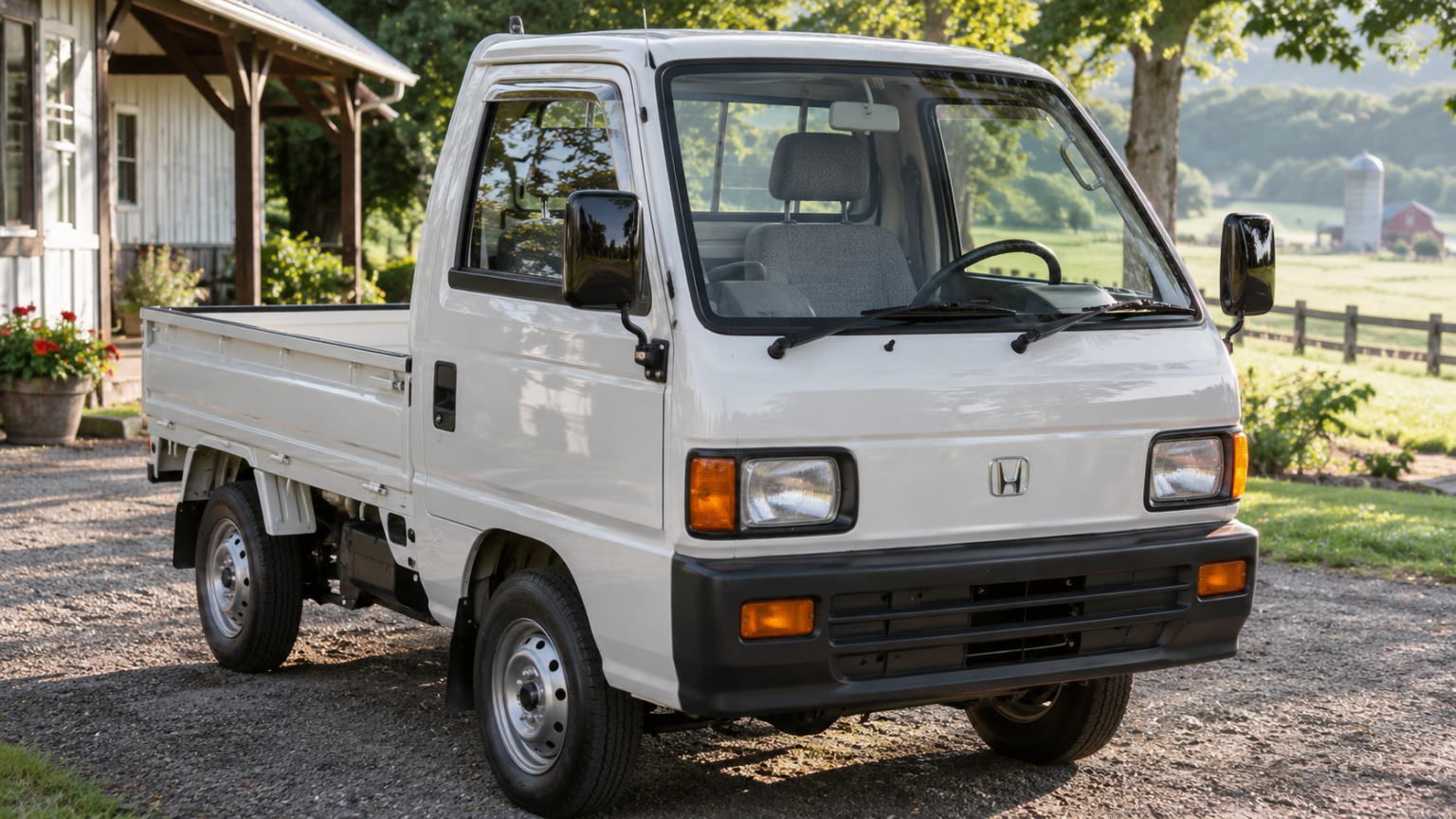
Japanese Truck Mirrors: Best Types and Buying Guide
A Japanese mini truck may be compact, but its mirrors have a big job. Whether you drive a Suzuki Carry […]
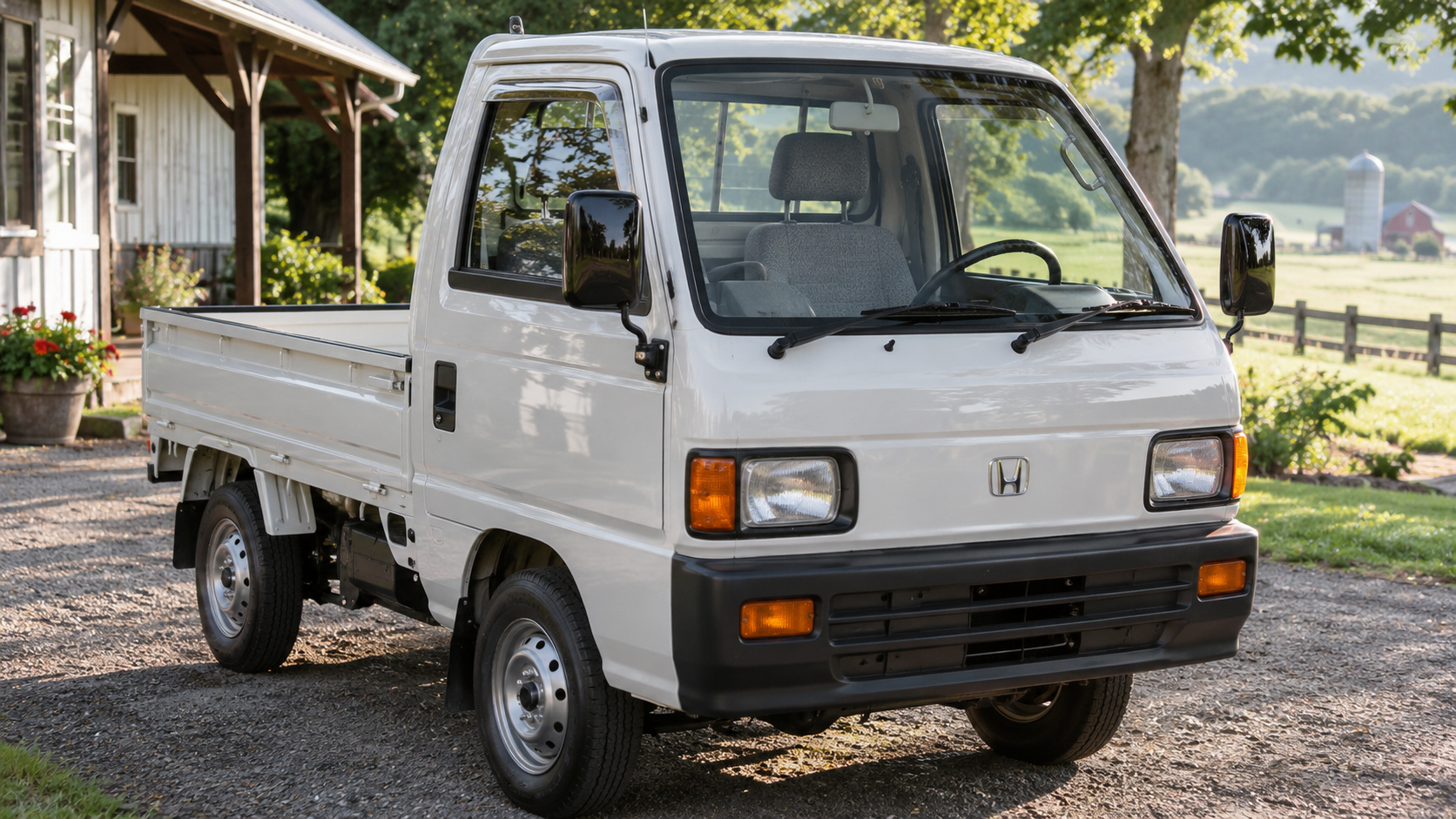
A Japanese mini truck may be compact, but its mirrors have a big job. Whether you drive a Suzuki Carry around a farm, take a Honda Acty through town, or use a Daihatsu Hijet for property maintenance, you need a dependable view behind and beside the vehicle. Choosing Japanese truck mirrors starts with identifying your exact model, checking the existing mounts, and deciding whether you need a direct replacement or additional visibility.
For most owners, the practical starting point is a secure, adjustable exterior mirror on each side. However, the best Japanese truck mirrors also depend on your driving position, cab design, cargo equipment, and local rules. Here’s how to choose without ordering the wrong parts.
Start With Your Truck’s Exact Identity
Japanese imports are frequently described by their brand and approximate year, but that information alone may not identify a compatible mirror. Parts suppliers often organize their catalogs by chassis code. A Suzuki Carry DD51T, for example, should not automatically be treated as interchangeable with a DA63T. Similarly, Honda Acty HA4 and HA7 designations distinguish different vehicle families.
Before shopping for Japanese truck mirrors, record the manufacturer, model, chassis code, and production year. Photograph the current mirror assembly, including its attachment point, and measure the mounting bolt spacing if accessible.
Why Model Codes Matter
Parts listings commonly separate Suzuki Carry, Daihatsu Hijet, Honda Acty, Subaru Sambar, and Mitsubishi Minicab by chassis family. When searching for Japanese truck mirrors, send the seller your chassis code and photographs before paying.
Check Both Sides Independently
A seller’s “right” and “left” labels refer to vehicle sides, not the driver’s and passenger’s positions. Most Japan-market kei trucks have right-hand drive. The right mirror is therefore typically the driver’s mirror, which can confuse buyers accustomed to left-hand-drive vehicles in the United States. Order Japanese truck mirrors using the actual right-hand and left-hand part designations.
Understand the Main Mirror Types
You may encounter several designs when comparing Japanese truck mirrors. Not all perform the same function, and some should supplement rather than replace your primary rearward view.
Original-Style Door Mirrors
These attach at the factory door mounting location and closely reproduce the original viewing angle and appearance. They are a sensible first option when a mirror is cracked, missing, or loose. Factory-style Japanese truck mirrors may also simplify installation because the base, fasteners, and adjustment mechanism are designed for a specific vehicle. Confirm whether the listing includes the complete housing or only the glass.
Flat Glass Mirrors
Flat, or unit-magnification, glass gives a more natural representation of object size and distance than strongly curved glass. It can be helpful for judging the location of a vehicle behind you. Certain U.S. federal mirror standards specifically call for unit-magnification surfaces, so the glass type is more than a styling choice. Select Japanese truck mirrors with suitable flat glass where the applicable rules require it.
Convex and Wide-Angle Mirrors
Convex glass broadens the visible area but makes reflected objects appear smaller, affecting distance judgments. Small stick-on blind-spot mirrors can be useful for monitoring the area alongside a truck, especially near the rear wheels. Treat these as auxiliary Japanese truck mirrors rather than assuming a curved add-on can legally substitute for a required main mirror.
Fender-Mounted and Specialty Mirrors
Some older Japanese vehicles use fender-mounted mirrors, while others have door-mounted units. A custom truck may also have extended arms, extra spot mirrors, or mirrors selected for agricultural use. Before switching styles, check sight lines, mounting strength, body clearance, and legality. The most effective Japanese truck mirrors are the ones you can actually adjust and use from your normal driving posture.
Match the Mirrors to How You Use the Truck
Farm, Ranch, and Private-Property Work
Slow maneuvers around gates, sheds, trailers, and equipment can make blind spots especially important. A sturdy pair of Japanese truck mirrors with stable bases is the foundation. An additional wide-angle spot mirror may help reveal nearby obstacles, but it should not replace looking around the vehicle before reversing. Clean mirrors more often when dust or mud accumulates.
Street and Neighborhood Driving
On public roads, prioritize a clear view of nearby traffic, accurate distance judgment, and secure attachment at road speeds. For road-going Japanese truck mirrors, verify applicable state requirements and whether the imported vehicle is legally authorized for your intended roads.
Trucks Carrying Tall Loads
Tool racks, boxes, and high cargo can partially block the rear window or a sideward sight line. Mirror extension or carefully placed auxiliary glass might improve visibility, but it needs to remain stable and avoid creating new hazards. Choose Japanese truck mirrors that provide an unobstructed view along both sides, and secure cargo so it does not interfere with adjustments.
What Do U.S. Mirror Rules Actually Say?
There is no single nationwide answer that makes every imported kei truck street-legal or prescribes one universal replacement kit. Federal Motor Vehicle Safety Standard No. 111 sets rear-visibility equipment requirements for covered vehicle categories. For trucks with a gross vehicle weight rating of 10,000 pounds or less, one compliance pathway involves stable, adjustable, unit-magnification outside mirrors on both sides, each meeting the specified reflective-area requirement. This standard is not a blanket retrofit instruction for every antique imported truck. LII / Legal Information Institute+1
The important distinction is between equipment standards for vehicle manufacture, rules that apply to particular vehicles in operation, and state registration and road-use restrictions. When selecting Japanese truck mirrors, do not assume an import exemption automatically settles your state’s inspection rules.
What About the 25-Year Import Rule?
The National Highway Traffic Safety Administration explains that vehicles at least 25 years old may be imported without having to comply with all applicable federal motor vehicle safety standards, based on the vehicle’s date of manufacture. That addresses federal import eligibility, not automatic permission to drive on every public road. Japanese truck mirrors still need to meet whatever operating and inspection requirements apply to your truck and location. NHTSA+1
Are Two Exterior Mirrors Always Required?
Two usable exterior mirrors are the straightforward safety recommendation, but precise legal obligations vary. Federal rules for certain commercial motor vehicles generally specify outside mirrors on both sides and include limited exceptions. Whether those operating rules apply to your kei truck depends on its use and classification. Consult your state’s motor vehicle agency or a qualified inspector instead of assuming all Japanese truck mirrors are governed by identical rules. LII / Legal Information Institute+1
How to Check Fit Before Ordering
Even within a familiar truck name, mounting patterns and housings can change between generations.
- Locate the chassis code and confirm the production period.
- Identify the damaged side as right or left, not driver or passenger.
- Photograph the original base, arm, glass, and fasteners.
- Compare bolt spacing, mounting shape, and clearance when the door opens.
- Check whether the part is manual, folding, heated, or electrically adjusted, if applicable.
- Ask whether the listing contains one mirror, a pair, glass only, or a decorative cover.
- Confirm the return policy before buying imported components.
When a supplier advertises Japanese truck mirrors as universal, inspect the product dimensions especially carefully. A universal attachment may need drilling, adapters, or reinforcement; a listing photo alone cannot establish fit.
New, Used, or Aftermarket?
New original-equipment components can preserve factory appearance, if available. Used original parts may fit accurately but should be inspected for weak hinges, corrosion, cloudy glass, and cracked bases. Aftermarket Japanese truck mirrors can be practical replacements when their dimensions and glass specification are documented.
A Quick Seller Question Worth Asking
Ask: “Will this complete left- or right-side assembly bolt directly to my chassis code, and what type of glass does it use?” A seller who can confirm the mounting points, side designation, and included parts is more useful than one who merely lists several model names.
Install and Adjust Them Properly
A mirror that fits but shakes cannot deliver dependable rearward visibility. Inspect the mounting area for cracks or corrosion before fitting a replacement. Use the correct hardware and tightening procedure for your vehicle, and avoid forcing fasteners into an incompatible thread. If mounting points are damaged or modifications are needed, consult a capable mechanic.
Once installed, set Japanese truck mirrors with the truck parked on level ground. Sit in your normal driving position and adjust each main mirror to show a narrow reference to the side of your truck while revealing as much of the adjacent rearward area as practical. Check visibility with doors fully closed and confirm that mirrors remain stable when moved by hand.
Test Your View Before Driving
Have a helper stand at safe, visible positions around the stationary vehicle while you check what appears in each mirror. Pay attention to the area near the rear corners, where small vehicles and obstacles may disappear from view. Recheck Japanese truck mirrors after the first drive, particularly if vibration or a loose hinge changes their alignment.
Avoid Common Installation Mistakes
Do not glue broken structural mounts back together and assume they will hold indefinitely. Do not rely on decorative chrome covers as replacements for a cracked mirror assembly. Avoid using only a tiny stick-on convex mirror when a full-size main mirror is missing. Good Japanese truck mirrors need sound mounts, usable reflective surfaces, and proper adjustment—not simply an attractive finish.
When Should You Replace a Mirror?
Replace a mirror when the glass is fractured, the reflective coating is badly degraded, the housing cannot stay adjusted, or the mounting bracket is unstable. Inspect Japanese truck mirrors after a door impact, collision, or heavy contact with branches.
If only the glass is damaged, a compatible replacement insert might be sufficient. If the pivot or base is broken, replacing the full assembly is usually the more dependable approach. Never assume adhesive-backed replacement glass restores a structurally damaged housing.
Frequently Asked Questions
Can I use ordinary pickup mirrors on a kei truck?
Possibly, but compatibility is not guaranteed. Standard pickup mirrors may have different attachment points, greater weight, or unsuitable viewing angles. Purpose-made Japanese truck mirrors are usually easier to fit when you can identify the exact chassis family. For universal parts, confirm dimensions and secure installation before use.
Do I need a mirror on both sides?
For practical visibility, install and maintain two functional exterior mirrors. Legal requirements depend on classification, use, vehicle age, and location, and exceptions may exist. Choosing Japanese truck mirrors for both sides is a sensible baseline, but check your state’s specific inspection and operating rules.
Is a convex mirror better than a flat mirror?
Neither is universally better. Convex mirrors show a wider area while changing the apparent size of objects; flat mirrors help with distance perception. A useful arrangement may include compliant flat primary Japanese truck mirrors and separate convex blind-spot aids, provided those additions do not obstruct the main view.
How do I find the correct part without a VIN?
Many Japan-market trucks use chassis identifiers that differ from the familiar 17-character U.S. VIN format. Locate the stamped chassis number or identification plate and ask a specialist to match it to a parts diagram. That information is typically more reliable for sourcing Japanese truck mirrors than an approximate model year alone.
Can I install replacement mirrors myself?
A straightforward bolt-on replacement may be a manageable DIY job with suitable tools, but do not guess at fastener sizes or remove trim carelessly. Seek professional help if the mount is damaged, wiring is involved, or modifications are required. After installation, verify the view and stability of your Japanese truck mirrors before driving.
Will new mirrors make my imported truck road-legal?
No. Better mirrors address only one aspect of vehicle safety. Registration, insurance, equipment inspections, and permitted road use can vary by state. Even well-fitted Japanese truck mirrors do not override restrictions that otherwise apply to a kei truck.
Conclusion
Start with your chassis code, then confirm the correct left- and right-side mounting assemblies. Favor secure, adjustable primary mirrors that offer useful rearward visibility, and add wide-angle aids only where they genuinely improve your view. Before ordering Japanese truck mirrors, check the glass type, included hardware, return terms, and rules relevant to how you drive. The right fit is not simply the mirror that looks closest in a photo; it is the one that mounts correctly, stays adjusted, and helps you see safely.

Written by Twastia Editorial Team
Twastia Editorial Team shares practical insights about website design, SEO services, Google Ads, content marketing, social media, conversion rate optimization, and digital marketing strategy.
Last updated: Nov 9, 2026
Related posts from Twastia
Explore more useful articles from twastia.com about digital marketing, SEO, websites, ads, content, and growth strategy.