What Is Sleep Apnea? Symptoms, Causes & Treatment Guide
Have you ever awakened feeling exhausted after what seemed like a full night of sleep? Or has someone told you […]
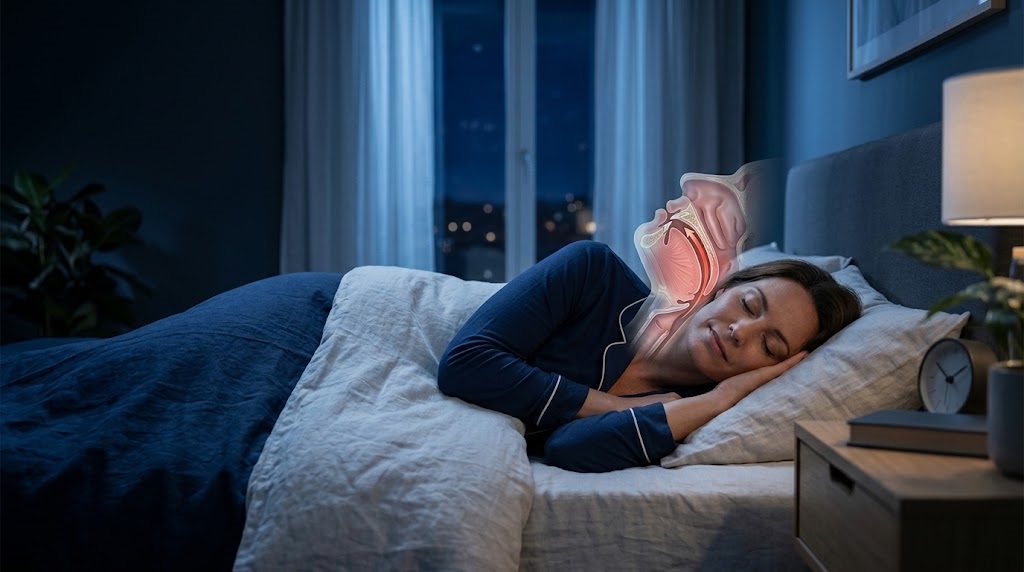
Have you ever awakened feeling exhausted after what seemed like a full night of sleep? Or has someone told you that you snore loudly, stop breathing, or gasp during the night? These can be warning signs of sleep apnea, a common sleep disorder that often goes unnoticed.
So, what is sleep apnea, and why does it matter? In simple terms, it is a condition in which breathing repeatedly stops or becomes shallow during sleep. These interruptions can disturb your rest and sometimes lower the oxygen your body receives. Understanding the symptoms, causes, and treatment options is the first step toward better sleep and better health.
What Is Sleep Apnea?
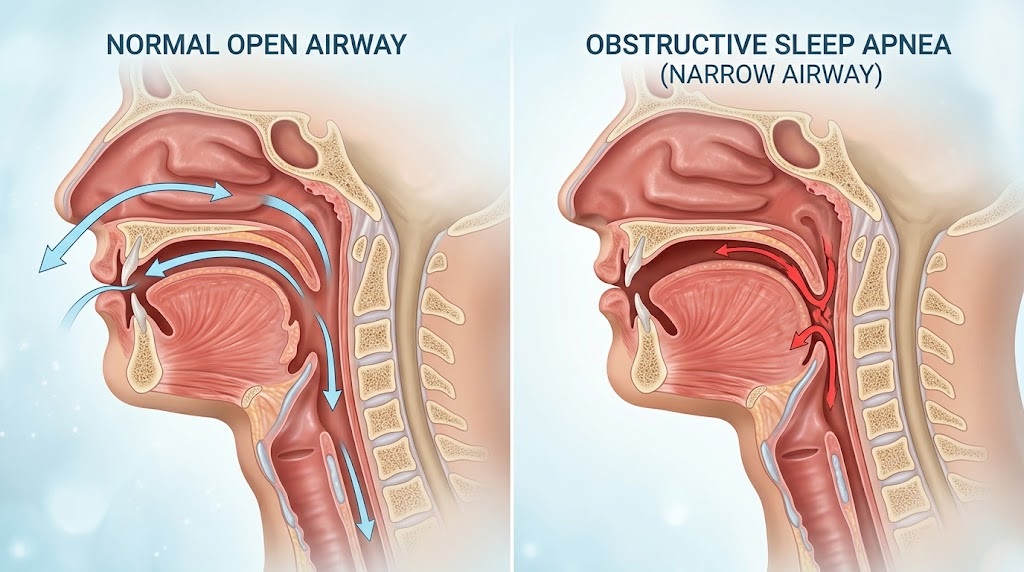
Sleep apnea is a disorder involving repeated breathing interruptions during sleep. An apnea is a pause in breathing; a hypopnea is a partial reduction in airflow. Both can cause brief awakenings that you may not remember the next morning.
Normally, your body maintains steady breathing throughout the night. With sleep apnea, airflow may become blocked or the brain may temporarily fail to send the signals that control breathing. The result can be fragmented sleep, daytime fatigue, and changes in blood oxygen levels.
Sleep apnea is different from occasional snoring. Snoring alone does not establish a diagnosis, and some people with sleep apnea do not snore noticeably. According to the National Heart, Lung, and Blood Institute (NHLBI), a sleep study may be needed to identify the condition and determine its type.
What Are the Main Types of Sleep Apnea?
Obstructive Sleep Apnea (OSA)
Obstructive sleep apnea is the most common form. It happens when the muscles and soft tissues around the throat relax during sleep, narrowing or blocking the upper airway. Your chest may continue trying to draw in air even though breathing is restricted.
A person with OSA may snore, briefly stop breathing, then snort or gasp as breathing resumes. These events can occur repeatedly, interfering with restful sleep.
Central Sleep Apnea (CSA)
Central sleep apnea happens when the brain does not consistently send the signals needed to breathe. Unlike obstructive sleep apnea, the problem is not mainly a blocked throat. Central apnea can occur alongside certain medical conditions, including heart failure or neurological illness, and may be associated with opioid medications.
Mixed or Complex Sleep Apnea
Some people experience both obstructive and central breathing events. A pattern called treatment-emergent central sleep apnea can also appear after positive airway pressure treatment begins for OSA. A sleep specialist can explain what the test findings mean and whether treatment needs adjustment.
Common Signs and Symptoms of Sleep Apnea
The most recognizable sleep apnea symptoms occur while a person is asleep. A partner or family member may notice loud, frequent snoring; breathing pauses; choking or gasping sounds; or restless sleep. People living alone may never notice these nighttime events.
During the day, warning signs may include waking with a dry mouth or headache, feeling tired despite enough time in bed, difficulty concentrating, irritability, and falling asleep during quiet activities. Some people awaken repeatedly or need to urinate more often overnight.
Symptoms in Women and Children
Sleep apnea does not always look the same in everyone. Women may report insomnia, fatigue, mood changes, or morning headaches rather than obvious snoring. Sleep apnea can also occur during pregnancy or after menopause.
Children may snore, breathe through their mouths, wet the bed, or have difficulty paying attention at school. Hyperactivity and behavior changes can sometimes be more noticeable than sleepiness. A pediatric clinician should evaluate these concerns because testing and treatment differ from adult care.
What Causes Sleep Apnea?
The cause depends on the type. In obstructive sleep apnea, the upper airway becomes too narrow during sleep. The tongue, soft palate, enlarged tonsils, or other surrounding tissues may contribute. In central sleep apnea, the brain’s control of breathing is disrupted.
Several factors can increase the risk of obstructive sleep apnea. Excess body weight may add tissue around the airway. A naturally narrow throat, large tonsils, certain jaw structures, and a family history of sleep apnea may also play a role. Risk generally increases with age, although children and young adults can develop the condition too.
Smoking can irritate the airway, and alcohol close to bedtime can increase throat-muscle relaxation. Hormonal conditions may contribute in some people. Central sleep apnea has different risk factors, including certain heart or neurological conditions and long-term opioid use.
Importantly, sleep apnea can affect people of any body size. Being thin, physically active, or young does not rule it out.
Why Is Untreated Sleep Apnea a Health Concern?
Repeated breathing interruptions do more than make sleep less refreshing. They can reduce oxygen levels, activate the body’s stress responses, and disrupt normal sleep stages. Over time, untreated sleep apnea is associated with high blood pressure, heart disease, stroke, and other health problems.
Poor sleep can also affect attention, memory, mood, and performance at work or school. Severe daytime sleepiness increases the danger of drowsy driving. The risk is not identical for every patient, and treatment decisions depend on the complete medical picture, but persistent symptoms should not be ignored.
How Is Sleep Apnea Diagnosed?
If you suspect sleep apnea, start with a primary care clinician or sleep specialist. They will ask about your snoring, fatigue, sleep schedule, medical history, medications, and any observations from someone who shares your bedroom. An examination may look for factors such as a crowded airway or enlarged tonsils.
Overnight Sleep Study
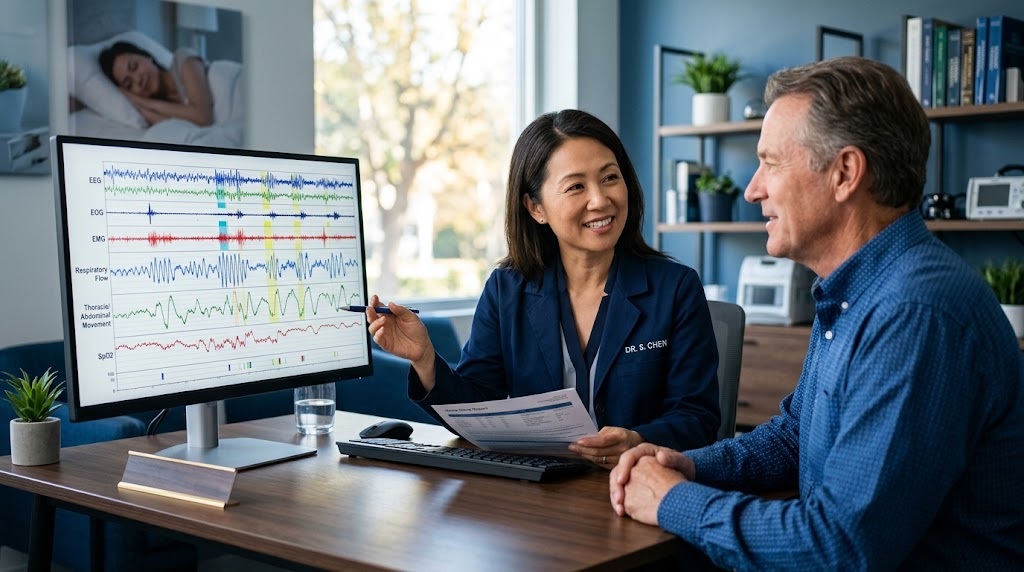
An in-lab sleep study, called polysomnography, records information while you sleep. Sensors may measure brain activity, airflow, breathing effort, heart rate, movements, and oxygen levels. The results help identify breathing events and distinguish obstructive from central sleep apnea.
Home Sleep Apnea Test
A home sleep apnea test can be appropriate for some adults with a higher likelihood of moderate or severe obstructive sleep apnea and no complicating medical conditions. It is convenient, but it does not measure everything an in-lab study measures.
If a home test is negative or unclear while symptoms remain concerning, an in-lab study may still be necessary. American Academy of Sleep Medicine guidance emphasizes professional evaluation and appropriate test selection.
Fitness watches, snoring apps, and online quizzes may help you notice patterns, but they cannot independently confirm or exclude sleep apnea.
Understanding the Apnea-Hypopnea Index
Sleep specialists often describe adult obstructive sleep apnea severity using the apnea-hypopnea index (AHI), the average number of breathing events per hour of sleep.
Common adult categories are mild at 5–14 events, moderate at 15–29, and severe at 30 or more. The diagnosis also depends on symptoms and other findings. Home tests may report a related measure based on monitoring time rather than actual sleep time.
What Are the Best Sleep Apnea Treatment Options?
Treatment is chosen according to the type and severity of sleep apnea, your medical history, and what you can comfortably use over time. Fortunately, several effective approaches are available.
CPAP and Other Positive Airway Pressure Devices
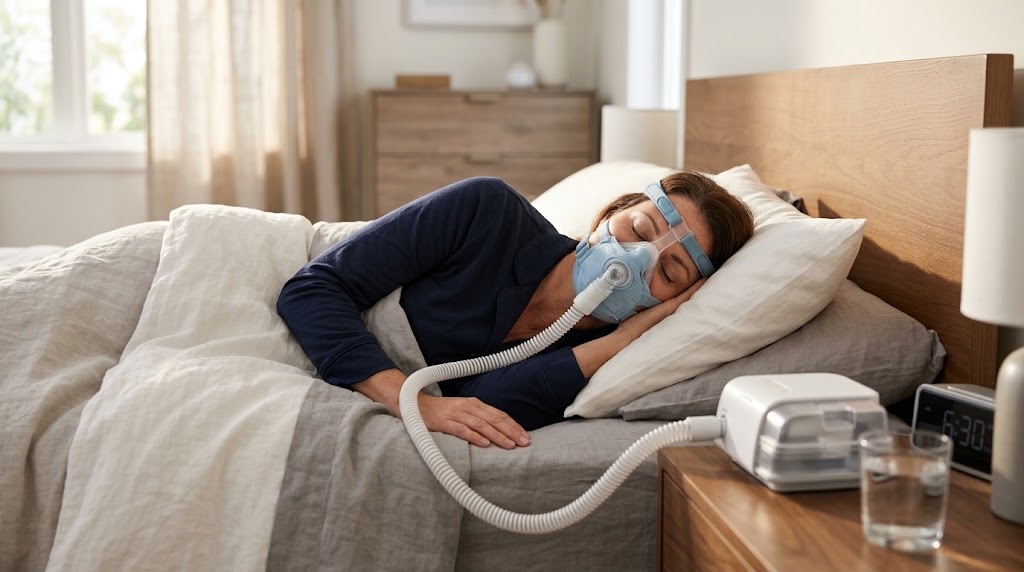
Continuous positive airway pressure (CPAP) is a common treatment for obstructive sleep apnea. A machine delivers gentle air pressure through a mask to help keep the airway open during sleep.
Other devices include automatically adjusting PAP (APAP) and bilevel PAP (BPAP), which may be recommended in particular situations.
Some people need time to adjust to the mask or airflow. A better-fitting mask, humidification, or clinician-guided settings adjustment can often improve comfort. Use prescribed PAP during all sleep, including naps, unless your clinician advises otherwise.
Custom Oral Appliances
For certain patients, a dentist trained in sleep medicine can provide a custom oral appliance that holds the lower jaw forward and helps keep the airway open.
This may be an option for some adults who prefer an alternative to CPAP or cannot tolerate it. Follow-up is important to confirm that it works and does not cause troublesome dental side effects.
Lifestyle Changes
Healthy habits can support treatment. If you have excess weight, a realistic weight-management plan may improve obstructive sleep apnea.
Sleeping on your side may help when symptoms are worse on your back. Regular activity, limiting alcohol near bedtime, and quitting smoking also support better breathing and sleep quality.
These measures do not replace prescribed therapy when breathing interruptions remain significant. Do not stop treatment simply because snoring becomes quieter.
Medication and Surgical Options
In December 2024, the U.S. Food and Drug Administration approved tirzepatide (Zepbound) for moderate to severe obstructive sleep apnea in adults with obesity, together with reduced-calorie eating and increased physical activity. It is not suitable for everyone and requires a discussion of benefits, risks, and eligibility with a clinician.
Selected patients may benefit from procedures such as tonsil removal, jaw surgery, or an implanted device that stimulates the nerve controlling tongue movement.
Central sleep apnea requires special attention to its underlying cause and may need a different treatment plan.
Living Well With Sleep Apnea
A diagnosis can feel overwhelming, but treatment becomes easier with a practical routine. Keep regular sleep hours, attend follow-up visits, and tell your care team about mask leaks, discomfort, or ongoing daytime sleepiness. If your weight or health changes considerably, you may need a reassessment.
Ask a sleep partner whether snoring or gasping has improved, but remember that feeling better and having fewer noises do not always mean apnea has resolved. Follow-up testing may be needed to confirm that therapy is controlling breathing events.
When Should You Talk to a Doctor?
Schedule an appointment if someone witnesses repeated breathing pauses, you wake up gasping, you snore loudly and feel unrefreshed, or you struggle with persistent daytime sleepiness.
If you are dangerously sleepy while driving, do not drive until the problem has been evaluated and managed.
Bring a list of your symptoms and medications, and ask whether a sleep study is appropriate. Early evaluation can help you find an effective treatment before sleep problems disrupt more of your life.
Frequently Asked Questions About Sleep Apnea
Is sleep apnea the same as snoring?
No. Snoring is a sound caused by vibrating airway tissues, while sleep apnea involves repeated breathing disturbances. You can snore without having apnea, and some people have sleep apnea without prominent snoring.
Can sleep apnea go away on its own?
Sometimes symptoms improve when contributing factors change, such as weight or sleeping position. However, sleep apnea often persists without treatment. Only a healthcare professional can determine whether it has improved enough to change therapy.
Is sleep apnea dangerous?
Untreated sleep apnea can contribute to poor daytime functioning and is linked to cardiovascular and metabolic health risks. Severity varies, so an individual evaluation is important rather than assuming every case carries the same danger.
Can you have sleep apnea if you are not overweight?
Yes. Airway anatomy, enlarged tonsils, age, family history, and medical conditions may contribute even in people who have a lower body weight.
How do I know if I need a CPAP machine?
A clinician uses your sleep test, symptoms, apnea type, and overall health to recommend treatment. CPAP is common for obstructive sleep apnea, but not every person needs the same device or approach.
Does health insurance cover sleep apnea testing?
Many U.S. health plans cover medically necessary evaluation and testing, but deductibles, referrals, prior authorization, and network rules vary. Check your specific plan before scheduling a study or buying equipment.
Conclusion
What is sleep apnea? It is a sleep-related breathing disorder that can repeatedly interrupt airflow and disturb your rest, sometimes without your awareness. Its warning signs range from snoring and gasping to fatigue, headaches, and difficulty concentrating.
The encouraging news is that sleep apnea can be diagnosed and managed with appropriate testing and personalized treatment.
If the symptoms sound familiar, speak with a qualified healthcare professional. Understanding what is happening during sleep is a meaningful first step toward safer, more restorative nights.

Written by Twastia Editorial Team
Twastia Editorial Team shares practical insights about website design, SEO services, Google Ads, content marketing, social media, conversion rate optimization, and digital marketing strategy.
Last updated: Oct 11, 2026
Related posts from Twastia
Explore more useful articles from twastia.com about digital marketing, SEO, websites, ads, content, and growth strategy.