0 Types of Bamboo Plants and Their Varieties: Complete Growing Guide for 2026
Bamboo brings natural beauty, elegant movement, and a distinctive architectural appearance to outdoor spaces. Its graceful leaves, upright stems, and […]
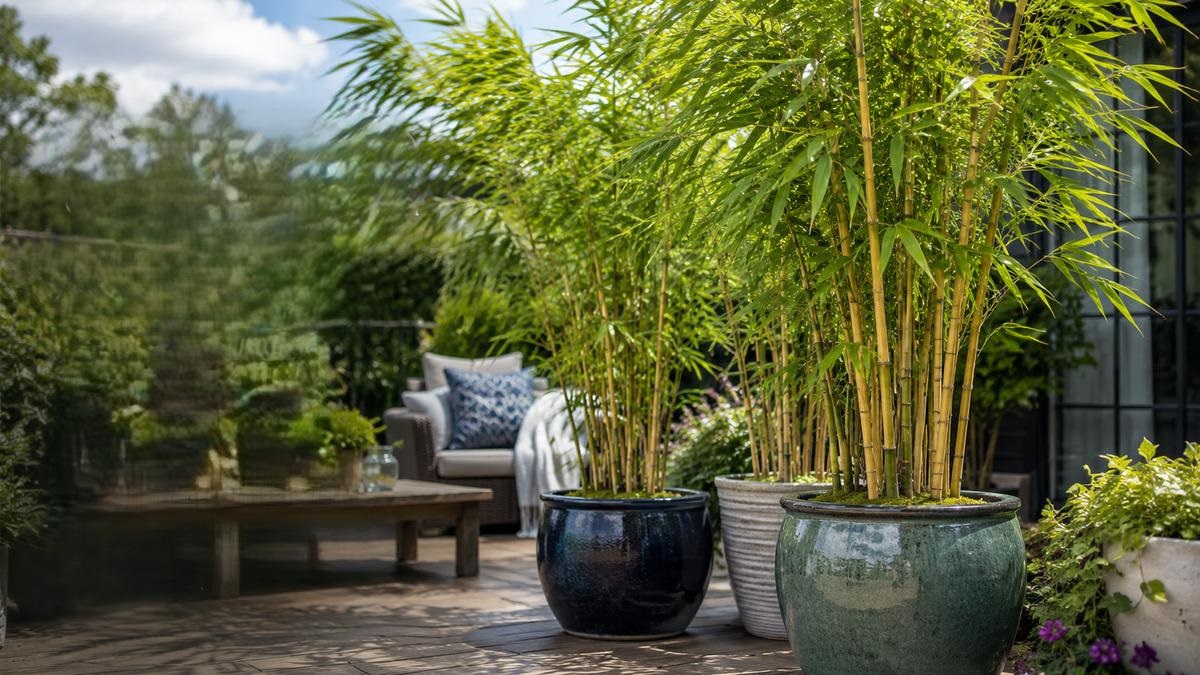
Bamboo brings natural beauty, elegant movement, and a distinctive architectural appearance to outdoor spaces. Its graceful leaves, upright stems, and diverse colors make it a popular choice for privacy screens, decorative gardens, and contemporary landscaping.
However, not every bamboo plant grows the same way. Some varieties develop compact clusters, while others spread aggressively through underground stems. Choosing the wrong variety can create significant maintenance problems.
Understanding Bamboo Plants and their varieties helps homeowners choose attractive plants without overlooking their growth habits or environmental impact.
Whether you are designing a Japanese-inspired garden, creating a backyard privacy screen, or decorating a patio with container plants, there are many bamboo varieties worth exploring.
This guide introduces ten ornamental bamboo types, explains their differences, and provides practical growing advice for gardeners throughout the United States.
What Are Bamboo Plants?
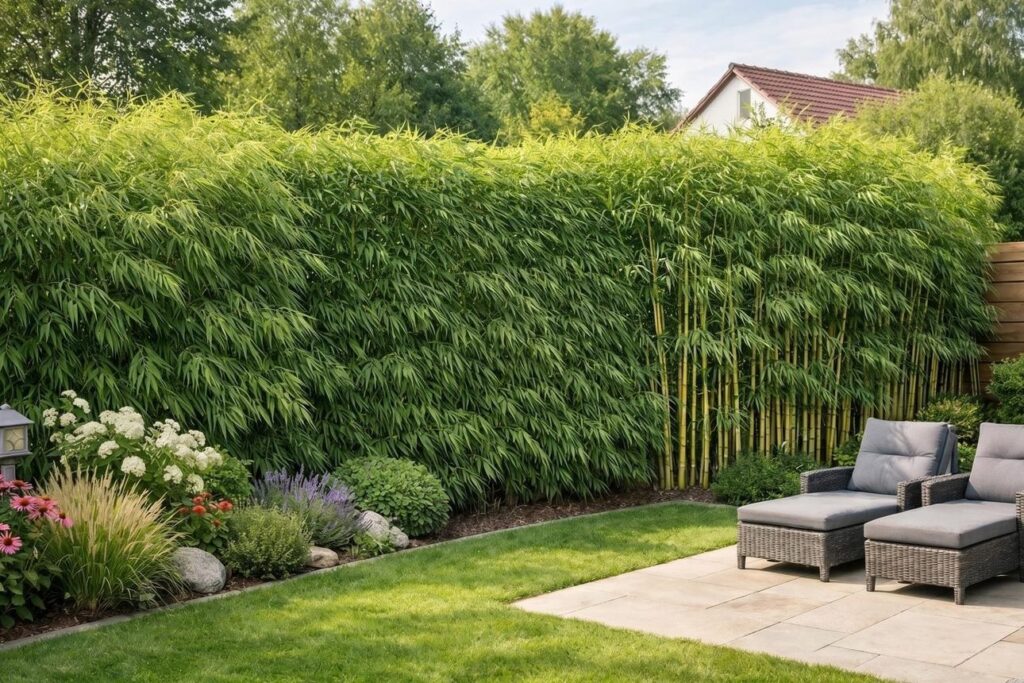
Bamboo belongs to the grass family, Poaceae, and includes numerous species found naturally in Asia, Africa, and the Americas.
Unlike typical lawn grasses, many bamboo species produce woody stems known as culms.
These stems have recognizable joints called nodes, with sections between them called internodes.
Depending on the species, bamboo may grow only a few feet tall or develop into impressive stands resembling small forests.
Most ornamental varieties are valued for their evergreen foliage, distinctive stems, and fast seasonal growth.
However, bamboo growth rates, mature dimensions, and environmental suitability vary considerably.
Understanding Clumping and Running Bamboo
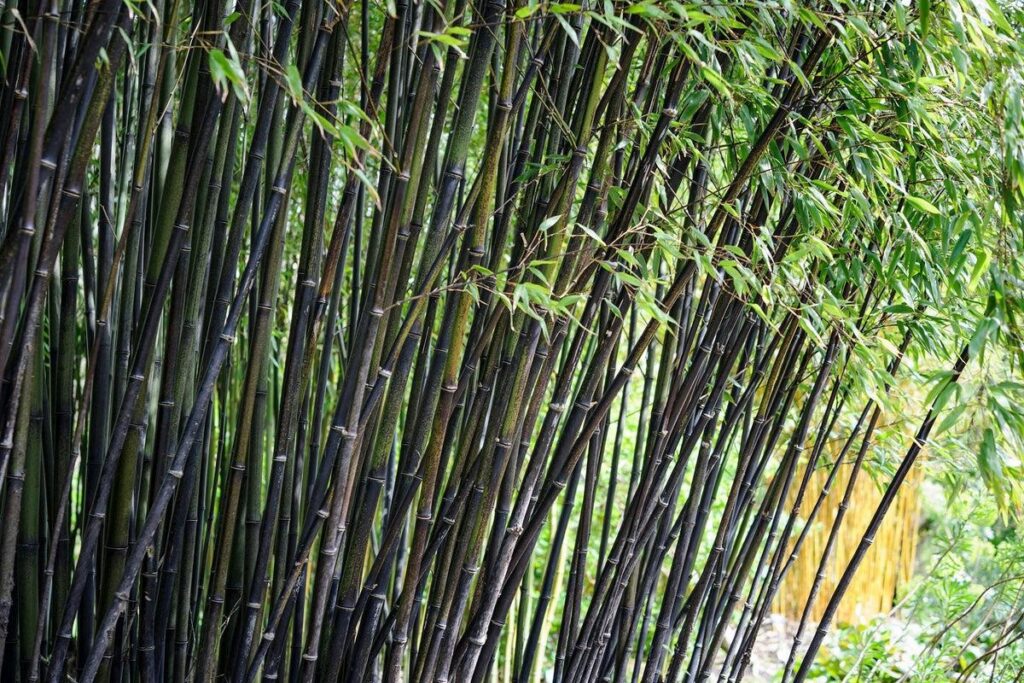
Before selecting a bamboo variety, it is essential to understand how its underground stems grow.
Clumping Bamboo
Clumping bamboo produces new shoots relatively close to the existing plant.
Its underground rhizomes generally develop a compact growth pattern, creating a gradually expanding cluster.
Many Fargesia varieties fall into this category.
Clumping bamboo is often a more manageable choice for residential gardens, although it still requires adequate growing space.
Running Bamboo
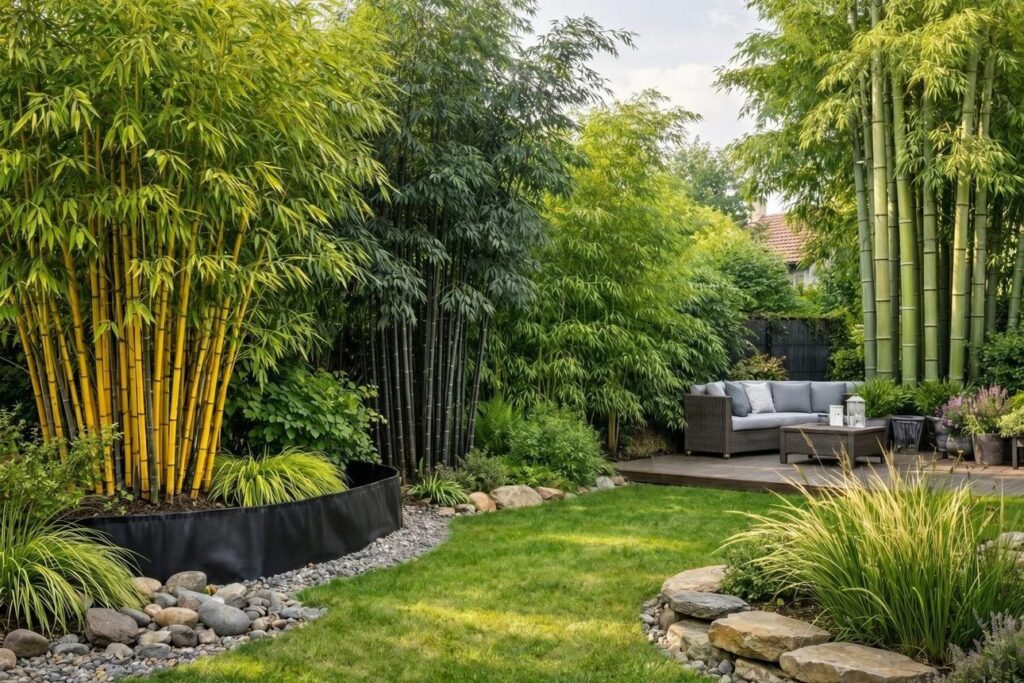
Running bamboo spreads through long underground rhizomes that can produce new shoots several feet from the original planting.
Some species can colonize neighboring properties and natural habitats.
The University of Maryland Extension warns that several running bamboo species are invasive in the United States and difficult to remove once established.
For most homeowners, selecting an appropriate clumping variety is preferable to attempting to control an aggressive running species.
10 Beautiful Types of Bamboo Plants and Their Varieties
Gardeners exploring Bamboo Plants and their varieties will find a useful collection of ten ornamental species and cultivars in Yard Surfer’s illustrated guide.
The following varieties reflect that collection, with additional guidance about growing conditions and potential spreading problems in American landscapes.
1. Fargesia nitida – Fountain Bamboo
Fargesia nitida is an attractive clumping bamboo recognized for its slender stems and delicate green foliage.
It develops graceful clusters that can create a soft, fountain-like appearance.
The ‘Black Pearl’ variety is especially interesting because its stems can develop deep purple to nearly black coloration.
Best uses: Ornamental garden borders, sheltered privacy screens, and shaded planting areas.
Fargesia generally prefers cooler climates and protection from intense afternoon heat.
It can be a useful choice for temperate gardens where running bamboo would be undesirable.
2. Shibataea kumasaca – Ruscus-Leaved Bamboo
Shibataea kumasaca is a compact bamboo valued for its distinctive broad-looking foliage and low-growing appearance.
Compared with tall screening varieties, it creates a more understated landscape feature.
Its short stature can complement garden borders, woodland-style plantings, and carefully managed containers.
Best uses: Decorative foliage displays, low ornamental planting, and sheltered garden spaces.
Although some descriptions characterize it as clump-like, it can spread through underground rhizomes. Verify local suitability and use appropriate containment rather than assuming it will remain in place.
3. Phyllostachys nigra – Black Bamboo
Black bamboo is among the most recognizable ornamental bamboo plants.
Young culms emerge green and can gradually darken to rich brown or nearly black as they mature.
The contrast between dark stems and bright green leaves makes it particularly striking.
Best uses: Architectural accents and large ornamental displays where its spreading habit can be managed.
Phyllostachys nigra is a running bamboo.
Its underground rhizomes can extend beyond the original planting, making it a risky choice for small residential yards.
Check local regulations and ecological concerns before planting.
4. Phyllostachys aureosulcata ‘Spectabilis’ – Showy Yellow Groove Bamboo
This variety features attractive yellow stems with green markings and colorful young growth.
Its upright habit creates a bold appearance suitable for spacious landscapes.
The stems provide interesting contrast against dark green foliage and other ornamental plants.
Best uses: Large landscape features and screening where responsible containment is possible.
Despite its beauty, it belongs to a vigorous running species group.
Golden groove bamboo is regulated in some U.S. jurisdictions because of invasive spreading.
It should not be treated as an easy, maintenance-free privacy solution.
5. Phyllostachys bambusoides ‘Castillonii’ – Japanese Timber Bamboo
This ornamental cultivar is admired for yellow culms featuring distinctive green stripes.
Its colorful stems create a dramatic garden appearance, especially when older lower branches are selectively removed to reveal the canes.
The parent species is known for producing substantial woody culms.
Best uses: Large ornamental gardens and architectural planting displays.
As a Phyllostachys variety, it spreads through running rhizomes.
Choose it only after carefully evaluating property boundaries, local restrictions, and long-term maintenance responsibilities.
6. Fargesia robusta – Upright Clumping Bamboo
Fargesia robusta is a popular ornamental bamboo with a relatively upright growth habit.
Its stems and protective sheaths can create contrasting green and pale-colored patterns.
The cultivar ‘Campbell’ is often selected for its attractive structure and dense appearance.
Best uses: Privacy hedges, garden screens, and contemporary landscaping.
This clumping bamboo can be suitable for cooler American climates.
It generally performs best where excessive summer heat and prolonged drought stress can be avoided.
7. Fargesia rufa – Compact Clumping Bamboo
Fargesia rufa is appreciated for its graceful arching foliage and manageable growth pattern.
It forms dense clusters that can create a naturally rounded appearance.
Its soft green leaves provide an attractive background for flowering plants and decorative garden features.
Best uses: Shaded privacy screens, mixed borders, and larger patio containers.
This variety often performs well in cooler regions, especially when protected from harsh afternoon sunlight.
Allow enough room for the mature clump to expand naturally.
8. Chusquea culeou – Chilean Bamboo
Chusquea culeou originates from southern South America and offers a distinctive alternative to more familiar Asian bamboo species.
It develops upright stems and dense branching that can create an unusual textured appearance.
Different selections may display variations in stem color and plant shape.
Best uses: Ornamental gardens and screening in suitable cool or mild climates.
It is generally a clumping bamboo, but successful cultivation depends heavily on local conditions.
Cooler coastal areas may suit it better than regions with prolonged hot, humid summers.
9. Phyllostachys aureosulcata ‘Aureocaulis’ – Golden-Stem Bamboo
This striking ornamental selection produces bright yellow culms that add warmth to garden compositions.
Its tall, upright growth can create impressive visual contrast against dark fencing or evergreen shrubs.
Best uses: Large-scale ornamental planting where strict spread management is feasible.
Like other Phyllostachys varieties discussed here, it is a runner.
Its attractive color does not eliminate the potential for underground expansion.
10. Pleioblastus fortunei – Dwarf Whitestripe Bamboo
Pleioblastus fortunei is a low-growing bamboo known for its attractive green-and-white variegated leaves.
It is often used as ornamental ground cover because of its relatively short height and dense foliage.
Best uses: Carefully contained foliage displays and decorative pots.
Despite its small size, this is an aggressive running bamboo.
North Carolina State University Extension warns that it can escape cultivation and displace native plants.
For unrestricted garden beds, a less aggressive alternative is generally preferable.
Which Bamboo Plants Are Best for Privacy?
Bamboo’s dense foliage makes it attractive for screening patios, fences, and neighboring properties.
However, height alone should not determine the best variety.
For Cooler American Climates
Fargesia robusta and Fargesia rufa may provide attractive screening without the rapid underground expansion associated with running bamboo.
Their suitability depends on sunlight, summer temperatures, moisture, and available space.
For Warm Southern Regions
Bambusa multiplex, commonly called hedge bamboo, is another clumping species worth considering.
North Carolina State University Extension identifies it as suitable for USDA Zones 8 through 11, with mature heights commonly ranging from approximately 10 to 25 feet.
Although it is not one of the original guide’s ten varieties, it is a practical additional option for some warmer U.S. landscapes.
For Small Gardens
Select a naturally compact clumping variety rather than planting a tall runner and repeatedly trying to restrict its growth.
Consider mature width as well as height.
Growing Bamboo in Different U.S. Climate Zones
The United States includes a wide range of growing conditions, from cold northern winters to subtropical southern climates.
Cold-Climate Gardens
Many Fargesia varieties tolerate relatively cold winters.
However, cold hardiness alone does not guarantee success.
Summer heat, humidity, wind exposure, and moisture availability also influence plant health.
Warm and Humid Regions
Certain Bambusa species may suit warmer southern gardens.
Check the exact species and cultivar before purchasing.
Mild Coastal Climates
Parts of the Pacific Northwest and coastal California may support bamboo varieties that prefer moderate temperatures.
The USDA Plant Hardiness Zone Map helps identify average extreme winter minimum temperatures, but it does not measure summer heat tolerance or invasive potential.
How to Plant Bamboo Successfully
Choose the Right Location
Research the mature height, spread, sunlight requirements, and growth habit of your chosen variety.
Avoid planting bamboo too close to foundations, property boundaries, or underground utilities.
Prepare the Soil
Many ornamental bamboos prefer fertile, well-drained soil with consistent moisture.
Improve planting conditions according to a soil assessment rather than adding unnecessary amendments.
Water During Establishment
Newly planted bamboo generally requires regular attention to moisture.
Keep the soil appropriately moist without allowing prolonged waterlogging.
Apply Mulch
A suitable organic mulch can help regulate soil moisture and temperature.
Keep mulch away from direct contact with vulnerable structures and avoid burying the plant’s crown.
Can Bamboo Be Grown in Containers?
Yes. Some compact clumping varieties can grow successfully in large containers.
Choose a sturdy pot with drainage holes and sufficient room for the root system.
Use a suitable growing medium and monitor moisture carefully.
Container-grown bamboo may require more frequent watering than plants growing in the ground.
Running bamboo is particularly problematic because its rhizomes may eventually escape through drainage openings or damage containers.
Choose naturally compact plants whenever possible.
How to Prevent Bamboo From Spreading
Preventing unwanted spread begins with selecting the correct species.
Avoid running bamboo near natural areas, property lines, or sensitive ecosystems.
If an existing running bamboo stand must be contained, professional installation of a suitable rhizome barrier may help.
However, barriers require inspection and maintenance.
The University of Maryland Extension explains that even properly installed barriers are not completely maintenance-free.
New shoots and rhizomes should be monitored regularly.
In some circumstances, complete removal is a more practical long-term solution.
Common Bamboo Growing Mistakes
One major mistake is assuming all bamboo varieties behave alike.
A compact-looking young runner may eventually occupy a much larger area.
Other mistakes include planting heat-sensitive species in exposed southern gardens, choosing undersized containers, and failing to research local invasive plant restrictions.
Some gardeners also mistake lucky bamboo for a true bamboo species.
Lucky bamboo is actually Dracaena sanderiana, a different type of plant.
Always confirm the botanical name before making a purchase.
Frequently Asked Questions About Bamboo Plants
What Are the Main Types of Bamboo Plants?
Bamboo is commonly divided into clumping and running types based on underground rhizome growth. Both categories contain numerous species and ornamental cultivars.
Which Bamboo Is Best for Privacy?
Suitable clumping varieties, including certain Fargesia and Bambusa species, can provide attractive screening. The best choice depends on climate, available space, and mature plant dimensions.
Is Bamboo Invasive in the United States?
Some running bamboo species are invasive in parts of the United States. Invasive status and legal restrictions vary by species and location.
Can Bamboo Grow in Cold Climates?
Yes. Several Fargesia varieties tolerate cold winters, although summer temperatures and growing conditions remain important.
Can You Grow Bamboo Indoors?
Some smaller bamboo varieties may survive indoors under suitable light and humidity, but many grow better outdoors. Lucky bamboo is a different plant commonly sold for indoor use.
How Fast Does Bamboo Grow?
Growth depends on species, climate, plant maturity, and growing conditions. Some established bamboos produce rapidly elongating shoots during their seasonal growth period.
Is Clumping Bamboo Completely Maintenance-Free?
No. Clumping varieties still require suitable spacing, watering, occasional pruning, and monitoring as they mature.
Which Bamboo Plants Have Black Stems?
Phyllostachys nigra is well known for dark stems. Certain Fargesia cultivars also develop deep purple or nearly black culm coloration.
Conclusion: Choose the Right Bamboo for Your Garden
Exploring Bamboo Plants and their varieties reveals an impressive selection of shapes, colors, sizes, and growth habits.
From compact Fargesia clumps to dramatic black bamboo and colorful yellow-stemmed cultivars, these plants can add character to outdoor landscaping.
However, attractive appearance should never outweigh practical considerations.
For many American homeowners, climate-appropriate clumping bamboo offers a more manageable option than vigorous running species.
Before planting, verify the botanical name, mature dimensions, local regulations, and maintenance requirements.
With thoughtful selection and proper care, bamboo can become a beautiful and distinctive feature of your garden for years to come.

Written by Twastia Editorial Team
Twastia Editorial Team shares practical insights about website design, SEO services, Google Ads, content marketing, social media, conversion rate optimization, and digital marketing strategy.
Last updated: Oct 15, 2026
Related posts from Twastia
Explore more useful articles from twastia.com about digital marketing, SEO, websites, ads, content, and growth strategy.