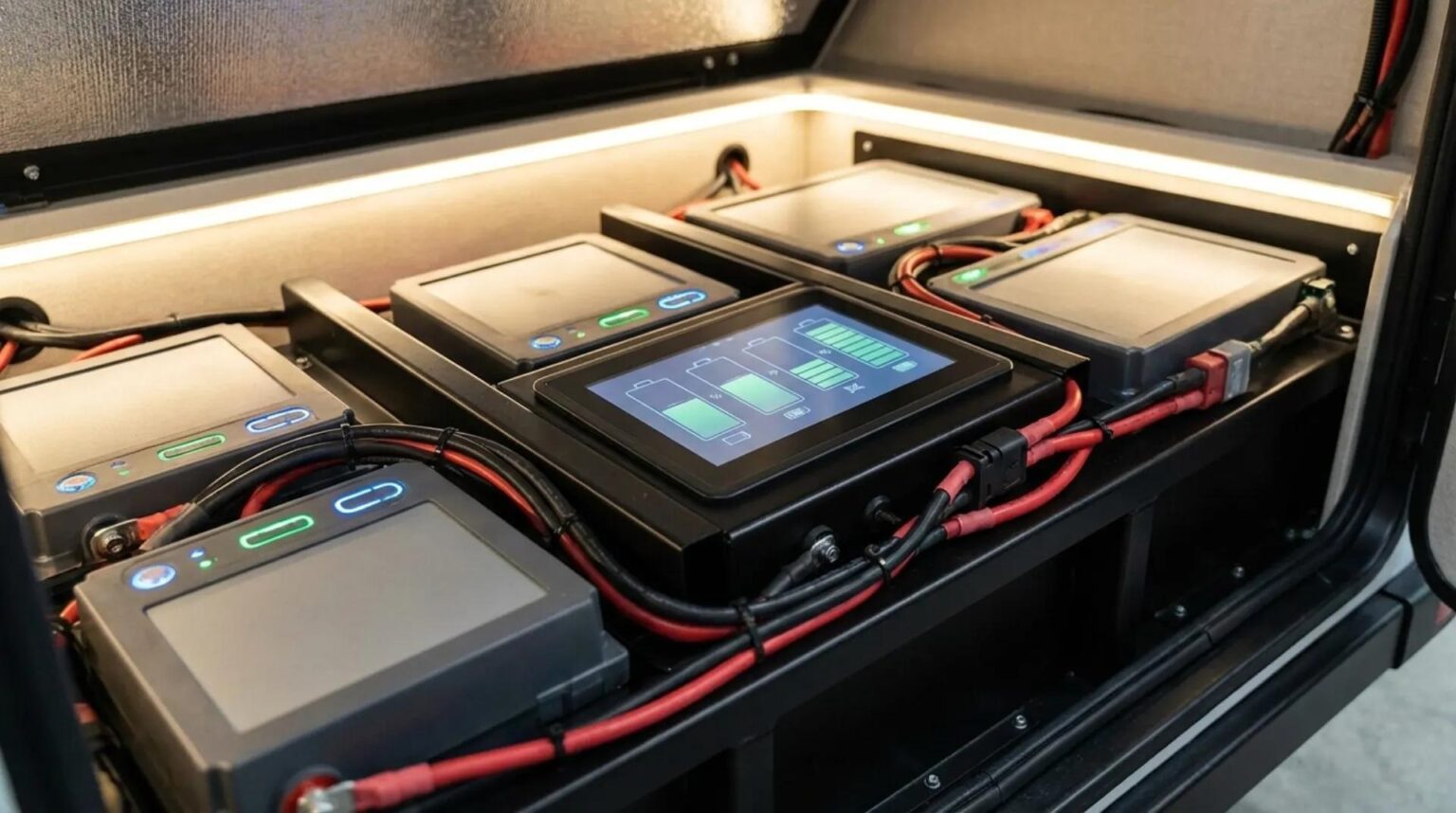
How Lithium-Ion Batteries Store Energy: Complete Guide for 2026
Reliable energy storage is becoming increasingly important for American households, outdoor enthusiasts, and businesses. From smartphones and laptops to recreational […]
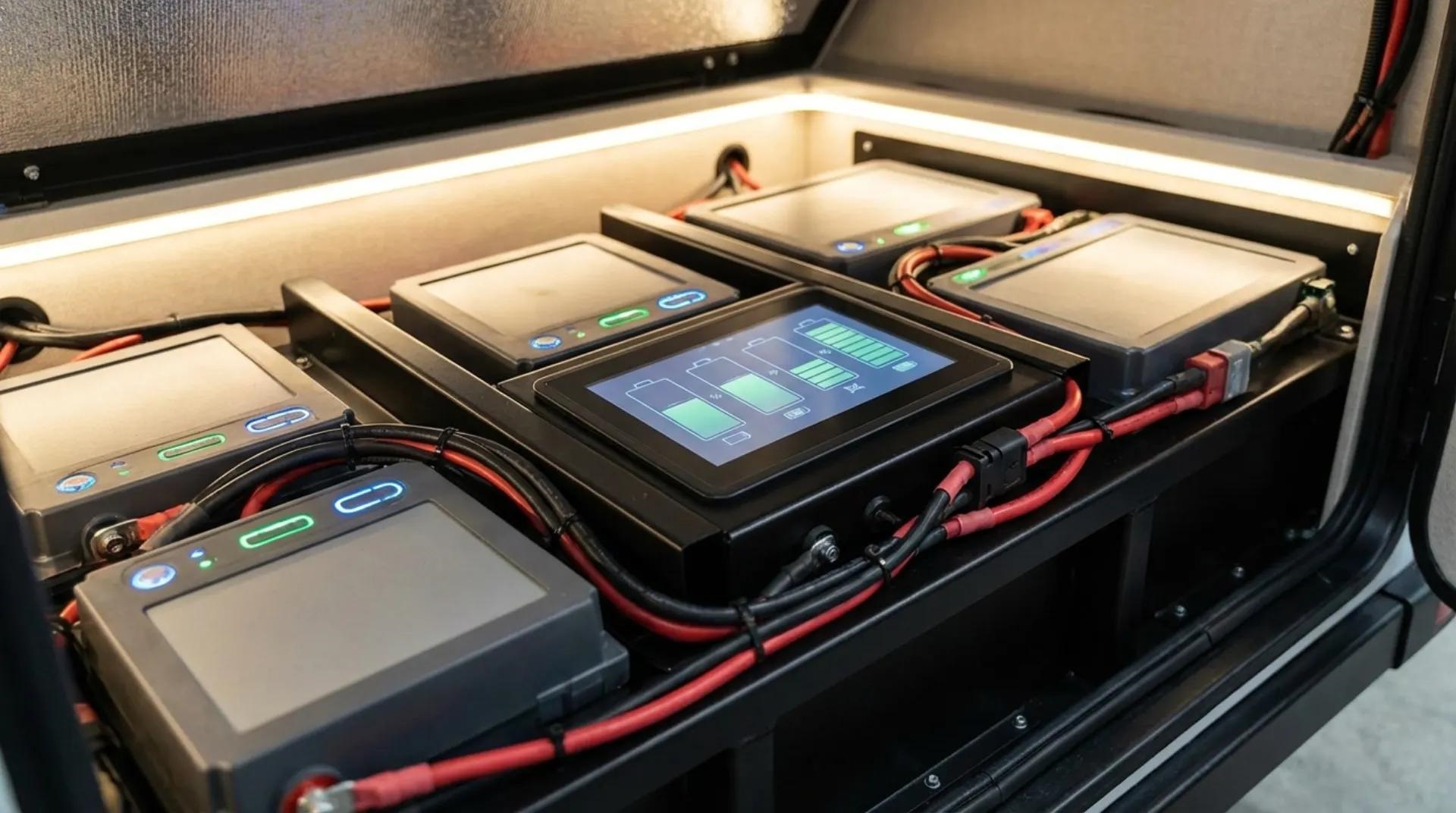
Reliable energy storage is becoming increasingly important for American households, outdoor enthusiasts, and businesses. From smartphones and laptops to recreational vehicles and solar backup systems, rechargeable batteries power many of the devices people depend on every day.
Among the available technologies, lithium-ion batteries have become especially popular because of their high energy density, rechargeable design, and ability to support a wide variety of applications.
However, understanding how these batteries function is essential before purchasing one for camping, RV travel, marine equipment, or emergency backup power.
Lithium-ion batteries use specialized chemical materials and the movement of lithium ions to store and release electrical energy. Different battery chemistries offer different advantages in terms of weight, performance, durability, and safety.
This comprehensive guide explains how lithium-ion batteries work, the benefits of lithium iron phosphate technology, common applications, charging requirements, capacity calculations, and essential maintenance and safety considerations.
What Are Lithium-Ion Batteries?
Lithium-ion batteries are rechargeable energy storage devices that use the movement of lithium ions between two electrodes during charging and discharging.
Unlike disposable batteries, they can undergo repeated charging cycles.
The main components include a positive electrode, a negative electrode, an electrolyte, and a separator.
These components work together to store electrical energy in chemical form and release it when connected to a compatible device.
Why Lithium Is Important

Lithium is a lightweight element with electrochemical properties that make it valuable for rechargeable battery technology.
The key principle is that lithium ions move between electrode materials as the battery operates.
Lithium-ion batteries do not generally store energy as large pieces of metallic lithium. Instead, they store chemical potential energy through carefully engineered electrode materials.
How Energy Is Stored

When a battery charges, an external power source drives electrochemical reactions that store energy.
During discharge, the reactions proceed in the opposite direction, allowing electrical energy to power connected equipment.
This process makes rechargeable batteries useful for everything from portable electronics to residential energy storage.
How Do Lithium-Ion Batteries Work?
The U.S. Department of Energy explains that rechargeable batteries store energy through reversible electrochemical reactions.
The movement of ions inside the battery and electrons through an external circuit makes charging and discharging possible.
Step 1: Charging the Battery
A compatible charger supplies electrical energy.
Lithium ions move through the electrolyte from the positive electrode toward the negative electrode, while electrons travel through the external circuit.
Energy is stored within the battery’s chemical system.
Step 2: Storing the Energy
Once charged, the battery can retain much of its stored energy until it is needed.
However, all batteries experience some self-discharge and gradual aging.
Step 3: Releasing Electricity
When a compatible device is connected, the battery undergoes a discharge reaction.
Lithium ions move back toward the positive electrode, while electrons flow through the external circuit and supply usable electricity.
This rechargeable process can occur many times, although performance gradually declines with age and use.
Types of Lithium-Ion Battery Chemistry
Lithium-ion is a broad category rather than one identical battery design.
Different chemistries use different electrode materials to achieve particular performance characteristics.
Lithium Iron Phosphate (LiFePO4)
Lithium iron phosphate, commonly called LFP or LiFePO4, is widely used for deep-cycle energy storage.
Its advantages often include good thermal stability, long cycle life, and suitability for repeated charging and discharging.
These characteristics make it attractive for camping systems, RV batteries, and certain stationary storage applications.
Nickel Manganese Cobalt (NMC)
NMC batteries are commonly used where energy density is especially important.
Depending on the cell design, they may provide more energy per unit of weight than LFP alternatives.
Other Lithium-Ion Chemistries
Lithium cobalt oxide, lithium manganese oxide, and nickel cobalt aluminum oxide are additional examples.
Each has different performance, cost, lifespan, and safety trade-offs.
For most RV and camping applications, understanding LiFePO4 specifications is particularly useful.
Why LiFePO4 Batteries Are Popular for Outdoor Power
Many campers and RV owners want reliable electricity without depending entirely on campground hookups or fuel-powered generators.
LiFePO4 batteries can provide a practical energy storage solution when installed in a compatible system.
Lightweight Construction
Lithium batteries often weigh less than lead-acid batteries with comparable usable energy capacity.
Lower weight can be particularly valuable in trailers, motorhomes, and boats.
Long Cycle Life
Quality LiFePO4 batteries may provide thousands of charging cycles under specified testing conditions.
However, actual lifespan depends on temperature, depth of discharge, charging behavior, and product quality.
Consistent Power Delivery
Lithium batteries can maintain a relatively stable output voltage across much of their usable charge range.
This can support compatible electrical equipment without the same voltage behavior associated with some lead-acid designs.
Reduced Routine Maintenance
Sealed lithium battery systems generally do not require watering or other maintenance associated with certain flooded lead-acid batteries.
Owners must still monitor connections, operating conditions, and charging equipment.
Exploring Lithium Batteries From Outbax
Consumers researching the statement Lithium-ion batteries use lithium as a material to store energy can explore lithium battery products and technical descriptions offered by Outbax.
Outbax is an Australian retailer specializing in camping equipment, portable power solutions, and outdoor accessories.
Its lithium battery collection includes models from brands such as VoltX and Gentrax.
Lithium Battery Options
The retailer lists 12V, 24V, and 48V battery categories, with capacities including 100Ah, 200Ah, and 300Ah.
Some products feature Bluetooth monitoring, integrated battery management systems, or compact designs.
Battery Accessories
The catalog also includes chargers, battery boxes, inverters, and solar charge controllers.
These components help illustrate how a complete off-grid electrical system may be assembled.
Important Information for U.S. Readers
Outbax currently states that it only ships within Australia.
American buyers can use the product descriptions for research and comparison but should select batteries available through appropriately supported U.S. suppliers.
Individual products must be checked for compatibility, current stock, warranty coverage, and applicable safety requirements.
Lithium-Ion vs. Lead-Acid Batteries
Both lithium and lead-acid batteries can serve useful energy storage applications.
However, their performance characteristics differ.
Weight
Lithium batteries generally provide greater usable energy for a given weight.
This can benefit mobile systems where every pound matters.
Usable Capacity
Many LiFePO4 batteries are designed to tolerate deeper regular discharge than conventional lead-acid batteries.
However, usable capacity is always limited by the manufacturer’s operating specifications and battery management system.
Charging
Lithium and lead-acid batteries require different charging profiles.
Using an incompatible charger may damage the battery or create safety hazards.
Upfront Cost
Lithium batteries often cost more initially.
Their long-term value depends on cycle life, actual use, replacement costs, and system compatibility.
Understanding Battery Capacity: Ah vs. Wh
Two important specifications are amp-hours (Ah) and watt-hours (Wh).
Amp-hours describe electrical charge capacity.
Watt-hours describe an amount of stored energy.
How to Calculate Watt-Hours
A simplified calculation is:
Watt-hours = Nominal Voltage × Amp-hours
For example, a 12.8V battery rated at 100Ah has a nominal energy capacity of approximately 1,280Wh.
This equals 1.28 kilowatt-hours.
Actual available energy can be lower because of operating limits, temperature, battery aging, and electrical conversion losses.
Estimating Device Runtime
Suppose a device consumes 60 watts continuously.
If approximately 1,024Wh of energy is available after accounting for operating limits and estimated losses, the device might run for about 17 hours.
This is an illustrative calculation, not a guaranteed runtime.
Always account for appliance starting loads, inverter efficiency, and battery output limitations.
Choosing the Right Lithium Battery Size
The best battery depends on how much electricity your devices consume and how long you need them to operate.
Small Camping Systems
A compact setup powering LED lights, phones, and a portable refrigerator may use a 100Ah battery.
Actual requirements depend on device consumption and trip duration.
RV and Travel Trailer Systems
Larger systems may require 200Ah or more, particularly when operating multiple appliances.
Heating, cooling, and high-wattage equipment can increase demand significantly.
Off-Grid Solar Installations
Larger energy systems may require multiple appropriately matched batteries, specialized inverters, charge controllers, and professional installation.
A household-scale system should not be designed by simply connecting assorted batteries together.
What Is a Battery Management System?
A battery management system, or BMS, monitors important operating conditions within a rechargeable battery pack.
Depending on the design, it may protect against excessive charging voltage, deep discharge, excessive current, and unsafe temperatures.
Why BMS Protection Matters
Lithium cells have defined operating limits.
A BMS helps maintain operation within those limits and may disconnect the battery when necessary.
Not All BMS Systems Are Equal
Features vary between manufacturers.
Some systems include cell balancing, low-temperature charging protection, wireless monitoring, and communication with compatible equipment.
A BMS is an important safety feature, but it does not eliminate every possible battery hazard.
Charging Lithium Batteries Safely
Correct charging practices are essential for battery performance and safety.
Use a Compatible Charger
Select a charger specifically approved for the battery chemistry, voltage, and intended application.
Do not assume an older lead-acid charger is automatically suitable for LiFePO4.
Monitor Temperature
Lithium batteries can be damaged or become unsafe when charged outside their permitted temperature range.
Charging LiFePO4 below freezing requires particular attention unless the system is specifically designed and approved for those conditions.
Avoid Unsupervised Improper Charging
Follow the manufacturer’s instructions regarding charging location, operating limits, and monitoring.
Stop using a battery that becomes unusually hot, swells, leaks, or shows signs of damage.
Lithium Batteries for Solar Energy Storage
Solar panels generate electricity when sunlight is available.
A compatible battery system can store some of that energy for use later.
Components of a Solar Battery System
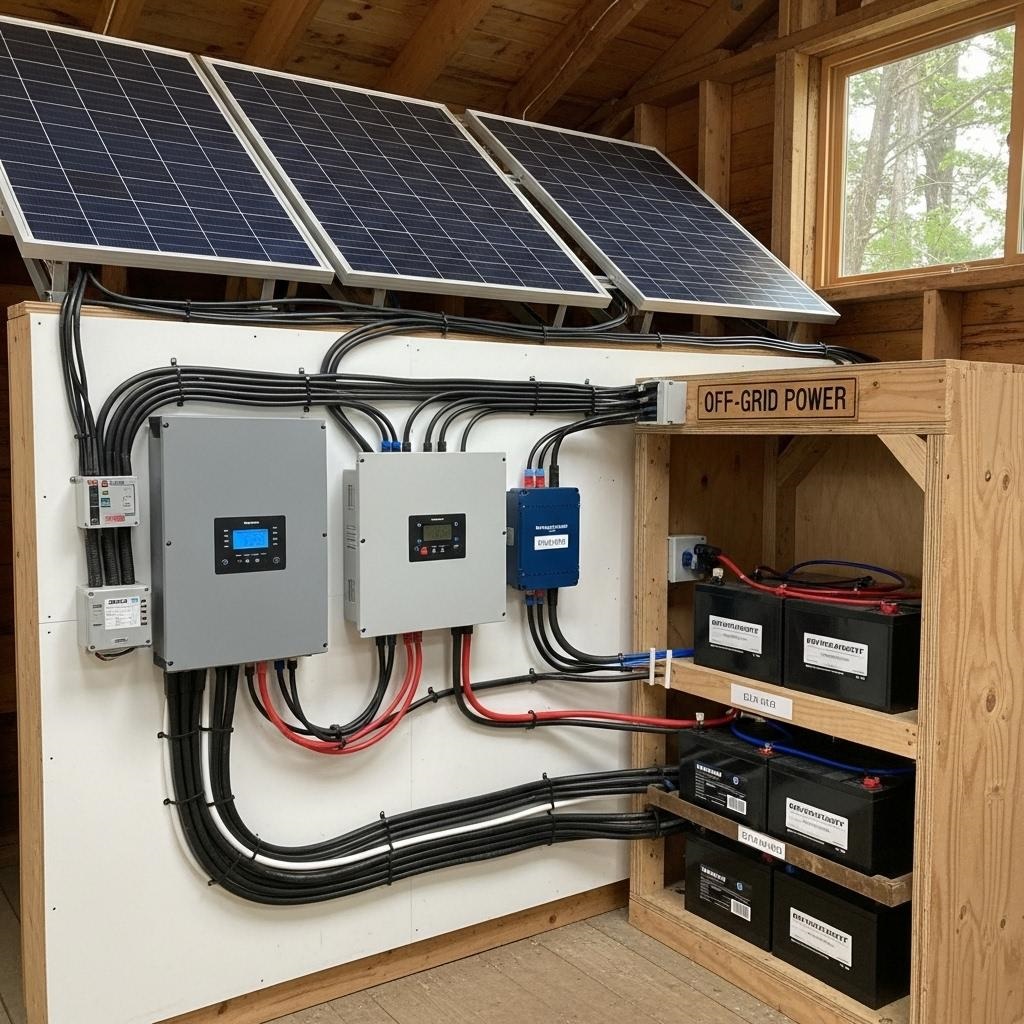
A typical arrangement may include solar panels, charge control equipment, battery storage, and an inverter when AC electricity is needed.
The equipment must be electrically compatible and properly protected.
Why Battery Sizing Matters
A battery with insufficient capacity may run out before nighttime demand is satisfied.
An oversized installation may create unnecessary expense.
A qualified installer can help evaluate daily consumption, solar production, weather conditions, and backup requirements.
Lithium Battery Safety and Fire Prevention
Lithium batteries can present fire and electrical hazards if damaged, improperly charged, overheated, or used with incompatible equipment.
Choose Suitable Products
Look for appropriate independent safety certifications relevant to the complete product and intended application.
Verify certification claims rather than relying on unsubstantiated advertising.
Keep Batteries Away From Excessive Heat
Avoid storing batteries in direct sunlight, hot vehicles, or locations outside manufacturer temperature limits.
Watch for Warning Signs
Unusual odors, deformation, leaking, excessive heat, and abnormal noises require immediate attention.
If a battery is smoking or burning, move away, evacuate others, and call emergency services.
Do not handle or attempt to repair a failing battery pack yourself.
Can Lithium Batteries Be Taken on Airplanes?
U.S. airline rules depend on battery capacity and intended use.
The Federal Aviation Administration generally permits rechargeable lithium-ion batteries up to 100Wh in passenger carry-on baggage, subject to applicable restrictions.
Batteries between 101Wh and 160Wh generally require airline approval.
Lithium-ion batteries exceeding 160Wh are generally prohibited on passenger aircraft, except where separate specialized rules apply.
Spare lithium batteries and power banks must remain in carry-on baggage, not checked luggage.
Large camping batteries frequently exceed these limits.
Always verify current FAA and airline requirements before traveling.
How to Maintain Lithium Batteries for Longer Service Life
Good battery maintenance begins with following the product manual.
Keep terminals protected, connections secure, and equipment clean and dry.
Avoid repeated exposure to extreme temperatures.
When storing batteries for extended periods, follow the manufacturer’s recommended state of charge and inspection schedule.
Do not mix batteries of different types or conditions unless the system manufacturer explicitly approves the configuration.
Professional installation is advisable for complex RV, marine, and residential electrical systems.
Are Lithium Batteries Recyclable?
Yes. Lithium-ion batteries contain materials that specialized recycling operations may recover.
However, they should never be placed in ordinary household trash or curbside recycling containers.
The U.S. Environmental Protection Agency recommends taking used lithium-ion batteries to appropriate battery collection or household hazardous waste facilities.
Before transport, protect terminals with suitable nonmetallic tape or place individual batteries in separate bags as directed.
Damaged batteries may require specialized handling.
Check local collection requirements before disposal.
Common Mistakes to Avoid When Buying Lithium Batteries
One common mistake is selecting a battery based only on its amp-hour rating without checking nominal voltage.
Another is overlooking maximum discharge current, charging compatibility, and temperature limitations.
Buyers may also assume every lithium battery is suitable for engine starting, solar charging, or series connections.
These applications require explicit manufacturer approval.
Avoid treating advertised cycle-life figures as guaranteed years of service.
Finally, compare complete system costs, warranties, and safety documentation rather than relying on unusually low prices.
Frequently Asked Questions About Lithium-Ion Batteries
How Do Lithium-Ion Batteries Store Energy?
They store chemical potential energy through electrochemical reactions involving lithium ions moving between electrode materials during charging and discharging.
What Is the Difference Between Lithium-Ion and LiFePO4?
LiFePO4 is a particular lithium-ion chemistry that uses lithium iron phosphate as its positive electrode material.
Are LiFePO4 Batteries Good for Camping?
They can be well suited to camping when correctly sized, installed, charged, and used with compatible equipment.
How Long Does a Lithium Battery Last?
Service life varies by chemistry, manufacturing quality, operating temperature, cycling conditions, and charging behavior.
Can I Replace a Lead-Acid Battery With Lithium?
Sometimes, but the charger, electrical equipment, protection system, and intended application must be compatible.
Can I Charge Lithium Batteries Below Freezing?
Many LiFePO4 batteries must not be charged below 32°F unless specifically designed with appropriate low-temperature protection or heating systems. Follow the manufacturer’s exact limits.
Does Outbax Ship Lithium Batteries to the United States?
Its current published policy states that shipping is available only within Australia.
What Should I Do With an Old Lithium Battery?
Take it to an appropriate battery recycling or household hazardous waste facility, following local rules and safe handling instructions.
Conclusion: Understanding Lithium-Ion Battery Energy Storage
Lithium-ion batteries have transformed how people store and use electrical energy.
From everyday electronics to camping equipment, RVs, and solar backup systems, these rechargeable technologies offer versatile power solutions.
LiFePO4 batteries are particularly attractive for many deep-cycle applications because of their thermal characteristics, cycle life, and energy storage capabilities.
However, choosing the correct battery requires more than comparing capacity or advertised performance.
Consider battery chemistry, voltage, usable energy, charger compatibility, safety features, operating temperatures, and warranty support.
By understanding how lithium-ion batteries work and following proper installation and maintenance practices, American consumers can make more informed decisions about reliable energy storage for their homes and outdoor adventures.

Written by Twastia Editorial Team
Twastia Editorial Team shares practical insights about website design, SEO services, Google Ads, content marketing, social media, conversion rate optimization, and digital marketing strategy.
Last updated: Oct 15, 2026
Related posts from Twastia
Explore more useful articles from twastia.com about digital marketing, SEO, websites, ads, content, and growth strategy.