The Ultimate Guide to Choosing the Best Pool Cover for Your Home
Owning a backyard swimming pool is one of the most rewarding aspects of residential homeownership in the United States. A […]
Owning a backyard swimming pool is one of the most rewarding aspects of residential homeownership in the United States. A sparkling pool provides an instant oasis during sweltering summer afternoons, a gathering place for weekend family barbecues, and a serene focal point for outdoor relaxation. However, behind every
beautiful, pristine pool lies a continuous commitment to maintenance, water chemistry balance, energy management, and safety enforcement. Leaving a swimming pool exposed to the elements without a high-quality protective barrier is an open invitation for leaves, twigs, pollen, and debris to foul your water, while evaporation constantly drains your chemical investment and spikes your monthly utility bills.
Investing in the right protective barrier is the single most effective step you can take to safeguard your investment, reduce ongoing maintenance headaches, and protect your loved ones. Whether you own an expansive inground oasis or a compact above-ground setup, utilizing a durable pool cover transforms how you
manage your outdoor living space. A reliable pool cover acts as a shield against unpredictable weather, drastically curtails water evaporation, traps solar heat, and provides indispensable peace of mind regarding child and pet safety. This comprehensive guide explores the various types of covers available, their unique benefits, essential maintenance practices, and how to select the perfect model for your home.
The Vital Importance of Protecting Your Swimming Pool
To understand why a protective barrier is an absolute necessity rather than an optional luxury, it helps to look at the environmental factors constantly acting upon your backyard water feature. Uncovered pools suffer from rapid water loss due to evaporation, especially during hot, dry summer months across states like Arizona, Texas, and California. As water evaporates, it carries away expensive pool chemicals, leaving behind imbalanced, harsh water that requires continuous adjustments with chlorine, shock, and pH balancers.
Furthermore, exposed water acts as a massive collector for airborne debris, dirt, insects, and organic matter. When leaves and twigs sink to the bottom and decay, they consume free chlorine, foster stubborn algae blooms, and clog skimmer baskets and filtration systems. By installing a high-quality pool cover, you create an impenetrable physical boundary that stops evaporation in its tracks, preserves water balance, and keeps dirt and organic debris completely out of your filtration equipment.
Exploring the Primary Types of Covers
Not all covers serve the exact same function. Depending on your primary goals—whether that is child safety, winter protection, heat retention, or daily convenience—different cover categories offer distinct operational advantages.
Solar Covers (Bubble Blankets)
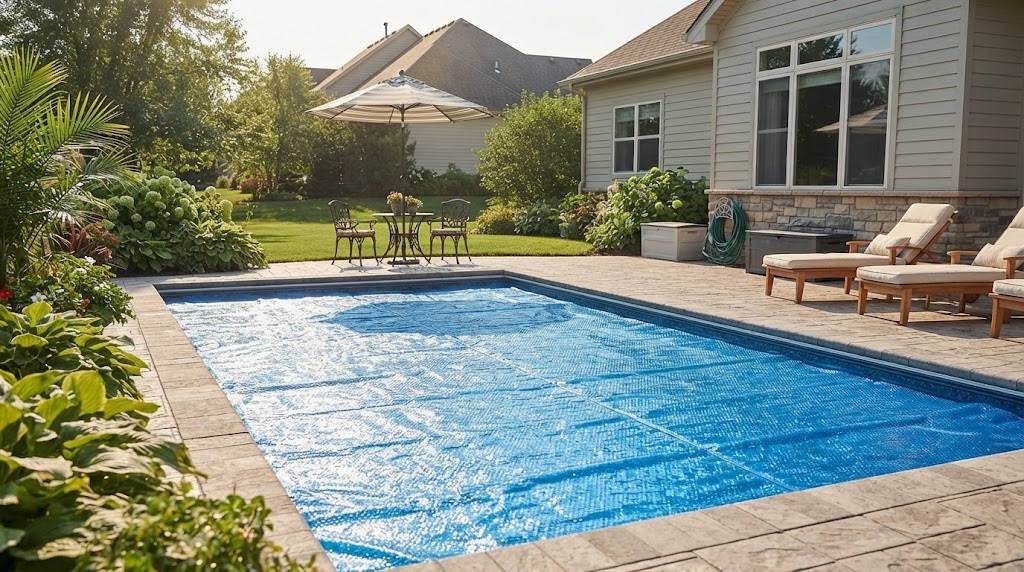
Solar covers, often called bubble blankets, are lightweight polyethylene sheets filled with thousands of tiny air bubbles designed to absorb solar radiation and transfer heat directly into your pool water. These blankets float directly on the water’s surface without mechanical anchors. They are exceptionally effective at raising water
temperatures by up to fifteen degrees Fahrenheit while preventing nighttime heat loss and evaporation. While solar blankets are highly cost-effective and easy to trim to custom pool shapes, they are strictly thermal barriers and offer zero safety protection for children or pets.
Safety Covers (Mesh and Solid)
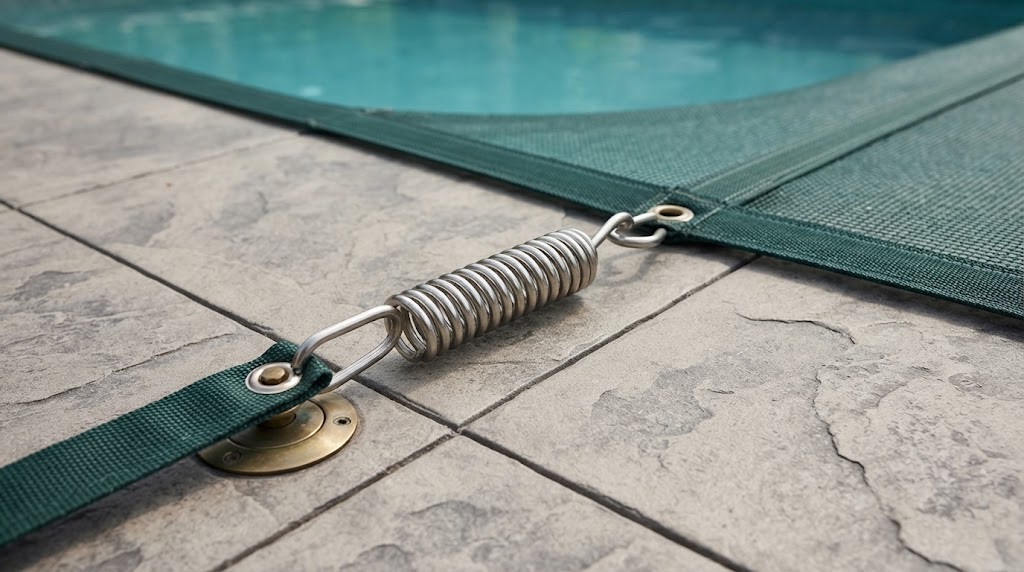
When child safety, pet security, and long-term durability are your top priorities, heavy-duty safety covers represent the gold standard of protection. Safety covers are securely anchored into the surrounding concrete deck or stone coping using heavy-duty stainless steel springs and brass anchors. Engineered to support substantial weight—often capable of holding several adults simultaneously—safety covers completely eliminate the risk of accidental submersion.
Safety covers come in two primary variations:
- Mesh Safety Covers: Constructed from tightly woven porous material, mesh covers allow rainwater and melting snow to drain directly into the pool while filtering out leaves and debris. This eliminates the need for an automatic cover pump on top, though fine silt and sunlight can pass through, requiring a thorough chemical cleanup in the spring.
- Solid Safety Covers: Built from impermeable vinyl material, solid covers block 100 percent of sunlight and liquid, keeping the water underneath completely dark and free of algae growth throughout the winter months. However, they require an automatic cover pump placed on top to drain accumulated rainwater and melted snow.
Automatic Pool Covers
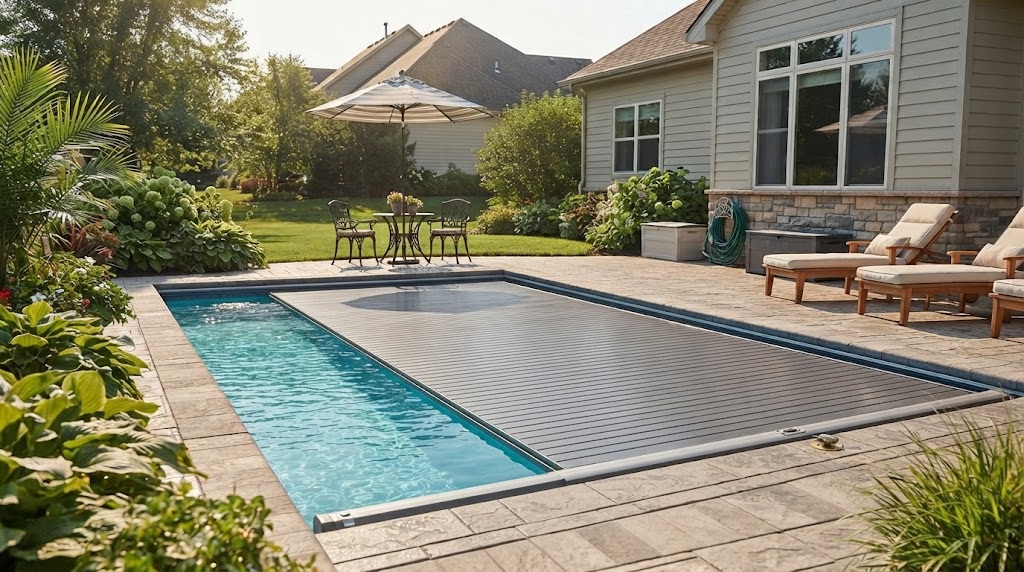
For the ultimate in luxury, convenience, and daily protection, automatic covers represent the pinnacle of modern pool engineering. Mounted on tracks concealed beneath the coping or along the deck edge, an automatic cover deploys or retracts smoothly across the water at the touch of a button or the turn of a key.
Automatic covers serve as all-in-one solutions: they act as certified safety barriers, eliminate daily debris accumulation, retain water heat, and drastically cut chemical consumption. While they carry a higher initial installation cost, their daily ease of use encourages consistent coverage, maximizing your overall financial savings over time.
Winter Tarps and Leaf Catchers
Winter tarps are basic, budget-friendly vinyl or polyethylene sheets held in place around above-ground or inground pools using water bags, cable winches, or weighted perimeter clips.
While they shield the water from autumn leaves and harsh winter snows, they lack structural anchoring and can accumulate heavy standing water. Leaf catchers, which are lightweight mesh nets placed directly over winter tarps or safety covers, allow homeowners to peel away massive accumulations of autumn leaves in a single, effortless motion before winter sets in.
Environmental and Financial Benefits
Installing a durable pool cover delivers immediate, tangible returns on your investment across several key areas of home budgeting and environmental sustainability.
Drastic Evaporation Reduction
According to the U.S. Department of Energy, evaporation is by far the single largest source of energy and water loss in residential swimming pools. Covering a pool when it is not in use can reduce evaporation rates by up to 95 percent. For a standard residential pool, this translates into saving thousands of gallons of fresh water every single year, making a pool cover an essential component of responsible water conservation in drought-prone regions.
Lower Chemical and Heating Expenses
Uncovered pools lose significant amounts of chlorine and chemical sanitizers through direct ultraviolet (UV) degradation and evaporation. By deploying a protective pool cover, you shield your water from intense sunlight, allowing chlorine to remain active and effective for much longer periods. Furthermore, retaining heat overnight means your gas heater or heat pump operates far less frequently, leading to substantial savings on monthly gas and electric utility bills.
Reduced Wear on Filtration Equipment
When leaves, pine needles, and garden dirt are prevented from entering the water, your pool skimmers, pump baskets, and filter media operate with far less mechanical stress. This reduces the frequency of backwashing or cleaning filter cartridges and extends the operational lifespan of expensive pool pump motors and filtration units.
Key Considerations When Selecting a Cover
Selecting the right protective barrier for your backyard requires evaluating several specific factors unique to your property, climate, and family dynamic.
- Primary Goal: Determine whether your main objective is child and pet safety, thermal heat retention during the swimming season, or long-term winterization during cold months.
- Pool Shape and Type: Standard rectangular pools accommodate automatic systems and off-the-shelf safety covers easily, whereas freeform, kidney, or custom-shaped pools with raised spas and waterfalls require custom-measured, precision-fabricated covers.
- Local Climate: Homeowners in northern states facing heavy snowfall require heavy-duty mesh or reinforced solid safety covers designed to handle snow loads, whereas homeowners in southern states often prioritize solar blankets and automatic systems for year-round sun exposure.
- Ease of Operation: Consider who will be deploying and removing the cover daily. Lightweight solar blankets on manual hand-crank reels or automatic motorized systems are far easier to manage for daily use than heavy manual safety covers.
Essential Maintenance and Storage Best Practices
To ensure your investment lasts for its intended lifespan—which can range from three years for basic solar blankets to over fifteen years for high-end safety covers—proper care and seasonal maintenance are required.
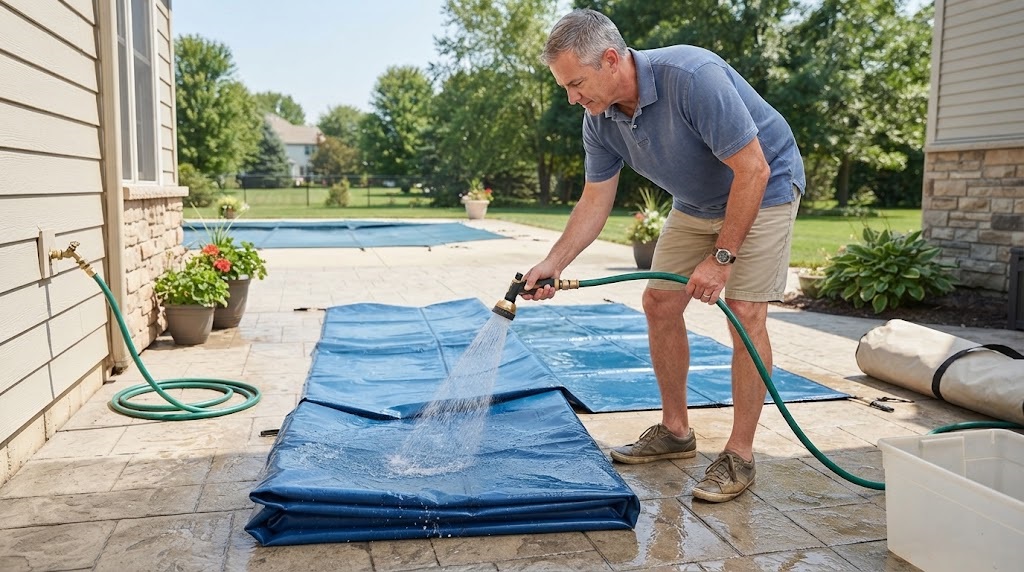
Always clean your cover thoroughly before folding and storing it for the season. Wash away accumulated dirt, salt, and chlorine residue using a gentle hose, mild soap, and a soft-bristle brush. Ensure the material is 100 percent dry before folding to prevent mildew, rot, and foul odors. Store folded covers inside sealed storage bags or heavy-duty plastic bins elevated off the ground to prevent mice, squirrels, and insects from nesting inside the fabric during off-seasons.
For solid covers that accumulate standing water during rainy periods, always operate a reliable, submersible cover pump to remove water promptly. Heavy standing water creates a dangerous drowning hazard for small animals and exerts immense stress on the fabric and anchoring springs.
Frequently Asked Questions
Can a solar pool cover protect children or pets from falling into the pool?
No. Solar bubble blankets offer absolutely zero structural support and float loosely on the water’s surface. In fact, an unsupervised child or pet walking onto a floating solar blanket can become entangled underneath the material. Never rely on a solar blanket as a safety barrier.
How long does a typical pool cover last?
Lifespans vary significantly by type and material quality. Standard solar bubble blankets generally last 2 to 4 years due to constant UV exposure. Basic winter tarps last 1 to 3 seasons, while heavy-duty mesh and solid safety covers typically last 10 to 15 years or more when maintained properly.
Do I still need to run my pool pump if the pool is covered?
Yes, but for significantly shorter durations. While a protective pool cover keeps out leaves and reduces chemical breakdown, pool water still requires daily circulation to distribute sanitizers, balance chemistry, and prevent localized stagnation.
How much weight can a certified safety pool cover hold?
Under ASTM F1346 standards, a certified safety cover must be capable of supporting a minimum of 485 pounds within a five-foot radius. High-end professional mesh and solid safety covers often exceed these standards, capable of easily holding the weight of multiple adults or unexpected snow loads.
Will a solid pool cover prevent algae growth during the winter?
Yes. Algae requires sunlight and organic nutrients to grow. A solid safety cover blocks 100 percent of UV light from entering the water, completely starving algae spores and keeping your pool water remarkably clear and clean when opened in the spring.
How do I measure my pool for a custom cover installation?
Measuring a pool requires taking precise length and width measurements at the widest points, taking into account steps, benches, raised spas, and rock features. For custom freeform pools, professionals use a triangulation technique or A-B line survey to ensure an exact fit around all perimeter contours.
Can I leave my automatic pool cover on all winter long?
While automatic covers are exceptionally strong, leaving an automatic cover closed throughout heavy northern winters without proper support can damage the tracks and drive motor due to excessive ice and snow weight. In heavy snow regions, many homeowners use a dedicated mesh safety cover for winterization.
Conclusion
A backyard swimming pool should be a source of relaxation, fun, and cherished family memories, not an endless chore that consumes your weekends and inflates your utility bills. Investing in a high-quality pool cover is the single most practical decision any pool owner can make to ensure
safety, lower operating costs, and protect their physical asset. Whether you choose the daily convenience of an automatic system, the thermal efficiency of a solar blanket, or the unyielding protection of a heavy-duty safety barrier, covering your pool pays immediate dividends in peace of mind, water conservation, and long-term enjoyment. Take control of your backyard oasis today, select the perfect cover for your lifestyle, and enjoy a cleaner, safer, and far more efficient swimming pool season after season.

Written by Twastia Editorial Team
Twastia Editorial Team shares practical insights about website design, SEO services, Google Ads, content marketing, social media, conversion rate optimization, and digital marketing strategy.
Last updated: Oct 18, 2026
Related posts from Twastia
Explore more useful articles from twastia.com about digital marketing, SEO, websites, ads, content, and growth strategy.