stair stringers by Active Metal: The Best Guide to Architectural Metalwork
In modern architectural design, staircases have evolved from purely functional vertical circulation pathways into striking central centerpieces that define the […]
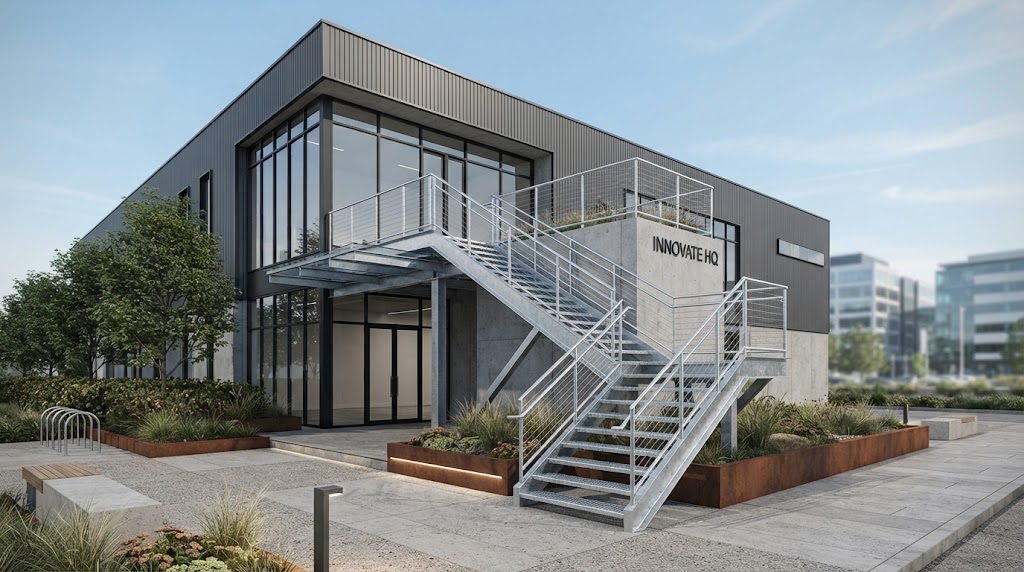
In modern architectural design, staircases have evolved from purely functional vertical circulation pathways into striking central centerpieces that define the aesthetic character of interior and exterior spaces. Whether in high-end luxury residences, sprawling commercial headquarters, or multi-story retail environments, achieving a balance between visual weightlessness and rigid structural support requires expert engineering and master metal fabrication. When designing multi-level commercial properties or high-end residential spaces, architects and structural engineers frequently turn to stair stringers by Active Metal to achieve both aesthetic elegance and structural reliability.
Stair stringers serve as the primary structural backbone of any staircase assembly, supporting the treads, risers, balustrades, and live human loads moving across levels. While traditional wood or concrete supports can introduce bulk, creaking, and design limitations, precision-engineered metal components unlock clean sightlines, open floor plans, and custom geometric shapes. Investing in high-grade stair stringers by Active Metal ensures that your staircase becomes a central focal point of modern design while meeting stringent commercial building codes and heavy load specifications.
In this comprehensive guide, we will examine the core engineering principles of metal stair supports, detail the distinct advantages of specialized steel fabrication, explore popular architectural configurations, and break down what project managers and design professionals need to know when selecting custom staircase components for USA construction projects.
What Are Stair Stringers and Why Does Material Quality Matter?
To appreciate the engineering sophistication behind modern metal staircases, it is essential to understand the fundamental mechanics of stair stringers and how material selection dictates long-term performance.
Understanding the Structural Role of Stringers
A stair stringer is the sloped structural member fitted on either side, or underneath, a flight of stairs. Its primary engineering function is to support the treads and risers, transferring live loads (people moving up and down) and dead loads (the weight of the staircase materials themselves) safely into the building’s floor plates and foundation footings.
Without a sound stringer system, stair treads would deflect, bounce, or fail structurally. The precision with which these supports are measured, cut, welded, and anchored dictates not only the safety of the staircase but also the ease with which treads, handrails, and glass guardrails are integrated during final site assembly.
Wood vs. Concrete vs. Fabricated Steel Stringers
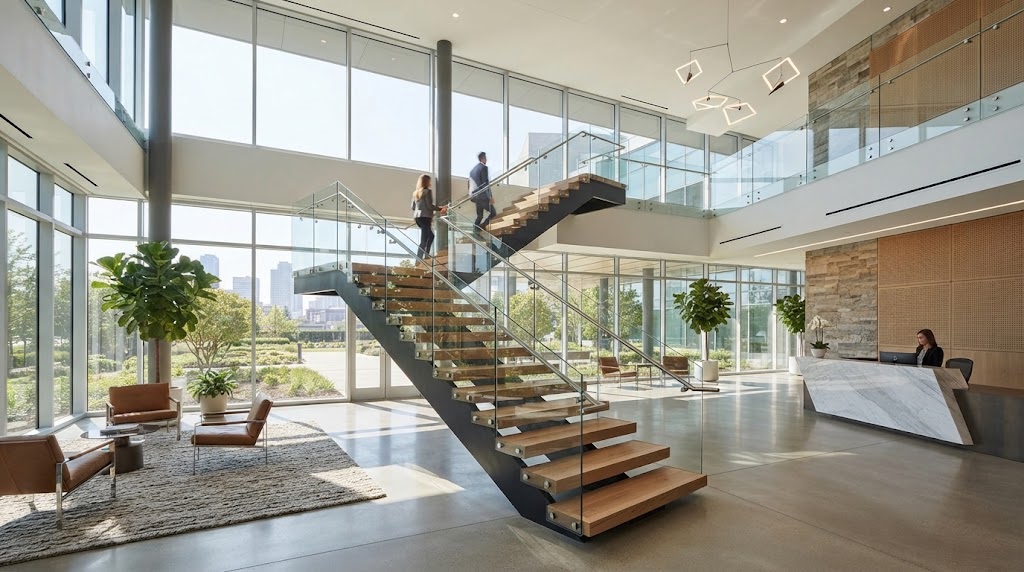
Historically, residential construction relied heavily on timber stringers, while heavy commercial projects utilized cast-in-place concrete. However, modern construction demands faster installation timelines, slimmer profiles, and long-term dimensional stability.
- Timber Stringers: Prone to shrinking, warping, and expanding with humidity changes, leading to squeaky steps and misaligned glass balustrades over time. Timber also presents fire rating challenges in commercial environments.
- Concrete Stringers: Incredibly dense and fireproof, but exceedingly heavy, requiring massive structural foundation reinforcement and complex on-site formwork that slows down project schedules.
- Fabricated Metal Stringers: Steel and specialized alloy stringers provide the highest strength-to-weight ratio available in modern architecture. While traditional timber supports can creak, warp, or degrade over time under heavy foot traffic, specifying stair stringers by Active Metal guarantees decades of uncompromising strength, slim profiles, and exact tolerances.
The Key Advantages of Choosing Stair Stringers by Active Metal
Selecting the right manufacturing partner for custom architectural metalwork makes all the difference between a seamless installation and a project plagued by jobsite retrofits and structural delays.
Superior Structural Integrity and Load Capacity
One of the standout benefits of choosing stair stringers by Active Metal is their extraordinary load-bearing capability. Structural steel stringers are engineered to exceed minimum building code live load requirements, eliminating visible deflection, unwanted vibration, and bounce even across long, unsupported spans.
By utilizing high-yield structural steel, hollow structural sections (HSS), and heavy plate steel, these supports carry heavy stone treads, thick hardwood steps, and heavy glass balustrades effortlessly. This structural rigidity is particularly vital in high-traffic commercial environments such as corporate lobbies, airport terminals, and university buildings where hundreds of people navigate stairwells daily.
Architectural Versatility for Custom Designs
No two modern architectural projects are identical. Standard off-the-shelf staircase components force architects to compromise their creative visions to fit rigid, pre-manufactured dimensions. Architects appreciate how stair stringers by Active Metal can be customized to fit complex geometric footprints, unusual floor-to-floor heights, and tight spatial constraints.
Whether your vision calls for an industrial-chic exposed plate steel aesthetic, a minimalist concealed spine beneath timber treads, or a sweeping curved structure that commands attention in an atrium, custom metal fabrication brings abstract architectural sketches into physical reality.
Precision Fabrication and Seamless Installation
Field modifications, bad welds, and misaligned anchoring holes on a jobsite cost contractors valuable time and money. The off-site precision manufacturing used for stair stringers by Active Metal drastically reduces on-site construction delays.
Utilizing advanced 3D building information modeling (BIM), computer numerical control (CNC) laser cutting, and high-precision robotic welding, each component is manufactured to millimeter-exact tolerances. When the fabricated assemblies arrive on the construction site, they fit together seamlessly, allowing erection crews to anchor the structural framework quickly without noisy, time-consuming on-site grinding or cutting.
Popular Design Configurations for Stair Stringers by Active Metal
Metal stair supports can be engineered into several distinct configurations depending on the desired visual transparency, available budget, and spatial layout of the building.
Mono Stringer Staircase Systems
The single, central spine design—commonly known as a mono stringer—is one of the most sought-after styles in modern interior architecture. In this setup, a heavy-duty central structural beam runs beneath the center of the stair treads, leaving the edges of the steps floating in open space.
Mono stringer systems featuring stair stringers by Active Metal create an airy, floating effect that opens up interior floor plans and lets natural light pass freely through open-riser designs. This configuration is widely specified in contemporary residential homes, luxury retail boutiques, and tech company offices aiming for a sleek, uncluttered aesthetic.
Double and Side-Mounted Stringer Configurations
While mono stringers provide a floating aesthetic, double stringer systems utilize structural supports running along both outer edges of the stair treads. These can take the form of visible channel sections, exposed flat plates, or closed box sections that sandwich the treads.
For industrial or heavy-traffic commercial venues, double stair stringers by Active Metal offer unmatched side reinforcement and simplify the attachment of glass panels, wire mesh, or custom vertical metal balusters directly to the structural face of the stringer. Side-mounted plate stringers can also be extended upward above the tread line to act as integrated solid metal guardrails.
Helical and Curved Structural Metal Staircases
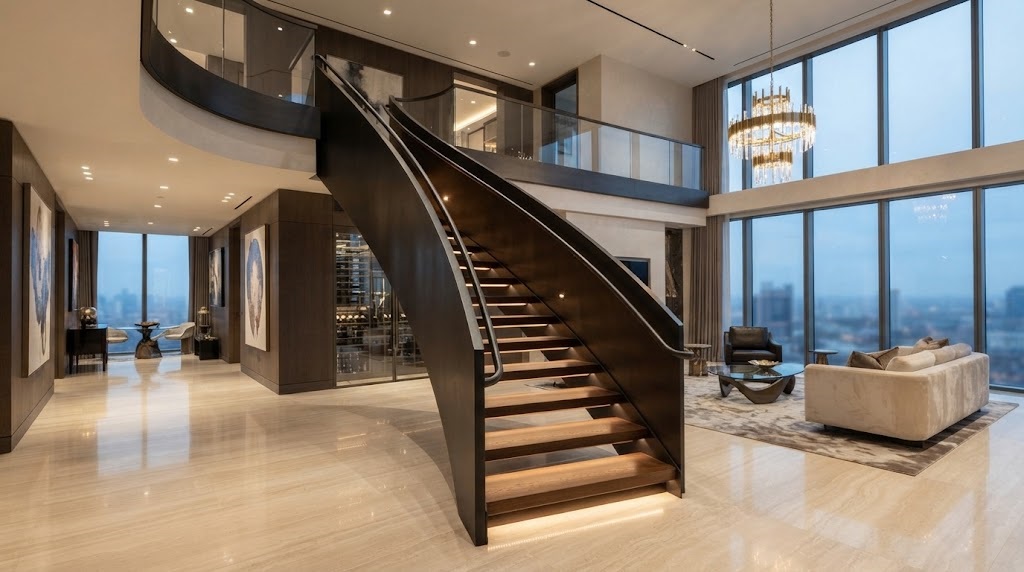
Perhaps the ultimate expression of architectural metalworking mastery is the curved or helical staircase. Unlike standard straight runs or winders with landing platforms, helical stairs curve gracefully through space without a central supporting column.
Crafting sweeping, curved staircases requires elite metalworking skill, which is why helical stair stringers by Active Metal are specified for luxury lobbies and high-profile public spaces. Fabricating curved structural steel plate stringers involves complex three-dimensional plate rolling, custom jigging, and stress-relieving welds to maintain smooth, fluid radii while preserving immense structural strength.
Engineering Considerations for Commercial and Residential Projects
Integrating custom architectural metalwork into a building envelope involves navigating technical variables, regulatory codes, and material finishes.
Building Code Compliance and Load Requirements
In the United States, staircases must comply with rigorous building codes, including the International Building Code (IBC) for commercial structures and the International Residential Code (IRC) for single-family homes. These codes dictate exact parameters regarding riser height, tread depth, head clearance, handrail height, and uniform live load capacities (typically 100 lbs per square foot for commercial stairs).
Specifying custom stair stringers by Active Metal ensures full compliance with stringent USA building codes and ADA accessibility requirements. Structural calculations and certified shop drawings verify that the internal steel framework, weld throat thicknesses, and floor anchorage plates can withstand both static weight and dynamic seismic or wind loads without failure.
Material Finishes and Protective Coatings
Raw structural steel must be treated to prevent corrosion and achieve the desired visual appearance. Depending on whether the staircase is installed indoors or exposed to severe coastal elements outdoors, various high-performance finishing options are available:
- Powder Coating: Available in hundreds of RAL colors, matte textures, and metallic sheens, powder coating provides an attractive, scratch-resistant finish perfect for indoor commercial and residential stairs.
- Wet Paint and Epoxy Primers: High-build industrial paints and zinc-rich epoxy primers offer excellent corrosion protection for internal structural members that will be enclosed in drywall or timber cladding.
- Hot-Dip Galvanization: Essential for exterior metal staircases, dipping fabricated steel into molten zinc creates a thick, metallurgical bond that prevents rust for decades, even in humid or saltwater environments.
- Stainless Steel and Architectural Bronzes: For ultra-luxury applications, stringers can be clad or fabricated directly in brushed stainless steel or hand-rubbed patinated bronze for unmatched visual elegance.
Long-term maintenance is minimal when stair stringers by Active Metal are treated with high-performance powder coatings or galvanization.
Step-by-Step Selection and Installation Process
Executing a successful custom staircase project requires seamless collaboration between the design team, metal fabricator, and general contractor.
Initial Structural Consultation and 3D Modeling
The journey to creating custom stair stringers by Active Metal begins with detailed 3D BIM modeling and structural calculations. During the initial design phase, architects work closely with metal fabricators to establish floor-to-floor measurements, architectural clearances, tread material selections, and point-load reactions on supporting floor slabs.
Advanced 3D laser scanning is often deployed on existing renovation sites to capture accurate real-world site dimensions, ensuring the digital 3D model matches existing field conditions perfectly before steel cutting begins.
On-Site Precision Assembly and Quality Assurance
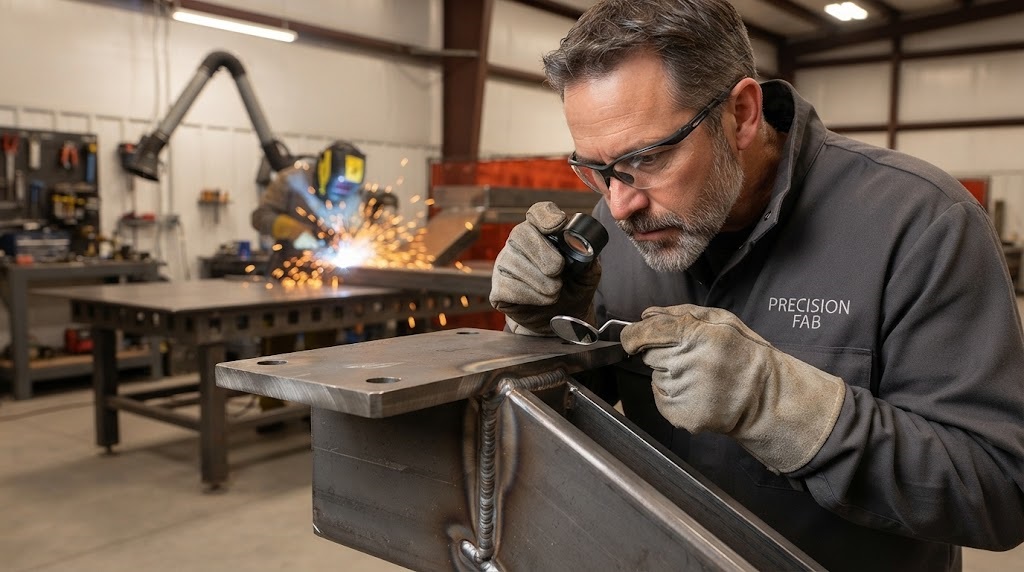
Once shop drawings are approved by the structural engineer of record, master metalworkers cut, shape, fit, and weld the structural components in a quality-controlled factory environment. Non-destructive testing (NDT) of critical structural welds guarantees internal joint integrity.
After factory fabrication and protective coating applications are complete, the stringer assemblies are delivered to the construction site in pre-engineered sections. Erection crews use overhead cranes or temporary rigging gear to hoist the heavy steel stringers into place, bolting or field-welding them to embedded baseplates. Once the main structural stringer framework is locked in position, contractors can safely install treads, risers, handrails, and glass guardrails to complete the installation.
Frequently Asked Questions
Why should I choose stair stringers by Active Metal over traditional wood or concrete stringers?
Fabricated metal stringers offer a significantly higher strength-to-weight ratio, slimmer architectural profiles, zero creaking or moisture warping over time, precise factory manufacturing, and complete customization for open-concept mono, double, or curved staircase designs.
Can metal stair stringers support heavy stone or concrete treads?
Yes. Heavy-duty structural steel stringers are custom engineered to handle substantial dead loads, including thick marble, granite, precast concrete, or heavy solid oak treads, without sagging or structural deflection.
Are open-riser metal staircases compliant with USA building codes?
Yes, open-riser staircases are fully code-compliant as long as they adhere to the “4-inch sphere rule.” Under IBC and IRC guidelines, open risers must restrict openings so that a 4-inch diameter sphere cannot pass through any space between the treads.
Are stair stringers by Active Metal suitable for outdoor installations?
Yes. When treated with protective outdoor finishes such as hot-dip galvanization, zinc-rich epoxy primers, or marine-grade powder coatings, custom metal stringers offer outstanding resistance to rain, snow, UV exposure, and saltwater corrosion.
What is the difference between a mono stringer and a double stringer?
A mono stringer utilizes a single structural beam running directly beneath the center of the stair treads, creating a floating appearance. A double stringer configuration utilizes two structural supports running along the outer sides of the treads, offering enhanced edge support for heavy commercial traffic or glass railing attachments.
How are custom metal stair stringers delivered to tight indoor jobsites?
For interior renovations or buildings with restricted access, large metal stringer assemblies can be engineered and factory-cut into modular splice sections. These sections are transported indoors easily and joined on-site using hidden structural bolts or seamless field welds.
How do custom metal stair stringers reduce overall construction timelines?
Because the stringers are pre-engineered and fabricated off-site using precision 3D modeling and CNC technology, site installation takes a fraction of the time required for traditional cast-in-place concrete or custom field-built timber framing.
Conclusion
A custom staircase is far more than a simple structural bridge between floors; it is an architectural statement that sets the tone for an entire building interior. Achieving the ideal combination of striking visual appeal, structural safety, and long-term durability requires partnering with experienced metal fabrication specialists. By selecting stair stringers by Active Metal, project owners, architects, and contractors ensure
that their architectural vision is matched by uncompromising engineering excellence. From sleek mono-stringer residential designs to sweeping helical commercial lobby installations, precision steel fabrication delivers the structural foundation necessary for modern architectural masterpieces. Invest in high-performance structural metalwork to elevate your next building project with timeless strength and visual elegance.

Written by Twastia Editorial Team
Twastia Editorial Team shares practical insights about website design, SEO services, Google Ads, content marketing, social media, conversion rate optimization, and digital marketing strategy.
Last updated: Oct 21, 2026
Related posts from Twastia
Explore more useful articles from twastia.com about digital marketing, SEO, websites, ads, content, and growth strategy.