
When Is The Right Time To Buy Your Own Home?: Best Financial & Homebuyer Readiness Guide
Buying your first home is an exciting milestone, but it is also one of the biggest financial decisions you may […]
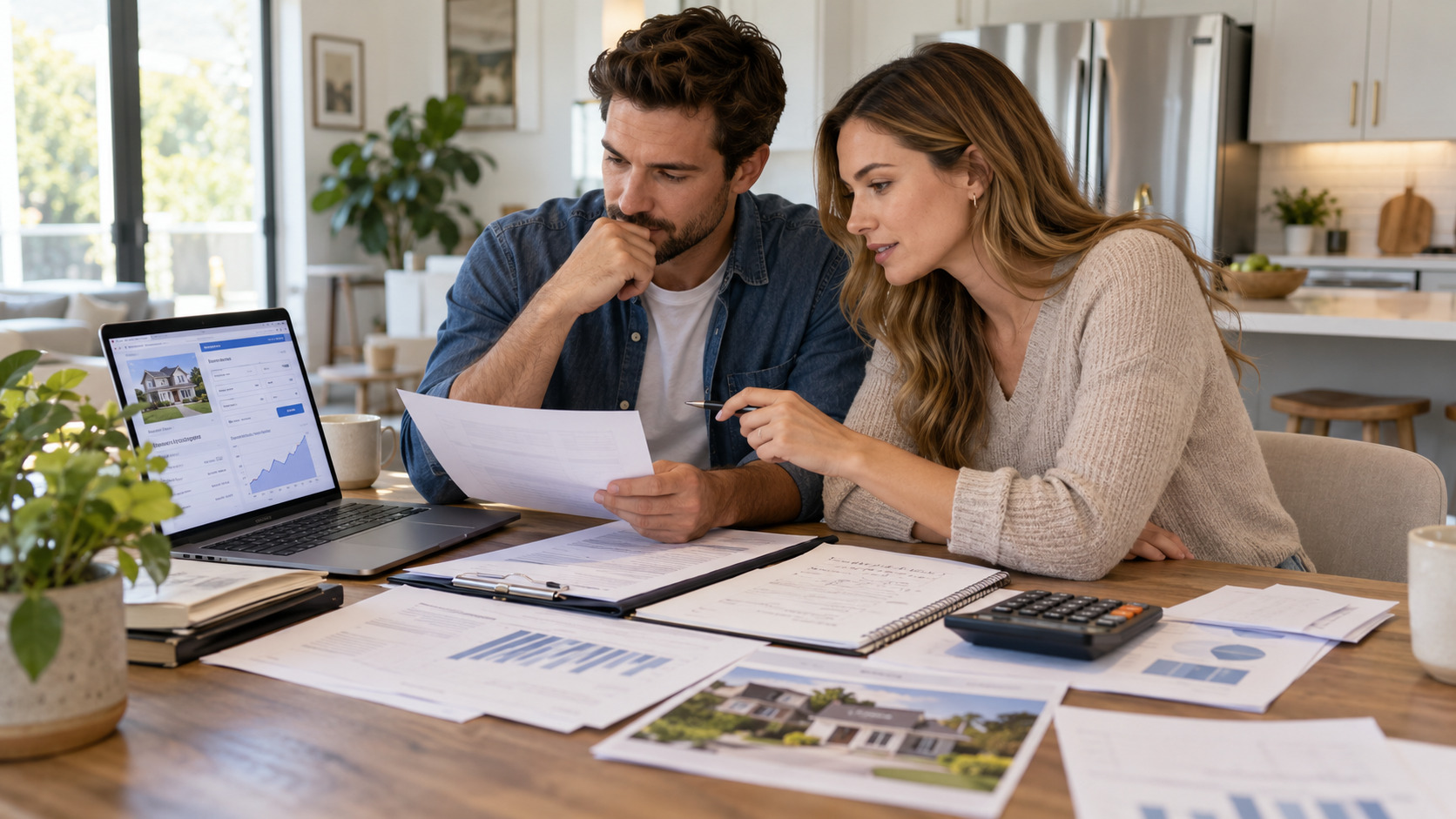
Buying your first home is an exciting milestone, but it is also one of the biggest financial decisions you may ever make. With changing mortgage rates, property prices, and everyday living expenses, many Americans wonder whether they should buy now or continue renting.
When Is The Right Time To Buy Your Own Home? The answer depends more on your financial stability, long-term plans, and ability to manage ownership costs than on predicting the perfect housing market.
A home can provide stability, personal freedom, and the opportunity to build equity. However, purchasing too early can create financial pressure when savings are limited or employment is uncertain.
According to the Consumer Financial Protection Bureau (CFPB), buyers should consider their income, credit history, savings, existing debts, and ability to cover homeownership expenses before purchasing.
Consumer Financial Protection Bureau
This guide explains the signs of homebuyer readiness, common financial challenges, practical preparation steps, and how to decide whether buying makes sense in 2026.
Why Choosing the Right Time to Buy a Home Matters
Buying property involves more than obtaining mortgage approval.
Homeowners become responsible for maintenance, property taxes, insurance, utilities, and unexpected repairs. These expenses can affect household finances for years.
Choosing the right time helps you avoid purchasing a home that becomes difficult to afford.
Homeownership can offer several benefits:
- Housing stability: Greater control over your living arrangements.
- Potential equity growth: Mortgage principal payments can gradually increase ownership equity.
- Personal freedom: More flexibility to decorate and modify the property within applicable rules.
- Long-term planning: A permanent residence may support family and lifestyle goals.
However, property values can decline, and selling a home involves additional expenses.
The CFPB advises considering how long you intend to remain in the property and whether your finances can support ownership responsibilities.
Consumer Financial Protection Bureau
Common Challenges That Make Homebuyers Wait
High Mortgage Interest Rates
Mortgage rates influence the monthly cost of borrowing.
As of October 22, 2026, Freddie Mac reported an average 30-year fixed mortgage rate of 7.32%, compared with 6.19% one year earlier.
Freddie Mac
These are national averages, not guaranteed offers. Your rate depends on credit, down payment, loan type, and lender.
Insufficient Savings
Buyers need more than a down payment.
Closing expenses, moving costs, initial repairs, and emergency savings should be considered before committing to a purchase.
Unstable Employment
A mortgage usually represents a long-term financial obligation.
If your income changes significantly or you expect to relocate soon, continuing to rent may offer greater flexibility.
Existing Debt Obligations
Car loans, student debt, and credit-card balances reduce the amount of income available for housing.
Lenders review debt obligations when evaluating mortgage applications.
10 Practical Signs You Are Ready to Buy Your Own Home
Financial readiness is usually more important than trying to predict short-term movements in property prices.
1. You Have a Stable Source of Income
Reliable income makes it easier to manage regular housing payments.
Before buying, consider whether your employment or business earnings are likely to remain reasonably dependable.
Mortgage lenders may evaluate income documentation and employment history, but their approval requirements vary.
2. You Have Saved for a Down Payment

Build Your Down Payment Savings
A larger down payment can reduce the amount borrowed and may affect mortgage costs. However, eligible buyers can access certain programs requiring less than 20% down.
Do not use all available savings for the down payment.
3. Your Credit History Is in Good Shape
Lenders consider your credit history when evaluating mortgage applications.
A stronger credit profile can improve access to certain financing terms.
Review your credit reports and address inaccuracies before applying.
4. You Can Afford the Total Monthly Payment
The mortgage principal and interest are only part of housing expenses.
Your budget must also account for property taxes, homeowners insurance, mortgage insurance when applicable, and homeowners association fees.
Choose an amount that remains comfortable after ordinary living expenses.
5. You Have an Emergency Fund

Protect Your Emergency Savings
The CFPB suggests retaining an emergency cushion, commonly three to six months of expenses, when determining how much cash is available for a purchase.
Consumer Financial Protection Bureau
The appropriate reserve depends on employment stability, family responsibilities, and the condition of the home.
6. Your Existing Debt Is Manageable
You do not necessarily need to become completely debt-free before purchasing.
However, existing payments should leave sufficient income for housing and other financial priorities.
Reducing expensive credit-card debt may improve your monthly flexibility.
7. You Plan to Stay in One Area
Buying and selling property involve transaction costs.
If you expect to move within the next year or two, purchasing may be less attractive than renting.
There is no universal minimum ownership period, so compare costs using realistic scenarios.
8. You Understand Maintenance Responsibilities

Prepare for Home Repairs
Roofs, HVAC systems, appliances, plumbing, and electrical components eventually require attention. Budget for both routine maintenance and unexpected failures.
A professional inspection can help identify existing problems before closing.
9. You Have Compared Mortgage Options
Request estimates from several lenders.
Compare rates, annual percentage rates, closing charges, loan terms, and total monthly payments.
Do not assume the lender advertising the lowest interest rate has the lowest overall borrowing cost.
10. Your Home Purchase Fits Your Lifestyle
A house should meet your needs beyond affordability.
Consider commute distances, household size, accessibility, nearby services, and available space.
A reasonably priced property in an unsuitable location may create long-term frustration.
Best Tools and Resources for First-Time Homebuyers
Reliable educational resources can make purchasing decisions easier.

1. Consumer Financial Protection Bureau Homebuying Tools
The CFPB provides educational resources for budgeting, comparing loans, evaluating closing costs, and deciding whether to rent or buy. Its Loan Estimate guidance helps buyers identify important mortgage charges.

2. Freddie Mac Mortgage Research
Freddie Mac publishes mortgage rate averages and provides educational information for buyers. Market averages can help establish context but do not replace personal lender quotes.

3. Local Real Estate Professionals
A knowledgeable agent can explain neighborhood conditions, comparable sales, contract requirements, and the practical home search process. Confirm representation and compensation terms.

4. Independent Home Inspectors
A qualified inspector can identify visible building deficiencies and recommend specialist assessments. Inspection reports help buyers understand potential maintenance responsibilities.
My Home by Freddie Mac
Renting vs. Buying: Which Makes More Financial Sense?
Renting and buying involve different financial commitments.
| Factor | Renting | Buying |
|---|---|---|
| Initial expenses | Deposit and moving costs | Down payment and closing costs |
| Monthly payments | Rent and utilities | Mortgage, taxes, insurance, fees |
| Maintenance | Usually landlord responsibility | Usually homeowner responsibility |
| Flexibility | Generally easier to relocate | Selling may take time and money |
| Equity | No ownership equity | Potential equity accumulation |
| Market risk | Rent increases possible | Property values may rise or fall |
When Renting May Be Better
Renting can be reasonable when employment is uncertain, savings are limited, or relocation is likely.
It can also offer flexibility while you learn about a new city.
When Buying May Be Better
Buying may be appropriate when income is reliable, your budget supports ownership, and you expect to remain in the property long enough to justify transaction expenses.
The CFPB recommends comparing realistic rent-versus-buy scenarios rather than assuming one option is always cheaper.
Consumer Financial Protection Bureau
How Much Money Do You Need Before Buying?
Consider a hypothetical $300,000 home.
| Expense | Illustrative amount |
|---|---|
| Home purchase price | $300,000 |
| Down payment at 5% | $15,000 |
| Estimated closing costs at 2% | $6,000 |
| Estimated closing costs at 5% | $15,000 |
| Upfront total before other reserves | $21,000–$30,000 |
Closing costs commonly range from 2% to 5% of the purchase price, excluding the down payment, according to the CFPB.
Consumer Financial Protection Bureau
These figures exclude moving expenses, emergency reserves, and initial repairs.
Mortgage Payment Example
Using a $285,000 mortgage at an illustrative 7.32% fixed interest rate over 30 years, principal and interest would be approximately $1,958 per month.
Property taxes, insurance, applicable mortgage insurance, and other fees would increase the total.
This illustrates why homeowners should evaluate the full monthly cost rather than the mortgage payment alone.
Step-by-Step Plan to Prepare for Buying a Home
Step 1: Review Your Finances
Calculate income, regular expenses, debts, savings, and credit obligations.
Identify how much you can realistically spend without sacrificing essential financial priorities.
Step 2: Research Your Local Market
Compare recently sold homes, asking prices, property taxes, insurance expenses, and available inventory.
Neighborhood-level data is more useful than relying only on national averages.
Step 3: Obtain Mortgage Preapproval
Consult lenders about available programs and borrowing requirements.
Preapproval can help guide your search, but final approval depends on underwriting and property-related conditions.
Step 4: Inspect Before Committing
Arrange appropriate inspections and review the property’s condition carefully.
Ask questions about major systems, maintenance needs, and potential repair expenses.
An accepted offer should not prevent you from conducting appropriate due diligence within your contract.
Common Home Buying Mistakes to Avoid
One mistake is buying at the maximum amount a lender approves rather than the amount your household can comfortably afford.
Another is using nearly all available savings for closing, leaving little protection against emergencies.
Some buyers also focus too heavily on market predictions and overlook their actual financial readiness.
Waiving inspections without understanding the consequences can expose buyers to unexpected repair costs.
Finally, remember that mortgage rates may change after purchasing. Refinancing could become possible later, but future lower rates are never guaranteed.
The safest decision is based on current affordability rather than assumptions about future prices or interest rates.
Frequently Asked Questions About When Is The Right Time To Buy Your Own Home?
When Is The Right Time To Buy Your Own Home?
The right time is generally when you have reliable income, manageable debt, sufficient savings, a comfortable ownership budget, and plans to remain in the area.
Should I buy a house in 2026 or wait?
Compare today’s home prices, mortgage rates, your financial readiness, and local inventory. Waiting may help you save more, but future market conditions are uncertain.
How much should I save before buying a house?
Plan for the down payment, closing costs, moving expenses, and an emergency reserve. The amount depends on your loan program and financial circumstances.
Is a 20% down payment required?
No. Certain mortgage programs permit smaller down payments, and some eligible borrowers may qualify for options requiring no down payment.
Is renting cheaper than buying?
It depends on local rents, home prices, financing, taxes, insurance, maintenance, and how long you stay. Compare total costs rather than monthly payments alone.
What credit score do I need to buy a house?
Requirements differ by loan program and lender. Better credit may improve financing options, but there is no single score that guarantees approval.
Should I wait for mortgage rates to drop?
Waiting can be reasonable if current payments are unaffordable. However, rates may rise or fall, so do not base your entire decision on forecasts.
How long should I plan to live in a house before buying?
A longer expected stay can help spread transaction costs over more years. Your personal break-even point depends on purchase costs, selling costs, and local market changes.
Conclusion
When Is The Right Time To Buy Your Own Home? The answer depends on your financial circumstances, long-term goals, and ability to manage the responsibilities of homeownership.
Stable income, manageable debt, adequate savings, and a realistic monthly housing budget are stronger indicators of readiness than attempts to predict the perfect housing market.
Before purchasing, compare mortgage offers, understand closing expenses, evaluate property conditions, and decide whether you expect to remain in the area for several years.
Buying a home can offer stability and the possibility of building equity, but it also involves financial risks and ongoing maintenance.
If your finances are not ready, continuing to rent while improving your savings and credit can be a sensible decision.
The best time to become a homeowner is when purchasing supports your financial security rather than putting it under unnecessary pressure.

Written by Twastia Editorial Team
Twastia Editorial Team shares practical insights about website design, SEO services, Google Ads, content marketing, social media, conversion rate optimization, and digital marketing strategy.
Last updated: Oct 26, 2026
Related posts from Twastia
Explore more useful articles from twastia.com about digital marketing, SEO, websites, ads, content, and growth strategy.