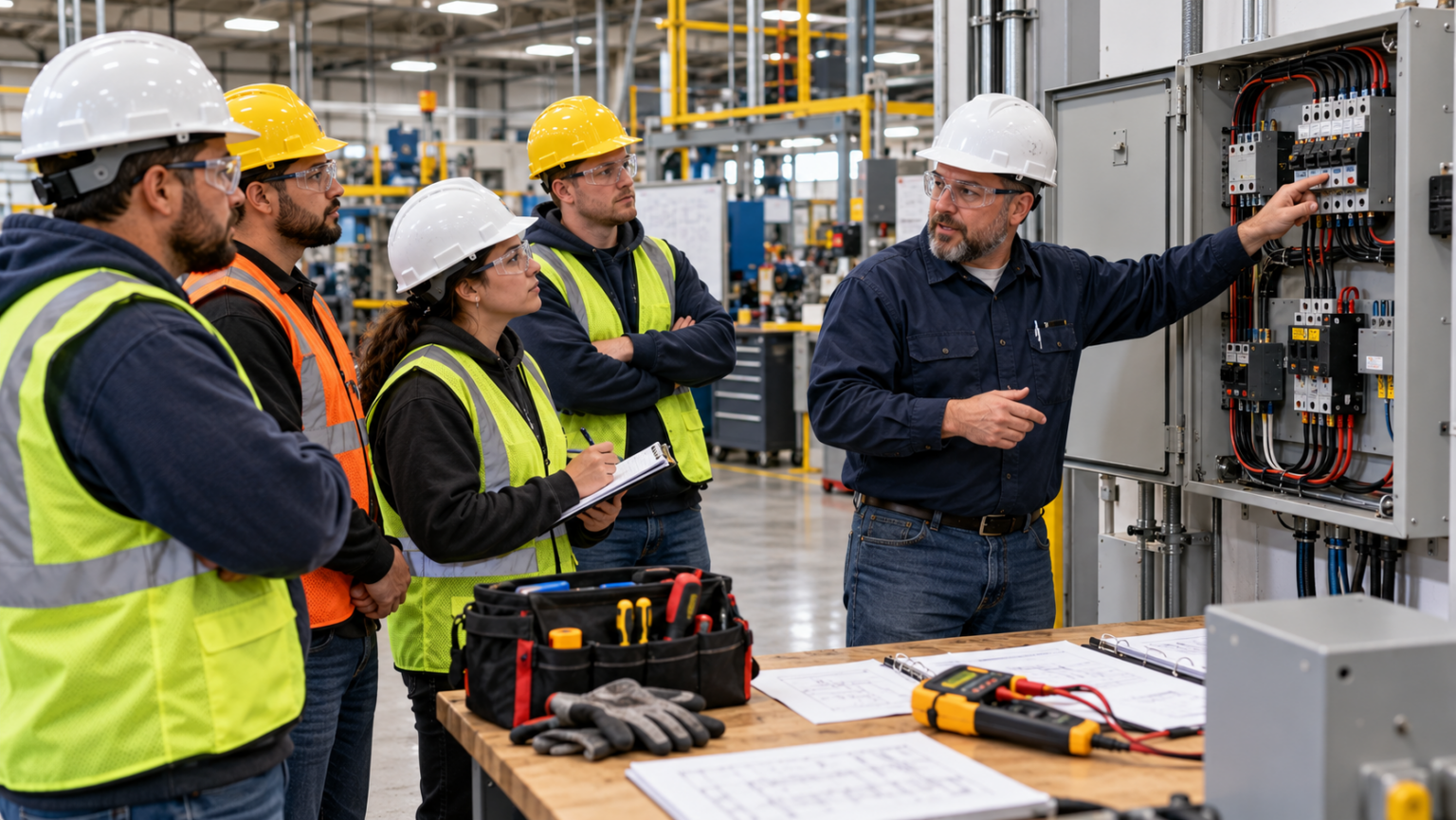
electrical safety classes: Best Training Courses, OSHA Requirements & Safety Guide
Electricity is essential in modern workplaces, but working around electrical equipment can expose employees to serious hazards. Electric shock, arc […]
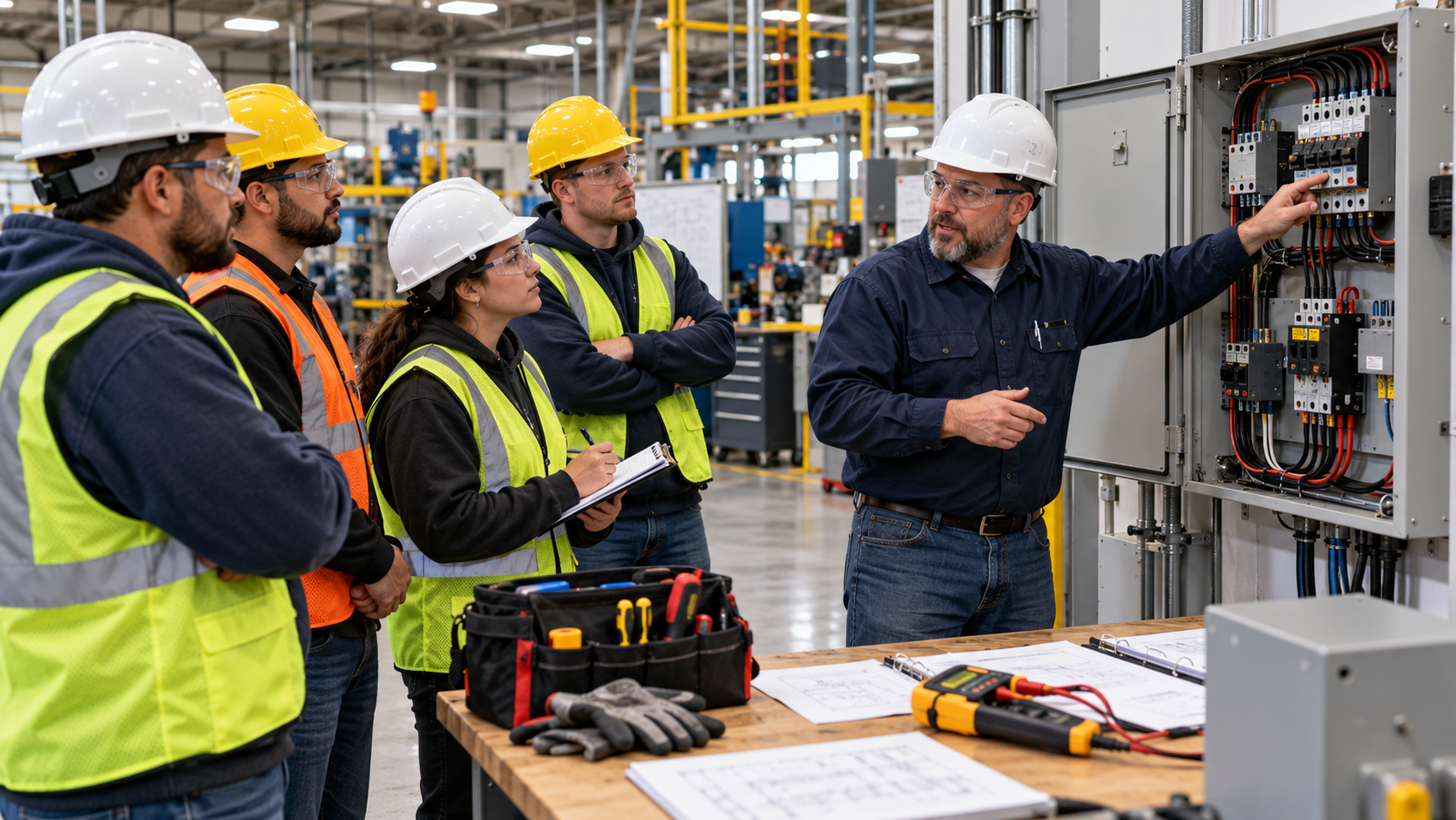
Electricity is essential in modern workplaces, but working around electrical equipment can expose employees to serious hazards. Electric shock, arc flash, burns, and unexpected equipment energization can cause severe injuries when risks are not properly controlled.
For American employers, electrical safety classes play an important role in helping workers recognize hazards, understand safe procedures, and respond appropriately to dangerous conditions.
However, effective training involves more than watching presentations or receiving a certificate. Employees must understand how safety practices apply to their actual job responsibilities.
The Occupational Safety and Health Administration (OSHA) requires appropriate training for workers exposed to certain electrical hazards under 29 CFR 1910.332.
Occupational Safety and Health Administration
Training needs differ between maintenance technicians, electricians, machine operators, supervisors, and employees who do not perform electrical work.
This guide explains common electrical hazards, ten practical ways to improve training effectiveness, popular course types, U.S. regulatory requirements, and how to select a suitable training provider.
Why Electrical Safety Classes Matter
Electrical incidents can occur in manufacturing facilities, commercial buildings, construction environments, maintenance departments, and utility-related operations.
Workers may encounter energized conductors, damaged equipment, unexpected startups, or situations involving inadequate protective measures.
Training helps employees understand their responsibilities and recognize when a task exceeds their qualifications.
Benefits of Effective Electrical Safety Training
- Hazard awareness: Helps workers identify dangerous electrical conditions.
- Safer decisions: Encourages proper assessment before work begins.
- Regulatory compliance: Supports applicable employer training responsibilities.
- Better communication: Establishes consistent safety terminology.
- Practical preparedness: Helps workers understand when to stop and request qualified assistance.
OSHA distinguishes between qualified and unqualified employees and requires training appropriate to their exposure and assignments.
Occupational Safety and Health Administration
Training should be combined with appropriate equipment, engineering controls, supervision, and an effective workplace safety program.
Common Electrical Hazards Employees Must Understand
Electric Shock and Electrocution
Contact with energized equipment can result in electric current passing through the body.
The severity depends on several factors, including current path, exposure duration, and electrical conditions.
Employees should understand how to recognize shock hazards and avoid unauthorized contact with energized components.
Arc Flash and Arc Blast
An arc flash can release intense thermal energy and cause serious burns.
Associated pressure effects, molten material, and flying debris may create additional dangers.
Training should address hazard assessment and protective measures appropriate to the task.
Unexpected Equipment Energization
Machinery may become hazardous when electrical energy is unexpectedly restored during servicing.
Energy-control procedures are therefore critical in workplaces where employees maintain or repair equipment.
Improper Equipment or PPE Use
Damaged tools, unsuitable protective equipment, and incorrect operating procedures can increase exposure to electrical hazards.
Employees must understand the limitations of protective equipment and when additional controls are necessary.
10 Practical Ways to Improve Electrical Safety Training
Effective education should focus on practical decisions and appropriate behavior rather than memorization alone.
1. Identify Employees Who Need Training
Review job responsibilities and the electrical hazards workers may encounter.
Electricians and electrical technicians commonly require specialized instruction, but machine operators and maintenance personnel may also face relevant exposure.
OSHA identifies several occupational groups that may require electrical safety-related training, depending on their work conditions.
Occupational Safety and Health Administration
2. Separate Qualified and Unqualified Worker Training

Electrical Hazard Awareness
Unqualified workers need to recognize relevant hazards and understand which tasks they must not perform. Qualified electrical workers require additional job-specific knowledge, skills, and demonstrated competence.
Attending a class alone does not automatically make someone qualified to work on energized equipment.
3. Include Arc Flash Risk Awareness
Workers should understand the nature of arc flash hazards and the importance of assessing equipment and tasks before work begins.
Training must emphasize selecting appropriate protective measures through an established safety process.
4. Teach Lockout/Tagout Principles

Hazardous Energy Control
Employees should understand their role in controlling hazardous energy, including authorization and verification requirements. Hands-on procedures must be taught by qualified personnel under an appropriate employer program.
Never treat a classroom demonstration as authorization to perform unfamiliar electrical isolation work.
5. Explain Electrical Risk Assessment
Training should encourage employees to identify hazards, evaluate potential consequences, and determine appropriate controls before beginning a task.
Realistic workplace scenarios can make these concepts easier to apply.
6. Cover Electrical Personal Protective Equipment

Electrical PPE Familiarization
Employees should learn when protective equipment is required and how its limitations affect safety. PPE selection must follow the applicable hazard assessment and established procedures.
Protective clothing does not eliminate electrical hazards or replace safe work practices.
7. Use Realistic Workplace Scenarios
Training scenarios should reflect the equipment, work environments, and decisions employees face.
For example, a maintenance technician may need to identify when an unexpected equipment condition requires stopping work and notifying an authorized person.
8. Encourage Questions and Discussion
Interactive discussions help instructors discover misunderstandings.
Participants should feel comfortable asking why a specific procedure exists and when it applies.
9. Assess Knowledge and Practical Competence

Practical Competency Assessment
Assessments can include scenario questions, supervised demonstrations, and job-specific observations. Employers should verify competence rather than relying only on course attendance.
10. Maintain Training Records and Refresh Skills
Document training subjects, attendance, assessments, and employee responsibilities.
Review training needs when duties, equipment, standards, or workplace hazards change.
Refresher intervals should reflect the applicable standards and actual training requirements rather than an arbitrary universal schedule.
Best Electrical Safety Classes for Different Employees
Not every employee needs the same level of instruction. Course selection should reflect exposure, assigned work, and existing competence.

1. Basic Electrical Hazard Awareness
Designed for employees who may encounter electrical hazards without performing specialized electrical work. Topics can include warning signs, restricted activities, and incident reporting.

2. Qualified Electrical Worker Training
Intended for personnel responsible for tasks involving greater electrical exposure. Training should address job-specific equipment, safe work methods, applicable boundaries, and demonstrated skills.

3. Arc Flash and NFPA 70E Training
These courses address electrical risk assessment, protective measures, and safe workplace decisions. They are particularly relevant to electrical maintenance and industrial operations.

4. Interactive Virtual Electrical Safety Training
Instructor-led sessions can support teams working across different facilities. Scenario discussions and real-time feedback are especially valuable when supported by necessary practical assessments.
Understanding OSHA and NFPA 70E Training Requirements
Employers should distinguish legal requirements from industry standards and optional course offerings.
| Reference | Primary purpose | Training relevance |
|---|---|---|
| OSHA 29 CFR 1910.332 | Electrical safety training | Requires applicable workers to receive appropriate instruction |
| OSHA 29 CFR 1910.333 | Electrical work practices | Addresses de-energization and protective procedures |
| OSHA 29 CFR 1910.147 | Hazardous energy control | Establishes relevant lockout/tagout training responsibilities |
| NFPA 70E | Electrical safety in the workplace | Provides a framework for electrical risk management and safe work practices |
Does OSHA Require Electrical Safety Classes?
OSHA requires training for employees covered by 1910.332, including workers facing specified electrical shock hazards.
The regulation permits classroom or on-the-job training, with the degree of training based on employee risk.
Occupational Safety and Health Administration
Construction, utility, and other specialized work may involve different or additional requirements.
What Is the Current NFPA 70E Edition?
As of October 2026, the current edition is NFPA 70E (2027), released earlier in 2026.
It addresses electrical safety-related work practices, including shock and arc flash risk management.
nfpa.org
+1
Employers should verify which edition is referenced by their organizational policies, contractual obligations, or applicable requirements.
Does Course Completion Make Someone a Qualified Electrician?
No. A training certificate does not automatically establish electrical qualification, trade licensing, or authorization to perform every electrical task.
The employer must evaluate the worker’s knowledge, demonstrated skills, and assignment-specific capabilities.
Electrical Safety Training From LEAF Electrical Safety
Employers exploring electrical safety classes and arc flash training from LEAF Electrical Safety can review an instructor-led training approach focused on practical decision-making.
LEAF Electrical Safety advertises a one-day virtual program using interactive scenarios rather than passive webinar-style instruction.
According to its published training page, the agenda covers job planning, risk assessment, PPE, establishing an electrically safe work condition, and energized electrical work.
The company recommends limiting groups to approximately 15 participants to encourage discussion and instructor feedback.
It also states that participants receive certificates of completion and that training records document attendance and covered topics.
leafelectricalsafety.com
These are the provider’s published descriptions. Employers should independently confirm course availability, coverage, pricing, and suitability for their specific workforce.
What Makes Scenario-Based Training Useful?
Realistic scenarios require workers to recognize hazards and explain their decisions.
This can reveal misunderstandings that may remain hidden during lecture-only instruction.
However, virtual learning does not necessarily replace supervised hands-on instruction when employees must demonstrate physical job skills.
Step-by-Step Plan for Organizing Workplace Electrical Safety Training
Step 1: Assess Workplace Electrical Risks
Identify employee groups, assigned activities, equipment types, and potentially hazardous situations.
Review existing incident reports, inspections, and safety procedures.
Step 2: Match Training to Job Responsibilities
Choose introductory awareness training for relevant unqualified workers and more advanced instruction for employees performing specialized electrical tasks.
Include job-specific practical instruction where required.
Step 3: Evaluate the Training Provider
Ask about instructor experience, course objectives, applicable standards, practical exercises, assessments, documentation, and class format.
Confirm the standard edition used and whether it matches your organization’s requirements.
Step 4: Verify Understanding After Training
Supervisors should assess whether employees can apply the instruction to their assigned work.
Maintain records and arrange additional training when equipment, tasks, or procedures change.
Common Electrical Safety Training Mistakes to Avoid
A frequent mistake is assuming that a completion certificate proves a worker can safely perform every electrical task.
Another is assigning identical training to all employees without considering their exposure and responsibilities.
Some companies rely only on videos or presentations without evaluating practical understanding.
Failing to update course content when standards or equipment change can also leave important knowledge gaps.
Another serious mistake is allowing production pressures to override safe work decisions.
Under OSHA 1910.333, de-energization is generally required before exposed electrical work unless specified exceptions apply. Energized work is restricted to appropriately qualified personnel following suitable protective procedures.
Occupational Safety and Health Administration
Effective training should reinforce these principles through supervision, procedures, and workplace practice.
Frequently Asked Questions About Electrical Safety Classes
What are electrical safety classes?
Electrical safety classes teach employees how to recognize electrical hazards, understand safe work practices, and apply relevant safety requirements according to their job responsibilities.
Who needs electrical safety training?
Electricians, maintenance technicians, machine operators, supervisors, and other employees may require training when their assigned work exposes them to relevant electrical hazards.
Are electrical safety classes required by OSHA?
Yes, for employees covered by applicable OSHA requirements, including 29 CFR 1910.332. Training content and depth depend on their work and exposure.
What is NFPA 70E training?
NFPA 70E training addresses workplace electrical safety practices, including electrical risk assessment, shock protection, arc flash hazards, and appropriate protective measures.
Can electrical safety training be completed online?
Some awareness and theoretical instruction can be delivered virtually. However, employers must also ensure workers demonstrate any required practical knowledge and skills.
How long do electrical safety classes take?
Duration varies with the course. Basic awareness sessions may be relatively short, while advanced training can take one or more days. LEAF advertises a one-day virtual program.
How often should workers receive electrical safety refresher training?
Requirements depend on the applicable standard, employer program, employee duties, and changes in workplace conditions. There is no single OSHA refresher interval covering every electrical safety course.
Do electrical safety classes provide certificates?
Many providers issue completion certificates. However, a certificate does not automatically establish OSHA compliance, electrical trade licensing, or qualified worker status.
Conclusion
Electrical safety classes are an important part of protecting employees who work with or near potentially hazardous electrical equipment.
Effective training helps workers recognize shock and arc flash hazards, understand safe work practices, and make better decisions when conditions change.
For American employers, OSHA requirements and NFPA 70E provide important references for planning appropriate instruction.
However, training must reflect actual job responsibilities and include practical competency assessment where necessary.
Programs such as those offered by LEAF Electrical Safety emphasize interactive scenarios and instructor-led discussions, which may help teams apply concepts to realistic situations.
Before enrolling employees, assess workplace risks, verify course content, and confirm that instructors address the appropriate standards.
Training delivers the greatest value when supported by effective supervision, suitable protective equipment, written procedures, and a workplace culture that prioritizes safety over shortcuts.

Written by Twastia Editorial Team
Twastia Editorial Team shares practical insights about website design, SEO services, Google Ads, content marketing, social media, conversion rate optimization, and digital marketing strategy.
Last updated: Oct 26, 2026
Related posts from Twastia
Explore more useful articles from twastia.com about digital marketing, SEO, websites, ads, content, and growth strategy.