Local Deck Builder in Toronto: Best Hiring & Deck Design Guide
A beautiful backyard deck can transform an ordinary outdoor space into a comfortable place for relaxing, entertaining guests, and spending […]
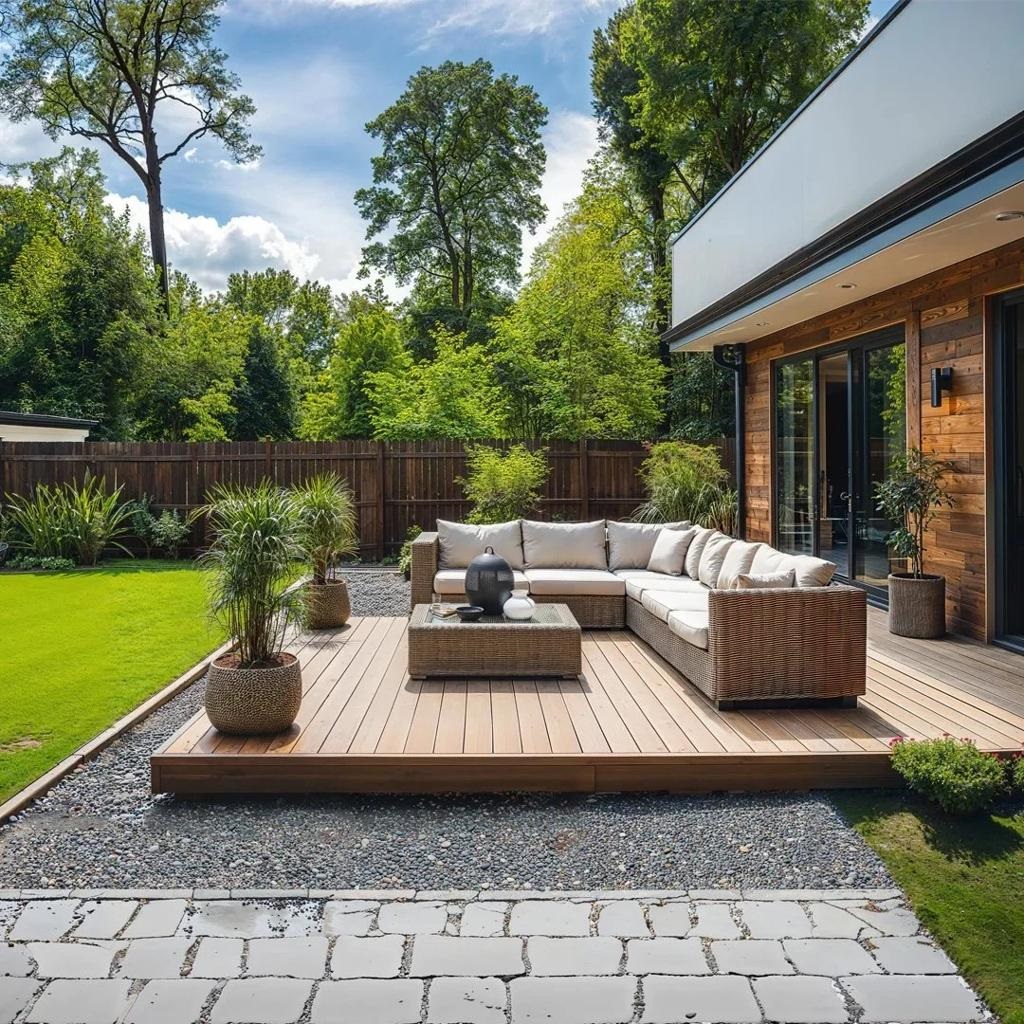
A beautiful backyard deck can transform an ordinary outdoor space into a comfortable place for relaxing, entertaining guests, and spending time with family. In Toronto, where homeowners appreciate making the most of their outdoor areas during warmer months, a well-designed deck can become a valuable addition to a residential property.
However, constructing a deck requires more than choosing attractive wood and installing boards. Proper foundations, structural support, drainage, railing design, and local building requirements all influence the finished result.
Hiring a local deck builder in Toronto can help homeowners plan a safe, functional, and attractive outdoor living space.
Professional deck contractors understand different construction materials, local weather conditions, and the practical challenges of urban backyards. They can also assist with design decisions, construction planning, and applicable permit requirements.
Whether you’re considering a new deck, replacing an aging structure, or upgrading your existing outdoor space, understanding the process can help you make informed decisions.
This guide covers deck materials, popular designs, installation costs, building permits, maintenance, and tips for selecting a reliable Toronto contractor.
Why Hire a Local Deck Builder in Toronto?

Building a residential deck involves structural decisions that affect long-term performance and safety.
Knowledge of Local Conditions
Toronto experiences freezing winters, snow, rainfall, and seasonal temperature changes.
Experienced local contractors can recommend suitable materials, foundation details, and construction methods for these conditions.
Professional Construction
Qualified builders understand framing, fastening, structural support, and safe stair construction.
Proper workmanship helps prevent problems such as unstable railings, uneven surfaces, and premature deterioration.
Project Coordination
A deck contractor can coordinate material delivery, construction schedules, required trades, and inspections.
This makes the process more manageable for homeowners unfamiliar with construction.
Popular Deck Building Services in Toronto
Deck construction companies may offer several residential outdoor improvement services.
New Deck Installation
New installations typically include site assessment, design planning, foundations, framing, decking, and finishing details.
Deck Replacement
Older decks may need replacement because of deteriorated framing, unsafe connections, or extensive surface damage.
A contractor should inspect the existing structure before recommending replacement.
Deck Repairs
Repairs may involve replacing damaged boards, reinforcing appropriate connections, or addressing loose railings.
Structural problems require professional evaluation.
Custom Deck Design
Custom designs can incorporate multiple levels, built-in seating, stairs, privacy screens, and integrated lighting.
The design should match the available space and the homeowner’s budget.
Choosing the Right Decking Material
Material selection affects appearance, maintenance, durability, and cost.
Pressure-Treated Wood
Pressure-treated lumber is widely used for residential deck structures and surfaces.
It is generally more affordable than many premium alternatives.
However, periodic cleaning and suitable finishing may be necessary.
Cedar Decking
Cedar offers a warm, natural appearance and is commonly used for outdoor residential projects.
It requires appropriate maintenance to preserve its appearance and manage weather exposure.
Composite Decking
Composite products typically combine wood-based materials and polymers.
Many products require less routine staining than natural wood, although cleaning and manufacturer-specific care remain necessary.
Hardwood Decking
Certain hardwoods offer distinctive color and density.
They may cost more and require specialized installation techniques.
Wood Decks vs. Composite Decks
Homeowners often compare natural wood with manufactured decking.
Appearance
Wood provides natural grain and color variation.
Composite decking offers manufactured finishes in multiple colors and textures.
Maintenance
Natural wood generally requires more regular finishing to maintain its preferred appearance.
Composite products usually avoid routine staining but still need cleaning.
Initial Cost
Composite decking often involves a higher upfront material cost.
However, long-term maintenance expenses should also influence the decision.
Climate Suitability
Both materials can perform well when properly selected and installed.
Ask about product warranties, expansion requirements, fastening systems, and winter conditions.
Popular Backyard Deck Designs
The best design depends on how the outdoor area will be used.
Ground-Level Decks
Low-profile decks can create comfortable seating areas near lawns and gardens.
Their simple appearance suits many smaller residential properties.
Raised Decks
Raised structures can connect elevated house entrances with outdoor spaces.
Structural support, stairs, and guards require careful planning.
Multi-Level Decks
Multi-level designs help organize dining, lounging, and garden access.
They may also work well on sloped properties.
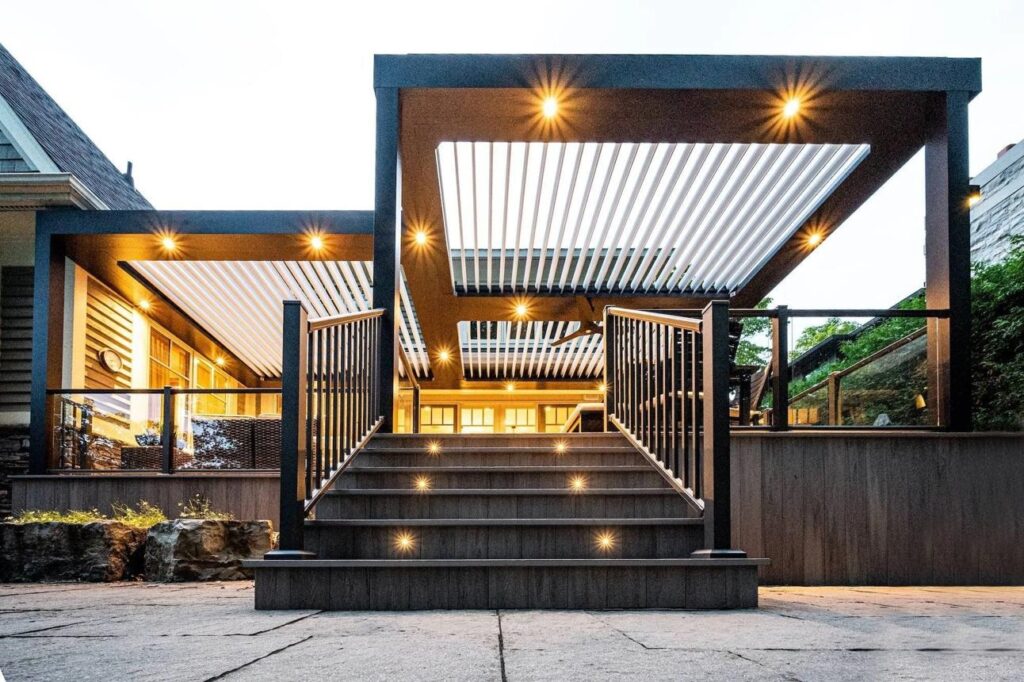
Decks With Pergolas
A pergola can provide partial shade and a decorative focal point.
Additional structures may introduce separate design and permit requirements.
Planning Your Toronto Deck Project
Careful preparation can reduce unexpected changes during construction.
Determine Your Main Purpose
Decide whether the deck will primarily serve outdoor dining, entertaining, gardening, or relaxation.
Measure the Available Space
Consider property boundaries, existing trees, drainage, doors, walkways, and neighboring structures.
Establish a Budget
Include materials, labor, permits, landscaping adjustments, and potential additional work.
Consider Privacy
Screens, planters, and thoughtful furniture placement can improve comfort in smaller urban backyards.
Toronto Deck Building Permits and Regulations
Local building requirements are important parts of residential deck construction.
When Is a Permit Required?
The City of Toronto identifies decks and porches among projects that may require building permits.
Some qualifying low, uncovered platforms may not require permits.
Permit requirements depend on characteristics such as deck height, attachment, size, and construction details.
Understanding Permit Exemptions
Toronto provides an exemption pathway for certain uncovered platforms no more than 60 centimeters above adjacent finished grade, subject to additional conditions.
Do not assume every ground-level deck qualifies.
Required Construction Plans
Permit submissions may require site plans, footing details, framing dimensions, stair designs, and guard construction information.
Confirm Before Building
Homeowners remain responsible for meeting applicable building and zoning requirements.
Ask Toronto Building whether your specific design requires approval before construction begins.
How Much Does Deck Building Cost in Toronto?
Deck construction costs vary significantly between projects.
Deck Size
Larger decks typically require more materials and labor.
However, complex shapes can also increase the cost of smaller structures.
Material Selection
Pressure-treated lumber, cedar, composite decking, and hardwoods have different price points.
Railing and fastening choices affect the total.
Site Conditions
Uneven ground, restricted access, difficult excavation, and existing landscaping can create additional expenses.
Custom Features
Pergolas, lighting, privacy screens, built-in benches, and elaborate stairs increase project complexity.
Request Detailed Estimates
Compare written quotations based on matching designs and materials.
Prices should be clearly identified in Canadian dollars, with applicable taxes and exclusions explained.
How to Choose the Best Deck Contractor
A successful project begins with selecting a dependable professional.
Review Relevant Experience
Look for contractors who regularly construct decks similar to the one you’re planning.
Ask to see completed residential projects.
Check References
Speak with previous customers about communication, workmanship, schedules, and how problems were resolved.
Confirm Insurance and Coverage
Request evidence of appropriate liability insurance and verify applicable Workplace Safety and Insurance Board coverage.
Evaluate Communication
A reliable contractor should explain construction options, answer questions, and discuss potential complications openly.
Important Questions to Ask Before Hiring
A consultation should cover practical project details.
Who Handles Permits?
Ask whether the contractor prepares drawings, submits applications, and coordinates inspections.
What Materials Are Included?
Confirm decking brands, framing materials, railing specifications, and fastening systems.
Who Performs the Work?
Find out whether employees or subcontractors will complete the project.
What Happens if Plans Change?
Request a written process for approving additional work and costs.
What Warranty Is Offered?
Review workmanship and product warranties separately.
Understanding Deck Construction Contracts
Written agreements help protect both homeowners and contractors.
Detailed Scope of Work
A contract should specify the deck size, design, materials, and included services.
Payment Schedule
Payments should follow reasonable milestones and applicable consumer protection requirements.
Ontario recommends keeping deposits modest and avoiding full payment before work is completed.
Project Timeline
Include anticipated start and completion dates and procedures for handling delays.
Cleanup and Final Inspection
Clarify responsibility for waste removal, site cleanup, and final corrections.
Ontario consumer guidance emphasizes written renovation contracts and itemized estimates.
What Happens During Deck Installation?
The construction process generally follows several stages.
Step 1: Site Assessment
The contractor examines ground conditions, property access, drainage, and existing structures.
Step 2: Design and Approval
The homeowner reviews the design and confirms necessary permits or approvals.
Step 3: Foundation Construction
Footings and structural supports are installed according to the approved design.
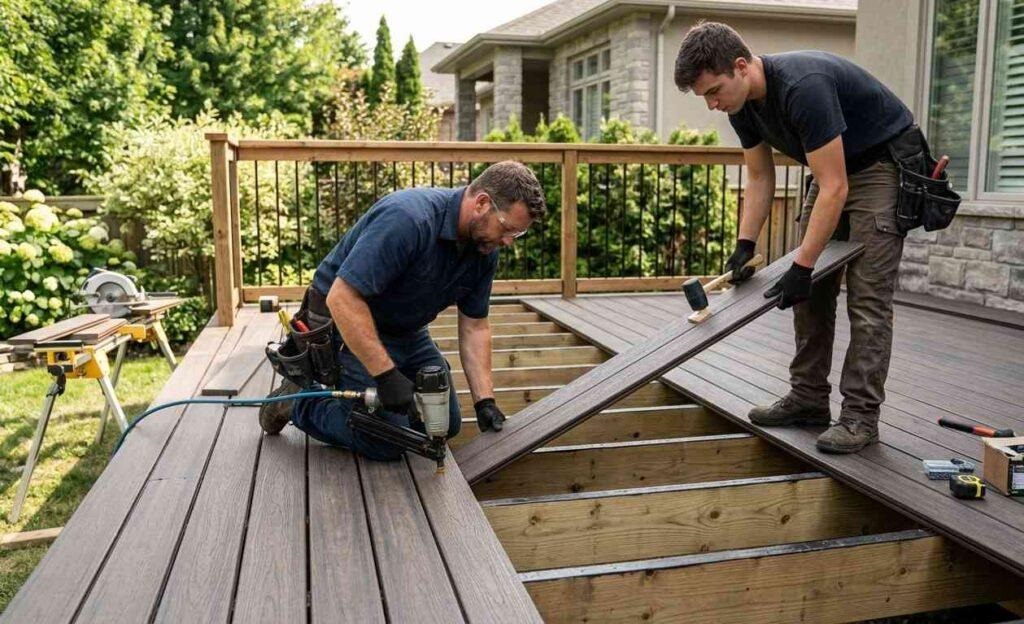
Step 4: Framing and Decking
Workers construct the frame and attach surface boards using appropriate methods.
Step 5: Railings and Finishing
Required guards, stairs, and other components are completed.
Step 6: Inspection
The project is reviewed for outstanding work and required municipal inspections.
Deck Maintenance in Toronto’s Climate
Regular care supports long-term deck performance.
Spring Inspection
Check for loose boards, damaged fasteners, unstable railings, and winter-related deterioration.
Summer Cleaning
Remove dirt, leaves, and debris using products suitable for the decking material.
Fall Preparation
Clear trapped leaves and check that water can drain away from the structure.
Winter Precautions
Use snow removal tools recommended by the manufacturer.
Avoid products or techniques that could damage deck surfaces.
Should You Repair or Replace an Existing Deck?
The answer depends on the condition of the structure.
When Repairs May Be Appropriate
Limited surface deterioration or isolated component damage may be repairable.
When Replacement Is Safer
Extensive rot, unstable foundations, severely deteriorated framing, or unsafe connections may justify replacement.
Request a Structural Assessment
Do not assume installing new surface boards will correct problems underneath.
A qualified professional should evaluate the supporting structure.
Common Deck Building Mistakes to Avoid
Ignoring Permit Requirements
Unapproved construction can create legal, financial, and safety problems.
Choosing Materials by Appearance Alone
Consider durability, maintenance, slip resistance, and installation requirements.
Overlooking Drainage
Poor drainage can contribute to moisture damage around decks and adjacent structures.
Hiring Based Only on Price
An inexpensive quotation may omit necessary structural work or finishing details.
Skipping Written Documentation
Clear contracts, receipts, and change orders help prevent misunderstandings.
Frequently Asked Questions About Deck Builders in Toronto
1. What does a local deck builder in Toronto do?
A deck builder may provide design, installation, replacement, repairs, railings, and outdoor living improvements.
2. Do I need a permit to build a deck in Toronto?
Many decks require permits, although certain qualifying low, uncovered platforms may be exempt. Confirm requirements with Toronto Building.
3. What is the best decking material for Toronto?
Pressure-treated wood, cedar, and composite decking are common choices. The best option depends on budget, appearance, and maintenance preferences.
4. How much does a new deck cost?
Costs vary by size, materials, design complexity, site conditions, and required permits.
5. How long does deck installation take?
Timelines depend on project scope, weather, material availability, contractor scheduling, and approvals.
6. Is composite decking better than wood?
Composite typically requires less finishing, while wood provides natural appearance and may have a lower initial price.
7. Can an old deck be repaired?
Yes, if the supporting structure remains suitable and defects can be corrected safely.
8. How do I find a reliable Toronto deck contractor?
Compare written estimates, review recent projects, check references and insurance, and clarify permit responsibilities.
Conclusion
Hiring a local deck builder in Toronto can help transform your backyard into a comfortable, practical, and attractive outdoor living space.
From choosing cedar or composite materials to designing stairs, railings, and custom features, professional planning helps create a structure suited to your property.
Toronto homeowners should pay particular attention to weather conditions, building permits, structural safety, and contractor qualifications.
Before starting, establish a realistic budget, compare detailed estimates, and confirm all agreements in writing.
A carefully planned and properly constructed deck can provide years of outdoor enjoyment while complementing your home’s design and everyday lifestyle.

Written by Twastia Editorial Team
Twastia Editorial Team shares practical insights about website design, SEO services, Google Ads, content marketing, social media, conversion rate optimization, and digital marketing strategy.
Last updated: Oct 29, 2026
Related posts from Twastia
Explore more useful articles from twastia.com about digital marketing, SEO, websites, ads, content, and growth strategy.