Guide to Finding the Best Online Real Estate School
Starting a career in real estate can be an exciting opportunity for people who enjoy working with clients, understanding property […]

Starting a career in real estate can be an exciting opportunity for people who enjoy working with clients, understanding property markets, and building professional relationships. However, before you can begin representing buyers or sellers, you generally need to complete the education and licensing requirements established by your state.
Online real estate schools make this process more accessible by allowing students to complete approved coursework without attending a traditional classroom every day.
But choosing the right school is important. Course quality, state approval, pricing, instructor support, and exam preparation can differ significantly between providers.
This guide to finding the best online real estate school explains how to evaluate your options and avoid spending money on courses that do not meet your licensing needs.
Whether you’re beginning a new career, changing professions, or completing continuing education, understanding the available programs can help you make a confident decision.
What Is an Online Real Estate School?
An online real estate school provides educational courses through a digital learning platform.
Students may access recorded lessons, reading materials, quizzes, assignments, and practice exams using a computer or compatible mobile device.
Prelicensing Education
Prelicensing courses help aspiring agents complete the education required before applying for a real estate license.
Course subjects commonly include contracts, property ownership, agency relationships, real estate finance, and state-specific laws.
Exam Preparation
Exam preparation programs provide practice questions and study materials designed to help students prepare for licensing examinations.
These programs may be sold separately from mandatory coursework.
Continuing Education
Licensed agents often complete continuing education to maintain their credentials.
The required subjects, hours, and renewal schedules depend on state regulations.
Why Choose an Online Real Estate School?

Online education offers several practical advantages.
Flexible Study Schedules
Many programs allow students to study before work, during evenings, or on weekends.
This flexibility can benefit adults balancing education with employment or family responsibilities.
Learn From Home
Students can access their course materials without traveling to a physical classroom.
However, some state requirements may involve supervised exams or other specified activities.
Different Learning Formats
Online schools may offer text-based courses, video lessons, interactive activities, or instructor-led virtual classes.
Easier Progress Tracking
Digital dashboards can show completed lessons, remaining modules, and assessment results.
These features help students organize their study schedules.
1. Check State Approval Before Enrolling

State approval is the most important factor when choosing a prelicensing school.
Understand State-Specific Requirements
Each state establishes its own rules for real estate licensing education.
A course accepted in one state may not satisfy requirements elsewhere.
Verify the Exact Provider and Course
Visit your state’s real estate commission or licensing agency website.
Look for its approved education provider directory or course database.
Example: California
The California Department of Real Estate maintains an official directory of approved statutory prelicensing courses.
Individual courses generally involve a minimum of 45 hours, and applicants must complete the required course combination.
Understand ARELLO Certification
The Association of Real Estate License Law Officials evaluates distance education course design and delivery.
ARELLO certification can provide information about educational quality, but applicants must still verify state recognition and course approval.
2. Compare Course Content and Learning Materials
A strong real estate education program should explain more than definitions and memorized facts.
Review the Curriculum
Look for appropriate coverage of real estate principles, contracts, agency relationships, financing, property valuation, and ethics.
Confirm State-Specific Lessons
Licensing laws vary by jurisdiction.
The course should cover the rules and terminology applicable to your intended licensing state.
Look for Practical Examples
Examples involving purchase agreements, property disclosures, and negotiation situations can help make unfamiliar topics easier to understand.
Check Course Updates
Ask whether educational materials reflect current requirements.
Outdated content may create confusion when preparing for a licensing examination.
3. Choose the Best Learning Format
Different students benefit from different teaching methods.
Self-Paced Online Courses
Self-paced programs let students review material according to their schedules.
They are useful for independent learners who can maintain consistent study habits.
Live Online Classes
Virtual instructor-led courses provide scheduled lessons and opportunities to ask questions.
They may suit students who prefer classroom-style accountability.
Video-Based Learning
Recorded lectures allow students to pause, repeat, and revisit difficult topics.
Mobile-Friendly Courses
Students who travel frequently may appreciate smartphone-compatible lessons.
Confirm that the course works properly on your preferred devices.
4. Compare the Total Cost of Real Estate School
Course prices can vary by state, provider, and package.
Basic Prelicensing Packages
Entry-level packages may include required coursework without extensive exam preparation.
Premium Packages
Higher-priced options may provide practice exams, instructor sessions, printed materials, or professional development resources.
Additional Expenses
Your total licensing budget may also include application fees, fingerprinting, background checks, licensing examinations, and other state-required costs.
Check Refund Policies
Read the refund and cancellation terms before purchasing.
Some schools restrict refunds after course access begins or a specified time passes.
Avoid Choosing Based Only on Price
An inexpensive course may offer good value, but the relevant measure is whether it meets your needs and state requirements.
5. Look for Strong Exam Preparation Resources
Completing coursework and passing the licensing examination are different steps.
Practice Examinations
Practice tests can help students become familiar with question formats and identify knowledge gaps.
Topic-Based Quizzes
Short quizzes reinforce individual subjects before students complete larger assessments.
Real Estate Math Practice
Mortgage calculations, commissions, prorations, and other mathematical concepts may appear in licensing coursework and examinations.
Exam Readiness Reviews
Some providers offer performance reports that highlight subjects requiring additional study.
Understand Pass Guarantees
Any advertised examination pass guarantee should be reviewed carefully.
Eligibility conditions, refund limitations, and deadlines may apply.
No provider can guarantee every student will pass.
6. Evaluate Instructor and Student Support
Even independent learners sometimes need assistance.
Academic Support
Find out whether instructors or subject specialists can answer course-related questions.
Technical Support
A reliable support team can help resolve login problems, course access issues, and software errors.
Support Availability
Check operating hours and communication methods.
Student Resources
Downloadable notes, study guides, webinars, and review sessions may provide additional value.
Read Recent Reviews
Look for detailed student experiences involving educational quality, usability, and customer service.
Consider patterns rather than relying on isolated testimonials.
7. Research Established Online Real Estate Schools
Several providers are frequently considered by U.S. licensing students.
The CE Shop
The CE Shop offers online real estate education, including prelicensing and continuing education options across numerous states.
It is often considered by students seeking self-paced learning and digital progress tracking.
Colibri Real Estate
Colibri Real Estate provides online real estate courses and offers different packages that may include exam preparation and instructor assistance.
AceableAgent
AceableAgent is known for mobile-friendly learning options and online prelicensing courses in participating states.
Kaplan Real Estate Education
Kaplan provides real estate education and examination preparation through different course formats, depending on the location.
Compare the Exact State Course
School availability, package features, prices, and approval status vary.
These providers are examples for comparison, not a universal ranking or guarantee of suitability.
8. Understand the Real Estate Licensing Process
Before choosing your school, review the complete process for becoming licensed.
Meet Basic Eligibility Rules
States establish requirements relating to minimum age, identification, eligibility, and background disclosures.
Complete Required Education
Enroll in the specific approved courses required for your intended license.
Pass Required Assessments
Some education providers administer course examinations before issuing completion records.
Apply for Licensing
Submit the necessary documents and fees according to state instructions.
Pass the State Licensing Examination
Applicants generally must pass the required examination administered through the state’s authorized process.
Find an Appropriate Brokerage
In many states, newly licensed salespersons must work under a supervising real estate broker before conducting licensed transactions.
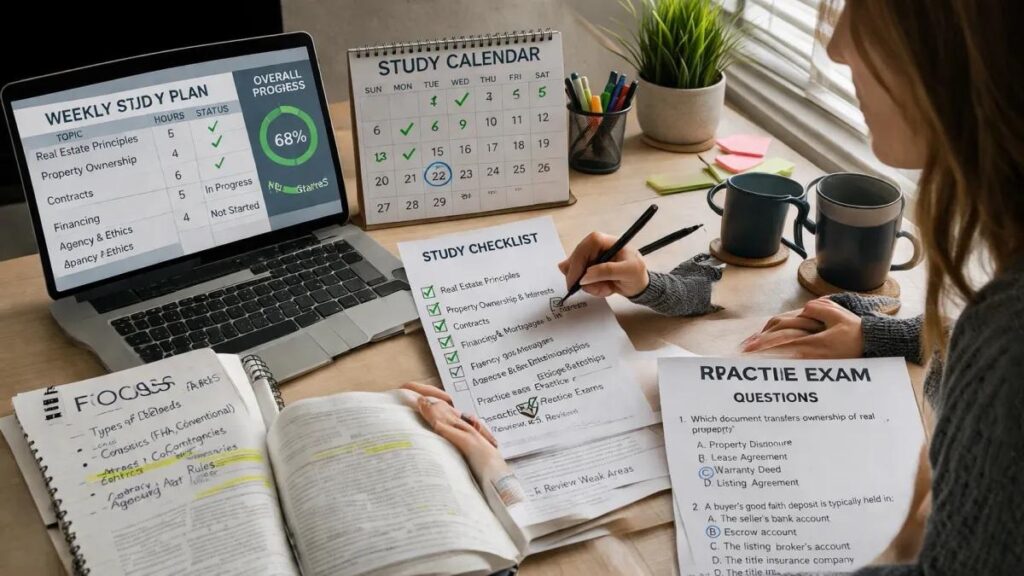
9. Build a Realistic Study Schedule
Online education requires self-discipline.
Establish Weekly Goals
Divide the required coursework into manageable sections.
Study Consistently
Regular study sessions can make it easier to retain information than completing large amounts of material irregularly.
Review Difficult Subjects
Spend additional time on contracts, agency law, financing, and other challenging topics.
Take Practice Assessments
Use quiz results to identify areas requiring improvement.
Plan Around State Deadlines
Some courses and examination applications have completion or validity deadlines.
Review these requirements early.
10. Consider Your Long-Term Career Goals
Real estate education continues after obtaining an initial license.
Residential Sales
Agents working with homebuyers and sellers benefit from communication, local market knowledge, and contract skills.
Commercial Real Estate
Commercial property transactions may require additional knowledge of investment analysis, leasing, and property valuation.
Property Management
Managing rental properties involves tenant relations, maintenance, financial records, and applicable housing laws.
Broker Licensing
Experienced agents may later pursue broker qualifications, subject to state-specific experience and education requirements.
Continuing Education
Look for educational providers offering appropriate renewal courses when your license requires them.
Common Mistakes When Choosing an Online Real Estate School
Assuming Every Online School Is Approved
A professional-looking website does not establish state authorization.
Buying the Wrong Course
Prelicensing, post-licensing, exam preparation, and continuing education serve different purposes.
Ignoring Expiration Dates
Some programs limit course access or completion periods.
Overlooking Extra Costs
Premium learning materials, extensions, and examination fees may increase your overall expenses.
Trusting Advertised Pass Rates Without Context
Ask whether pass rates are independently verified and how students were counted.
Neglecting Customer Support
Poor technical assistance can become frustrating when deadlines are approaching.
Online vs. In-Person Real Estate Classes
Both learning methods can prepare students for licensing when they satisfy state requirements.
Benefits of Online Classes
Online courses may provide flexible scheduling, convenient access, and multiple learning formats.
Benefits of Classroom Education
In-person classes offer direct instructor interaction and a structured timetable.
Hybrid Programs
Some providers combine digital coursework with live instruction or scheduled review sessions.
Which Option Is Better?
Choose based on state eligibility, personal learning preferences, budget, and available study time.
How to Find the Best Online Real Estate School for Your Budget
Affordability should be evaluated alongside educational value.
Begin With Mandatory Requirements
Identify the exact courses and hours required by your state.
Compare Equivalent Packages
Do not compare a basic course-only package with a premium program containing several additional services.
Ask About Discounts
Some schools offer promotional pricing, but confirm the actual checkout price and terms.
Review Included Resources
A slightly more expensive program may offer useful exam preparation or extended support.
Calculate the Complete Licensing Cost
Include both school expenses and government or examination fees in your financial plan.
Frequently Asked Questions About Online Real Estate Schools
1. What is the best online real estate school?
The best choice depends on your state, course approval, learning preferences, budget, and need for exam preparation or instructor support.
2. Can I get a real estate license entirely online?
You may complete approved coursework online in many states, but licensing examinations, fingerprinting, or other steps may require separate arrangements.
3. How much does online real estate school cost?
Prices vary widely according to state requirements, providers, course hours, and included study resources.
4. How long does online real estate school take?
The timeline depends on required education hours, state rules, course format, and your study schedule.
5. Are online real estate schools legitimate?
Yes, many are legitimate. Always verify the specific provider and course through your state’s official licensing authority.
6. Is the real estate licensing exam difficult?
Difficulty varies by student and state. Completing coursework, practicing exam questions, and reviewing weak subjects can help with preparation.
7. Do online real estate schools provide certificates?
Approved providers generally issue the completion records required for their qualifying courses, subject to state procedures.
8. What happens after I finish real estate school?
You must complete the remaining state licensing steps, which may include an examination, application, background check, and brokerage affiliation.
Conclusion
Finding the right real estate education program requires more than choosing a well-known school or the least expensive course.
This guide to finding the best online real estate school emphasizes starting with state approval, then evaluating curriculum quality, learning flexibility, exam preparation, student support, and total cost.
Established providers such as The CE Shop, Colibri Real Estate, AceableAgent, and Kaplan offer options worth researching, but not every course is available or approved in every state.
Before enrolling, confirm the exact licensing requirements with your state regulator, compare course packages carefully, and select a study format that suits your schedule.
A suitable online real estate school can help you build foundational knowledge and prepare for the next stage of your professional career.
With consistent study habits, practical expectations, and the right educational resources, you can approach real estate licensing with greater confidence.

Written by Twastia Editorial Team
Twastia Editorial Team shares practical insights about website design, SEO services, Google Ads, content marketing, social media, conversion rate optimization, and digital marketing strategy.
Last updated: Oct 29, 2026
Related posts from Twastia
Explore more useful articles from twastia.com about digital marketing, SEO, websites, ads, content, and growth strategy.