7 Ways to Pay for a New Roof: Best Financing Options for Homeowners
Replacing a roof is one of the most important home improvement projects a homeowner may face. Your roof protects your […]
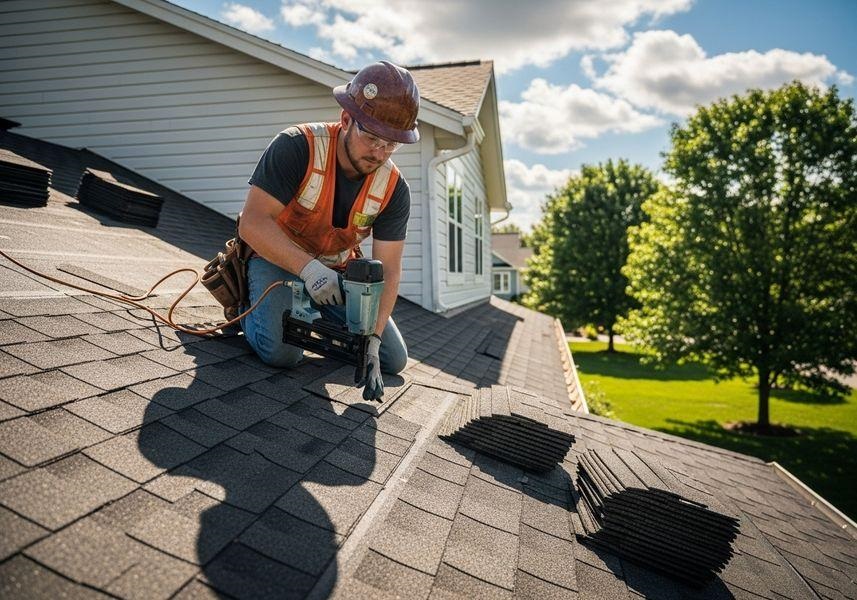
Replacing a roof is one of the most important home improvement projects a homeowner may face. Your roof protects your property from rain, wind, snow, and extreme temperatures. However, installing a new roofing system can also represent a significant financial commitment, especially when unexpected damage requires immediate attention.
Fortunately, homeowners have several options for covering the expense without necessarily paying the entire amount upfront. Understanding the 7 ways to pay for a new roof can help you choose a payment method that suits your finances, property, and long-term goals.
Some homeowners use personal savings, while others rely on insurance claims, home improvement loans, or contractor financing. Certain households may also qualify for government-backed repair programs.
Each option has different requirements, advantages, and financial risks. Before committing to a payment plan, it is worth comparing the total cost, repayment terms, and potential effects on your household budget.
This guide explains seven practical financing methods and offers helpful advice for making a confident, financially responsible decision.
Why Roof Replacement Financing Matters
A new roof does more than improve your home’s appearance. It helps prevent water intrusion, protects structural materials, and maintains the overall condition of your property.
Unfortunately, roofing projects can become expensive because of material costs, labor, roof size, structural repairs, and local building requirements.
A steep roof, multiple roof sections, or damaged decking can increase the final price. Premium roofing materials may also require a higher initial investment.
For many households, paying the full amount immediately is not realistic.
Roof replacement financing allows homeowners to spread eligible expenses over time, making necessary repairs more manageable.
However, financing also introduces borrowing costs. Interest charges, origination fees, and longer repayment periods can increase the amount ultimately paid.
That is why homeowners should evaluate multiple payment options rather than accepting the first available offer.
1. Pay for a New Roof Using Personal Savings
Using personal savings is often the most straightforward way to fund roof replacement.
If you have enough money set aside, paying directly allows you to complete the project without applying for a loan or making monthly debt payments.
The U.S. Department of Housing and Urban Development (HUD) identifies cash as generally the most economical way to finance home improvements when sufficient funds are available. hud.gov
Benefits of Paying Cash
Paying cash offers several advantages:
- No loan interest or financing fees.
- No monthly repayments.
- No additional debt obligations.
- Greater flexibility when selecting contractors.
- Easier management of the total project budget.
For example, if your roofing estimate is $12,000 and you already have that amount saved specifically for home improvements, you may be able to avoid borrowing altogether.
However, using all available savings could leave you financially vulnerable.
When Using Savings Makes Sense
Cash payments are most appropriate when you can afford the project while maintaining a reasonable emergency fund.
Remember to budget for possible additional expenses, such as deteriorated decking, ventilation improvements, or unexpected structural damage discovered during installation.
If paying cash would eliminate your emergency savings, consider financing part of the project instead.
2. Use Homeowners Insurance for Covered Roof Damage
Homeowners insurance may help cover roof replacement expenses when damage results from a covered event.
Examples can include certain windstorms, hailstorms, falling objects, or fire damage, depending on the specific policy.
Insurance coverage is not automatic, and ordinary roof aging or gradual deterioration generally does not qualify as a covered sudden-loss event.
The National Association of Insurance Commissioners (NAIC) explains that policies differ in their coverage of storm damage, replacement costs, depreciation, and deductibles. content.naic.org
How to File a Roof Insurance Claim
If your roof has sustained potentially covered damage, begin by documenting the condition.
Take photographs from safe locations and contact your insurance provider to understand the claims process.
A professional roofer can inspect the roof and provide a written damage assessment.
Your insurer may then arrange an inspection and determine whether the damage qualifies for payment under your policy.
Understand Deductibles and Coverage Limits
Even when a claim is approved, homeowners may still have out-of-pocket expenses.
Your deductible is the portion of the covered loss you are responsible for paying.
Additionally, actual cash value policies account for depreciation, while replacement cost coverage generally provides broader reimbursement subject to policy terms.
Insurance payments may therefore be less than the total roof replacement bill.
This option is most useful when the roof has suffered legitimate, covered damage rather than simply reaching the end of its useful life.
3. Apply for a Personal Home Improvement Loan
Personal loans are another option for homeowners who need a new roof but do not want to borrow against their property.
Many banks, credit unions, and online lenders offer personal loans that can be used for qualifying home improvement expenses.
Most unsecured personal loans do not require your home as collateral.
How Personal Loans Work
After approval, the lender typically provides a lump sum that you repay over an agreed period.
Monthly payments depend on your loan amount, annual percentage rate (APR), and repayment term.
For example, if you borrow $10,000 at a hypothetical fixed 10% annual interest rate for five years, your monthly principal-and-interest payment would be approximately $212.
Your actual offer may differ based on creditworthiness, lender requirements, and fees.
Advantages and Disadvantages
Personal loans can be attractive because they often provide predictable repayment schedules and do not require home equity.
However, borrowers with weaker credit profiles may receive higher interest rates.
Compare multiple lenders and examine the APR rather than focusing exclusively on the advertised interest rate.
Also check origination fees, late-payment charges, and any early repayment conditions.
A personal loan may be suitable when you need financing for a defined roofing project and can comfortably afford the monthly payment.
4. Consider a Home Equity Loan
A home equity loan allows eligible homeowners to borrow money using their property equity as collateral.
Home equity is generally the difference between your home’s market value and the amount owed on existing mortgages.
For homeowners with substantial equity, this can be a potential source of roof replacement financing.
How Home Equity Loans Work
A home equity loan usually provides a lump sum that is repaid through scheduled payments.
Many offer fixed interest rates, although loan structures vary.
For instance, a homeowner with a property valued at $300,000 and an outstanding mortgage balance of $180,000 has approximately $120,000 in equity.
That does not mean the homeowner can borrow the entire $120,000. Lenders apply their own loan-to-value limits, credit requirements, and affordability assessments.
Important Risks to Consider
Because your property secures the loan, missed payments can have serious consequences.
The Consumer Financial Protection Bureau warns that homeowners who fail to repay home equity loans could face foreclosure. Consumer Financial Protection Bureau
Compare closing costs, repayment terms, interest rates, and monthly obligations before proceeding.
This approach may be appropriate for financially stable homeowners with sufficient equity who understand the risks of secured borrowing.
5. Use a Home Equity Line of Credit (HELOC)
A home equity line of credit, commonly called a HELOC, offers a different way to access funds secured by your property.
Unlike a traditional home equity loan, a HELOC generally allows you to borrow repeatedly up to an approved credit limit during a specified draw period.
This flexibility can help homeowners managing roofing projects with uncertain final costs.
Why a HELOC May Help With Roofing Costs
Suppose a roofing contractor estimates that replacement will cost $15,000, but additional decking repairs may be necessary.
A HELOC may allow you to draw money as expenses arise rather than borrowing the entire available amount immediately.
During the draw period, borrowers may be able to access funds as needed.
However, HELOCs commonly have variable interest rates, which means payments can change.
The Consumer Financial Protection Bureau also cautions that payments can increase significantly when the repayment period begins. Consumer Financial Protection Bureau
When a HELOC Is Appropriate
A HELOC may appeal to homeowners who have sufficient equity, reliable income, and the financial capacity to handle changing payments.
Still, using your home as collateral introduces foreclosure risk if you cannot meet the repayment obligations.
Carefully review the draw period, repayment period, fees, and interest rate structure before applying.
6. Explore Roofing Contractor Financing Plans
Some roofing contractors offer financing through partnerships with banks or third-party financing companies.
This arrangement can simplify the process because homeowners may be able to explore payment options while reviewing their roofing estimate.
Contractor financing may include installment loans, promotional interest offers, or other repayment arrangements.
How Contractor Financing Works
A contractor presents available financing programs, and the homeowner applies through the relevant lender.
If approved, the customer makes payments according to the financing agreement.
Depending on the lender, some plans may feature fixed monthly installments or promotional repayment periods.
However, advertised low-payment offers do not necessarily mean the financing is inexpensive.
Questions to Ask Before Signing
Before accepting a contractor financing agreement, ask:
- What is the total amount financed?
- What is the APR?
- Are there loan origination or administrative fees?
- Does the offer include deferred interest?
- What happens if a payment is missed?
- Is the loan secured by the property?
- What is the total repayment amount?
The Federal Trade Commission advises homeowners to compare financing offers independently and avoid contractors who pressure them into borrowing through a particular lender. Consumer Advice
Contractor financing can be convenient, but convenience should not replace careful financial comparison.
7. Look Into Government Home Repair Loans and Assistance Programs
Government-backed programs may offer another path for homeowners who cannot afford necessary roof repairs through traditional financing.
Eligibility depends on factors such as household income, property location, program rules, and available funding.
These programs generally do not provide unrestricted free roof replacements.
USDA Section 504 Home Repair Program
The U.S. Department of Agriculture offers the Section 504 Home Repair program for eligible homeowners in qualifying rural areas.
According to USDA guidance, eligible low- and very-low-income homeowners may receive repair loans, while grants are available to qualifying very-low-income homeowners aged 62 or older for health and safety hazards.
The program lists loans of up to $40,000 and grants of up to $10,000, subject to applicable eligibility requirements. Rural Development
Necessary roofing work may qualify when it meets the program’s repair or safety criteria.
FHA Title I and 203(k) Programs
HUD also provides information about FHA-insured property improvement financing.
Title I loans can help eligible homeowners finance qualifying improvements.
For larger renovation projects, FHA’s Section 203(k) program allows eligible buyers or homeowners to combine renovation expenses with a home purchase or refinance mortgage.
HUD specifically identifies roofing repairs and replacements among eligible improvements under the 203(k) program. hud.gov+1
Homeowners should also contact their local housing department to ask about community development and rehabilitation assistance programs.
Availability varies, so always verify program requirements through official government sources.
How to Choose the Right Roof Financing Option
After reviewing these 7 ways to pay for a new roof, the next step is comparing options against your personal financial circumstances.
There is no single payment method that works best for every homeowner.
Compare the Total Borrowing Cost
Do not choose a financing offer solely because it has an affordable monthly payment.
A longer repayment term may reduce the monthly amount while increasing total interest charges.
Consider APR, fees, repayment duration, and the complete amount you will pay.
Protect Your Financial Stability
Evaluate your existing mortgage, living expenses, savings, and other financial responsibilities.
Your roofing payment should fit within a realistic household budget.
If repayment would create financial strain, explore alternative arrangements or assistance programs before committing.
Get Multiple Roofing Estimates
Financing is only one part of managing replacement costs.
Obtaining several detailed estimates helps homeowners compare materials, labor charges, warranties, and the overall scope of work.
Ask contractors to identify whether the proposal includes removal of existing materials, decking repairs, underlayment, ventilation, flashing, and cleanup.
The FTC recommends obtaining multiple written estimates and verifying a contractor’s licensing and insurance. Consumer Advice
Common Roof Financing Mistakes to Avoid
Financial decisions made during an urgent roofing problem can have long-term consequences.
One mistake is borrowing more than necessary. Although additional funds may provide flexibility, unnecessary borrowing increases potential interest expenses.
Another common mistake is overlooking the full terms of promotional financing.
Some offers have special conditions that can result in substantial additional charges if repayment deadlines are missed.
Homeowners should also be cautious about contractors demanding full payment before work begins.
A reputable contractor should provide a clear written agreement describing project costs, payment milestones, and responsibilities.
Finally, avoid delaying urgent roof problems solely because financing feels complicated. Active water intrusion and structural damage may become more expensive if ignored.
A professional inspection can help determine whether an immediate repair is sufficient or full replacement is necessary.
Frequently Asked Questions
What is the cheapest way to pay for a new roof?
Paying with available savings generally avoids interest and financing charges. However, insurance may cover qualifying damage, and certain assistance programs may provide favorable terms for eligible homeowners.
Can I finance a new roof with bad credit?
Some lenders offer financing to borrowers with less-than-perfect credit, but approval is not guaranteed. Interest rates and fees may be higher. Compare lender offers and investigate eligible assistance programs before borrowing.
Will homeowners insurance pay for a new roof?
Insurance may cover roof replacement when damage results from a covered event, such as certain windstorms or hailstorms. Ordinary wear, aging, and maintenance-related deterioration are generally excluded.
Can I get a government grant for roof replacement?
Some homeowners may qualify for grants or repair assistance through programs such as USDA Section 504 or eligible local housing initiatives. Requirements vary based on age, income, location, and the purpose of the repairs.
Is a home equity loan better than a personal loan?
A home equity loan may offer different borrowing costs because it is secured by property. However, it also places your home at risk if you fail to repay. An unsecured personal loan avoids that particular collateral risk but may have higher rates.
How can I replace my roof without paying everything upfront?
Possible options include personal loans, home equity financing, HELOCs, contractor financing, and eligible government repair programs. Insurance payments may also help if your roof has sustained covered damage.
Conclusion
Replacing your roof is an important investment in your home’s safety, durability, and long-term condition. Although the expense can feel overwhelming, understanding the 7 ways to pay for a new roof makes it easier to evaluate your options.
Personal savings may be the simplest approach when sufficient funds are available. Insurance can help with qualifying damage, while personal loans, home equity financing, and contractor payment plans provide alternatives for homeowners who need to spread costs over time.
Government-backed repair programs may also offer valuable assistance to eligible households.
Before choosing a solution, compare total costs, understand repayment risks, and obtain detailed estimates from qualified roofing professionals.
The right financing decision is one that allows you to protect your home without placing unnecessary pressure on your financial future.

Written by Twastia Editorial Team
Twastia Editorial Team shares practical insights about website design, SEO services, Google Ads, content marketing, social media, conversion rate optimization, and digital marketing strategy.
Last updated: Nov 5, 2026
Related posts from Twastia
Explore more useful articles from twastia.com about digital marketing, SEO, websites, ads, content, and growth strategy.