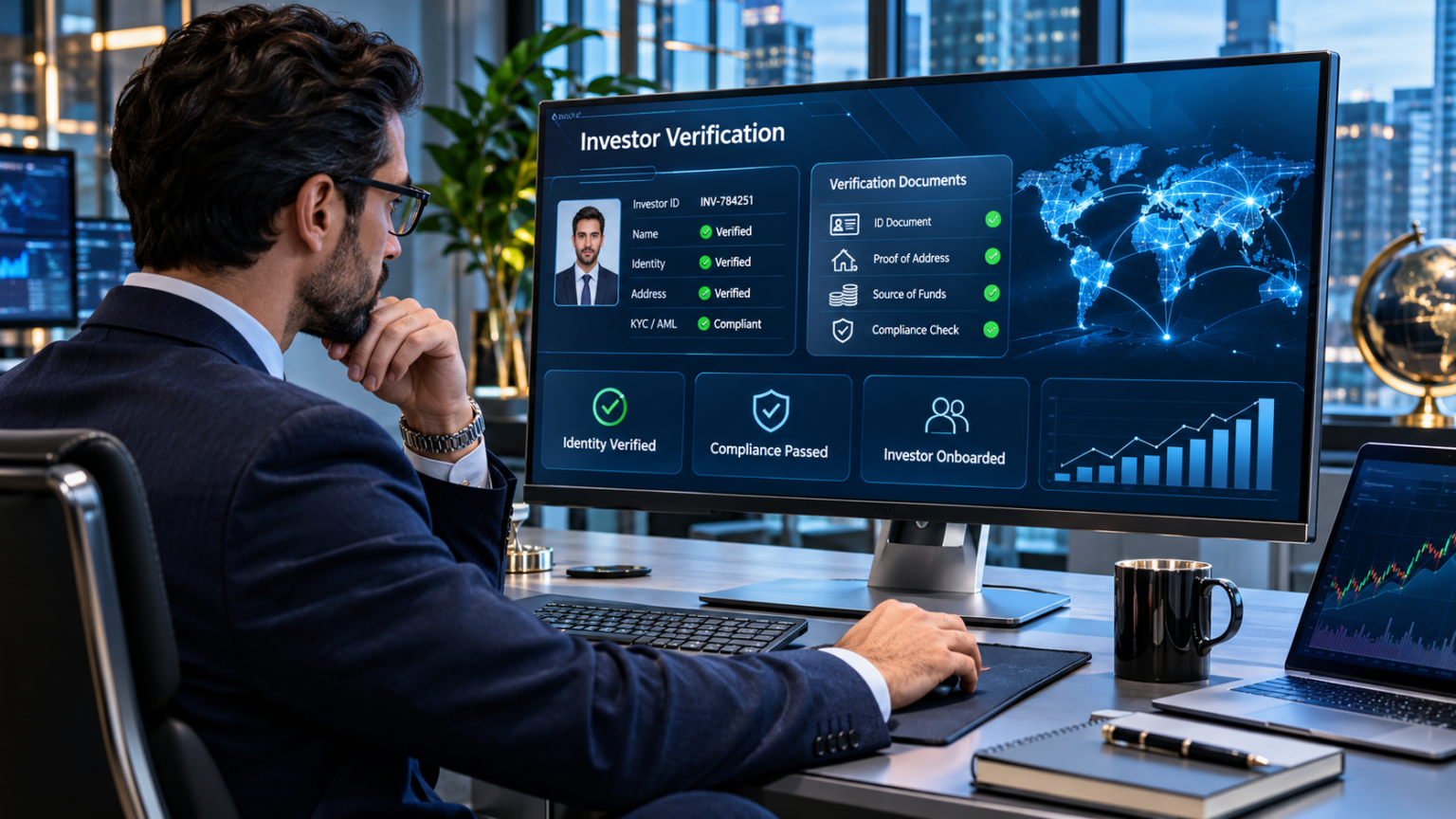
Investor Verification Service: Transforming Investment Market Globally: Best Guide to Secure Investing
Global investment markets have become increasingly connected through digital platforms, cross-border financial services, and online investment opportunities. Investors can explore […]
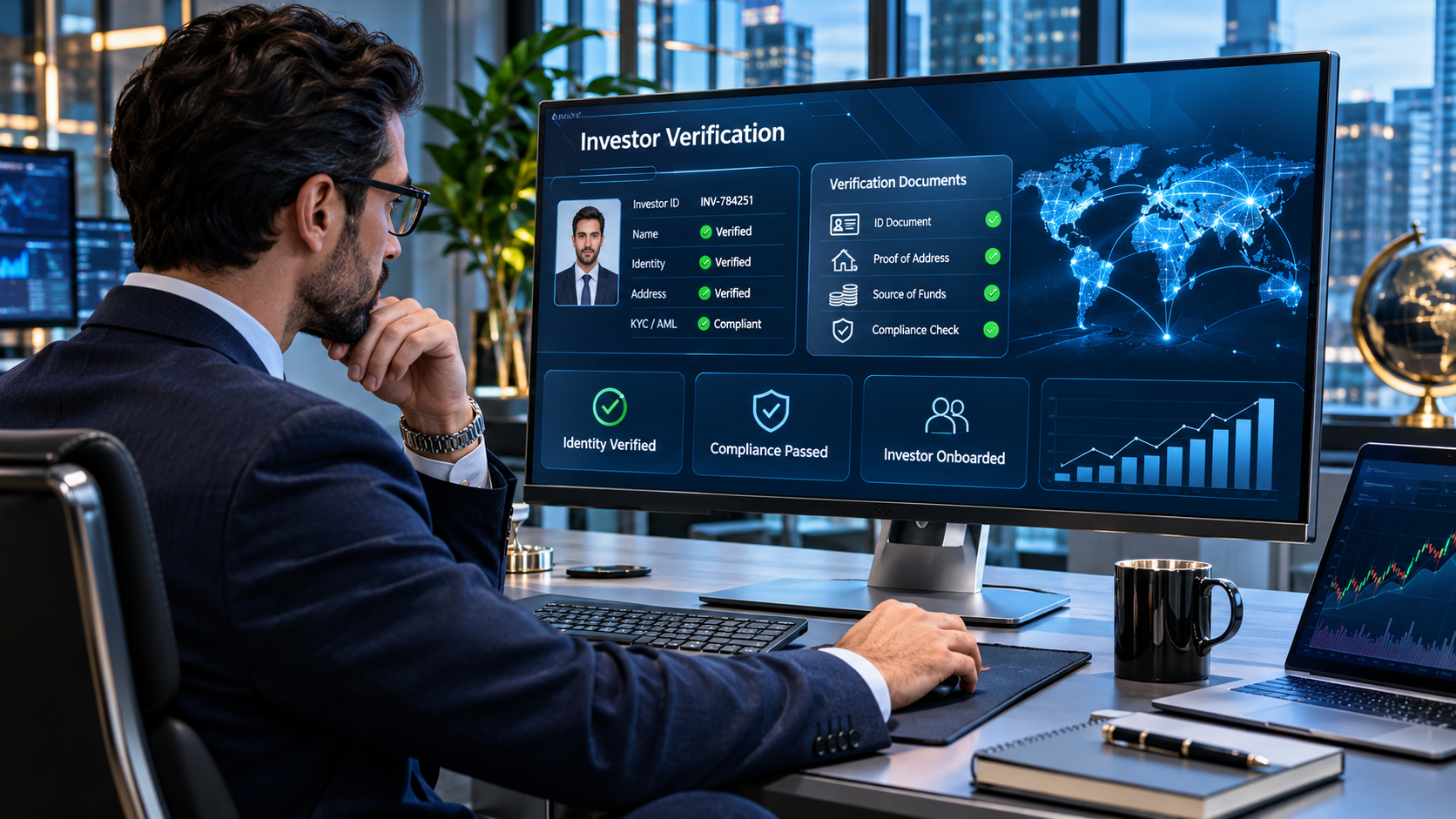
Global investment markets have become increasingly connected through digital platforms, cross-border financial services, and online investment opportunities. Investors can explore private funds, startup financing, real estate investments, and other financial products without necessarily visiting a physical office.
However, greater accessibility also introduces challenges involving identity verification, regulatory compliance, financial fraud, and investor eligibility.
This is where an investor verification service becomes important.
The concept of Investor Verification Service: Transforming Investment Market Globally reflects the growing role of digital verification technologies in helping financial institutions and investment platforms evaluate potential investors more efficiently.
Investor verification services may confirm personal identities, assess eligibility for restricted investment offerings, review supporting financial documentation, and assist with applicable compliance processes.
For example, certain U.S. private investment offerings require issuers to take reasonable steps to verify that purchasers meet accredited investor requirements.
The U.S. Securities and Exchange Commission (SEC) provides specific guidance on verification responsibilities under Regulation D, including the use of professional third-party confirmations. SEC
Although verification services cannot eliminate investment risks or guarantee regulatory compliance worldwide, they can help organizations create more consistent and secure investor onboarding procedures.
This guide explores investor verification services, how they work, their benefits, and their potential influence on international investment markets.
What Is an Investor Verification Service?
An investor verification service is a professional or technology-based solution that helps organizations confirm information about people or entities seeking to participate in investment opportunities.
Depending on the service, verification may involve identity checks, financial qualification assessments, document authentication, and compliance-related screening.
Investment platforms, private fund managers, financial institutions, and businesses raising capital may use these services to support their onboarding processes.
Main Functions of Investor Verification
Common functions include:
- Confirming an investor’s identity.
- Reviewing eligibility for restricted investments.
- Examining financial qualification documents.
- Supporting know-your-customer procedures.
- Assisting with anti-money laundering screening.
- Identifying beneficial owners of investment entities.
- Maintaining records of verification activities.
- Supporting regulatory reporting and audit processes.
Not every service performs all these activities.
Accredited investor verification, identity verification, sanctions screening, and AML compliance are distinct functions that may require separate procedures.
Organizations should determine which obligations apply before choosing a provider.
Why Investor Verification Matters in Global Markets
Investment transactions often involve sensitive financial information and substantial amounts of capital.
Without appropriate verification procedures, organizations may face increased exposure to impersonation, fraudulent documentation, and regulatory violations.
A structured verification process helps establish whether the investor is who they claim to be and whether they satisfy relevant participation requirements.
Supporting Trust Between Investment Participants
Trust is essential for financial transactions.
Investors want confidence that platforms handle personal information responsibly, while investment issuers need reliable information about prospective purchasers.
Verification procedures can support these expectations by introducing consistent onboarding controls.
However, successful identity verification does not prove that an investment is legitimate, profitable, or suitable for an individual.
Investors must still perform independent due diligence.
Helping Organizations Manage Risk
Financial institutions may be required to identify customers and beneficial owners under applicable AML rules.
The Financial Action Task Force (FATF) recommends customer identification, beneficial ownership verification, and ongoing risk-based due diligence for covered financial institutions. FATF
These recommendations influence national compliance frameworks, although individual countries implement them differently.
1. Accredited Investor Verification
Accredited investor verification is a particularly important service in the U.S. private investment market.
Certain securities offerings are available only to investors meeting specified financial or professional qualification standards.
Understanding Accredited Investor Status
Under U.S. securities rules, individuals may qualify as accredited investors through particular income, net worth, or professional qualification criteria.
Some entities may qualify under separate standards.
The precise definitions are established by SEC regulations.
Verification Under Regulation D
Rule 506(b) and Rule 506(c) apply different approaches to evaluating accredited investor status.
Under Rule 506(b), an issuer generally needs a reasonable belief that the investor is accredited.
Under Rule 506(c), issuers must take reasonable steps to verify accredited investor status.
The SEC emphasizes that the appropriate verification method depends on the relevant circumstances. SEC
Third-Party Verification
Certain verification methods allow issuers to obtain written confirmation from qualifying professionals.
These may include registered broker-dealers, SEC-registered investment advisers, licensed attorneys, and certified public accountants.
Professional verification can reduce the need for investment issuers to collect certain sensitive financial documents directly.
However, issuers remain responsible for satisfying the applicable legal requirements.
2. Know Your Customer (KYC) Verification
Know Your Customer, commonly called KYC, refers to procedures used by financial organizations to identify customers and understand relevant risks.
KYC is a major component of many financial compliance programs.
How KYC Verification Works
A typical identity verification process may involve collecting identifying information and examining government-issued identification.
Depending on the risk and applicable requirements, additional verification may be necessary.
Digital systems can assist with document authenticity checks and comparisons against reliable data sources.
The Financial Crimes Enforcement Network (FinCEN) explains that covered U.S. financial institutions may use documentary, non-documentary, or combined verification methods under applicable requirements. FinCEN.gov
Benefits of Digital KYC
Digital verification can reduce repetitive data entry and improve the consistency of onboarding records.
It may also allow investors to submit documentation remotely.
However, automated identity systems can make errors.
Organizations should provide appropriate procedures for reviewing uncertain results and handling legitimate applicants who cannot complete automated verification.
3. Anti-Money Laundering Compliance
Anti-money laundering, or AML, procedures help covered organizations identify and manage risks involving money laundering and related financial crimes.
Investor verification services may support these processes by checking identities, screening relevant parties, and maintaining compliance information.
Understanding Beneficial Ownership
Investment transactions are not always made directly by individuals.
Companies, trusts, partnerships, and other entities may participate in financial markets.
In relevant circumstances, financial institutions must identify the individuals who ultimately own or control an entity.
FinCEN’s Customer Due Diligence guidance explains how beneficial ownership verification applies to covered financial institutions, subject to regulatory exceptions and relief. FinCEN.gov
Risk-Based Monitoring
Verification may also involve reviewing activity that differs from an investor’s expected transaction patterns.
Higher-risk circumstances may require additional investigation.
However, a third-party screening provider does not automatically assume every regulatory responsibility of the institution using its services.
The institution must maintain an appropriate compliance framework.
4. How Technology Is Changing Investor Verification
Digital technology has changed how financial organizations collect, review, and manage investor information.
Traditional verification often involved printed documents, manual correspondence, and repeated requests for financial records.
Modern platforms can support secure document submission, automated workflows, and centralized review.
Automated Document Verification
Certain services use software to examine identification documents or financial records.
These systems may identify inconsistencies or refer unusual submissions for additional review.
Automation can assist with operational efficiency, but human oversight remains important for complex cases.
Digital Investor Onboarding
Online onboarding systems can guide investors through document collection, consent, identity checks, and eligibility reviews.
This creates opportunities to reduce administrative delays.
However, service providers must consider cybersecurity, access controls, record retention, and privacy requirements.
Artificial Intelligence and Fraud Detection
Artificial intelligence may assist with identifying suspicious patterns or evaluating document consistency.
Nevertheless, AI-based decisions can produce false positives and false negatives.
Financial institutions should evaluate model accuracy, fairness, security, and appropriate human review procedures.
Technology should support responsible verification rather than replace accountability.
5. Investor Verification in Cross-Border Investment
The growing popularity of international investment creates additional compliance considerations.
An investor located in one country may seek opportunities offered by a company or investment fund established elsewhere.
These transactions can involve different legal systems, investor classifications, tax requirements, and privacy rules.
Understanding International Regulatory Differences
Investor eligibility standards are not uniform worldwide.
A person qualifying as an accredited investor under U.S. rules does not necessarily qualify under another country’s professional investor framework.
Likewise, identity verification requirements vary by jurisdiction.
The United Kingdom’s Financial Conduct Authority (FCA), for example, provides guidance requiring relevant firms to identify customers and, where applicable, beneficial owners while understanding the purpose and nature of the relationship. handbook.fca.org.uk
Supporting International Investment Platforms
Verification providers can help organizations collect and organize information across multiple markets.
However, they must adapt workflows to applicable local laws.
A single standardized verification certificate should not be assumed to satisfy every jurisdiction’s requirements.
Professional legal and compliance guidance remains important for cross-border transactions.
6. Benefits for Investment Companies and Fund Managers
Investor verification services can offer operational advantages when implemented appropriately.
Private funds and investment platforms may process numerous investor applications containing sensitive financial and personal information.
A structured verification system can help organize these activities.
Reducing Administrative Work
Digital document submission and standardized review procedures may reduce manual correspondence.
Compliance teams can potentially spend more time examining unusual cases instead of repeatedly requesting basic information.
Improving Documentation
Maintaining organized records can help demonstrate which verification steps were performed and when they occurred.
This is especially relevant when an investment issuer must document its basis for determining investor eligibility.
Supporting Investor Experience
Clear instructions and secure submission systems can make onboarding less confusing.
Investors may appreciate understanding which documents are required and why.
However, collecting excessive information can create unnecessary privacy concerns.
Organizations should request only information needed for legitimate business and compliance purposes.
7. Recent Developments in Accredited Investor Verification
The U.S. accredited investor verification framework continues to evolve through regulatory interpretation and guidance.
In March 2025, SEC staff issued a no-action response addressing certain high-minimum-investment Rule 506(c) offerings.
The guidance discussed minimum cash investments of at least $200,000 for individuals and $1 million for entities, together with written investor representations and other specified conditions. No Action Letter: Latham & Watkins
Importantly, this was fact-specific staff guidance, not a universal exemption from verification.
In January 2026, SEC staff also clarified that issuers may use different appropriate verification methods for different investors within the same Rule 506(c) offering. Securities Act Rules
These developments demonstrate the importance of using current regulatory information rather than assuming one verification method is mandatory for every offering.
8. How to Choose an Investor Verification Service
Organizations evaluating verification providers should begin by identifying their legal obligations and operational needs.
A provider offering identity checks alone may not provide the same services as one specializing in accredited investor assessments.
Evaluate Regulatory Knowledge
Ask whether the provider has experience with the relevant investment structures and jurisdictions.
Find out how its procedures adapt to regulatory changes.
Review Security and Privacy Practices
Investor documentation may contain sensitive financial information.
Evaluate encryption, access restrictions, data retention, deletion procedures, and third-party data sharing.
Ask whether the service relies on additional processors or external verification partners.
Compare Verification Methods
A reliable provider should explain how it reaches its conclusions.
For accredited investor verification, determine whether the process uses documentation, qualifying professional confirmation, or another legally appropriate method.
Understand Costs and Support
Pricing may depend on verification volume, document complexity, or additional compliance services.
Review service agreements, processing arrangements, customer support, and responsibility for disputed results.
Do not select a provider solely on the basis of advertised processing speed.
Challenges Facing Global Investor Verification
Despite technological progress, investor verification remains complicated.
Different countries maintain distinct investor classification and financial compliance frameworks.
Digital fraud techniques also continue to change.
Data Privacy and Security Risks
Collecting financial documents increases the importance of secure information handling.
Poorly protected records may expose investors to identity theft or financial fraud.
Organizations should establish appropriate data protection controls and incident response procedures.
Inconsistent Documentation
Investors may use different forms of identification and financial evidence depending on their country of residence.
Verification systems must account for these differences without making unsupported assumptions.
False Verification Results
Automated systems may incorrectly reject legitimate applicants or fail to identify suspicious information.
Clear escalation procedures, manual review, and ongoing quality assessment help manage these risks.
The Future of Investor Verification Services
Investor verification technology may continue developing alongside digital financial platforms and international capital markets.
Potential improvements include more efficient identity checks, secure reuse of verified information, better integration between compliance systems, and improved fraud detection.
However, broader adoption will depend on legal compatibility, information security, and institutional trust.
Digital verification credentials may help reduce repeated document requests in certain circumstances.
Nevertheless, organizations must still determine whether previously collected evidence remains suitable for the transaction and applicable requirements.
The future of investor verification is therefore likely to involve a combination of automation, secure technology, professional judgment, and ongoing regulatory oversight.
Frequently Asked Questions
What is an investor verification service?
An investor verification service helps financial organizations confirm investor identities, assess eligibility for certain investments, review relevant documentation, and support applicable compliance procedures.
Why is investor verification important?
Verification helps organizations establish investor identity, evaluate eligibility, and manage certain fraud and regulatory risks. It does not guarantee investment safety or prevent every financial crime.
What is accredited investor verification?
Accredited investor verification is the process of determining whether a person or entity meets applicable qualification standards for certain securities offerings. In the United States, Rule 506(c) requires reasonable verification steps.
Can investor verification be completed online?
Yes. Many providers support digital document submission, identity checks, and remote review. However, some situations require additional documentation or professional evaluation.
Is investor verification mandatory for every investment?
No. Requirements vary according to the investment, securities offering structure, financial institution, and jurisdiction. Different laws may require different types of verification.
Can one investor verification service provide global compliance?
A service may support multiple jurisdictions, but no generic verification process automatically guarantees compliance with every country’s securities, privacy, and financial crime rules.
Conclusion
The concept of Investor Verification Service: Transforming Investment Market Globally reflects an important development in modern financial services.
As investment activities become more digital and international, organizations need reliable ways to confirm identities, assess eligibility, maintain appropriate documentation, and manage compliance obligations.
Investor verification services can support these processes through digital onboarding, accreditation assessments, identity verification, and compliance-related screening.
They may also help reduce administrative complexity and create more consistent investor experiences.
However, verification is not a substitute for investment due diligence, regulatory expertise, or responsible financial management.
Organizations must remain aware of jurisdiction-specific requirements, changing regulations, privacy obligations, and technology limitations.
With appropriate oversight and secure implementation, investor verification services can contribute to more efficient, transparent, and trustworthy participation in global investment markets.

Written by Twastia Editorial Team
Twastia Editorial Team shares practical insights about website design, SEO services, Google Ads, content marketing, social media, conversion rate optimization, and digital marketing strategy.
Last updated: Nov 5, 2026
Related posts from Twastia
Explore more useful articles from twastia.com about digital marketing, SEO, websites, ads, content, and growth strategy.