Why you should purchase Composite Fences instead of wooden: Best Benefits
A fence does more than mark the boundaries of your property. It creates privacy, helps define outdoor living areas, and […]
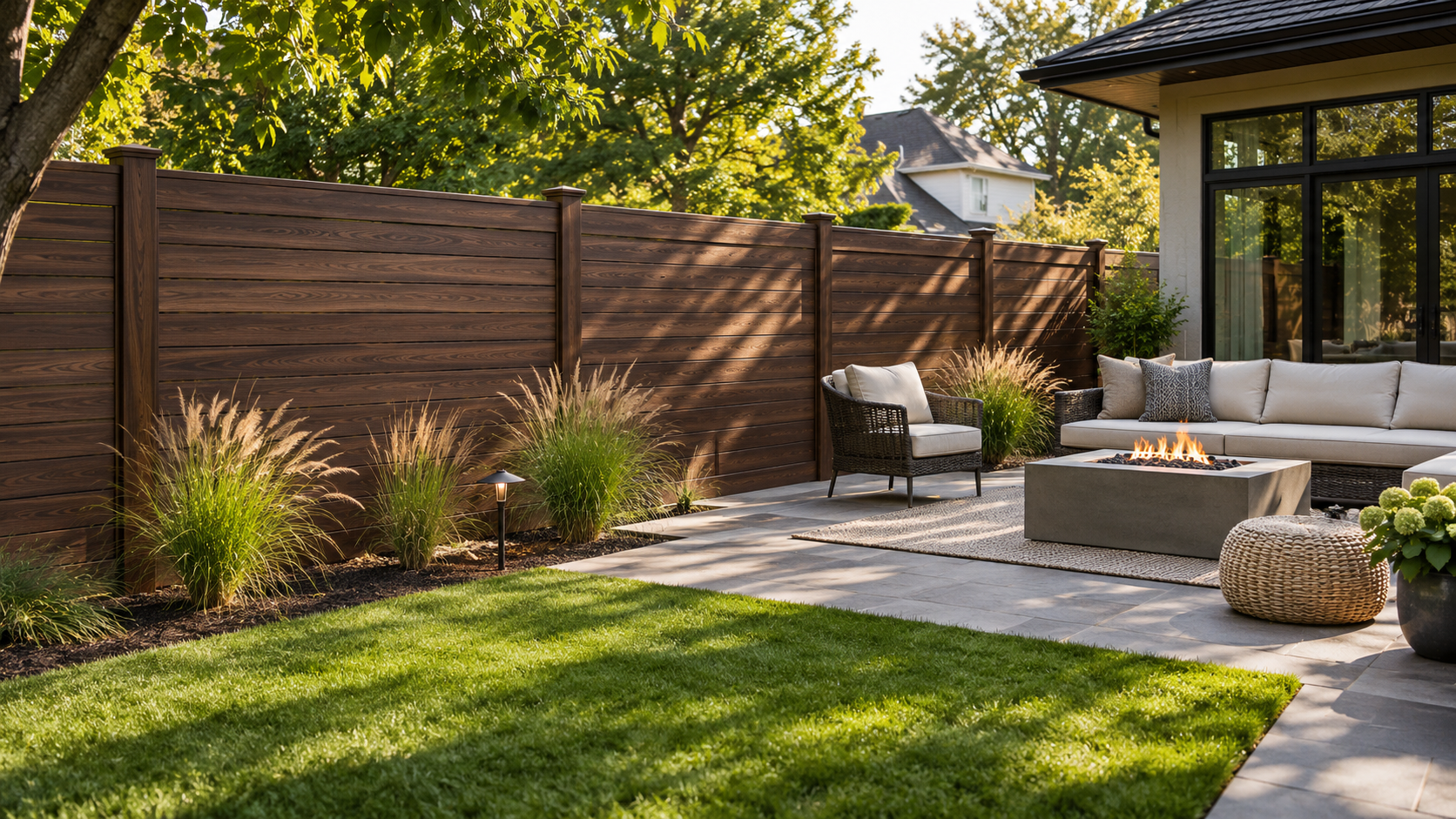
A fence does more than mark the boundaries of your property. It creates privacy, helps define outdoor living areas, and contributes to the appearance of your home. Whether you are replacing an aging wooden fence or planning a new backyard enclosure, selecting the right fencing material is an important investment.
Wood has been a traditional choice for residential fencing because of its natural appearance and versatility. However, wooden fences typically require regular maintenance to preserve their appearance and protect against weather-related deterioration.
Understanding Why you should purchase Composite Fences instead of wooden begins with comparing long-term performance rather than focusing only on the initial purchase price.
Composite fencing is commonly manufactured using a combination of wood fibers and polymers, although exact formulations vary between manufacturers. Many systems are designed to imitate the appearance of wood while reducing the need for painting, staining, and sealing.
The appeal of Why you should purchase Composite Fences instead of wooden lies in durability, appearance, convenience, and potentially lower maintenance expenses over time.
However, composite fencing is not always the ideal choice. It generally costs more upfront, can expand or contract with temperature changes, and may become hot in direct sunlight.
This guide explains the major benefits, limitations, costs, and practical considerations so homeowners can decide which material best suits their property and budget.
1. Spend Less Time on Fence Maintenance
One of the biggest differences between composite and traditional wood fencing is the amount of ongoing care required.
Wooden fences often need periodic cleaning, staining, sealing, or repainting to maintain their finish and reduce moisture-related damage.
A central reason behind Why you should purchase Composite Fences instead of wooden is that many composite products eliminate the need for routine staining and painting.
No Regular Staining or Sealing
Composite fencing is generally manufactured with protective characteristics built into the material.
Unlike traditional timber, it typically does not need repeated applications of wood stain or protective sealant.
Lowe’s identifies resistance to moisture, rot, and insects, along with reduced refinishing requirements, among the main benefits of composite fencing. Lowe’s
Simple Cleaning Requirements
Most composite fences can be cleaned using water, a soft brush, and a mild cleaning solution approved by the manufacturer.
Dust, leaves, pollen, and surface dirt should still be removed periodically.
However, low maintenance does not mean no maintenance. Some products can develop staining or mildew on accumulated debris, particularly in shaded or damp areas.
For homeowners considering Why you should purchase Composite Fences instead of wooden, reducing recurring maintenance can make a noticeable difference over many years.
Save Time for Other Outdoor Activities
Instead of dedicating weekends to sanding and staining fence boards, homeowners can focus on gardening, landscaping, or enjoying their outdoor spaces.
2. Benefit From Better Resistance to Moisture and Rot
Outdoor fences are continuously exposed to rain, humidity, snow, temperature changes, and sunlight.
Traditional wood can absorb moisture, which may contribute to swelling, cracking, fungal decay, or warping if the material is not adequately protected.
An important advantage supporting Why you should purchase Composite Fences instead of wooden is the improved moisture resistance offered by many wood-plastic composite products.
Reduced Risk of Rot
Composite materials are designed to resist several forms of deterioration associated with untreated natural timber.
The polymer content can help limit moisture absorption, although performance varies depending on the formulation and how the product is manufactured.
Protection Against Insect Damage
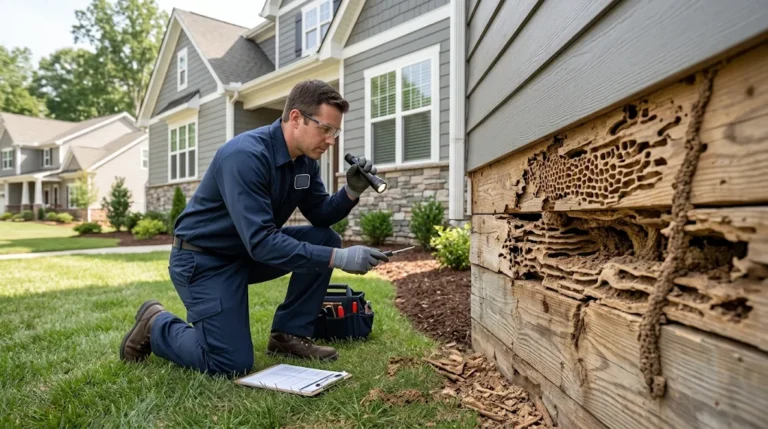
Some insects can damage wooden fencing, particularly when timber remains damp or deteriorates over time.
Many composite fencing products are more resistant to termite-related and other wood-boring insect damage than untreated wood.
Nevertheless, this does not guarantee that every composite fence is immune to all pests or environmental problems.
Suitable for Different Climates
When properly specified and installed, composite fencing can be useful in humid areas, rainy regions, and locations experiencing seasonal temperature changes.
Another practical consideration in Why you should purchase Composite Fences instead of wooden is choosing a product appropriate for the local climate rather than assuming every composite formulation performs identically.
Check the Product’s Outdoor Rating
Review the manufacturer’s instructions concerning UV exposure, temperature movement, installation clearances, and structural support requirements.
3. Enjoy a Longer Potential Service Life
A fence represents a long-term investment, so homeowners should consider how long the materials may remain functional before major repairs or replacement become necessary.
One of the practical benefits behind Why you should purchase Composite Fences instead of wooden is the potential for a longer service life when suitable materials are installed and maintained correctly.
Compare Expected Lifespans
According to Lowe’s, composite fencing may last approximately 25–30 years with proper installation. However, the lifespan of any fence depends on product quality, climate, installation, maintenance, and exposure to damage. Lowe’s
A well-maintained cedar or pressure-treated wooden fence can also remain serviceable for many years. Poorly installed composite fencing may fail much sooner than expected.
Pay Attention to the Posts and Hardware
Fence panels are only one component of the structure. Posts, foundations, brackets, and fasteners need to withstand the loads created by the fence and local wind conditions.
The long-term value of Why you should purchase Composite Fences instead of wooden depends on the entire system, including the structural components that may not be visible after installation.
Review Warranty Details
A 25-year product warranty does not necessarily guarantee 25 years without repairs. Read exclusions covering labor, fading, movement, staining, installation errors, and extreme weather.
4. Create a Modern and Consistent Backyard Appearance
Appearance matters when selecting fencing because it affects how the entire outdoor space feels.
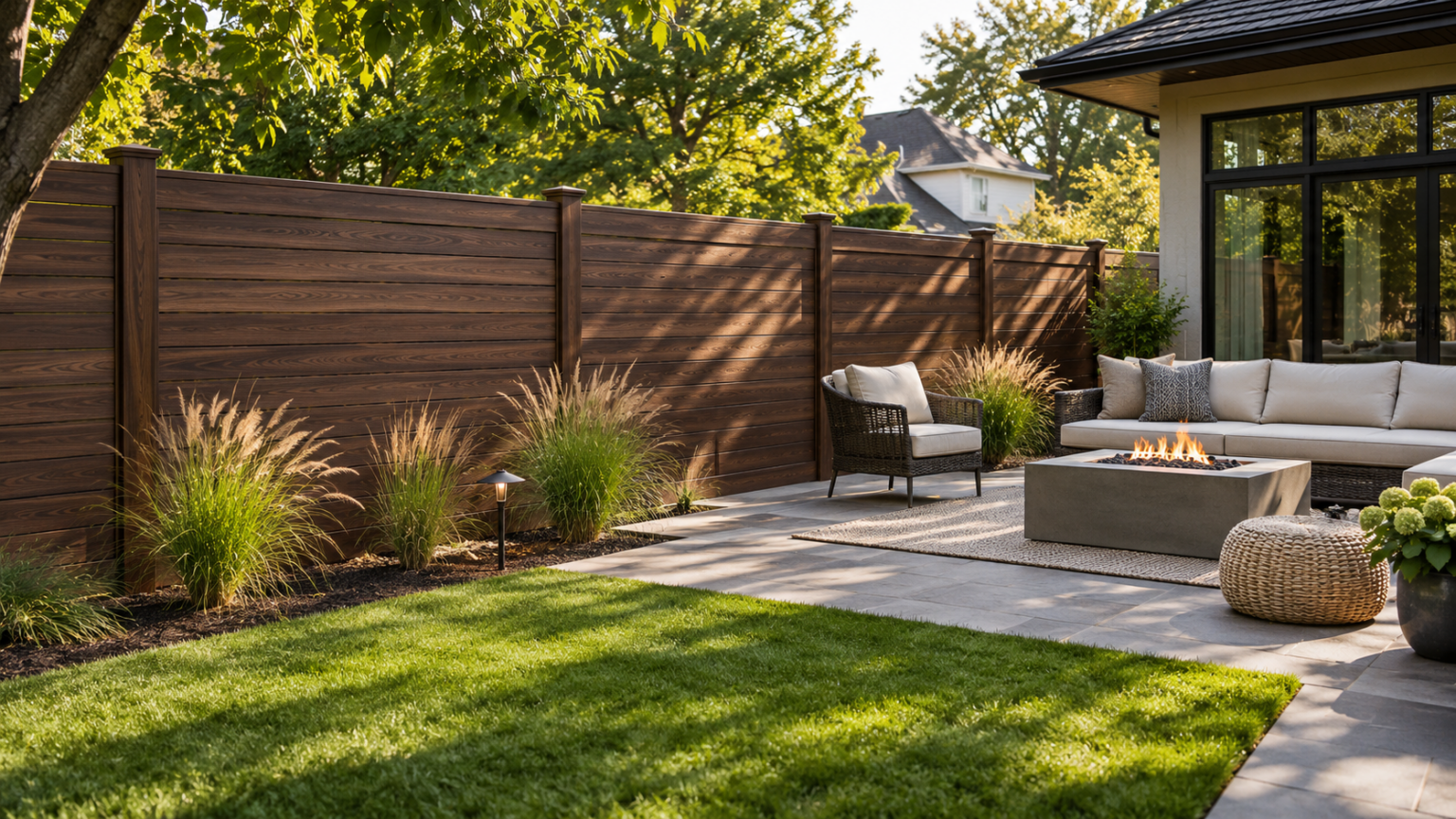
Wood offers natural grain patterns and traditional character. Composite fencing provides another approach, with engineered finishes that can imitate timber or create a distinctly contemporary appearance.
The design appeal of Why you should purchase Composite Fences instead of wooden includes a broad selection of colors, panel profiles, and privacy styles.
Explore Different Colors and Textures
Depending on the manufacturer, homeowners may choose shades resembling cedar, walnut, charcoal, gray, or other contemporary finishes.
Composite Woodgrain Fencing Kit – Anthracite (6ft x 6ft | 1.8m x 1.8m) – Easy Gardens Supply Ltd
Charcoal gray
A sophisticated choice for contemporary landscaping.
Holdbart Nice Komposithegn med Stålstolper
Walnut brown
Offers a timber-inspired appearance with a warm finish.
Composiet plankenscherm “Premium XL” – light grey – EXZO
Light gray
Complements minimalist architecture and neutral paving.
Cedar-inspired
Creates a more traditional, natural-looking outdoor boundary.
Maintain a More Uniform Finish
Natural wooden boards may weather at different rates because of differences in grain, moisture, and sun exposure.
Composite panels often provide a more consistent manufactured appearance.
However, they are not completely fade-proof. Some products may experience initial weathering or gradual color changes.
When considering Why you should purchase Composite Fences instead of wooden, request physical samples and ask the supplier how the selected finish is expected to change outdoors.
5. Improve Privacy and Outdoor Comfort
Privacy is one of the main reasons homeowners install fences around gardens, patios, and backyard seating areas.
A properly designed composite privacy fence can help screen views from neighboring properties and create a more secluded outdoor space.
A privacy-related advantage of Why you should purchase Composite Fences instead of wooden is the availability of solid-looking panels and interlocking board systems.
Choose the Right Panel Design
Composite fencing may be available in horizontal, vertical, tongue-and-groove, and other configurations.
Some designs provide near-continuous visual coverage, while decorative styles include gaps.
Check the actual panel construction before assuming a fence will offer complete privacy.
Consider Fence Height
A taller fence may improve visual screening, but local planning rules, building codes, homeowners association requirements, and sightline restrictions may limit its height or placement.
The suitability of Why you should purchase Composite Fences instead of wooden also depends on whether the fence is engineered for the intended height and wind exposure.
Understand Noise Limitations
A solid fence may reduce some direct sound transmission, but ordinary composite privacy fencing is not necessarily an engineered acoustic barrier.
Do not assume it will eliminate traffic noise or loud neighboring activities without appropriate acoustic design evidence.
6. Reduce Certain Long-Term Ownership Costs
Composite fencing commonly requires a larger initial investment than basic wooden fencing.
However, homeowners should compare the total expense over time, not simply the installation invoice.
The financial argument supporting Why you should purchase Composite Fences instead of wooden is that reduced refinishing and maintenance may help offset higher upfront costs.
Compare Current Installation Prices
Published U.S. cost estimates vary considerably.
Angi’s October 2026 composite fencing guide reports installed composite fence costs of approximately $11–$45 per linear foot for the project types it covers. Its broader October 2026 fence pricing guide lists wood fencing at approximately $10–$45 per linear foot. Angi+1
Other pricing guides report significantly higher amounts for premium composite privacy systems. HomeGuide, for example, places many installed composite fencing projects around $50–$100 or more per linear foot. HomeGuide
These figures are not directly interchangeable because the sources cover different materials, styles, heights, and installation arrangements.
Estimate Maintenance Over Time
Consider this hypothetical scenario:
| Cost category | Wooden fence | Composite fence |
|---|---|---|
| Initial installation | $4,500 | $7,500 |
| Periodic refinishing | $3,000 | $0 |
| Cleaning and minor repairs | $900 | $500 |
| Illustrative 15-year total | $8,400 | $8,000 |
Illustrative example only. Actual expenses vary by fence size, labor, climate, material quality, and repair requirements. This does not guarantee composite will be cheaper.
In this example, the composite fence costs more initially but slightly less over the assumed period.
The budgeting lesson from Why you should purchase Composite Fences instead of wooden is to calculate ownership costs using realistic local quotations and maintenance expectations.
7. Consider Sustainability and Material Efficiency
Many composite fencing systems use a combination of recycled plastic and reclaimed or recycled wood fibers.
Using recycled materials can create demand for recovered resources and reduce the need for certain virgin inputs.
The environmental consideration behind Why you should purchase Composite Fences instead of wooden is that some composite products may incorporate substantial recycled content.
Look Beyond the Recycled Content Claim
A product containing recycled material is not automatically environmentally superior to responsibly sourced timber.
Environmental performance depends on manufacturing processes, transportation, durability, maintenance, and disposal options.
Natural wood may be renewable and can sometimes be repaired, reused, or recycled more readily, depending on treatments and local services.
Check Manufacturer Documentation
Ask for credible information about recycled content, environmental product declarations where available, and product disposal or take-back arrangements.
The sustainability aspect of Why you should purchase Composite Fences instead of wooden becomes more meaningful when the supplier provides verifiable information rather than relying on vague eco-friendly marketing.
Consider Replacement and End-of-Life Options
Some composite products are difficult to recycle through ordinary municipal programs because they contain mixed materials.
Before purchasing, ask how damaged panels and old fencing should be handled.
8. Choose a Fence That Fits Your Lifestyle
Different households have different priorities.
Some homeowners value the natural appearance of cedar and enjoy refinishing wood. Others prefer a fence that requires relatively little attention after installation.
For busy households, Why you should purchase Composite Fences instead of wooden often comes down to convenience.
Useful for Busy Families
Parents, frequent travelers, and homeowners with limited time for maintenance may appreciate not needing to arrange repeated painting or staining.
Composite can also be attractive for properties where accessing the fence for regular maintenance is difficult.
Suitable for Outdoor Entertaining Areas
A well-designed composite fence can complement outdoor dining areas, gardens, patios, and seating spaces.
However, homeowners should consider how much sunlight reaches the fence. Dark composite surfaces may become hotter than natural timber in direct sun.
The lifestyle value of Why you should purchase Composite Fences instead of wooden depends on how well the fence performs in your actual setting.
Consider Pets and Children
Inspect panel spacing, gate latches, post stability, and any sharp or protruding components.
No fencing material automatically guarantees containment or safety. The installation must be designed for the intended use.
Composite Fencing vs. Wooden Fencing: Quick Comparison
| Feature | Composite fencing | Wooden fencing |
|---|---|---|
| Initial cost | Generally higher | Often lower |
| Maintenance | Periodic cleaning | Cleaning and periodic refinishing |
| Moisture resistance | Generally strong, product-dependent | Depends on species and treatment |
| Rot resistance | Typically better than untreated timber | Can rot if exposed and poorly maintained |
| Color choices | Manufactured colors and woodgrain finishes | Natural wood, stain, or paint |
| Customization | Depends on available product systems | Often easier to cut and customize |
| Longevity | Potentially 20–30 years or more | Varies widely with timber and care |
| Painting | Often unnecessary or unsuitable | Usually possible |
| Environmental impact | Depends on recycled content and lifecycle | Depends on sourcing, treatment, and lifecycle |
Important Drawbacks to Consider Before Purchasing
Despite its advantages, composite fencing has limitations.
The higher upfront cost may make it unsuitable for homeowners with strict budgets. Some products expand and contract with temperature changes, requiring carefully planned installation gaps and appropriate fastening systems.
Dark panels may become uncomfortable to touch in direct sunlight. Surface scratches, staining, and gradual fading are also possible.
Composite products may be less convenient to modify or repaint than natural timber, and replacement panels can be difficult to match if a particular color or product line is discontinued.
Wood may remain the better choice for homeowners seeking an authentic natural appearance, extensive customization, or a lower initial purchase price.
How to Choose the Right Composite Fence
Before ordering materials, measure your intended fence line and confirm the legal property boundaries.
Request quotations for the same fence height, style, and approximate length so that costs can be compared fairly.
Check that the proposal includes posts, foundations, panels, gates, hardware, delivery, labor, removal of the existing fence, and applicable permits.
Ask the installer about wind resistance, expansion allowances, drainage, and manufacturer-approved fastening methods.
Finally, inspect actual material samples in daylight and review the warranty conditions.
A properly installed fence using a suitable product is more valuable than an expensive material installed incorrectly.
Frequently Asked Questions
Is composite fencing better than wood?
Composite fencing may be better for homeowners prioritizing low maintenance, moisture resistance, and a consistent appearance. Wood remains attractive for its natural look, lower initial cost, and versatility.
How long does composite fencing last?
Quality composite fencing may last approximately 20–30 years, depending on product specifications, installation, climate, and maintenance. Actual performance varies.
Does composite fencing need painting?
Most composite fences do not require painting or staining. Many manufacturers discourage repainting, so consult the product instructions before applying coatings.
Is composite fencing waterproof?
Many composite products are highly moisture-resistant, but they should not be described as completely waterproof under every condition. Performance depends on material composition and installation.
Does composite fencing fade in sunlight?
Some fading or weathering can occur, especially with darker colors or products with limited UV protection. Review manufacturer documentation and warranty exclusions.
Is composite fencing worth the extra money?
It can be worthwhile when reduced maintenance and potentially longer service life offset the higher initial expense. Compare local installation prices and realistic long-term costs before deciding.
Conclusion
Composite fencing offers several practical advantages over traditional wooden fencing. Lower routine maintenance, resistance to moisture-related deterioration, a variety of modern finishes, and potentially longer service life can make it appealing for many residential properties.
However, wood remains a reasonable option for homeowners who prefer natural materials, enjoy customization, or need to control upfront expenses.
Before purchasing, evaluate the full cost of installation and maintenance, choose a product suitable for your climate, and work with an experienced installer.
The best fencing material is the one that fits your budget, design preferences, maintenance expectations, and property conditions.

Written by Twastia Editorial Team
Twastia Editorial Team shares practical insights about website design, SEO services, Google Ads, content marketing, social media, conversion rate optimization, and digital marketing strategy.
Last updated: Nov 6, 2026
Related posts from Twastia
Explore more useful articles from twastia.com about digital marketing, SEO, websites, ads, content, and growth strategy.