Leaving Liquid Plumber in Too Long: Best Safety Guide for Homeowners
You pour Liquid-Plumr into a clogged bathroom sink, get distracted, and suddenly realize several hours have passed. Perhaps you even […]
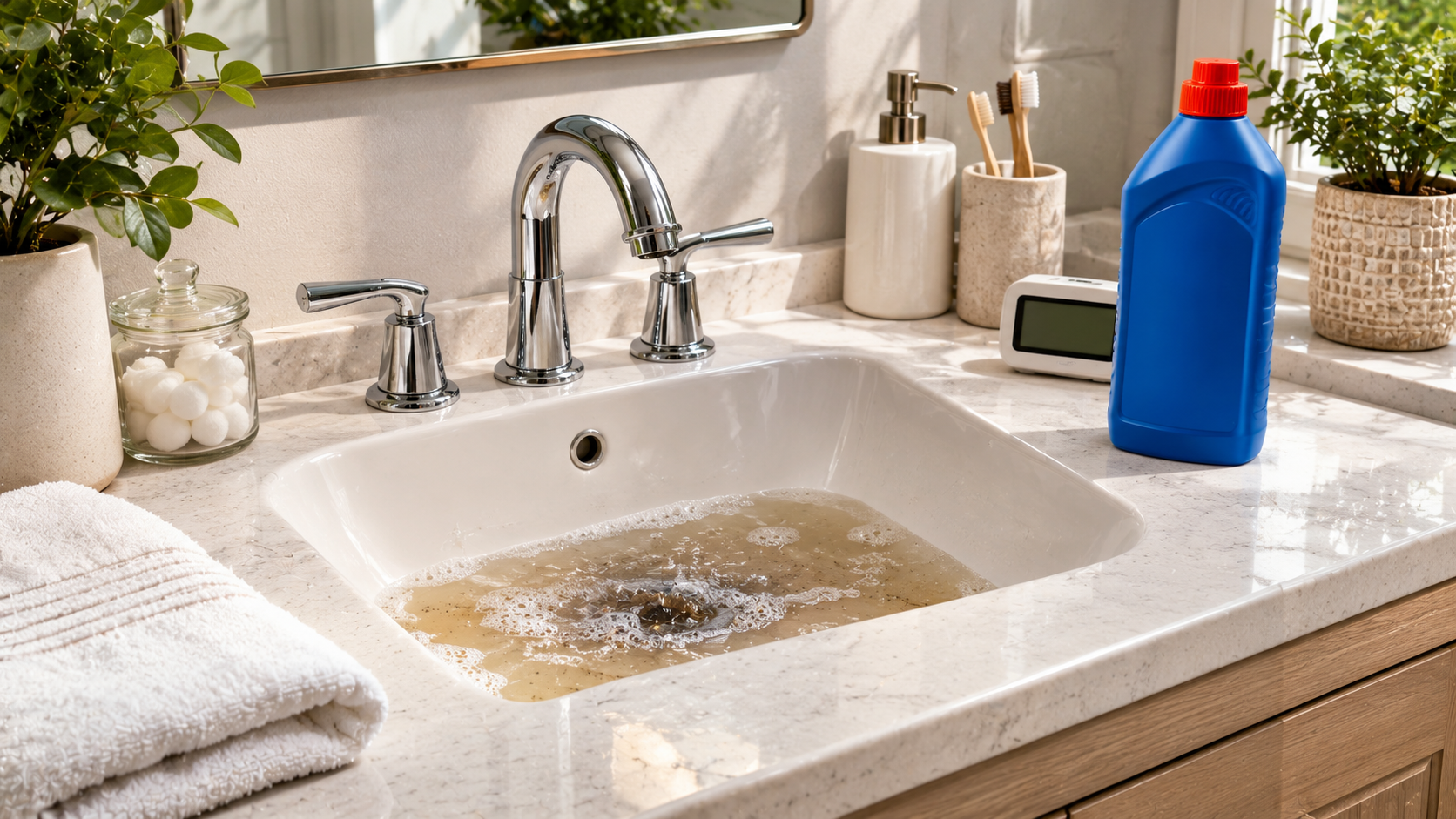
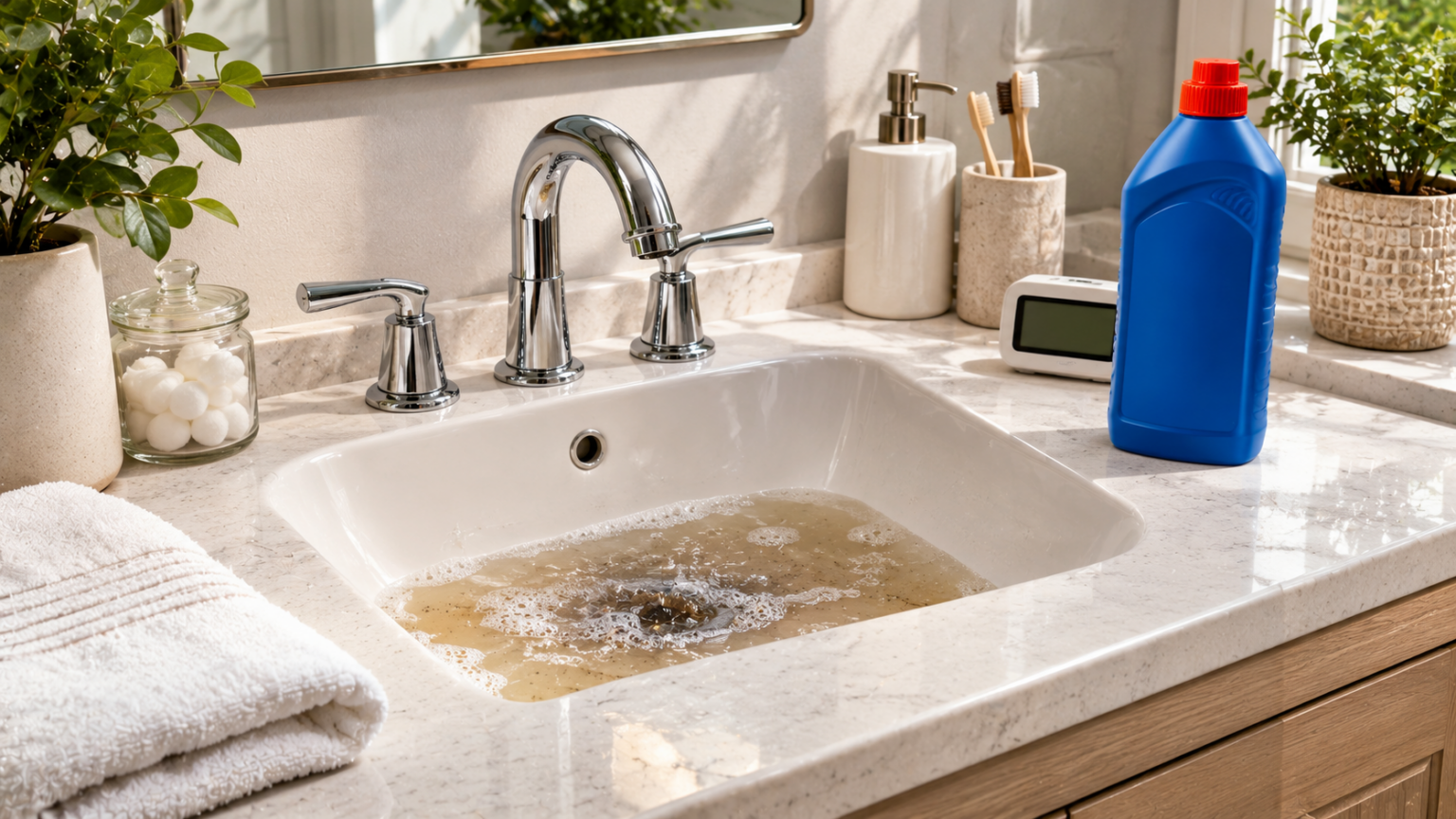
You pour Liquid-Plumr into a clogged bathroom sink, get distracted, and suddenly realize several hours have passed. Perhaps you even left it overnight. Your first thought may be whether the chemical has damaged your pipes or made the blockage worse.
The good news is that leaving Liquid Plumber in too long does not automatically mean your plumbing is damaged. Some Liquid-Plumr gel products explicitly state that overnight contact will not harm compatible pipes. However, instructions vary by formula, and the chemical may still be hazardous to anyone who touches, splashes, or mixes it.
The safest response depends on which product you used, how long it has been in the drain, and whether water can still flow. Understanding these differences can help you avoid turning a routine clog into a dangerous plumbing problem.
How Long Is Liquid-Plumr Supposed to Stay in a Drain?
Liquid-Plumr is a brand of chemical drain-cleaning products manufactured by The Clorox Company. Different formulas are designed for particular types of blockages, so there is no universal waiting period that applies to every bottle.
For example, the manufacturer specifies a 15-minute waiting period for its Pro-Strength Clog Destroyer Gel, while also stating that this particular formula will not harm compatible pipes if left overnight. Its Hair Clog Eliminator instructions also specify a 15-minute wait, but homeowners should not assume all formulas share the same extended-contact guidance. The Clorox Company+1
That distinction is crucial when evaluating leaving Liquid Plumber in too long. A recommended waiting time is not necessarily the exact moment at which pipe damage begins.
Why Instructions Differ Between Products
Drain cleaners may contain different ingredients, concentrations, thickening agents, and additives. Some are designed to travel through standing water, while others target hair or organic buildup.
Always identify the precise product and follow the instructions printed on your bottle. Online guidance for another formula, or packaging sold in another country, may not apply.
Is Fifteen Minutes a Strict Safety Limit?
Not necessarily. The manufacturer may recommend 15 minutes because that is the intended treatment period, not because the product suddenly becomes destructive at minute sixteen.
Nevertheless, leaving Liquid Plumber in too long without checking the label is not a sensible cleaning strategy. More time does not guarantee that a clog will dissolve, especially when the obstruction is not something the chemical can effectively remove.
What Happens When the Cleaner Stays in the Pipes?
Several things may happen depending on the product, plumbing materials, and type of blockage. The most important point is that the chemical remains potentially hazardous even if the recommended treatment period has passed.
The Formula Continues Contacting the Blockage
Some Liquid-Plumr products contain sodium hydroxide, which helps break down certain organic materials, and sodium hypochlorite, an oxidizing ingredient. Exact ingredients and concentrations vary. The manufacturer’s safety data for Advanced Action identifies sodium hydroxide and warns of severe skin burns and eye damage. The Clorox Company
With leaving Liquid Plumber in too long, the chemical may continue contacting hair, soap residue, or other buildup. However, that does not mean additional waiting will always improve the result. Some clogs consist of foreign objects, mineral deposits, or structural problems that chemical drain cleaners cannot adequately resolve.
Liquid Can Remain Trapped Behind a Clog
If a drain is completely blocked, the cleaner may remain in standing water rather than moving through the plumbing. That creates a possible exposure hazard when someone later tries to plunge, disconnect, or mechanically clear the drain.
One concern with leaving Liquid Plumber in too long is forgetting that a corrosive substance may still be present. Anyone working on the plumbing needs to know what was used, even if several hours have passed.
Additional Time Does Not Guarantee Better Results
A partially dissolved blockage may move farther into the drainage system and remain lodged. The drain might briefly improve before slowing again.
Repeatedly adding chemicals without understanding the problem can make a difficult situation more hazardous. The safer approach is to identify why the drain remains blocked instead of assuming stronger treatment is needed.
Can Leaving Drain Cleaner Overnight Damage Pipes?
There is no single answer for every plumbing system. Manufacturers test particular formulations for compatibility with specified materials, but actual plumbing systems differ in age, condition, fittings, and previous repairs.
For example, Liquid-Plumr states that its Pro-Strength Clog Destroyer Gel is compatible with common plumbing materials, including PVC and metal pipes, and specifically permits overnight contact. This does not establish that every chemical drain cleaner is safe in every pipe indefinitely. Liquid Plumr
Plastic and PVC Pipes
Many modern drain systems use PVC or other plastic materials. Certain Liquid-Plumr formulations are advertised as suitable for these pipes when used as directed.
Nevertheless, leaving Liquid Plumber in too long should not be treated as permission to ignore the manufacturer’s instructions. Incorrect chemical combinations, incompatible products, or damaged connections can create problems that have nothing to do with the normal performance of a compatible gel.
Older Metal Plumbing
Older homes may have galvanized steel, cast iron, copper, or a combination of materials. Existing corrosion, weakened joints, and deterioration can make plumbing failures more likely.
Chemical exposure should not automatically be blamed for a leak discovered afterward. However, if pipes are already damaged, a homeowner should be cautious about repeated chemical treatment.
Seals, Fittings, and Previous Repairs
A drain is more than a single pipe. It contains fittings, seals, traps, and sometimes components installed during earlier repairs.
When considering leaving Liquid Plumber in too long, the condition of these connections matters. A product’s general pipe-compatibility claim cannot guarantee that an old, leaking, or improperly repaired drainage system will remain trouble-free.
If you notice moisture beneath the sink, a new leak, or deterioration around fittings, stop using the fixture and arrange an inspection.
What Should You Do If You Accidentally Left It Overnight?
Start by identifying the exact product. Read the bottle’s instructions, warnings, and manufacturer contact information before doing anything else.
The correct response depends particularly on whether the drain is flowing freely.
Step 1: Check the Product Instructions
If your bottle explicitly permits overnight contact, and nothing unusual has occurred, the extra waiting time may not be a reason for alarm.
For other formulas, follow the relevant label or contact the manufacturer for guidance.
The practical concern with leaving Liquid Plumber in too long is not simply elapsed time. It is how to handle the remaining chemical safely.
Step 2: Keep People Away From the Drain
Prevent children and pets from accessing the treated fixture. Do not lean directly over the drain or put your hands into standing water.
Avoid using the sink, shower, or tub until you have determined the correct next step.
Step 3: Follow the Rinsing Directions if Water Can Flow
If the product’s instructions direct you to rinse after treatment, the drain is flowing, and there are no signs of an unsafe reaction, follow those directions carefully.
Some Liquid-Plumr gels specify flushing with hot tap water. That does not mean pouring boiling water into a chemically blocked drain. Avoid improvised rinsing methods that could cause splashing.
Step 4: Stop if the Drain Remains Completely Blocked
If water cannot drain, do not force additional liquid into an overflowing basin or attempt to scoop out chemical-contaminated water without professional guidance.
Do not assume leaving Liquid Plumber in too long can be corrected by adding another bottle.
Contact the manufacturer or a qualified plumber, describe the exact product and quantity, and explain how long it has remained in the drain.
Dangerous Mistakes to Avoid
Many serious drain-cleaning hazards result from what happens after the original product fails, particularly when someone introduces another chemical.
Never Mix Different Drain Cleaners
Do not add another brand of drain opener, bleach, ammonia, vinegar, acidic toilet cleaner, or another household chemical into a drain that may still contain Liquid-Plumr.
Incompatible chemicals can cause dangerous reactions, including the release of hazardous gases. The manufacturer’s warnings explicitly prohibit mixing its products with certain other cleaners. Confluence
The greatest danger associated with leaving Liquid Plumber in too long may arise when a homeowner tries to neutralize or strengthen the chemical using another substance.
Do Not Use a Plunger While Chemical Cleaner Is Present
Plunging can splash corrosive liquid into your face, eyes, or onto your skin.
Liquid-Plumr specifically warns against using a plunger with relevant drain-cleaning formulations.
Even if the cleaner has been sitting for hours, it should not be assumed harmless.
Avoid Disassembling the Drain Yourself
Removing a P-trap may release liquid containing concentrated cleaner. What appears to be ordinary standing water could still contain a hazardous substance.
A professional should know about prior chemical treatment before opening the pipe.
What Information Should You Give the Plumber?
Tell the plumber the product name, approximate quantity, time of application, whether another cleaner was used, and whether the drain is flowing.
These details are essential when leaving Liquid Plumber in too long has resulted in a persistent blockage requiring professional attention.
What If You Notice Strong Fumes or a Chemical Reaction?
A strong chemical odor, coughing, eye irritation, or breathing discomfort deserves attention, especially if another cleaning product may have been present in the drain.
Stop working, move away from the affected area, and get to fresh air. Do not lean closer to investigate or attempt to correct a suspected reaction with another chemical.
If breathing difficulties occur, seek urgent medical assistance. In the United States, Poison Control provides free guidance at 1-800-222-1222. Poison Control
What About Skin or Eye Exposure?
Corrosive drain cleaners can cause burns and serious eye injuries.
If exposure occurs, immediately follow the product’s first-aid label, begin flushing affected skin or eyes with water, and contact Poison Control or emergency medical services as appropriate. Remove contaminated clothing when safe.
The manufacturer’s safety data emphasizes the seriousness of skin and eye exposure. The Clorox Company
Do not underestimate leaving Liquid Plumber in too long simply because the liquid is no longer visibly bubbling. Its ability to cause injury is not determined by visible activity.
When Should You Call a Professional Plumber?
Chemical treatment is not the right solution for every drainage problem.
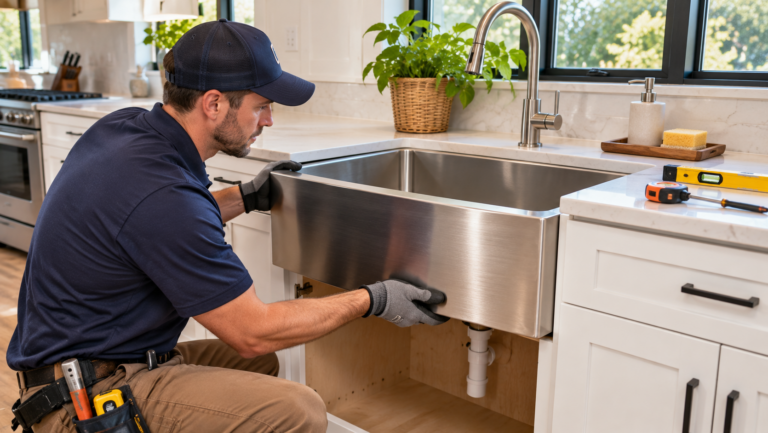
A professional inspection is sensible when the drain remains blocked, multiple fixtures back up, wastewater returns through another drain, or leaks appear beneath the sink.
Persistent Hair and Soap Buildup
Bathroom clogs often involve hair, soap residue, and other accumulated material. Some can be removed mechanically, but chemical residue changes how safely that work can be performed.
If you have already used a drain cleaner, inform the plumber before they begin.
Foreign Objects or Deeper Blockages
Jewelry, small plastic items, sanitary products, and other objects may lodge in plumbing. Chemical treatment generally will not remove a solid foreign object.
The issue with leaving Liquid Plumber in too long is that additional waiting may delay an appropriate mechanical solution without improving the blockage.
Recurring Drain Problems
Repeated clogs may indicate an issue farther along the line, improper drainage, or damaged plumbing.
A plumber can assess whether mechanical clearing or camera inspection is appropriate after the chemical hazard has been addressed.
How to Prevent Clogs Without Repeated Chemical Treatments
Routine prevention can reduce the need for harsh drain cleaners.
Use removable drain screens to catch hair, dispose of cooking grease in an appropriate container rather than pouring it into the sink, and keep unsuitable objects out of plumbing fixtures.
Clean accessible drain screens regularly. For recurring problems, ask a professional about nonchemical maintenance methods suitable for your plumbing.
Remember That Toilets Are Different
Liquid-Plumr’s manufacturer states that its drain-cleaning products should not be used to clear toilet clogs. A toilet auger or appropriately designed plunger may be a better tool for ordinary toilet blockages, provided chemical cleaner has not already been added. Liquid-Plumr®
Avoid leaving Liquid Plumber in too long in a toilet or other fixture for which the product is not approved. If it has already been used in an unsuitable fixture, seek product-specific safety advice before attempting removal.
Frequently Asked Questions
Can I leave Liquid-Plumr in the drain overnight?
Some formulations, including Pro-Strength Clog Destroyer Gel, explicitly permit overnight contact with compatible pipes.
However, leaving Liquid Plumber in too long should always be evaluated against the particular bottle’s directions. Do not assume every formula shares the same instructions.
Will Liquid-Plumr damage PVC pipes after several hours?
Certain Liquid-Plumr products are labeled compatible with PVC pipes when used as directed, including formulations that permit overnight contact.
Pipe age, condition, product selection, and prior chemical exposure still matter. A product compatibility claim is not a guarantee against every plumbing failure.
What happens if Liquid-Plumr stays in the drain for 24 hours?
The result depends on the formula, drain condition, and whether the chemical remains trapped behind a clog.
There is no universal rule that 24 hours automatically causes pipe damage. However, leaving Liquid Plumber in too long for a period beyond the label guidance calls for manufacturer advice, particularly when the drain remains blocked.
Can I pour vinegar or baking soda down the drain afterward?
Do not add vinegar, baking soda, or other substances to a drain that may still contain chemical cleaner.
Although these ingredients are commonly discussed as household cleaning remedies, adding them to an existing chemical mixture is not a safe way to neutralize a drain cleaner.
Should I use boiling water to rinse away the cleaner?
Follow the exact manufacturer’s rinsing instructions. Some formulas specify hot water, but that does not mean boiling water.
If the drain is completely blocked or could splash, avoid adding more water without appropriate guidance.
What should I do if the drain is still clogged the next morning?
Review the product directions and avoid mixing cleaners or plunging.
If the blockage persists, contact a plumber and explain what chemical was used. The risk from leaving Liquid Plumber in too long becomes more important when someone may need to open or mechanically clear contaminated plumbing.
Conclusion
Accidentally leaving drain cleaner overnight does not automatically mean a costly plumbing repair is coming. Some Liquid-Plumr formulas specifically allow extended contact, while others should be used according to their stated waiting periods.
The main priorities are identifying the exact product, preventing chemical exposure, avoiding incompatible cleaners, and recognizing when the blockage requires professional help.
Ultimately, leaving Liquid Plumber in too long is a situation that calls for careful, product-specific decisions rather than panic or improvised chemical remedies. Follow the manufacturer’s guidance, protect everyone around the drain, and seek professional assistance when the water cannot flow safely.
A useful final rule is that leaving Liquid Plumber in too long is less concerning when the specific manufacturer explicitly permits the extended waiting period, but potentially hazardous when chemical residue remains in a blocked drain or someone attempts an unsafe follow-up treatment.

Written by Twastia Editorial Team
Twastia Editorial Team shares practical insights about website design, SEO services, Google Ads, content marketing, social media, conversion rate optimization, and digital marketing strategy.
Last updated: Nov 10, 2026
Related posts from Twastia
Explore more useful articles from twastia.com about digital marketing, SEO, websites, ads, content, and growth strategy.