What Is a Kitchenette? Features, Benefits, Costs, and Kitchen vs. Kitchenette Differences
When searching for an apartment, designing a small home, or planning a basement renovation, you may come across the term […]
When searching for an apartment, designing a small home, or planning a basement renovation, you may come across the term kitchenette. Although it sounds similar to a traditional kitchen, the two spaces have some important differences.
A kitchenette provides basic facilities for preparing food, storing groceries, and handling everyday cooking tasks without requiring the space or equipment of a full-sized kitchen. It is particularly useful in studio apartments, guest suites, vacation rentals, and smaller residential properties.
For people living in compact homes, having a convenient cooking area can make everyday life considerably easier. A thoughtfully designed kitchenette can provide essential functionality while leaving more room for other activities.
But what is a kitchenette, what appliances does it include, and how does it compare with a traditional kitchen?
Whether you are renting an apartment, renovating your home, or considering adding a small cooking area to a basement or guesthouse, this guide explains everything you need to know in 2026.
What Is a Kitchenette?
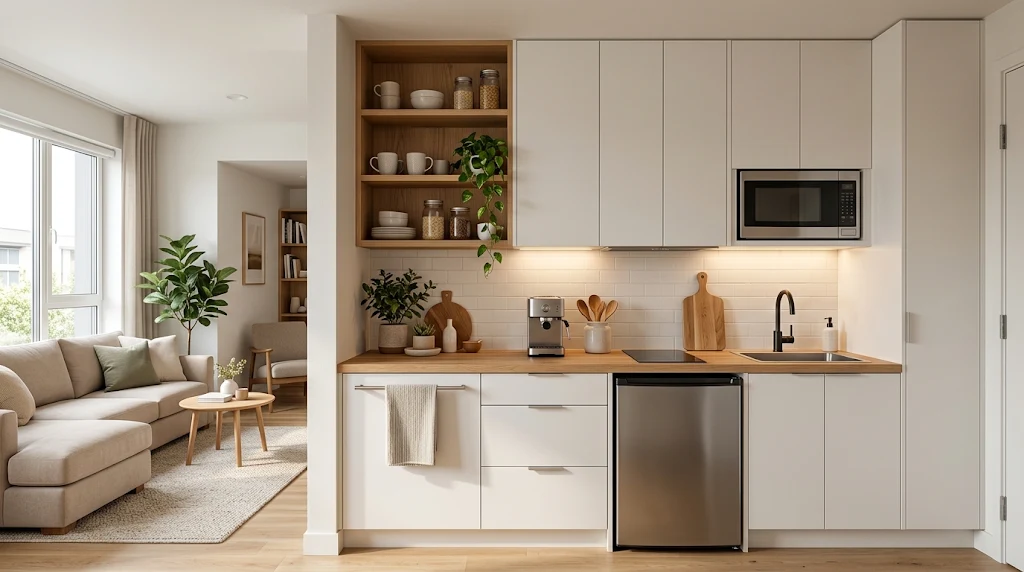
A kitchenette is a compact version of a traditional kitchen designed to provide essential food preparation, cooking, and storage facilities within a limited space.
Unlike a conventional kitchen, which generally includes full-sized appliances, extensive countertops, and multiple storage cabinets, a kitchenette usually contains smaller appliances and fewer cooking facilities.
Its design focuses on convenience and efficient use of available space.
A typical kitchenette may include:
- A compact refrigerator or mini fridge
- A microwave
- A small sink and faucet
- A two-burner cooktop or hot plate
- A limited countertop
- A few cabinets or open shelves
- Basic cooking and food preparation equipment
Not every kitchenette contains all these features. Some provide only a refrigerator, microwave, and sink, while others include a small stovetop or additional appliances.
The exact configuration depends on the property, available space, and intended use.
What Is the Difference Between a Kitchen and a Kitchenette?
Although both spaces serve similar purposes, their size, equipment, and functionality are different.
A traditional kitchen is generally designed to support regular cooking, food storage, cleaning, and meal preparation for multiple people.
A kitchenette provides a more limited setup for simpler cooking activities.
1. Size and Available Space
A conventional kitchen generally has more floor space, larger countertops, and additional cabinets.
It may also include a separate dining area or kitchen island.
A kitchenette is usually integrated into a studio apartment, bedroom, basement, or open-plan living space.
Its compact layout makes it suitable for properties where every square foot matters.
2. Appliances and Equipment
Traditional kitchens commonly feature a full-sized refrigerator, oven, stove, dishwasher, and microwave.
Kitchenettes generally use smaller appliances.
For example, a compact refrigerator and two-burner cooktop may replace the larger equipment found in a standard kitchen.
3. Cooking Capabilities
A full kitchen supports a wider range of cooking activities, including preparing several dishes simultaneously.
A kitchenette is better suited to simple meals, reheating food, preparing breakfast, and cooking smaller portions.
4. Storage and Counter Space
Traditional kitchens usually provide more cabinets, drawers, pantry space, and food preparation surfaces.
Kitchenettes have limited storage, making organization especially important.
Apartments.com also highlights the smaller appliances, reduced counter space, and limited storage commonly associated with kitchenettes. https://www.apartments.com/blog/what-is-the-difference-between-a-kitchen-and-a-kitchenette
What Appliances Are Usually Included in a Kitchenette?
The appliances included in a kitchenette depend on its design and intended purpose.
Understanding the available equipment can help you determine whether the space meets your everyday needs.
Mini Refrigerator
A mini refrigerator provides space for beverages, fresh ingredients, snacks, and smaller grocery purchases.
Some kitchenettes feature under-counter refrigerators to save space.
Others include slightly larger compact models with freezer compartments.
Microwave
A microwave is one of the most useful kitchenette appliances.
It allows residents to reheat prepared meals, defrost ingredients, and prepare simple foods without requiring a conventional oven.
Electric Cooktop or Hot Plate
Some kitchenettes include a small electric cooktop with one or two burners.
This provides additional cooking flexibility for preparing eggs, vegetables, pasta, and other simple dishes.
Small Sink
A compact sink provides a convenient place to wash dishes, rinse ingredients, and clean kitchen utensils.
Kitchenettes with standard sinks generally require appropriate water supply and drainage connections.
Additional Small Appliances
Depending on available countertop space and electrical capacity, residents may also use:
- Electric kettles
- Toaster ovens
- Coffee makers
- Slow cookers
- Air fryers
- Electric skillets
Before adding appliances, check available outlets, electrical capacity, ventilation, and manufacturer safety instructions.
Where Are Kitchenettes Commonly Found?
Kitchenettes are useful in different residential and commercial environments.
Their compact design makes them suitable for spaces where a traditional kitchen would be unnecessary or impractical.
Studio Apartments
Studio apartments frequently use kitchenettes because living, sleeping, and cooking activities share the same general space.
A compact cooking area helps preserve room for furniture, storage, and everyday activities.
Guest Suites and In-Law Units
Homeowners sometimes install kitchenettes in separate guest accommodations.
These facilities allow visitors or extended family members to prepare snacks and simple meals without using the main household kitchen.
Finished Basements
A basement kitchenette can make a finished lower level more convenient.
It may be useful in entertainment areas, guest rooms, or separate living spaces.
However, homeowners should check local zoning, building, plumbing, and occupancy requirements before adding cooking facilities.
Vacation Rentals and Hotels
Hotels, extended-stay accommodations, and vacation rentals often provide kitchenettes for guests who prefer preparing some of their own meals.
A refrigerator, microwave, and small cooking area can make longer stays more comfortable.
Offices and Commercial Spaces
Some workplaces include kitchenettes where employees can prepare coffee, store lunches, and heat food during breaks.
These spaces are generally designed for convenience rather than extensive cooking.
Benefits of Having a Kitchenette
A kitchenette offers several practical advantages, particularly when space and budget are limited.
1. Efficient Use of Space
One of the biggest benefits is its compact layout.
Instead of dedicating a large area to cooking equipment, homeowners can install essential facilities along one wall or inside a small alcove.
This leaves more space for living, sleeping, or working.
2. Lower Installation Costs
A kitchenette generally requires fewer cabinets, appliances, and materials than a full kitchen.
This can make it a more affordable option for homeowners creating a secondary cooking area.
However, plumbing, electrical work, ventilation, and building modifications can still add substantial expenses.
3. Easier Cleaning and Maintenance
Smaller countertops, fewer appliances, and limited storage areas can make routine cleaning easier.
There are also fewer surfaces and fixtures to maintain compared with a large kitchen.
4. Convenient Everyday Cooking
A well-equipped kitchenette provides enough functionality for many basic cooking activities.
Residents can prepare breakfast, make coffee, heat meals, and cook simple dishes without accessing a larger kitchen.
5. Flexible Property Design
Kitchenettes can make additional living areas more functional.
They may be particularly useful in guest accommodations, accessory dwelling units, and properties designed for extended family living.
How to Design a Functional Kitchenette
A small cooking area can still look attractive and provide practical functionality.
The key is to make thoughtful decisions about layout, storage, lighting, and appliance selection.
Choose a Space-Saving Layout
A single-wall kitchenette is one of the simplest designs.
The refrigerator, sink, countertop, and cooktop can be arranged along one wall.
An L-shaped layout may work better when the room provides additional corner space.
Keep frequently used appliances accessible and avoid placing too many items on the countertop.
Use Vertical Storage
When floor space is limited, vertical storage becomes especially valuable.
Consider installing:
- Floating shelves
- Wall-mounted cabinets
- Hanging utensil organizers
- Magnetic knife holders
- Overhead storage compartments
These features can increase storage capacity without occupying additional floor space.
Select Compact Appliances
Choose appliances according to the available dimensions and your actual cooking requirements.
A compact refrigerator, microwave, and small cooktop may provide sufficient functionality for one or two residents.
Avoid purchasing large appliances that consume valuable countertop or cabinet space.
Improve Lighting
Good lighting makes a kitchenette feel more spacious and comfortable.
Under-cabinet lighting can improve visibility during food preparation.
Bright ceiling fixtures and natural daylight can also help create a more welcoming environment.
Choose Light and Coordinated Colors
White, cream, beige, and light wood finishes can create an open appearance.
Reflective surfaces and simple cabinet designs may also help a compact cooking area feel less crowded.
How Much Does It Cost to Install a Kitchenette?
Kitchenette installation costs vary depending on the property’s existing condition and the features you want to include.
A basic setup with a refrigerator, microwave, countertop, and storage cabinets may cost considerably less than a more advanced design with a cooktop, sink, and custom cabinetry.
Factors That Affect Installation Costs
Appliances: Compact refrigerators, cooktops, microwaves, and other equipment contribute to the overall budget.
Cabinetry and countertops: Custom cabinets and premium countertop materials can increase expenses.
Plumbing: Installing a sink may require new water supply and drainage connections.
Electrical work: Additional circuits or outlets may be necessary for certain appliances.
Labor and permits: Professional installation and local permit requirements can influence the final price.
For an accurate budget, obtain written estimates from qualified contractors and compare the complete project costs rather than appliance prices alone.
Is a Kitchenette Right for Your Lifestyle?
A kitchenette can be an excellent solution for people who do not require a full-sized cooking area.
However, it is important to consider your daily habits before making a decision.
Who Benefits Most From a Kitchenette?
Kitchenettes may suit:
- Individuals living in studio apartments
- Students and young professionals
- People using guest suites
- Homeowners creating basement living spaces
- Extended-stay accommodation operators
- People who frequently eat outside the home
When Is a Full Kitchen Better?
A full kitchen may be more appropriate for larger households, frequent home cooks, and people who regularly prepare complicated meals.
It offers more counter space, larger appliances, and additional storage.
If you enjoy entertaining guests or preparing several dishes simultaneously, a kitchenette may feel restrictive.
Frequently Asked Questions
What is a kitchenette in an apartment?
A kitchenette is a compact cooking area within an apartment. It usually includes a small refrigerator, microwave, limited counter space, and sometimes a sink or cooktop.
Can you cook full meals in a kitchenette?
Yes, depending on the available appliances. You can prepare many simple meals using a cooktop, microwave, toaster oven, or slow cooker. However, limited equipment may restrict more complicated cooking.
Does a kitchenette have a stove?
Some kitchenettes include a small electric cooktop or hot plate. Others provide only a microwave and refrigerator.
Is a kitchenette cheaper than a full kitchen?
Generally, yes. A kitchenette usually requires fewer appliances, less cabinetry, and a smaller installation area. Actual costs depend on plumbing, electrical work, materials, and labor.
Does a kitchenette need plumbing?
A kitchenette with a conventional sink requires appropriate water supply and drainage connections. Some portable models use water containers and pumps instead.
Can I add a kitchenette to my basement?
Yes, a basement kitchenette may be possible. However, check local building codes, plumbing requirements, ventilation, electrical safety, and zoning rules before beginning installation.
Does a kitchenette increase property value?
It may improve the functionality and appeal of a property, particularly when added to a suitable guest suite or secondary living area. However, its effect on property value depends on local market conditions and whether the installation complies with applicable regulations.
Conclusion
Understanding what is a kitchenette can help you make better decisions when renting an apartment, renovating a home, or designing a compact living space.
A kitchenette provides essential cooking and food preparation facilities without requiring the space, appliances, or investment associated with a traditional kitchen.
From studio apartments and guest suites to finished basements and vacation rentals, these compact cooking areas offer flexibility and convenience.
The best design depends on your available space, cooking habits, storage requirements, and budget.
By selecting suitable appliances, using vertical storage, improving lighting, and planning the layout carefully, you can create a kitchenette that is both attractive and practical.
Ultimately, a well-designed kitchenette proves that even a small cooking space can provide considerable everyday value.

Written by Twastia Editorial Team
Twastia Editorial Team shares practical insights about website design, SEO services, Google Ads, content marketing, social media, conversion rate optimization, and digital marketing strategy.
Last updated: Nov 14, 2026
Related posts from Twastia
Explore more useful articles from twastia.com about digital marketing, SEO, websites, ads, content, and growth strategy.