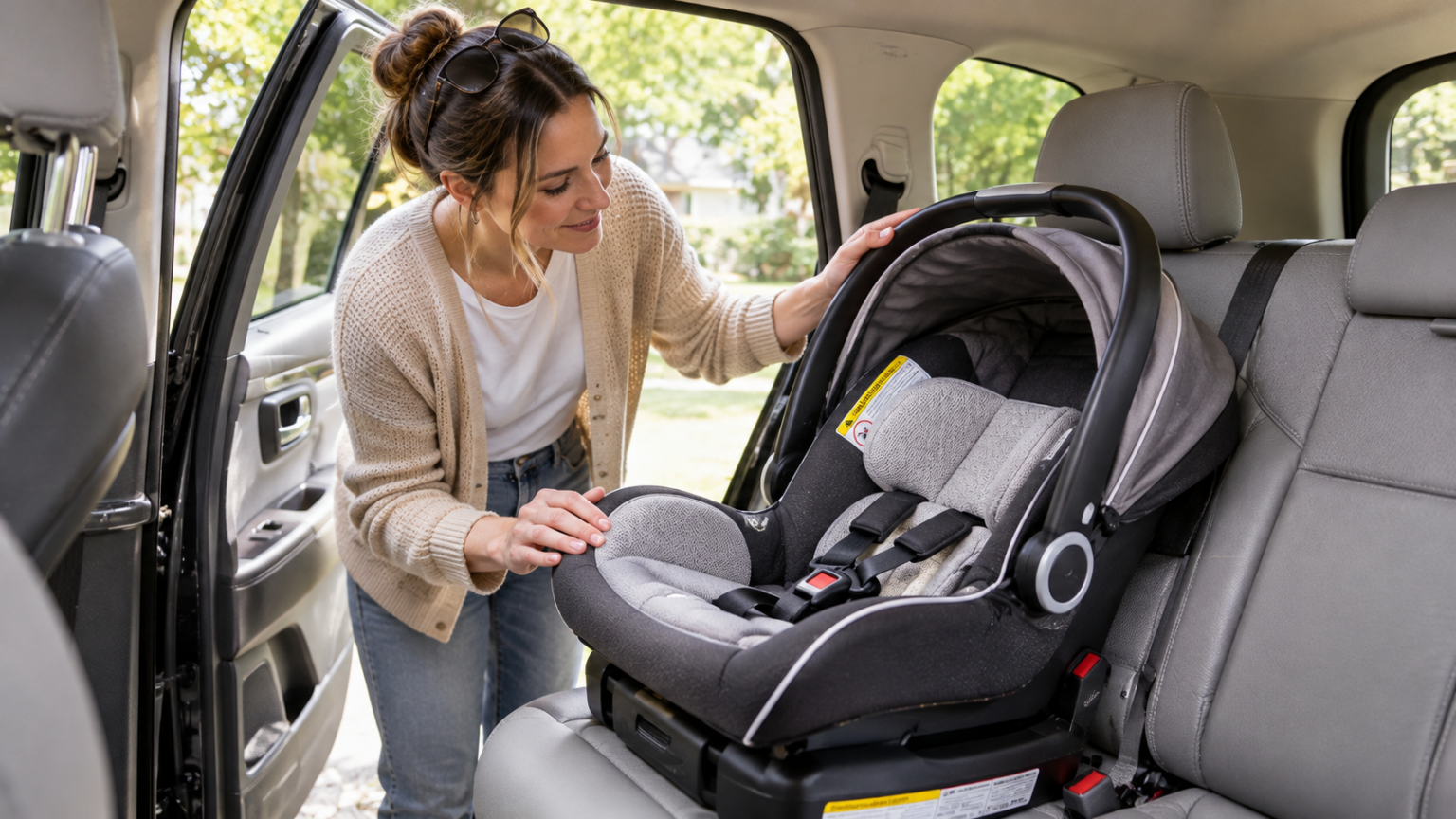
Baby Car Seat and Carrier: What You Must Know? Best Guide
Welcoming a baby into your family brings many exciting experiences, along with important new responsibilities. One of the biggest priorities […]
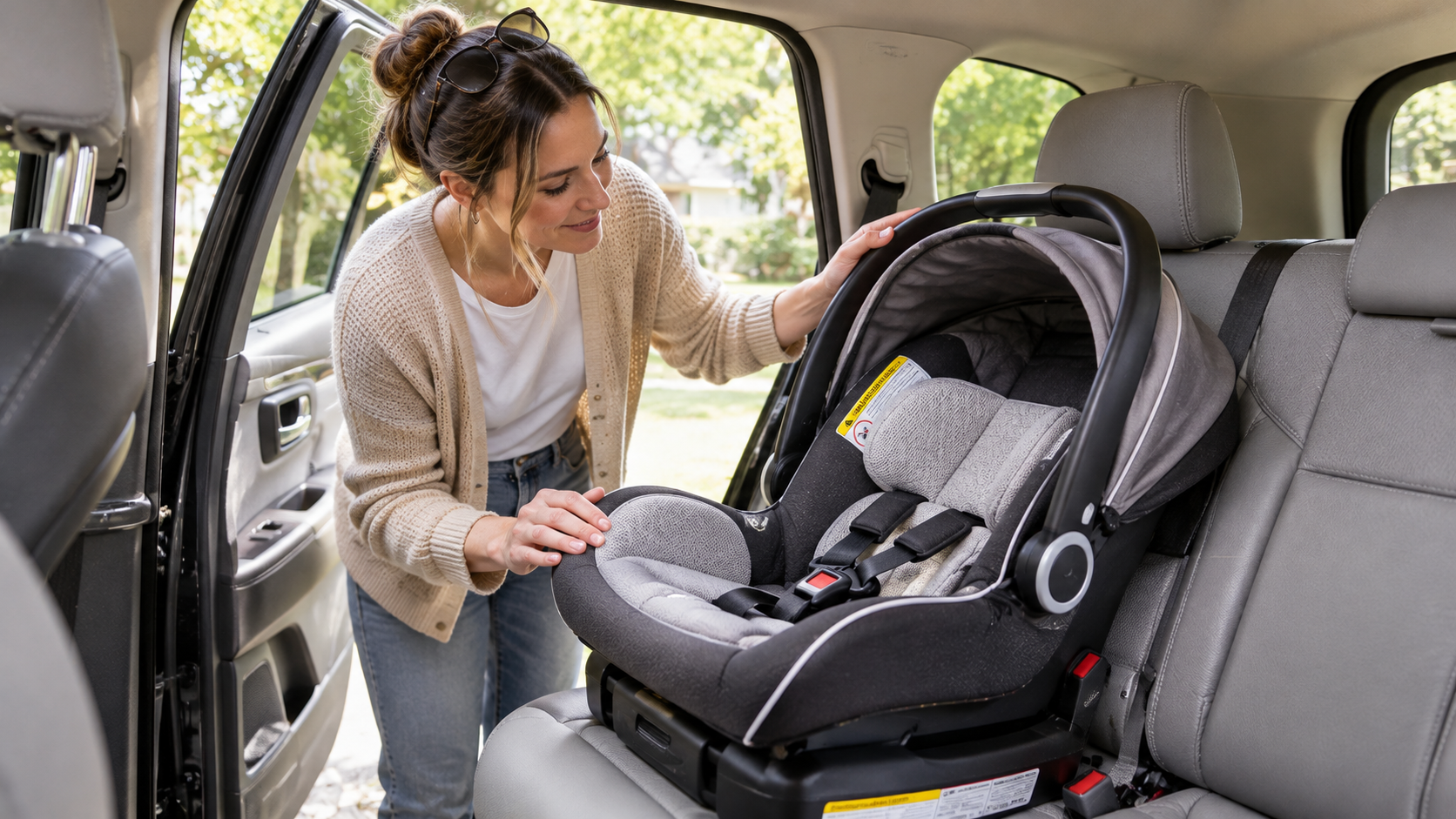
Welcoming a baby into your family brings many exciting experiences, along with important new responsibilities. One of the biggest priorities for parents is ensuring that their child travels safely, whether heading home from the hospital, visiting relatives, or going on a family trip.
Choosing appropriate baby travel equipment is an important part of that preparation.
Infant car seats, detachable carriers, convertible seats, and wearable baby carriers are designed for different purposes. Although these products may appear similar in advertisements, they are not interchangeable.
Understanding Baby Car Seat and Carrier: What You Must Know? helps parents recognize the differences between these products and use each one appropriately.
A properly selected and installed car seat is essential for protecting infants during vehicle travel. However, the protection it provides depends on the seat matching the child’s size, being installed correctly, and having the harness adjusted according to the manufacturer’s instructions.
The National Highway Traffic Safety Administration (NHTSA) recommends keeping children rear-facing for as long as possible, until they reach the maximum height or weight allowed by the car seat manufacturer. NHTSA
The importance of Baby Car Seat and Carrier: What You Must Know? also extends beyond driving. Parents need to understand safe carrying practices, appropriate travel breaks, and why infant car seats should not be used as routine sleeping spaces outside vehicles.
This guide explores the different types of infant travel equipment, important safety features, installation procedures, purchasing considerations, and common mistakes to avoid.
1. Understand the Difference Between a Car Seat and a Baby Carrier
Many parents use the words car seat and carrier interchangeably.
However, the terminology can describe different products designed for different situations.
The first important lesson in Baby Car Seat and Carrier: What You Must Know? is understanding precisely what each product is intended to do.
Infant Car Seat
An infant car seat is a child restraint designed to protect a baby during travel in a motor vehicle.
Rear-facing-only infant seats generally include a harness, protective shell, carrying handle, and a method for securing the seat inside the vehicle.
Many models come with a detachable installation base.
Detachable Infant Car Seat Carrier
Some infant car seats can be removed from their installed bases and carried by an adult using the built-in handle.
This allows parents to move a properly secured baby between the vehicle and another destination without immediately removing the child from the harness.
However, a detachable infant car seat is still primarily a vehicle restraint, not a routine sleep product.
Wearable Baby Carrier
A wearable baby carrier holds a baby against an adult’s body.
Examples include soft-structured carriers, wraps, and slings.
These products can make walking and certain daily activities more convenient, but they do not provide crash protection and must never replace a properly installed car seat during vehicle travel.
Stroller-Compatible Travel Systems
Some infant car seats attach to compatible stroller frames.
This arrangement is often called a travel system.
Parents should use only manufacturer-approved combinations and follow the attachment instructions.
The product-selection aspect of Baby Car Seat and Carrier: What You Must Know? begins with recognizing that each type of equipment has its own safety requirements and intended uses.
2. Explore the Main Types of Car Seats for Babies
Car seats differ in their design, size limits, adjustability, and expected period of use.
Some are intended exclusively for infants, while others can accommodate children through several stages of growth.
Choosing the right category is an important part of Baby Car Seat and Carrier: What You Must Know?
Joie i-Gemm 3 Encore Set Infant Car Seat – Buy at 4mybaby
Rear-Facing-Only Infant Seat
Designed for rear-facing vehicle travel. Usually includes a carrying handle and may attach to a separate base or compatible stroller. Must be replaced when the baby reaches the applicable size or fit limit.
Baby Equipment Rentals – Rent Cribs | BabyQuip
Convertible Car Seat
Can be used rear-facing and later forward-facing according to the manufacturer’s limits. Usually remains installed in the vehicle rather than functioning as a detachable carrier.
Perfect BV | Al ruim 20 jaar dé vloerspecialist in alle soorten vloeren
All-in-One Car Seat
Designed to accommodate multiple stages, potentially including rear-facing, forward-facing with a harness, and booster use. The exact stages and limits depend on the model.
Which Type Is Best for a Newborn?
Both suitable rear-facing-only infant seats and some convertible or all-in-one seats can accommodate newborns.
The best choice depends on the manufacturer’s minimum size requirements, harness fit, compatibility with the vehicle, and any specific medical considerations.
The American Academy of Pediatrics (AAP) explains that rear-facing-only seats are commonly designed with carrying handles, while convertible seats may offer higher rear-facing size limits for growing children. HealthyChildren.org
When Should Parents Change Car Seats?
A child must move out of a particular seat or seating mode when the manufacturer’s relevant height, weight, or fit limits have been reached.
If a baby outgrows a rear-facing-only infant carrier, the next seat should still be used rear-facing until the child reaches the rear-facing limits of that seat.
The age-related guidance in Baby Car Seat and Carrier: What You Must Know? is therefore based on proper fit and manufacturer limits—not simply on a child’s birthday.
3. Keep Babies Rear-Facing for as Long as Possible
Rear-facing car seats are designed to support a young child’s head, neck, and spine during a crash.
Infants have developing bodies, and rear-facing restraint systems distribute crash forces differently from forward-facing seats.
For this reason, rear-facing travel is a fundamental recommendation in U.S. child passenger safety guidance.
One of the most important principles in Baby Car Seat and Carrier: What You Must Know? is keeping a child rear-facing until the maximum allowed rear-facing height or weight limit of the chosen car seat is reached.
Why Rear-Facing Position Matters
In certain frontal collisions, a rear-facing seat supports the child’s head and torso against the seat shell.
This helps manage forces on vulnerable parts of the body.
The AAP recommends rear-facing car seats for infants and toddlers for as long as their particular restraint permits. HealthyChildren.org
Do Not Switch Based on Age Alone
Parents sometimes assume they must move their child forward-facing immediately after the first or second birthday.
However, many convertible seats allow rear-facing travel beyond these ages.
Check the manufacturer’s limits and applicable state law.
Keep the Seat in the Back of the Vehicle
The back seat is the recommended location for children.
Never install a rear-facing car seat in front of an active passenger airbag. Deployment can cause severe or fatal injuries. HealthyChildren.org
Check Vehicle Compatibility
Some car seats occupy substantial front-to-back space when rear-facing.
Before buying, confirm that the seat fits properly in your vehicle without violating either manufacturer’s installation instructions.
The rear-facing guidance in Baby Car Seat and Carrier: What You Must Know? highlights why a suitable installation is more important than choosing a car seat based on appearance alone.
4. Learn How to Install an Infant Car Seat Correctly
Even a well-designed car seat may not offer its intended protection when installed incorrectly.
Installation requirements vary depending on the vehicle, car seat model, seating position, and attachment method.
Parents should read both the car seat instruction manual and the relevant section of the vehicle owner’s manual.
Correct installation is a central safety requirement within Baby Car Seat and Carrier: What You Must Know?
Seat Belt Installation
Many car seats can be secured using the vehicle’s seat belt.
The belt must pass through the correct installation path and be locked or secured using the method specified by the manufacturers.
The seat should be tightened according to its instructions.
Lower Anchor Installation
The LATCH system uses lower anchor points provided in compatible vehicles.
Many car seats can be installed using approved lower-anchor attachments rather than the vehicle seat belt.
Parents should follow the weight limits and instructions for the specific lower-anchor installation.
Do not combine the seat belt and lower anchors unless both the car seat and vehicle manufacturers explicitly allow that configuration.
Check for Excessive Movement
NHTSA recommends checking movement at the belt path.
A correctly secured seat or base should not move more than one inch side-to-side or front-to-back when tested at that location. NHTSA
Do not assess tightness by pulling on the top of the seat, which may move even when the installation is secure.
Check the Recline Angle
Infant seats must be installed at the appropriate angle to support safe positioning.
Most rear-facing seats have angle indicators or adjustment mechanisms.
Use the manufacturer’s guidance rather than estimating the angle visually.
Verify the Carrier Is Attached
If using a detachable infant seat and base, follow the manufacturer’s procedure to make sure the seat is fully attached and locked before driving.
For baseless installation, use only the approved installation procedure.
The installation-related information in Baby Car Seat and Carrier: What You Must Know? emphasizes that parents should check their specific equipment rather than rely on generic instructions alone.
5. Adjust the Harness for a Secure and Comfortable Fit
A properly adjusted harness helps keep a child positioned within the protective car seat shell during vehicle travel.
Loose straps, twisted webbing, or incorrectly positioned harness components may reduce the restraint’s effectiveness.
Understanding proper harness fit is one of the most practical elements of Baby Car Seat and Carrier: What You Must Know?
Position Shoulder Straps Correctly
For rear-facing use, the shoulder straps should generally emerge from the harness slots at or below the child’s shoulders, following the manufacturer’s specifications.
Make sure the webbing lies flat without twists.
Tighten the Harness Properly
NHTSA recommends tightening the harness until you cannot pinch extra strap material at the shoulder.
The harness should be snug against the baby’s body.
Position the Chest Clip
On U.S. seats equipped with a chest clip, place it at armpit level.
This helps maintain correct harness positioning.
Avoid Bulky Clothing
Thick winter coats and padded clothing can compress during a crash, leaving unnecessary space beneath the harness.
Secure the baby in suitable lightweight clothing, and place blankets or outer layers over the fastened harness when additional warmth is needed.
Use Only Approved Inserts and Accessories
Some car seats include newborn inserts or positioning accessories designed for that particular model.
Use the accessories required or permitted by the manufacturer, and remove them when instructed.
Do not add aftermarket head cushions, thick padding, or harness accessories that have not been approved for the seat. NHTSA specifically warns against placing unauthorized thick padding behind or underneath the baby. NHTSA
The harness-related guidance in Baby Car Seat and Carrier: What You Must Know? is especially important because correct fit must be checked as a baby grows.
6. Understand Safe Sleep Rules for Infant Carriers
Infants frequently fall asleep during car journeys.
A baby may also fall asleep shortly after being carried indoors in a detachable car seat.
However, a car seat should not be treated as an alternative to a crib, bassinet, or other approved flat infant sleep surface.
An essential safety topic within Baby Car Seat and Carrier: What You Must Know? is understanding where babies should sleep.
Sleeping During Vehicle Travel
A baby may doze off while properly restrained in an appropriately installed car seat during a journey.
This does not mean the car seat is a suitable place for unsupervised or routine sleeping once the vehicle is no longer being used for travel.
Move the Baby to a Safe Sleep Surface
The AAP advises that if a baby falls asleep in a car seat, stroller, swing, sling, or other sitting or carrying device, caregivers should move the baby to a firm, flat sleep surface on their back as soon as practical. HealthyChildren.org
Why Car Seats Are Not Cribs
A baby’s head may fall forward or their body may shift when a sitting device is placed outside its intended environment.
This can interfere with breathing.
The risk is especially important for young infants who have limited head and neck control.
Avoid Using Carriers for Unsupervised Naps
Do not leave a baby sleeping unattended in a car seat placed on a floor, couch, bed, or other household surface.
Never place an infant car seat on an elevated countertop or table because of fall hazards.
The U.S. Consumer Product Safety Commission (CPSC) warns that infant car seats and other inclined sitting products should not be used as infant sleep spaces. U.S. Consumer Product Safety Commission
The sleep-related advice in Baby Car Seat and Carrier: What You Must Know? is simple but critical: a product designed for vehicle travel does not replace an appropriate infant sleep environment.
7. Use Wearable Baby Carriers Safely
Wearable carriers can provide convenience for caregivers who want to keep a baby close while walking or performing appropriate everyday activities.
However, soft-structured carriers and fabric slings have different safety requirements from vehicle car seats.
The babywearing discussion in Baby Car Seat and Carrier: What You Must Know? focuses on supporting the baby’s position and keeping the airway clear.
Keep the Baby’s Face Visible
The baby’s nose and mouth must remain unobstructed.
Avoid allowing fabric, clothing, or the caregiver’s body to cover the face.
Prevent Chin-to-Chest Positioning
The baby’s head should not be forced forward with the chin pressed into the chest.
This position can restrict breathing.
The AAP emphasizes maintaining an open airway and checking the baby’s position frequently when using wearable carriers. HealthyChildren.org
Follow Minimum Age and Size Requirements
A carrier should be appropriate for the baby’s current weight, height, development, and any health considerations.
Premature infants or babies with respiratory concerns may need specific medical advice before using certain upright carriers.
Check Straps and Fasteners
Inspect the carrier for damaged seams, worn fabric, and defective buckles.
Ensure the product supports the baby properly and that all fasteners are secured according to its instructions.
Never Use a Wearable Carrier Instead of a Vehicle Car Seat
A sling or wearable carrier cannot provide the crash protection required for an infant traveling in a car.
The carrying-related guidance in Baby Car Seat and Carrier: What You Must Know? is to use each product only for its intended purpose and never substitute convenience for safety.
8. Choose the Right Features When Buying Baby Travel Equipment
Baby travel products are available in many styles, price ranges, and configurations.
Some advertise lightweight designs, removable covers, compatible strollers, rotating mechanisms, or advanced installation indicators.
Although these features can be helpful, parents should prioritize proper safety compliance, fit, and ease of correct use.
Choosing appropriate features is another important part of Baby Car Seat and Carrier: What You Must Know?
Check Safety Standards
In the United States, car seats intended for vehicle use must comply with applicable federal motor vehicle safety requirements.
When purchasing, choose a legitimate product intended for your market, with appropriate labels, instructions, and manufacturer information.
Be cautious of counterfeit or unverified products advertised through unfamiliar sellers.
Check Height and Weight Limits
Every child restraint has specific limits.
These determine whether the seat is suitable for the baby’s current size and when a different seat or seating mode is required.
Do not assume a product will fit throughout an entire age range merely because its packaging uses terms such as newborn or toddler.
Evaluate Installation Convenience
Useful features may include clearly marked belt paths, built-in installation indicators, a compatible load leg, or an easy-to-adjust harness.
The benefits and installation requirements depend on the specific product.
Consider Cleaning and Maintenance
Removable covers can be convenient, but the cleaning method must follow the manufacturer instructions.
Never machine-wash harness webbing, soak straps, or apply cleaning chemicals unless the car seat manufacturer expressly permits it.
Assess Portability
A detachable infant carrier may make short transfers easier.
However, the carrier’s weight, handle design, and compatibility with your vehicle or stroller should be considered.
A heavier seat may become uncomfortable to carry as your baby grows.
The shopping considerations in Baby Car Seat and Carrier: What You Must Know? are about choosing a model you can install and use correctly on every journey.
9. Be Careful When Buying a Used or Secondhand Car Seat
Secondhand baby equipment can reduce household expenses.
However, used car seats require particular attention because prior damage, missing parts, product recalls, or an unknown history can affect their suitability.
The secondhand purchasing advice within Baby Car Seat and Carrier: What You Must Know? is to verify the seat’s condition and history before considering it for use.
Check the Crash History
A used seat should have a reliable and complete history.
NHTSA’s used-seat checklist states that a seat should never have been involved in a moderate-to-severe crash. A seat involved in any crash must also be assessed under the specific manufacturer’s replacement policy. NHTSA
If the crash history is unknown, choosing another seat is safer.
Identify the Manufacturer and Model
The seat should have a legible model number and manufacture-date label.
This information is necessary for checking recalls and determining whether the product has exceeded its manufacturer-defined useful life.
Check for Missing Components
All required parts must be present, including the relevant harness components, buckles, covers, and approved accessories.
Do not improvise replacements for missing safety components.
Confirm the Instructions Are Available
You should be able to access the exact manufacturer’s instruction manual for the model.
Some manufacturers provide digital copies.
Check the Expiration or Useful Life
Many manufacturers specify a useful-life period for their seats.
The period is not universal, so confirm the exact requirements for the seat rather than assuming all products expire after the same number of years.
A critical lesson from Baby Car Seat and Carrier: What You Must Know? is that an unknown secondhand car seat may not be worth the potential savings.
10. Plan Safer and More Comfortable Family Journeys
Traveling with a baby requires more preparation than traveling alone.
Feeding schedules, diaper changes, changes of clothing, and rest breaks can affect the trip.
A secure car seat remains essential throughout the journey, even during short trips close to home.
The travel-planning part of Baby Car Seat and Carrier: What You Must Know? involves balancing convenience with proper restraint use and regular checks on the baby.
Take Appropriate Travel Breaks
Babies should not remain in a car seat for unnecessarily extended periods.
The AAP recommends taking regular breaks during long journeys and having an adult observe the baby when practical. HealthyChildren.org
Plan stops that allow you to check the baby, feed or change them safely, and provide time outside the restraint.
Avoid Feeding While Driving
Stop the vehicle in a safe location when a baby needs feeding or care.
Never loosen the harness or remove the child from the restraint while the vehicle is moving.
Keep Necessary Supplies Accessible
Pack diapers, wipes, spare clothes, suitable feeding supplies, and other essentials.
Organize supplies securely so loose objects do not become hazards during sudden braking or a collision.
Monitor Temperature and Clothing
Check that the baby is dressed appropriately for the environment.
Avoid unnecessary blankets under the harness and keep the vehicle interior at a comfortable temperature.
Never Leave a Baby Alone in a Vehicle
Even a brief absence can be dangerous.
Temperatures inside a parked vehicle can rise rapidly, and leaving children unattended creates other risks.
The journey-related guidance in Baby Car Seat and Carrier: What You Must Know? is to prioritize consistent safety practices rather than rushing through travel preparations.
Comparing Infant Travel Products
| Product | Main purpose | Typical use | Important limitation |
|---|---|---|---|
| Rear-facing-only infant seat | Crash protection during vehicle travel | Newborn and infant stages within limits | Outgrown at the specified size or fit limit |
| Convertible car seat | Crash protection across rear-facing and later forward-facing stages | Infancy through later childhood, depending on model | Usually not designed to be carried outside the vehicle |
| All-in-one car seat | Multiple child passenger restraint stages | Several growth stages within stated limits | Larger size may complicate installation |
| Detachable infant carrier | Vehicle restraint with portable carrying feature | Short transfers between car and destinations | Not a substitute for a crib or routine infant sleep space |
| Wearable baby carrier | Holding baby close during appropriate daily activities | Walking and other approved use | Never a substitute for a car seat |
| Stroller travel system | Compatible stroller and infant seat arrangement | Moving between vehicle and stroller | Compatibility and correct attachment must be confirmed |
Practical Car Seat Safety Checklist
Before every journey, confirm that your baby’s restraint is appropriate for their current size, properly installed, and correctly secured.
Pre-trip safety check
0/10Car seat is appropriate for the baby’s height, weight, and developmental stageSeat is correctly positioned rear-facing when requiredCar seat is installed in an approved back-seat positionSeat or base moves no more than one inch at the belt pathRecline angle matches the manufacturer’s instructionsHarness straps are flat, snug, and correctly positionedChest clip is at armpit level on seats equipped with oneNo bulky clothing or unapproved padding is beneath the harnessDetachable seat is fully locked into the base, if applicableSeat has been checked for recalls and manufacturer instructions
Reset checklist
This checklist is a reminder, not a replacement for the instructions supplied with the car seat and vehicle or an inspection by a certified Child Passenger Safety Technician.
Common Mistakes Parents Should Avoid
Parents often focus on purchasing a comfortable-looking infant seat but overlook the importance of proper installation and harness adjustment.
Some common mistakes include changing to forward-facing travel too early, leaving the harness loose, using bulky clothing under the straps, installing a rear-facing seat near an active frontal airbag, and using unauthorized padding.
Other errors involve allowing babies to sleep unattended in detachable car seats outside the vehicle or using wearable carriers in situations where a crash-tested car restraint is required.
A family should also avoid relying on an unfamiliar secondhand seat without verifying its history and recall status.
The practical value of Baby Car Seat and Carrier: What You Must Know? comes from understanding that safe equipment and correct everyday use are equally important.
Frequently Asked Questions
What type of car seat is best for a newborn?
A rear-facing-only infant seat or a convertible car seat approved for the newborn’s size can be appropriate. The seat must fit the child and vehicle properly, and parents must follow the manufacturer’s installation instructions.
How long should a baby remain rear-facing?
Keep the child rear-facing until they reach the maximum permitted rear-facing height or weight limit of their car seat. Do not move a child forward-facing solely because they reach a particular birthday.
Can a baby sleep in a car seat?
A baby may fall asleep while properly secured in a car seat during vehicle travel. However, car seats should not be used for routine sleeping outside the vehicle. Transfer a sleeping baby to an appropriate firm, flat sleep surface as soon as practical.
Is a detachable infant carrier the same as a wearable baby carrier?
No. A detachable infant car seat provides vehicle crash protection when installed correctly. A wearable baby carrier holds a child against the caregiver’s body and is not intended to protect the child in a vehicle crash.
Can I install a baby car seat without a separate base?
Some rear-facing-only infant car seats permit installation without a base using an approved vehicle seat belt method. Check the exact manual. Never assume every model supports baseless installation.
Should I buy a secondhand baby car seat?
Consider it only when you can verify the complete history, acceptable condition, manufacturer-defined useful life, recall status, required components, and instructions. Avoid used seats with unknown crash histories.
Conclusion
Choosing the right baby travel equipment is an important responsibility for every parent or caregiver.
Infant car seats, convertible restraints, detachable carriers, and wearable baby carriers offer different benefits, but each product must be used for its intended purpose.
Understanding Baby Car Seat and Carrier: What You Must Know? helps parents make informed decisions about rear-facing protection, correct installation, harness fit, safe carrying, and travel planning.
A properly installed car seat should be suitable for the baby’s current height and weight, positioned according to safety recommendations, and checked regularly as the child grows.
Parents should also remember that detachable infant carriers are not substitutes for cribs, and wearable carriers cannot replace crash-tested child restraints.
Ultimately, Baby Car Seat and Carrier: What You Must Know? is about developing safe habits that protect your baby during everyday journeys and family travel.
For additional assistance, use the NHTSA Car Seat Finder and inspection resources to explore appropriate seat types and locate certified installation assistance.

Written by Twastia Editorial Team
Twastia Editorial Team shares practical insights about website design, SEO services, Google Ads, content marketing, social media, conversion rate optimization, and digital marketing strategy.
Last updated: Nov 8, 2026
Related posts from Twastia
Explore more useful articles from twastia.com about digital marketing, SEO, websites, ads, content, and growth strategy.