commercial hvac grilles and diffusers: The Best Guide for Facility Managers
In modern commercial building architecture, designing an efficient heating, ventilation, and air conditioning system requires much more than selecting powerful […]
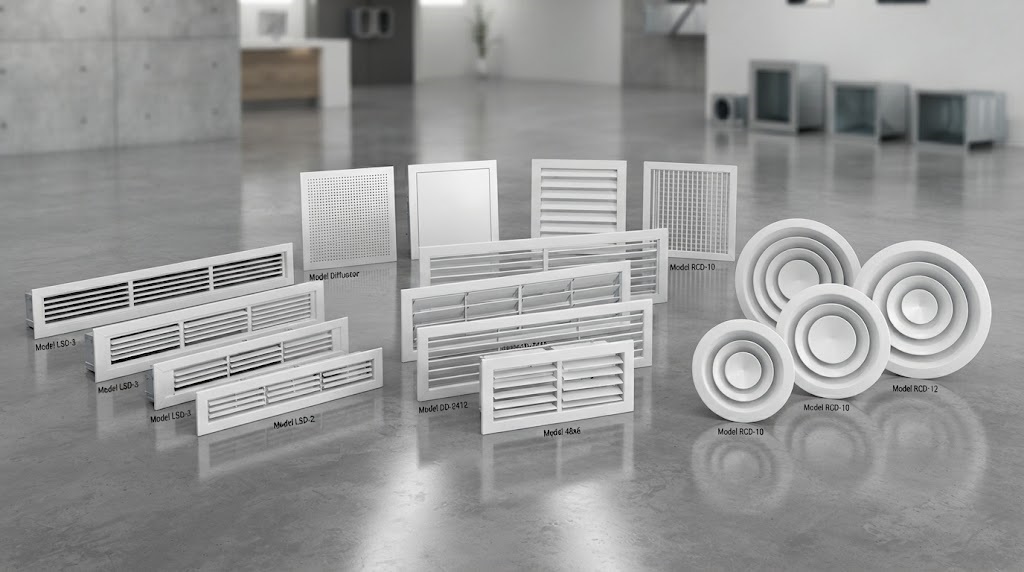
In modern commercial building architecture, designing an efficient heating, ventilation, and air conditioning system requires much more than selecting powerful chillers and air handling units. The ultimate success of any environmental control system depends on how effectively conditioned air is distributed throughout the occupied space. Specifying high-performance commercial hvac grilles and diffusers is essential for maintaining consistent indoor thermal comfort, controlling relative humidity, and ensuring optimal indoor air quality across office towers, healthcare facilities, educational institutions, and retail complexes.
When air distribution components are improperly selected or incorrectly placed, occupants suffer from uncomfortable cold drafts, stagnant air zones, noisy environments, and uneven temperature gradients. Understanding the engineering, selection criteria, and operational mechanics of commercial hvac grilles and diffusers enables facility managers, mechanical engineers, and building owners to maximize HVAC efficiency while reducing overall energy consumption. This comprehensive guide explores everything you need to know about specifying, installing, and maintaining air terminal devices in commercial environments.
Understanding the Fundamentals of Commercial Air Distribution
Air distribution components, often referred to collectively as air terminal devices or outlets, serve as the final physical interface between the ductwork system and the occupied space. Specifying modern commercial hvac grilles and diffusers ensures balanced air distribution, preventing localized hot spots and drafty seating areas that lead to occupant complaints.
To make informed specification decisions, it is critical to distinguish between the three primary categories of air outlets:
- Grilles: These are louvered or covered openings that allow air to pass through freely. Grilles typically lack directional control mechanisms or internal volume dampers and are primarily utilized for return air, exhaust air, or simple transfer air applications.
- Registers: A register is essentially a grille equipped with an integrated directional louver set and an adjustable volume control damper. Registers allow facility operators to manually regulate the volume and direction of air discharging into a room.
- Diffusers: Unlike simple grilles or registers, diffusers are sophisticated aerodynamic devices engineered to discharge supply air in specific directional patterns (such as 360-degree radial or 4-way horizontal distribution). Diffusers induce room air mixing, drawing ambient room air into the primary supply air stream to rapidly equalize temperature and velocity.
Key Types of Commercial HVAC Grilles and Diffusers
Commercial spaces vary widely in ceiling height, architectural aesthetic, occupant density, and thermal load requirements. Evaluating different commercial hvac grilles and diffusers allows architects and mechanical engineers to select the exact terminal device for each unique building zone.
Supply and Return Air Grilles
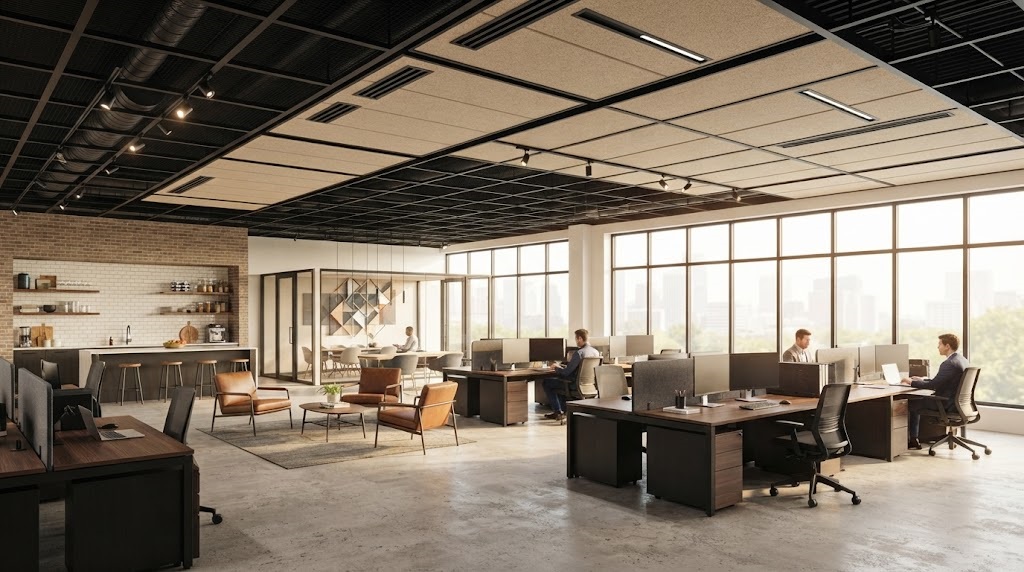
Supply air grilles feature adjustable or fixed louvers (deflection blades) designed to direct air streams vertically or horizontally. Double-deflection supply grilles feature two sets of perpendicular adjustable blades, giving technicians precise control over both throw distance and spread pattern. When selecting commercial hvac grilles and diffusers for perimeter walls or return air plenums, return air grilles utilize fixed angled louvers or eggcrate grids designed to pull spent room air back into the return ductwork smoothly and quietly.
Square, Round, and Architectural Ceiling Diffusers
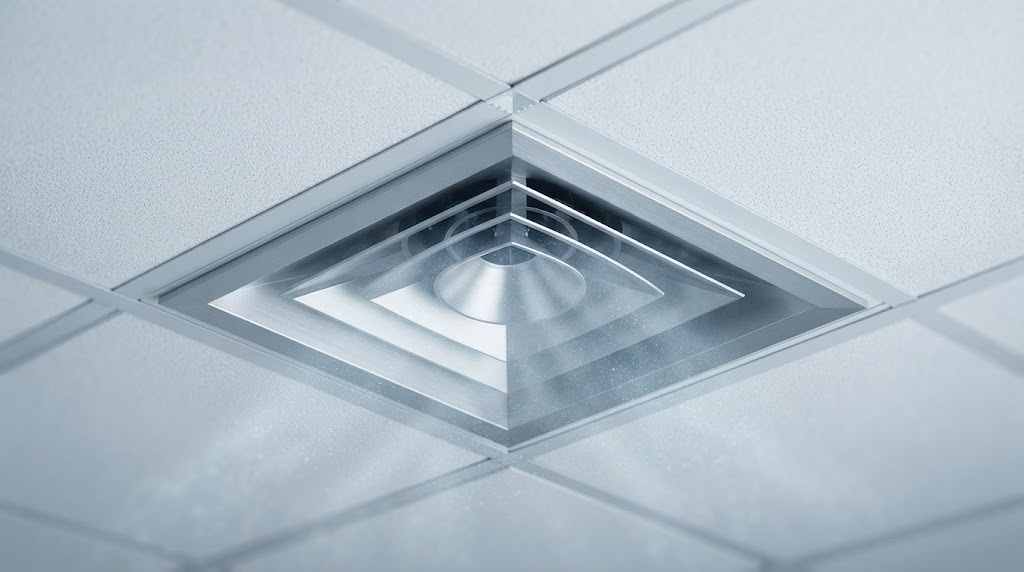
Ceiling-mounted diffusers are the workhorses of commercial office environments. Multi-cone round diffusers and louvered face square diffusers create a radial air distribution pattern along the ceiling plane. Architectural plaque diffusers offer a flat, minimalist aesthetic that blends seamlessly into modern suspended grid ceilings while delivering high-induction air mixing.
Linear Slot Diffusers and Bar Grilles
For high-end architectural applications, floor-to-ceiling glass facades, and perimeter heating zones, linear slot diffusers are the preferred choice. Incorporating linear commercial hvac grilles and diffusers provides sleek architectural lines while projecting a continuous curtain of conditioned air down window walls to offset exterior solar heat gain or cold glass radiant loads.
Perforated Face and Heavy-Duty Industrial Outlets
Cleanrooms, hospital operating theaters, and laboratory environments demand low-velocity, non-turbulent air delivery. Perforated face diffusers deliver a laminar air shower that washes over critical zones without inducing ambient room contaminants. In contrast, manufacturing plants and high-bay warehouses utilize heavy-duty industrial drum louvers and high-capacity spiral duct diffusers capable of projecting air across long throw distances.
Airflow Dynamics: Throw, Spread, Drop, and Noise Criteria
The physics governing air distribution requires a careful balance between air velocity, throw distance, and acoustics. Properly engineered commercial hvac grilles and diffusers prevent drafts by utilizing the Coanda effect—the tendency of a high-velocity fluid jet to adhere to an adjacent flat surface, such as a ceiling. When cool supply air hugs the ceiling, it gradually mixes with warm room air before gently dropping into the occupied zone.
Key aerodynamic metrics include:
- Throw: The distance an air stream travels from the outlet face before its velocity slows to a specified terminal velocity (typically 50, 100, or 150 feet per minute).
- Spread: The maximum horizontal or vertical divergence of the air stream as it exits the terminal device.
- Drop: The vertical distance the air stream falls below the ceiling plane as it loses velocity and cools.
- Noise Criteria (NC): Acoustic comfort is paramount in commercial settings. Selecting calibrated commercial hvac grilles and diffusers maintains ideal noise criteria ratings (typically NC 25 to NC 35 for open offices and conference rooms), preventing distracting whistling or rushing air noises caused by high static pressure drop.
Material Selection and Construction Standards
Operating environments dictate the structural materials and protective finishes specified for air outlets. Manufacturers craft commercial hvac grilles and diffusers from three primary materials:
- Extruded Aluminum: Aluminum is the industry standard for commercial construction due to its lightweight strength, natural corrosion resistance, and crisp, clean mitered corners. It is ideal for humid environments and high-grade office finishes.
- Galvanized and Cold-Rolled Steel: Steel outlets offer exceptional impact resistance and structural durability at a cost-effective price point, making them popular for industrial facilities, gymnasiums, and utility rooms.
- 304 and 316 Stainless Steel: Stainless steel is specified for sterile environments, medical laboratories, food processing plants, and marine coastal applications where harsh chemical sanitizers or saltwater corrosion would degrade standard metals.
Finishes typically include electrostatically applied factory powder coatings in standard white, custom RAL colors, clear anodized aluminum, or specialized antimicrobial coatings designed to inhibit bacterial growth in healthcare facilities.
Energy Efficiency and Building Code Compliance
Modern commercial building codes emphasize energy conservation and indoor air quality. Efficient commercial hvac grilles and diffusers optimize variable air volume (VAV) systems by maintaining effective air distribution patterns even when system air volume turns down during part-load conditions.
When terminal devices lack sufficient turn-down performance, low-velocity supply air dumps straight down into occupants’ workspaces, causing thermal discomfort and forcing facility operators to over-cool spaces. Upgrading legacy commercial hvac grilles and diffusers significantly reduces fan power usage, supports LEED building certification goals, and ensures compliance with ANSI/ASHRAE Standard 55 (Thermal Environmental Conditions for Human Occupancy) and ASHRAE Standard 62.1 (Ventilation for Acceptable Indoor Air Quality).
Best Practices for Installation, Air Balancing, and Maintenance
Achieving peak HVAC performance requires seamless coordination between mechanical contractors, testing and balancing (TAB) technicians, and facility maintenance teams.
- Proper Installation: Ensure rigid or flexible duct connections to collar necks are sealed with mastic and mechanical clamps to eliminate air leakage. Avoid sharp duct bends directly upstream of diffusers, as uneven air entering the neck creates turbulence and noise.
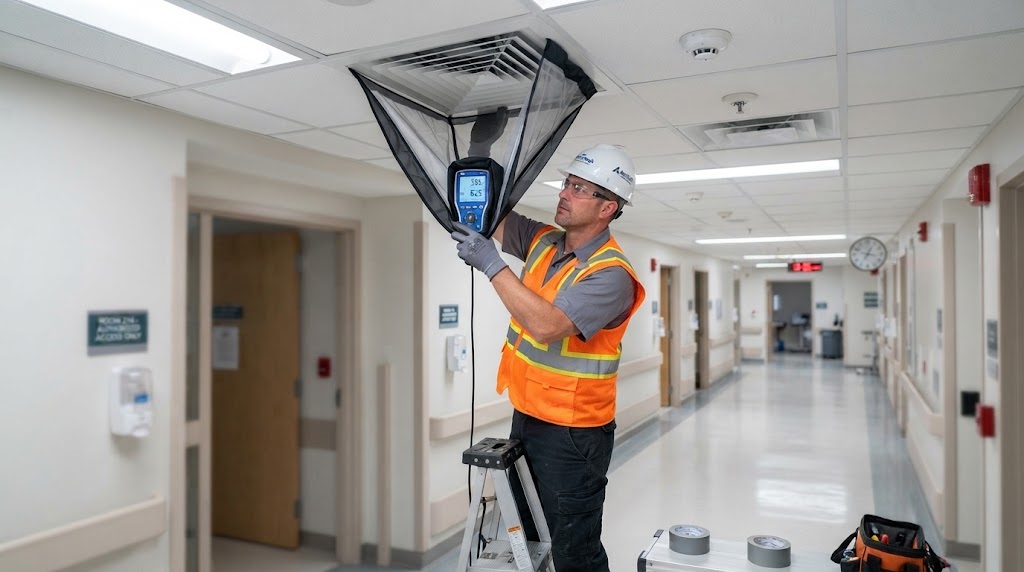
- Air Balancing: Installing high-grade commercial hvac grilles and diffusers requires precise air balancing using a calibrated flow hood (balometer). Technicians adjust integrated radial or opposable blade dampers to match design CFM values specified in mechanical drawings.
- Routine Maintenance: Routine cleaning of commercial hvac grilles and diffusers preserves indoor air quality and prevents unsightly smudging on surrounding ceiling tiles caused by secondary room dust induction. Facility teams should inspect, vacuum, and wipe down face louvers every six to twelve months, replacing filter-grille media regularly in units serving localized fan coils.
Frequently Asked Questions
What is the primary difference between commercial hvac grilles and diffusers?
A grille is a simple louvered opening designed to allow air to enter or exit ductwork with minimal directional control, mostly used for return or exhaust air. In contrast, diffusers are aerodynamically designed to distribute supply air in multi-directional patterns, inducing room air mixing to equalize temperature and velocity throughout the space.
How often should commercial hvac grilles and diffusers be cleaned in an office building?
In standard commercial office buildings, air outlets should be visually inspected and cleaned every 6 to 12 months. Facilities with higher particulate loads, such as healthcare environments, restaurants, or industrial manufacturing plants, require quarterly cleaning to maintain indoor air quality and prevent dust accumulation around ceiling tiles.
How do I select the right size for commercial hvac grilles and diffusers?
Sizing depends on required air volume (CFM), target throw distance, acceptable static pressure drop, and the desired Noise Criteria (NC) rating for the space. Engineers utilize manufacturer performance tables to select neck sizes and face dimensions that deliver necessary airflow without exceeding velocity limits or generating excessive noise.
What causes black dust smudges around ceiling diffusers?
Black smudges around diffusers are typically caused by “dirt induction.” As high-velocity supply air exits the diffuser face, it creates a localized low-pressure zone that draws ambient room air and suspended dust particles up toward the ceiling, depositing fine dirt onto surrounding ceiling tiles over time.
Are linear slot diffusers suitable for perimeter heating applications?
Yes, linear slot diffusers are highly effective for perimeter heating and cooling applications along floor-to-ceiling glass curtain walls. They project a continuous vertical curtain of conditioned air that intercepts solar heat gain during summer and prevents cold glass downdrafts during winter.
What materials are recommended for cleanroom and hospital air outlets?
High-grade 304 or 316 stainless steel and anodized extruded aluminum are recommended for cleanrooms and hospital operating suites. These materials resist harsh chemical disinfectants, prevent corrosion, and support specialized antimicrobial or HEPA-filtered laminar flow designs.
Can upgrading air diffusers improve commercial building energy efficiency?
Yes, modern high-induction diffusers allow VAV systems to operate effectively at lower air volumes without dumping air or creating stagnant zones. This enables building management systems to reduce fan speeds and HVAC energy usage while maintaining ASHRAE-compliant indoor air quality and occupant comfort.
Conclusion
Selecting the right commercial hvac grilles and diffusers plays a vital role in building management, indoor air quality, and occupant thermal comfort. By understanding the distinct performance characteristics of supply grilles, ceiling diffusers, and linear slot outlets, building owners and facility engineers can design spaces that promote occupant health and productivity. Furthermore, factoring in aerodynamic metrics like throw, drop, and noise criteria ensures quiet, draft-free air delivery across all operating conditions.
Investing in modern commercial hvac grilles and diffusers delivers long-term energy savings by optimizing air mixing, supporting low-turndown VAV operation, and protecting building equipment. Whether you are constructing a new corporate headquarters or retrofitting an existing medical facility, prioritizing high-quality air distribution components is a smart, lasting investment in commercial real estate performance.

Written by Twastia Editorial Team
Twastia Editorial Team shares practical insights about website design, SEO services, Google Ads, content marketing, social media, conversion rate optimization, and digital marketing strategy.
Last updated: Oct 20, 2026
Related posts from Twastia
Explore more useful articles from twastia.com about digital marketing, SEO, websites, ads, content, and growth strategy.