MDF boards: Easy Guide to Cutting, Painting, and DIY Projects
When planning custom cabinetry, interior trim, or home furniture projects, choosing the right sheet material is critical to achieving a […]

When planning custom cabinetry, interior trim, or home furniture projects, choosing the right sheet material is critical to achieving a professional finish. Across workshop spaces and industrial manufacturing facilities in the United States, MDF boards have become a foundational building material for carpenters, furniture makers, and weekend DIY enthusiasts alike. Known formally as medium-density fiberboard, this engineered composite sheet delivers an exceptionally smooth, uniform surface that eliminates the knots, grain direction irregularities, and natural defects typically found in traditional lumber.
Understanding the full potential of MDF boards allows builders to make informed decisions regarding material selection, structural joinery, and surface finishing techniques. While natural timber and plywood certainly hold valuable places in modern construction, medium-density fiberboard offers unique performance characteristics that excel in specific interior woodworking applications. In this comprehensive guide, we will explore how engineered fiberboards are manufactured, compare them against alternative panel products, break down essential working techniques for cutting and painting, and examine the most effective ways to utilize these versatile panels in your home improvement projects.
What Are MDF boards and How Are They Manufactured?
To appreciate why fiberboard panels behave the way they do under workshop tools, it helps to examine how raw timber is transformed into dense, engineered sheet goods.
The Composition and Production Process
Unlike natural solid wood or layered plywood sheets, MDF boards are produced by breaking down hardwood and softwood residuals into fine, individual wood fibers. These microscopic wood particles are thoroughly washed, dried, and blended with synthetic resin binders and paraffin wax. The coated fiber mix is then formed into a thick, continuous mat and fed into a massive industrial press. Under intense heat and high hydraulic pressure, the resin cures, bonding the fibers together into a dense, solid sheet with a uniform internal structure throughout.
Because the manufacturing process completely breaks down the grain orientation of natural timber, MDF boards do not expand or contract across their width or length nearly as dramatically as solid wood when exposed to ambient humidity shifts. This structural isotropic stability makes fiberboard panels an ideal core substrate for large cabinet doors, decorative wall cladding, and precision-milled architectural trim.
Key Physical Properties and Density Levels
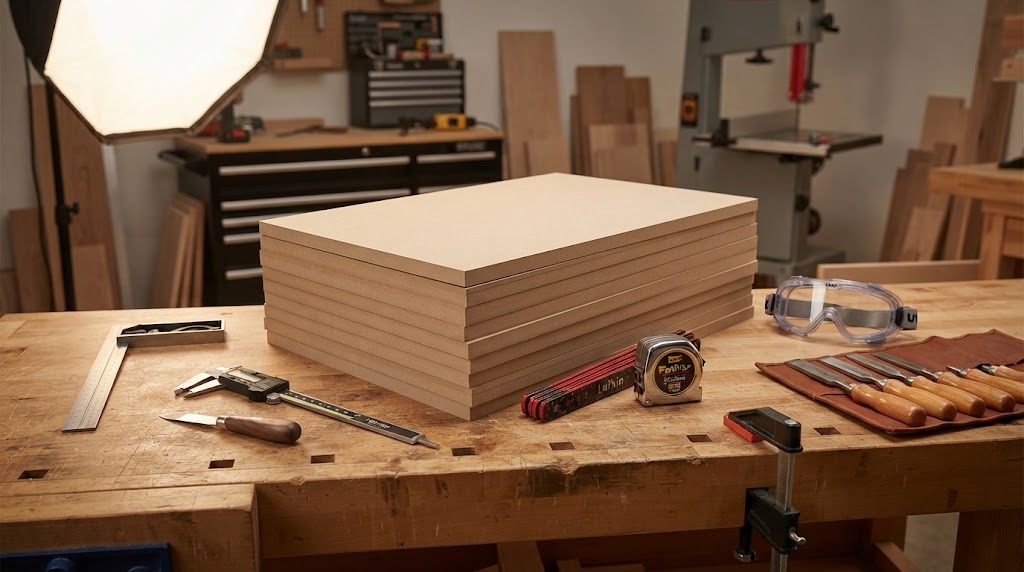
Engineered fiberboards are categorized primarily by their density and weight. Standard interior sheets typically possess a density ranging between 38 and 50 pounds per cubic foot (600 to 800 kg/m³). The extreme pressure applied during hot-pressing results in panels with ultra-smooth outer faces and a slightly less dense core center. This ultra-flat surface profile accepts paint, wood veneers, and plastic laminates with extraordinary consistency, eliminating the grain telegraphing issues often encountered when painting natural softwood or birch plywood.
Comparing MDF boards vs Plywood and Solid Wood
Selecting the ideal sheet material requires evaluating structural demands, environmental exposure, and overall project budget constraints.
Surface Smoothness and Workability
When it comes to achieving a glass-smooth painted finish, MDF boards outperform almost all competing wood panel products. Plywood features a rotary-cut wood veneer face that exhibits natural grain texture, wood knots, and occasional core voids that can show through paint layers. Solid lumber requires extensive sanding, grain filling, and surface preparation to eliminate texture. Fiberboard sheets, conversely, offer a defect-free surface right out of the factory, allowing woodworkers to apply primers and topcoats with minimal prep work.
Structural Strength and Screw Retention
While fiberboards offer superior surface smoothness, solid wood and high-grade plywood maintain distinct advantages in raw bending strength and edge screw holding power. Plywood consists of cross-laminated wood veneers, which distribute tensile strength across multiple directions and allow screws to bite tightly into solid wood grain. MDF boards, while dense and heavy, lack continuous grain fibers. Consequently, driving fasteners directly into raw edges without drilling proper pilot holes can cause the material to split or delaminate. Utilizing specialized coarse-thread wood screws or cabinet assembly fasteners prevents joint failure in fiberboard assemblies.
Cost Differences and Budget Considerations
Budget management is another area where engineered panels excel. Manufacturing fiberboard utilizes forest thinnings and recycled sawmill wood chips, making production significantly less expensive than harvesting large timber logs for solid boards or premium cabinet-grade plywood. Incorporating MDF boards into large furniture projects—such as closet organizers, bookcases, and entertainment centers—drastically reduces material costs while delivering a clean, modern aesthetic.
Key Types and Grade Variations of MDF boards
Not all fiberboard sheets are created equal. Chemical formulations and pressing techniques have advanced to create specialized panel grades tailored for specific environmental conditions.
Standard Interior Grade Panels
Standard interior-grade sheets represent the vast majority of composite panels sold in home improvement centers across America. Designed exclusively for dry indoor environments, standard MDF boards are widely used for freestanding furniture, interior door frames, baseboards, and wall wainscoting. However, standard panels absorb water rapidly if exposed to direct flooding or standing liquid, causing the wood fibers to swell permanently.
Moisture-Resistant and Exterior Grade Options
For projects located in humid areas—such as bathroom vanities, kitchen sink cabinets, and laundry room shelving—manufacturers produce moisture-resistant sheets, commonly referred to as MR-MDF. These specialized MDF boards incorporate moisture-repellent resin binders, often dyed green for easy identification in lumber yards. While MR panels resist swelling from ambient steam and high humidity, they are not completely waterproof and should never be used outdoors in direct rain or submerged in standing water.
Fire-Retardant and Ultra-Lite MDF boards
Commercial construction projects often require materials that comply with strict municipal building fire codes. Fire-retardant fiberboard sheets are manufactured with flame-extinguishing chemical additives that slow flame spread and smoke development, often dyed red or pink for clear building inspector identification. For applications where panel weight is a primary concern, ultra-lite MDF boards utilize lightweight wood species and lower pressing densities, reducing total sheet weight by up to 30 percent to make overhead ceiling installations and portable trade show displays much easier to handle.
Easy Techniques for Working with MDF boards
Working with engineered composite panels requires specific workshop techniques to ensure clean cuts, tight joints, and beautiful painted finishes.
Safe Cutting Practices and Dust Control
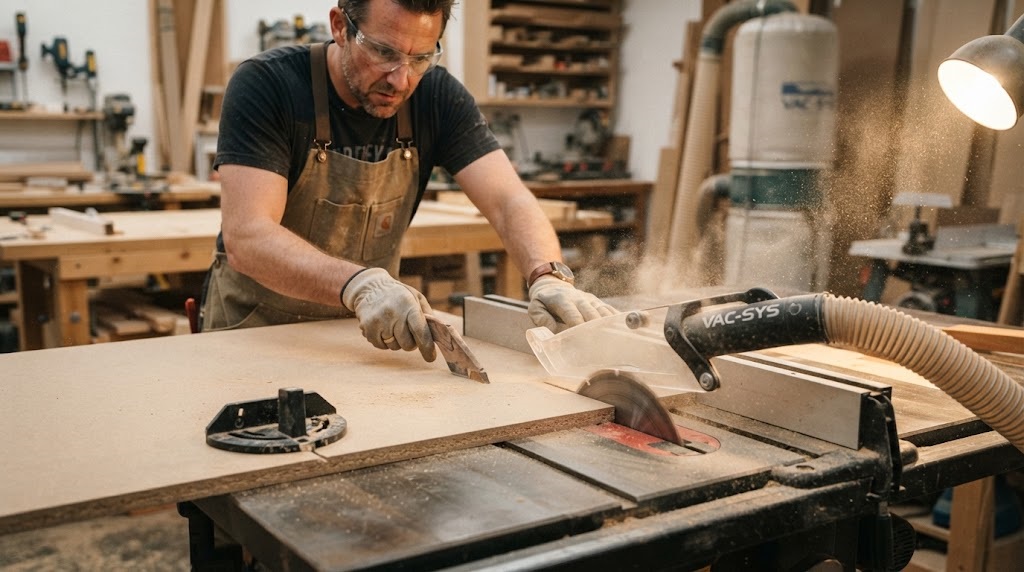
Because engineered panels are held together with synthetic resins and compressed fine particles, cutting them produces microscopic airborne wood dust that can irritate respiratory passages and eyes. Always wear a NIOSH-approved N95 or N100 respirator mask, safety goggles, and employ active dust collection attached to your power tools when cutting MDF boards. To prevent face chipping along cut lines, utilize sharp, carbide-tipped saw blades with high tooth counts (60 to 80 teeth on a 10-inch table saw blade).
Fastening and Joinery Methods
Creating strong, durable joints with composite panels requires proper mechanical attachment strategies. Always drill pre-clearance pilot holes and countersinks before driving screws near board edges. Pocket-hole joinery, wood dowels, biscuits, and dado joints bonded with standard polyvinyl acetate (PVA) wood glue produce exceptionally strong assemblies. When attaching face frames or trim moldings, pneumatic brad nailers paired with wood glue provide quick, secure holding power while leaving minimal nail holes to fill.
Sealing and Painting Fiberboard for a Flawless Finish
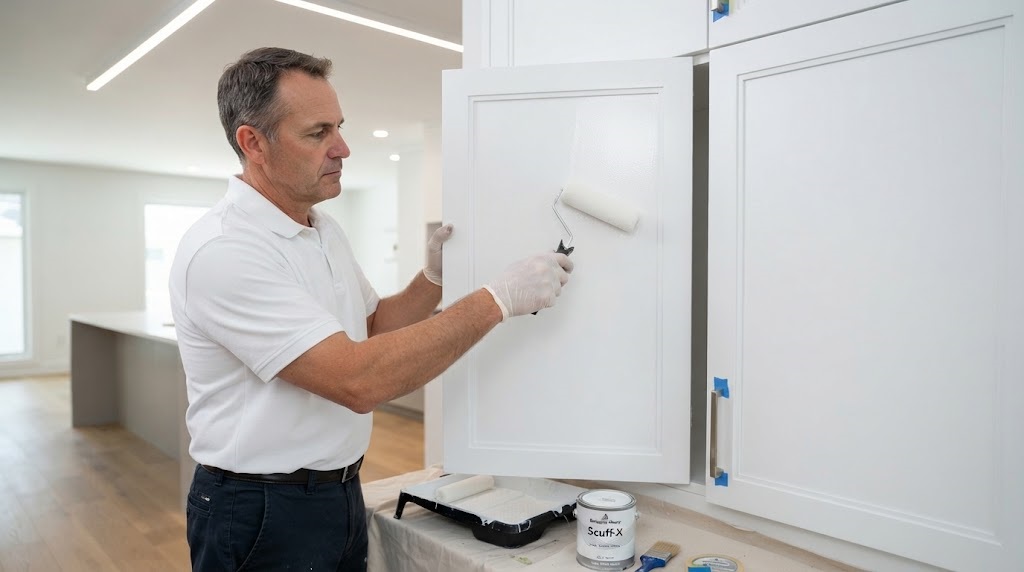
Achieving a flawless factory paint finish requires properly addressing the exposed edges of composite panels. Because board edges reveal the less dense inner core of fine fibers, raw edges absorb liquid paint rapidly and expand slightly if unsealed.
- Step 1: Edge Sanding and Filling: Sand all cut edges smooth using 180-grit to 220-grit sandpaper. Apply a thin layer of lightweight drywall spackle, wood filler, or shellac-based sealer over exposed edges to fill porous fibers, then sand flush once dry.
- Step 2: Solvent-Based Priming: Never apply water-based latex primers directly to unsealed raw composite panels, as water causes surface fibers to swell. Instead, apply a coat of solvent-based shellac or oil-based primer to seal the entire surface.
- Step 3: Topcoat Application: Once the solvent primer cures completely, lightly sand the panel face with 320-grit sandpaper to remove any nibs. Apply two topcoats of high-quality acrylic latex, enamel, or polyurethane paint using a fine-finish foam roller or airless sprayer for a smooth, durable shell.
Common Applications of MDF boards in Modern Homes
The exceptional flatness and smooth surface profile of composite panels make them a preferred choice for numerous architectural and decorative applications throughout modern residential real estate.
Custom Cabinetry and Built-In Shelving
Custom cabinet makers frequently utilize composite panels for cabinet door centers, drawer fronts, and carcass components. Because painted composite doors do not shift or warp with seasonal humidity changes, cabinet doors built with MDF boards prevent paint cracking along corner miter joints, ensuring long-lasting painted kitchen aesthetics.
Interior Wall Paneling and Architectural Trim
Adding architectural character to plain drywall is simple using engineered trim components. Board-and-batten accent walls, shaker-style wainscoting, beadboard paneling, and deep crown moldings crafted from MDF boards offer sharp, crisp profile lines that paint beautifully, instantly elevating hallway corridors, dining rooms, and primary bedrooms.
Frequently Asked Questions
Are MDF boards safe to use inside homes?
Yes. Modern fiberboard panels manufactured in or imported into the United States must comply with strict EPA TSCA Title VI and CARB Phase 2 regulations governing formaldehyde emission levels, ensuring ultra-low indoor emissions that are completely safe for residential interior spaces.
Can you use MDF boards outdoors if painted properly?
No. Standard composite panels should never be used outdoors. Even when heavily primed and painted, outdoor moisture, ground contact, and seasonal rain will eventually penetrate the paint layer, causing the internal fibers to swell, rot, and structural breakdown to occur.
Which saw blade is best for cutting MDF boards without chipping?
A sharp, carbide-tipped circular or table saw blade featuring a high tooth count (at least 60 teeth for a 10-inch blade or 48 teeth for a 7.25-inch blade) and a Triple Chip Grind (TCG) or Alternate Top Bevel (ATB) tooth geometry produces clean cuts without surface chipping.
What is the best way to fill screw holes in composite panels?
Fill countersunk screw heads using a high-quality solvent-based wood filler or lightweight joint compound. Overfill the hole slightly to account for shrinkage, allow it to dry completely, and sand it flush with 220-grit sandpaper before applying primer.
How do fiberboard panels compare to particle board?
Fiberboard panels are significantly stronger, denser, and smoother than particle board. Particle board is made from larger, visible wood chips and shavings bonded together, resulting in a weaker core with rough edges, whereas fiberboard utilizes fine wood fibers pressed under much higher pressure.
Can you stain medium-density fiberboard to look like real wood?
Because composite panels lack natural wood grain patterns and growth rings, traditional wood stains will simply soak in and create a muddy, dark, uneven surface. To achieve a wood-grain look, builders apply real wood veneers over the panel or use specialized faux-wood graining painting tools.
Why do screws strip out so easily in composite panels?
Fiberboard panels do not contain continuous interlocking wood grain fibers. If a screw is over-tightened or driven without a proper pilot hole, the internal compressed fibers crumble. Using coarse-thread cabinet screws and avoiding over-torquing prevents stripped screw holes.
Conclusion
Engineered fiberboard panels have fundamentally revolutionized the modern woodworking, cabinetry, and home improvement industries. By offering an ultra-smooth, dimensionally stable, and cost-effective alternative to solid lumber, MDF boards empower woodworkers and home renovators to build stunning custom furniture, seamless wall paneling, and flawless painted cabinetry. By mastering proper cutting safety, using correct
fasteners, and applying oil-based sealers prior to painting, you can achieve professional, factory-grade results on every project. Whether you are transforming a plain bedroom with custom wainscoting or crafting an entire wall of built-in library bookshelves, incorporating MDF boards into your material selection ensures smooth surfaces, straight lines, and lasting beauty for your home.

Written by Twastia Editorial Team
Twastia Editorial Team shares practical insights about website design, SEO services, Google Ads, content marketing, social media, conversion rate optimization, and digital marketing strategy.
Last updated: Oct 20, 2026
Related posts from Twastia
Explore more useful articles from twastia.com about digital marketing, SEO, websites, ads, content, and growth strategy.