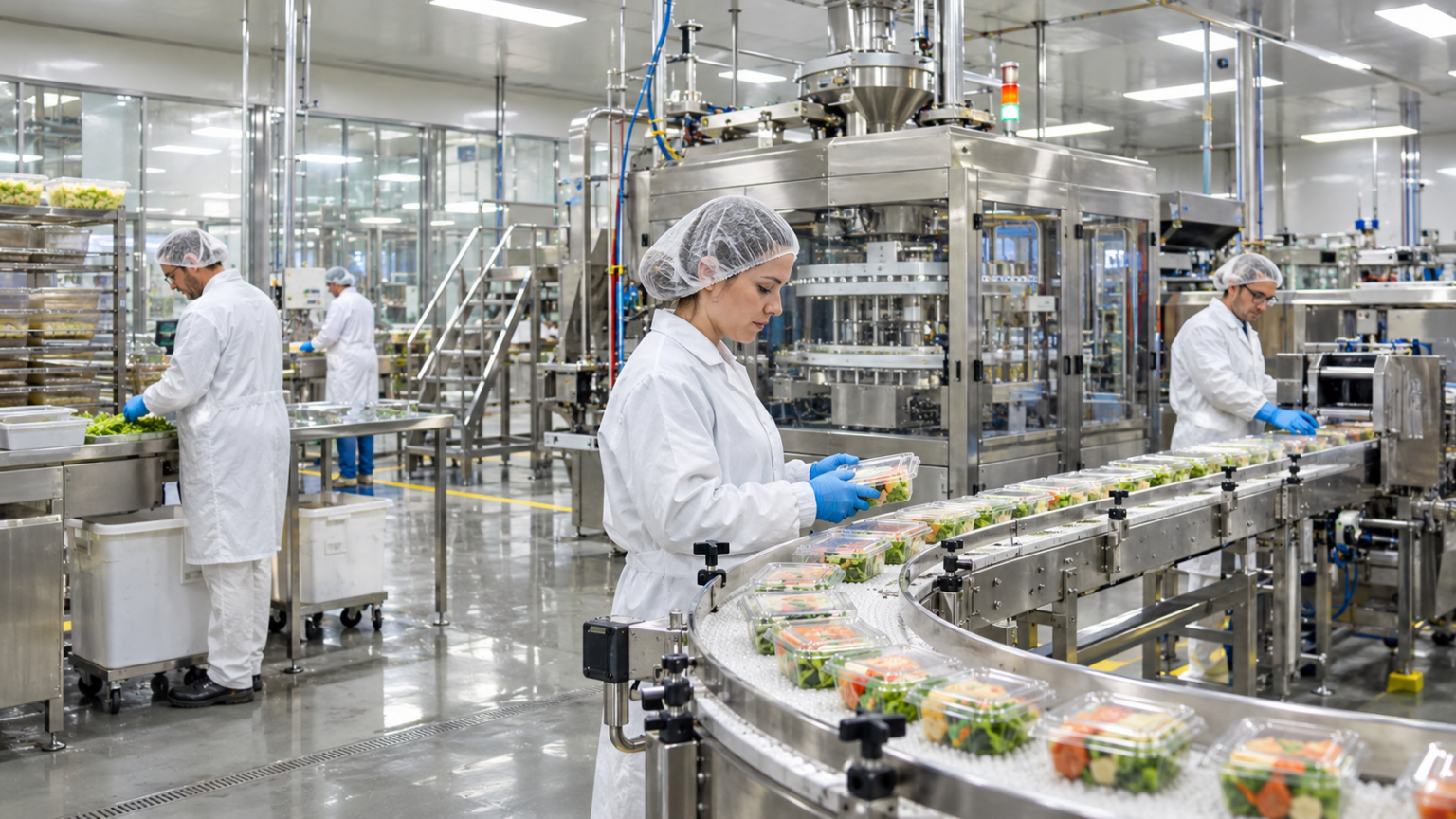
Food Processing Plant Hygiene: Best 5 Ways to Maintain Safe Operations
A clean-looking production floor does not necessarily mean the food moving through it is safe. Harmful microorganisms, allergen residues, contaminated […]
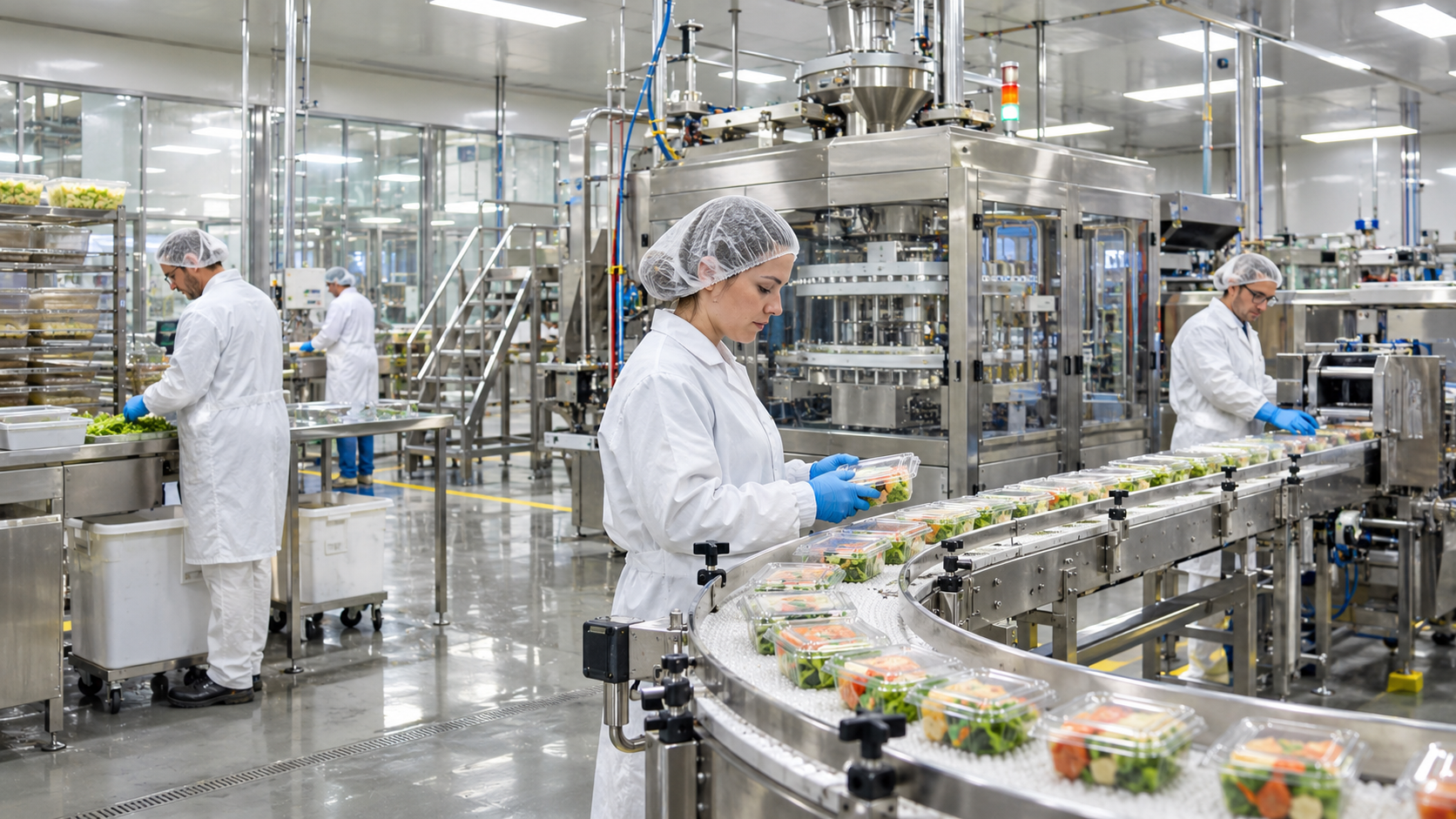
A clean-looking production floor does not necessarily mean the food moving through it is safe. Harmful microorganisms, allergen residues, contaminated equipment, and poor employee practices can create hazards long before a problem becomes visible. Strong food processing plant hygiene depends on a consistent system that prevents contamination, detects weaknesses, and corrects them before affected products reach customers.
Whether you manufacture baked goods, sauces, frozen meals, or packaged snacks, the basic priorities are similar: train people, clean equipment, separate hazards, protect the facility, and verify that controls work. These five methods explain how food processing plant hygiene becomes part of daily operations rather than an occasional inspection-day exercise.
1. Make Personal Hygiene a Daily Operating Standard
Every person entering a production area can introduce contamination. Employees touch door handles, packaging, tools, and sometimes exposed food. A training presentation is not enough if sinks are inconvenient or supervisors ignore unsafe habits. Effective food processing plant hygiene starts with facilities and expectations that support correct behavior during every shift.
Build Reliable Handwashing Habits
Place accessible, properly equipped handwashing stations where workers need them. Train personnel to wash before starting food work, after breaks or restroom visits, and whenever hands may have become contaminated. The FDA’s current good manufacturing practice requirements under 21 CFR 117.10 address hand hygiene, cleanliness, and reporting health conditions that could contaminate food. LII / Legal Information Institute
Gloves are not a substitute for clean hands. Workers must change contaminated gloves and maintain them in a sanitary condition. Supervisors should observe practices during real production, not only during scheduled training.
Manage Clothing, Health, and Visitors
Use suitable protective garments, effective hair or beard restraints where necessary, and rules for jewelry and personal possessions. Employees should understand when illness, infected wounds, or other health concerns must be reported. Provide a confidential, practical reporting process rather than encouraging people to hide symptoms to avoid missing a shift.
Train for the Actual Job
A packaging employee, sanitation crew member, and maintenance contractor may face different risks. Demonstrate the hygiene procedures relevant to each role, then verify understanding through observations and refresher coaching. Document training and correct recurring failures promptly. Strong food processing plant hygiene requires supervisors to model the same practices they expect from everyone else.
2. Clean and Sanitize Equipment Using Written Procedures
Food residues can collect under conveyor belts, around seals, inside valves, and in hard-to-reach equipment joints. Cleaning removes soil; sanitizing, where appropriate, reduces microorganisms on adequately cleaned surfaces. These are related but distinct activities. A dependable food processing plant hygiene program defines both steps instead of relying on a generic instruction to “wash everything.”
Create Equipment-Specific Sanitation Procedures
Write instructions identifying responsible personnel, approved chemicals, concentrations, contact times, water requirements, necessary disassembly, and safe reassembly. Procedures should reflect the manufacturer’s equipment guidance and the facility’s actual products. Wet cleaning is not ideal for every dry-processing environment, where added moisture may introduce new microbial risks.
Use food-contact-compatible chemicals according to their labels. Never mix products casually or assume that a stronger solution disinfects better. Store cleaning chemicals securely and prevent residues or overspray from contacting food and packaging.
Verify Cleaning Before Production Restarts
Conduct pre-operational inspections of surfaces, guards, drains, and difficult equipment areas. Depending on the hazard, verification may include visual checks, appropriate allergen residue testing, microbial sampling, or other validated methods. ATP testing can indicate residual organic material but does not alone prove the absence of pathogens or allergens.
The FDA identifies sanitation controls, monitoring, corrective actions, and verification as elements of preventive control systems for covered facilities. If a check fails, investigate and document the response before restarting the affected operation. Food processing plant hygiene improves when cleaning results are measured rather than assumed. FDA
3. Prevent Cross-Contamination and Allergen Cross-Contact
Even spotless equipment can become a contamination route when raw materials, finished food, employees, and tools move through the same areas without controls. Cross-contamination can transfer microorganisms; allergen cross-contact can introduce an allergenic ingredient into food where it is not intended. Food processing plant hygiene therefore includes the design of product and personnel movement, not just surface cleaning.
Separate Raw and Ready-to-Eat Operations
Assess where incoming ingredients, waste, unprocessed products, and finished goods travel. Use physical separation where needed, establish controlled traffic routes, and dedicate utensils or equipment when the hazard analysis supports it. Color-coded tools can help staff follow the system, but colors alone do not prevent contamination.
Pay particular attention to transitions after maintenance, spills, rework, and movement between different hygiene zones. Clearly defined procedures should specify when people change protective garments or clean tools before entering another area.
Control Allergens Through Scheduling and Labels
Identify allergenic ingredients in each recipe and assess where residues could move between products. Appropriate controls may involve dedicated lines, validated changeover cleaning, sequencing production from lower-risk to higher-risk products, and confirming that packaging bears the correct declaration.
The FDA’s preventive controls framework explicitly includes allergen cross-contact prevention and appropriate labeling. A product with the wrong label can pose a serious risk even when the facility appears immaculate. Food processing plant hygiene must therefore connect production, sanitation, quality assurance, and packaging checks. FDA
4. Maintain a Facility That Resists Contamination
Walls, drains, ventilation, pest access points, and water supplies shape how easily a plant can be kept clean. Broken floor coatings can hold residue; pooled water can support microbial growth; poorly managed waste can attract pests. A strong food processing plant hygiene plan includes preventive maintenance of the building itself.
Inspect Water, Drainage, and Condensation
Water touching food or food-contact surfaces must be safe and suitable for its purpose. Inspect hoses, plumbing, drains, and potential backflow hazards. Address roof leaks and condensation above production areas. Do not allow uncontrolled water to migrate from lower-hygiene spaces into ready-to-eat processing zones.
FDA sanitary-facility requirements under 21 CFR 117.37 cover water supplies, plumbing, handwashing facilities, toilets, and waste handling. Specific monitoring needs depend on the process and applicable requirements, so facilities should develop controls from their hazards rather than copy generic checklists. LII / Legal Information Institute
Make Pest Prevention Routine
Keep doors and openings appropriately sealed, clear clutter from exterior walls, manage landscaping and standing water, and remove waste in a timely way. Inspect receiving areas and storage zones for evidence of activity. Use a qualified pest-control program suited to food production, and keep pest-control chemicals from contaminating ingredients or equipment.
Maintenance teams should report damaged screens, cracked seals, flaking surfaces, or hard-to-clean repairs. Improving food processing plant hygiene may require replacing an unsuitable piece of equipment or redesigning a drain, not merely increasing cleaning frequency.
5. Monitor Risks, Document Actions, and Improve Continuously
A plant can have excellent written procedures that fail during a busy shift. Monitoring connects the food safety plan to actual production. Records show what was checked, what happened when limits were missed, and whether corrective action worked. This is the difference between hygiene as a slogan and food processing plant hygiene as an accountable system.
Start With a Product-Specific Hazard Analysis
Identify reasonably foreseeable biological, chemical, physical, and allergen hazards associated with your products and process. Apply required preventive controls and monitor them according to their role in the food safety plan. Temperature, time, pH, sanitation, and supply-chain controls may all matter, but no single list suits every food manufacturer.
In the United States, FDA’s FSMA preventive-controls rule generally applies to covered human-food facilities, with important exemptions and modified requirements. Meat and poultry operations may fall under distinct USDA-FSIS requirements. Have a qualified food safety professional determine the rules applicable to your operation. FDA+1
Use Environmental Monitoring When Risk Requires It
Some ready-to-eat operations must consider contamination from environmental pathogens such as Listeria monocytogenes. FDA guidance identifies environmental monitoring as a verification activity when an environmental pathogen in ready-to-eat food is a hazard requiring a preventive control. Other facilities may use risk-based sampling as appropriate to their food and process. FDA
Testing cannot substitute for sanitary design, good practices, or effective cleaning. Positive findings should prompt a documented investigation, evaluation of affected food, corrective action, and any required follow-up sampling. Food processing plant hygiene improves when data leads to decisions rather than merely filling a binder.
Build a Short, Useful Review Routine
At the start of a shift, confirm that sanitation and pre-operational checks are complete. During production, monitor the relevant controls and unusual conditions. At handoff, communicate unresolved concerns. Review trends regularly to identify repeated failures, insufficient training, or equipment that needs redesign.
A Useful Daily Checklist
- Confirm handwashing supplies, protective garments, and employee health reporting arrangements.
- Review equipment sanitation results and any outstanding corrective actions.
- Check raw-to-ready-to-eat separation, allergen changeovers, and label verification.
- Inspect drains, water leaks, waste areas, and signs of pest activity.
- Record required monitoring, investigate deviations, and release product only through established procedures.
The checklist supports food processing plant hygiene but cannot replace a tailored hazard analysis or legally required food safety plan.
Common Mistakes That Weaken a Sanitation Program
The most damaging mistakes are often ordinary: relying on a cleaning smell as evidence of effectiveness, allowing workers to keep contaminated gloves on, storing allergens beside unprotected ingredients, and treating a passing audit as proof that every shift is safe. Another mistake is recording temperatures without acting when they fall outside established limits.
For lasting food processing plant hygiene, make it easy to report problems early. Reward accurate reporting and timely corrections rather than hiding deviations. When procedures are difficult to follow, investigate whether the equipment, schedule, staffing, or training is the root cause.
Frequently Asked Questions
What is the difference between cleaning and sanitizing?
Cleaning removes food residue, grease, and other soil. Sanitizing reduces microorganisms on surfaces through a suitable process after cleaning when required. Sanitation procedures should specify how both steps are performed and verified, based on the equipment and hazards.
How frequently should processing equipment be cleaned?
There is no universal schedule. The product, processing method, equipment design, allergens, and identified hazards determine cleaning frequency. Food processing plant hygiene programs should define validated or otherwise justified intervals and additional cleaning triggers, such as changeovers or contamination incidents.
Are gloves enough to keep food safe?
No. Gloves can become contaminated and do not replace handwashing, employee health practices, or safe handling. Workers must use them correctly and change or clean them as the operation requires.
Does every factory need environmental pathogen testing?
Not in the same way. Applicability depends on products, hazards, regulations, and the facility’s food safety plan. FDA requires environmental monitoring where contamination of ready-to-eat food with an environmental pathogen is identified as a hazard requiring a preventive control.
How can small processing plants improve hygiene affordably?
Start by fixing high-risk weaknesses: access to handwashing, clear sanitation instructions, separation of ingredients, and monitoring that produces actionable records. Affordable improvements are most valuable when a hazard assessment confirms that they address a real risk.
Who should oversee sanitation and hygiene?
Management must assign competent people responsibility for sanitation, while trained employees carry out assigned procedures. Qualified personnel should manage applicable preventive-controls activities. Effective food processing plant hygiene depends on shared responsibility, not a single inspector visiting occasionally.
Conclusion
Food safety begins with habits that work during ordinary production, not just during inspections. Train employees, clean and sanitize equipment properly, keep contamination pathways separated, maintain the building, and verify that preventive controls function as intended. Each step reinforces the others. Good food processing plant hygiene also requires consistent oversight and a willingness to correct weak practices.
For a sustainable food processing plant hygiene program, tailor procedures to your products and hazards, empower staff to report problems, and document what you learn. Consistent prevention protects consumers, reduces avoidable disruption, and strengthens confidence in the food leaving your facility.

Written by Twastia Editorial Team
Twastia Editorial Team shares practical insights about website design, SEO services, Google Ads, content marketing, social media, conversion rate optimization, and digital marketing strategy.
Last updated: Nov 10, 2026
Related posts from Twastia
Explore more useful articles from twastia.com about digital marketing, SEO, websites, ads, content, and growth strategy.