How Much Does Abstract Art Sell For?: Best Price Guide
Abstract art has become an important part of contemporary interiors, private collections, and the global fine art market. From colorful […]
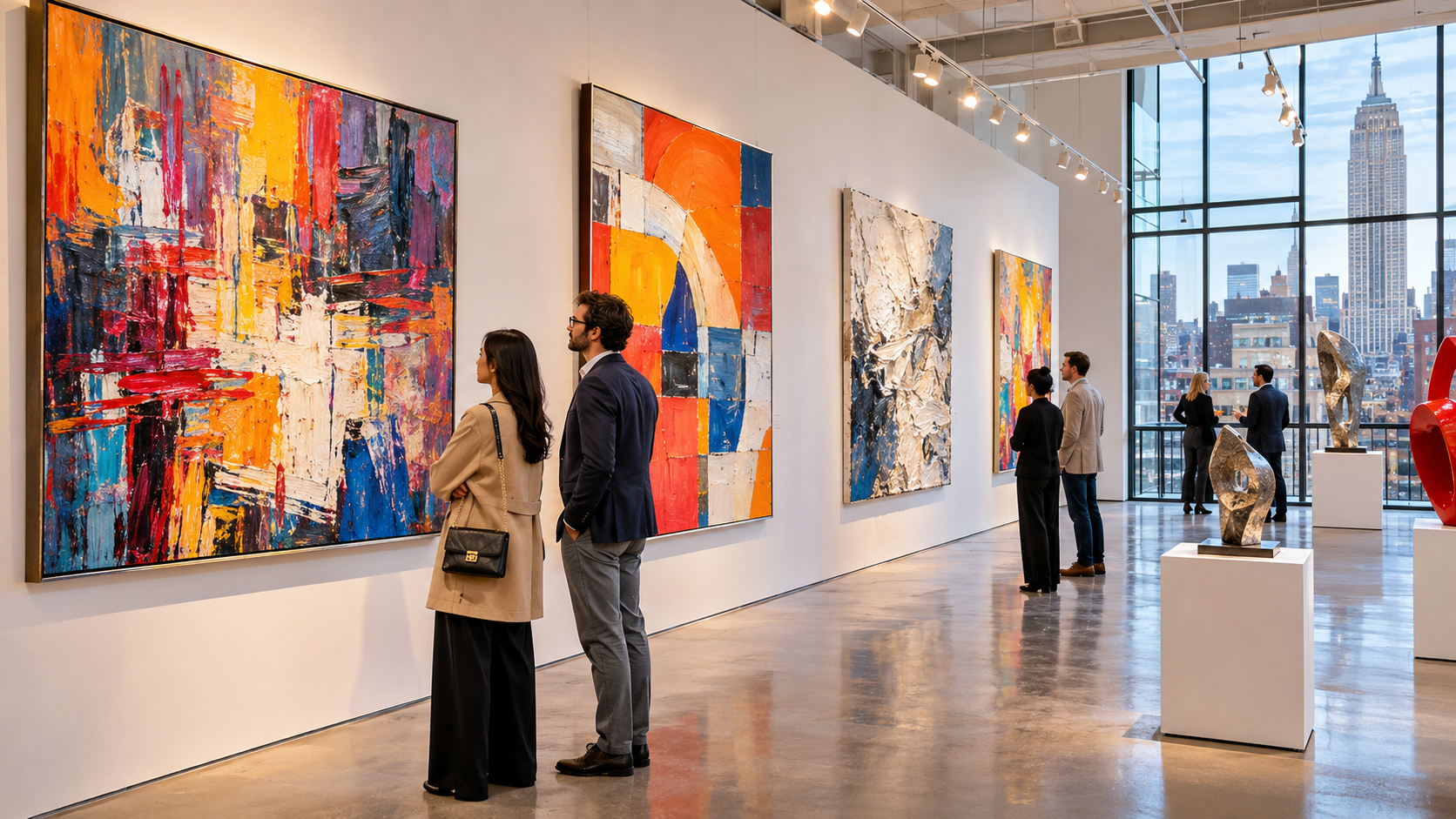
Abstract art has become an important part of contemporary interiors, private collections, and the global fine art market. From colorful geometric compositions to expressive paintings filled with texture and movement, abstract artwork attracts buyers with different tastes, budgets, and collecting goals.
However, one question frequently comes up among both artists and collectors: How much is an abstract painting actually worth?
The answer is not straightforward. Some original abstract artworks sell for less than $200, while others command thousands, millions, or even tens of millions of dollars.
Understanding How Much Does Abstract Art Sell For? requires examining the artist’s reputation, the size of the artwork, materials, originality, provenance, buyer demand, and the platform used to sell it.
A beginner artist selling through an online marketplace may approach pricing differently from an established painter represented by a respected commercial gallery.
Similarly, a decorative abstract print purchased for a living room is a different product from an original painting with documented exhibition history.
According to Saatchi Art’s February 2026 collector guide, original abstract paintings and works on paper can be accessible at budgets of $500 or less, while larger works and pieces by established artists may cost several thousand dollars or more. Canvas: A Blog By Saatchi Art
This guide explains How Much Does Abstract Art Sell For?, including realistic price ranges, factors that influence value, pricing methods for independent artists, and strategies for selling original abstract artwork successfully.
1. Understand the Typical Price Range of Abstract Art
Abstract art prices vary considerably across different markets.
A small original painting sold directly by an emerging artist may cost a few hundred dollars, while a large work displayed by a successful mid-career artist can command several thousand dollars.
Museum-quality paintings by historically important artists operate in a completely different market.
An essential starting point for How Much Does Abstract Art Sell For? is recognizing that there is no universal price for abstract paintings.
Affordable Original Artwork
Independent artists often sell smaller acrylic paintings, works on paper, and experimental pieces at relatively accessible prices.
Saatchi Art’s collector guidance notes that original drawings and watercolors by emerging artists can start around $150, while certain smaller original oil paintings are available for less than $500. Canvas: A Blog By Saatchi Art
These examples demonstrate that original art does not always require an enormous budget.
Mid-Range Abstract Paintings
Collectors shopping between $1,000 and $5,000 may find original abstract paintings in larger sizes or works by artists with growing exhibition experience.
However, prices depend on the specific artist and artwork rather than the painting’s dimensions alone.
High-End Contemporary Art
Works by artists with major gallery representation, museum recognition, strong collector demand, and established auction records can sell at dramatically higher prices.
When researching How Much Does Abstract Art Sell For?, it is important to separate ordinary retail transactions from exceptional auction results.
A multimillion-dollar auction sale should not be treated as evidence that an unknown artist can charge a similar amount for an abstract painting.
2. Compare Prices Based on Artwork Size
The physical dimensions of a painting can influence its price.
Larger artworks often require more materials, studio space, preparation, and handling. They can also make a stronger visual impact in residential and commercial interiors.
However, size alone does not determine value.
A particularly important aspect of How Much Does Abstract Art Sell For? is understanding how size interacts with the artist’s market position.
Illustrative Price Ranges for Original Paintings
The following ranges are broad examples for the U.S. primary art market, not verified national averages or guaranteed sale prices.
| Artwork size | Emerging artist | Mid-career artist |
|---|---|---|
| Small, approximately 8 × 10 inches | $150–$400 | $400–$1,200 |
| Medium, approximately 16 × 20 inches | $400–$1,200 | $1,200–$4,000 |
| Large, approximately 30 × 40 inches | $1,000–$3,500 | $3,500–$10,000 |
| Oversized, approximately 48 × 60 inches | $3,000–$8,000 | $8,000–$30,000+ |
Illustrative market ranges informed by a 2026 independent artist pricing guide, not a statistically representative survey of completed transactions. Mosaic’s By Marc
Why Larger Paintings Can Cost More
Large canvases usually require more raw materials, appropriate supports, larger shipping packages, and careful handling.
However, collectors may pay more for a small painting by a well-known artist than for a much larger painting by an emerging artist.
Consider Display Space
Some buyers want compact artwork for hallways, home offices, and small apartments.
Others seek statement pieces for living rooms, hotel lobbies, and corporate interiors.
The size-related answer to How Much Does Abstract Art Sell For? therefore depends partly on the needs and budgets of the target customers.
3. Explore the Factors That Determine an Abstract Painting’s Value
Two abstract paintings of identical dimensions can have very different prices.
The difference may result from reputation, originality, demand, historical importance, and the strength of the artist’s sales record.
Understanding these factors provides a more complete answer to How Much Does Abstract Art Sell For?
Artist Experience and Reputation
An emerging artist may have limited exhibitions and few documented sales.
A mid-career artist might have a consistent collector base, professional representation, and participation in recognized exhibitions.
An established artist may have museum collections, critical publications, and a substantial secondary-market history.
As an artist develops professional recognition and consistent demand, pricing may change.
However, recognition alone does not guarantee future appreciation.
Originality and Artistic Identity
Collectors often seek artwork with a recognizable artistic direction.
A coherent body of work can help buyers understand an artist’s methods, influences, and visual language.
For example, an artist who consistently explores large-scale geometric compositions may develop a distinctive identity over time.
Materials and Technique
Oil paint, acrylic, mixed media, collage, and other materials can influence production costs and conservation requirements.
An elaborate textured painting may require additional preparation, but greater material expense does not automatically produce greater market value.
Provenance and Documentation
Provenance refers to the documented history of an artwork’s ownership.
Certificates of authenticity, invoices, exhibition records, and clear information about the artist can help buyers establish confidence in a purchase.
A major consideration in How Much Does Abstract Art Sell For? is whether the asking price reflects reliable evidence of previous sales and current demand.
Condition and Conservation
Damage, unauthorized restoration, fading, or unstable materials can reduce a work’s appeal.
For valuable older paintings, a qualified conservator may be needed to assess condition.
4. Understand the Difference Between Original Art and Prints
Original abstract paintings and reproduced prints should not be valued in the same way.
An original painting generally refers to a unique artwork created by the artist.
A print is an image reproduced through a printing process, although some fine art printmaking techniques produce original artworks in their own right.
The distinction is central to How Much Does Abstract Art Sell For? because buyers consider originality, edition size, production methods, and artist recognition.
Original Abstract Paintings
An original canvas painting may feature visible brushstrokes, surface texture, and other physical characteristics that distinguish it from reproductions.
Buyers may pay a premium for the uniqueness of the piece.
Open-Edition Prints
Open-edition prints are generally reproduced without a predetermined limit on the number of copies.
They often provide a more affordable way to purchase artwork.
However, print quality, brand reputation, and artist demand can still affect pricing.
Limited-Edition Prints
Limited-edition prints have a stated number of copies within an edition.
They may be signed and numbered, and prices can vary considerably depending on the artist, technique, edition size, and authenticity.
A limited edition does not automatically guarantee investment value.
For collectors asking How Much Does Abstract Art Sell For?, verifying whether a work is an original painting, an original print, or a reproduction is an essential first step.
5. Learn How Emerging Artists Can Price Their Paintings
Artists sometimes struggle to establish prices because creative work does not have a simple standardized value.
Charging only for materials may undervalue the business effort, while selecting an ambitious price without evidence of demand may make sales difficult.
The practical side of How Much Does Abstract Art Sell For? involves choosing a pricing method that is consistent, explainable, and appropriate for the artist’s current market.
Calculate Production Costs
Start by tracking the direct expenses associated with each artwork.
These may include canvas, paint, medium, varnish, framing materials, and suitable packaging.
Consider studio overhead and the time spent creating the piece, while recognizing that buyers do not automatically pay for every production hour.
Use a Consistent Pricing Method
Some independent artists use a square-inch method to establish a starting price.
For example, a 24 × 30-inch painting has an area of 720 square inches.
If an artist uses an illustrative base rate of $1.50 per square inch, the preliminary price would be $1,080.
This is only a calculation method, not evidence that a buyer would pay that amount.
Adjust for Actual Market Demand
Compare your work with paintings of similar size, medium, style, and career stage.
Saatchi Art recommends examining comparable artworks that have actually sold rather than relying only on unsold listings and advertised prices. Help Center
The most useful answer to How Much Does Abstract Art Sell For? comes from real transactions involving comparable artwork.
Review Pricing Over Time
Maintain records of your prices, completed sales, customer feedback, and exhibition activity.
If multiple pieces sell consistently at a certain price, you may have evidence supporting gradual adjustments.
Avoid sudden large increases based solely on the number of social media followers.
6. Account for Gallery and Online Marketplace Commissions
The amount a customer pays for an abstract painting is not always the amount the artist receives.
Galleries and online marketplaces may charge substantial commissions for marketing, customer service, payment processing, and access to buyers.
This distinction matters when calculating How Much Does Abstract Art Sell For? from the artist’s perspective.
Gallery Commission
Commercial galleries commonly work on a commission arrangement.
Saatchi Art’s guidance describes a 50% gallery commission as a common benchmark, although agreements vary. Help Center
A gallery taking half the sale price means the artist must consider the commission when setting the retail price.
Online Art Marketplace Fees
Saatchi Art states that it charges a 40% commission on the price of an original artwork, leaving 60% before other applicable costs.
Artfinder’s current seller plans have commission rates of 40%, 45%, or 50%, depending on the selected plan. Help Center+1
Illustrative Commission Comparison
Suppose an original painting sells for $1,500.
| Sales channel | Commission assumption | Artist receives before other costs |
|---|---|---|
| Direct sale | 0% marketplace commission | $1,500 |
| Online marketplace | 40% | $900 |
| Online marketplace | 45% | $825 |
| Gallery | 50% | $750 |
Direct sales can still involve payment-processing charges, marketing expenses, taxes, shipping, and other costs. These figures are illustrative, not net profit.
Price Consistently Across Channels
An artist should carefully review agreements when selling through multiple platforms.
Significant pricing differences between direct sales and gallery listings can create problems with representation agreements and collector expectations.
An accurate understanding of How Much Does Abstract Art Sell For? should always distinguish retail price from earnings after selling expenses.
7. Discover Where Abstract Paintings Are Sold
The sales channel influences the type of buyer an artist reaches, the level of presentation expected, and the costs of making a sale.
Some collectors prefer purchasing art in person, while others are comfortable selecting original paintings through online platforms.
Choosing where to sell is another important part of How Much Does Abstract Art Sell For?
Online Art Marketplaces
Websites such as Saatchi Art and Artfinder allow eligible artists to offer artwork to collectors.
These platforms provide established browsing and purchasing experiences, but artists must consider their admission rules, commissions, return policies, and shipping responsibilities.
Independent Artist Websites
An artist’s own website can provide greater control over branding, portfolio presentation, and customer relationships.
However, the artist must attract visitors, establish trust, manage payments, and handle customer service.
A website without qualified traffic may generate fewer sales than a marketplace with an existing audience.
Local Exhibitions and Art Fairs
Art fairs, open studios, and community exhibitions allow buyers to view paintings in person.
Texture, color, and scale are often easier to appreciate when standing in front of an original artwork.
Participating in these events can involve booth fees, transportation, display equipment, and preparation costs.
Commercial Art Galleries
Galleries may offer access to established collectors, professional exhibition spaces, and curatorial guidance.
However, reputable galleries are selective about which artists they represent.
The sales-channel discussion surrounding How Much Does Abstract Art Sell For? demonstrates why artist income depends on distribution costs as well as the price of the artwork.
8. Examine Real Abstract Art Auction Prices
Major auction results attract attention because they demonstrate how valuable certain historically important paintings have become.
However, the auction market is not representative of the typical earnings of emerging abstract artists.
A well-known artist with decades of institutional recognition operates in a different commercial environment from someone selling their first original canvas.
A Major Sale by Mark Rothko
Mark Rothko | No. 31 (Yellow Stripe) (1958) | MutualArt
Mark Rothko — No. 31 (Yellow Stripe), 1958
The painting sold at Christie’s in New York on November 17, 2025, for $62,160,000. Christie’s
The result reflects an exceptional established artist and a highly competitive collector market, not ordinary retail prices.
This example illustrates why the question How Much Does Abstract Art Sell For? can have answers ranging from relatively affordable original works to extraordinary auction figures.
Understand the Difference Between Auction Estimates and Results
An auction estimate represents an expected selling range, not a confirmed transaction price.
The hammer price is the winning bid before applicable buyer’s premium and other charges. Published sale totals may include that premium.
When comparing auction records, verify which price is being reported.
Auction Prices Do Not Guarantee Future Appreciation
An artwork selling for a substantial amount today may not achieve a higher price in the future.
Collector demand, attribution, condition, provenance, and broader market trends can change.
Art should not be treated as a guaranteed financial investment.
9. Explore How Buyers Evaluate Abstract Artwork
Abstract art is often purchased for its emotional impact, color, composition, and relationship to a particular space.
Unlike functional household goods, artworks do not have standardized production specifications that determine an obvious selling price.
The collector’s perspective is essential when evaluating How Much Does Abstract Art Sell For?
Visual Impact and Personal Preference
Some collectors are attracted to bold colors and energetic brushwork.
Others prefer restrained monochromatic compositions, subtle textures, or geometric shapes.
A painting that feels highly meaningful to one buyer may not appeal to another.
Compatibility With Interior Design
Abstract paintings are frequently purchased for residential living rooms, bedrooms, dining areas, offices, and commercial spaces.
Interior designers may choose artwork based on dimensions, color relationships, and the atmosphere of a room.
However, collectors purchasing for artistic or historical significance may prioritize different characteristics.
Artist Story and Authenticity
Collectors often appreciate learning about the artist’s creative process, materials, and artistic development.
An accurate biography, professional portfolio, and clear artwork documentation can help establish confidence.
Avoid inventing exhibition achievements, collector demand, or claims of investment potential.
The Importance of Transparent Pricing
Clear prices reduce uncertainty and allow customers to determine whether an artwork fits their budget.
Artists should provide information about dimensions, materials, framing, condition, shipping, and authenticity.
The buyer-focused answer to How Much Does Abstract Art Sell For? depends on the combination of perceived artistic value and the buyer’s willingness to pay.
10. Increase Your Chances of Selling Abstract Paintings
Creating an attractive painting does not automatically generate sales.
Artists also need to present their work effectively, reach suitable buyers, and build trust.
Successful marketing does not require exaggerated claims or aggressive discounting.
For independent creators researching How Much Does Abstract Art Sell For?, a practical selling strategy can be just as important as the pricing formula.
Invest in Professional Artwork Photography
Photograph paintings using accurate lighting and color reproduction.
Include a clear front-facing image, close-ups of the texture, and a scale reference where appropriate.
Avoid filters that significantly alter the artwork’s actual appearance.
Write Useful Artwork Descriptions
An effective listing should explain the dimensions, medium, materials, support surface, framing status, and any included documentation.
You can also describe the techniques used or the artistic ideas behind the work.
Avoid promising that a painting will appreciate in value.
Offer Different Sizes and Formats
Some buyers prefer small originals, while others want oversized statement pieces.
Where appropriate and consistent with the artist’s practice, a selection of original works and properly described prints can serve different budgets.
Build a Consistent Portfolio
A recognizable style or coherent series can help collectors understand your work.
That does not mean every painting needs to look identical. Artistic development can occur within a consistent professional presentation.
Track Sales and Adjust Thoughtfully
Record completed transactions, artwork sizes, selling channels, commissions, and customer inquiries.
These records can reveal which price points attract buyers and which products generate repeat interest.
The business-focused discussion of How Much Does Abstract Art Sell For? becomes more reliable when artists use their own sales history instead of guessing.
A Practical Pricing Example for a New Abstract Artist
Imagine an emerging artist creates a 24 × 30-inch abstract acrylic painting.
The artist estimates $130 in materials, packaging, and allocated overhead, then uses a consistent pricing framework and comparable sales to determine an initial retail price of $900.
If sold directly, the artist receives the $900 sale proceeds before payment fees, taxes, labor, and other selling expenses.
If sold on a platform charging a 40% commission, the platform retains $360 and the artist receives $540 before other costs.
The example demonstrates how the same artwork can produce significantly different earnings depending on the selling channel.
It also shows why artists should determine their intended earnings before finalizing a retail price.
Frequently Asked Questions
How much does a small abstract painting usually cost?
Small original abstract paintings by emerging artists can sometimes cost approximately $150–$500. Prices may be higher depending on the artist, materials, and demand. These are examples, not universal averages.
Can abstract paintings sell for thousands of dollars?
Yes. Established and some mid-career artists regularly offer paintings in the thousands of dollars. However, an asking price does not prove that a painting has sold for that amount.
How should beginners price abstract artwork?
Beginners can calculate material and business expenses, consider a consistent size-based pricing method, and compare completed sales involving artists at similar career stages.
Is original abstract art more expensive than prints?
Often, but not always. Unique original paintings generally have a different market position from mass-produced reproductions. Original fine art prints and limited editions by prominent artists can also be expensive.
Where is the best place to sell abstract art online?
Possible options include established art marketplaces and independent artist websites. The best choice depends on commissions, eligibility, marketing reach, shipping arrangements, and the artist’s target audience.
Does abstract art increase in value over time?
Some artworks appreciate, while others maintain their value or become less desirable. Price appreciation is uncertain, and purchasing abstract art should not be treated as a guaranteed investment.
Conclusion
Abstract art occupies an unusually wide price range.
Affordable original paintings may cost a few hundred dollars, while works by recognized artists can sell for thousands or considerably more.
At the highest end of the market, historically significant abstract paintings have achieved extraordinary auction results.
However, price depends on far more than whether a painting is abstract. The artist’s reputation, career history, originality, size, materials, provenance, condition, and buyer demand all contribute.
Ultimately, How Much Does Abstract Art Sell For? is a question best answered by comparing relevant completed sales rather than relying on advertised prices or exceptional auction headlines.
For artists, consistent pricing, clear documentation, accurate photography, and thoughtful marketing can improve the professionalism of their sales process.
For collectors, understanding the artwork’s origin, quality, and pricing context can help support more informed purchasing decisions.
Whether you are buying your first original canvas or developing an independent art business, the strongest approach is to combine artistic appreciation with realistic market research.

Written by Twastia Editorial Team
Twastia Editorial Team shares practical insights about website design, SEO services, Google Ads, content marketing, social media, conversion rate optimization, and digital marketing strategy.
Last updated: Nov 7, 2026
Related posts from Twastia
Explore more useful articles from twastia.com about digital marketing, SEO, websites, ads, content, and growth strategy.