Modern Denture Technology: A Complete Guide to Advanced Tooth Replacement Solutions
Tooth replacement has evolved significantly over the past few decades, offering patients greater comfort, improved aesthetics, and more personalized treatment […]
Tooth replacement has evolved significantly over the past few decades, offering patients greater comfort, improved aesthetics, and more personalized treatment options. Modern denture technology combines digital dentistry, advanced materials, and precision manufacturing to create dentures that are more accurate, durable, and natural-looking than many traditional designs. These innovations help dental professionals provide prosthetic solutions that better fit each patient’s unique oral anatomy while supporting everyday functions such as speaking and eating.
Whether you’re considering dentures for the first time or replacing an older set, understanding today’s advancements can help you discuss suitable treatment options with your dental professional.
What Is Modern Denture Technology?
Modern denture technology refers to the use of advanced dental materials, digital design tools, and innovative manufacturing techniques to produce removable or implant-supported dentures.
Compared with conventional methods, these technologies can improve:
- Denture fit
- Appearance
- Comfort
- Manufacturing precision
- Treatment efficiency
The most appropriate treatment depends on a patient’s oral health, bone structure, and recommendations from a qualified dental professional.
How Modern Denture Technology Has Changed Dentistry
Traditional denture fabrication often required multiple appointments, physical impressions, and manual laboratory work.
Today’s technology may include:
- Digital impressions
- Computer-aided design (CAD)
- Computer-aided manufacturing (CAM)
- 3D printing
- Advanced acrylic and polymer materials
These innovations can streamline parts of the fabrication process while improving consistency.
Digital Impressions
Improved Patient Comfort
Digital intraoral scanners can replace traditional impression materials in certain cases, reducing discomfort for some patients.
Instead of using impression trays, dentists capture detailed digital images of the mouth.
The suitability of digital impressions depends on the patient’s clinical needs and the dental practice’s equipment.
Greater Precision
Digital scans provide highly detailed models that assist dental laboratories in designing dentures with greater accuracy.
Accurate impressions may contribute to improved denture fit and fewer adjustments.
CAD/CAM Technology
Computer-Aided Design and Computer-Aided Manufacturing (CAD/CAM) have become important tools in modern prosthetic dentistry.
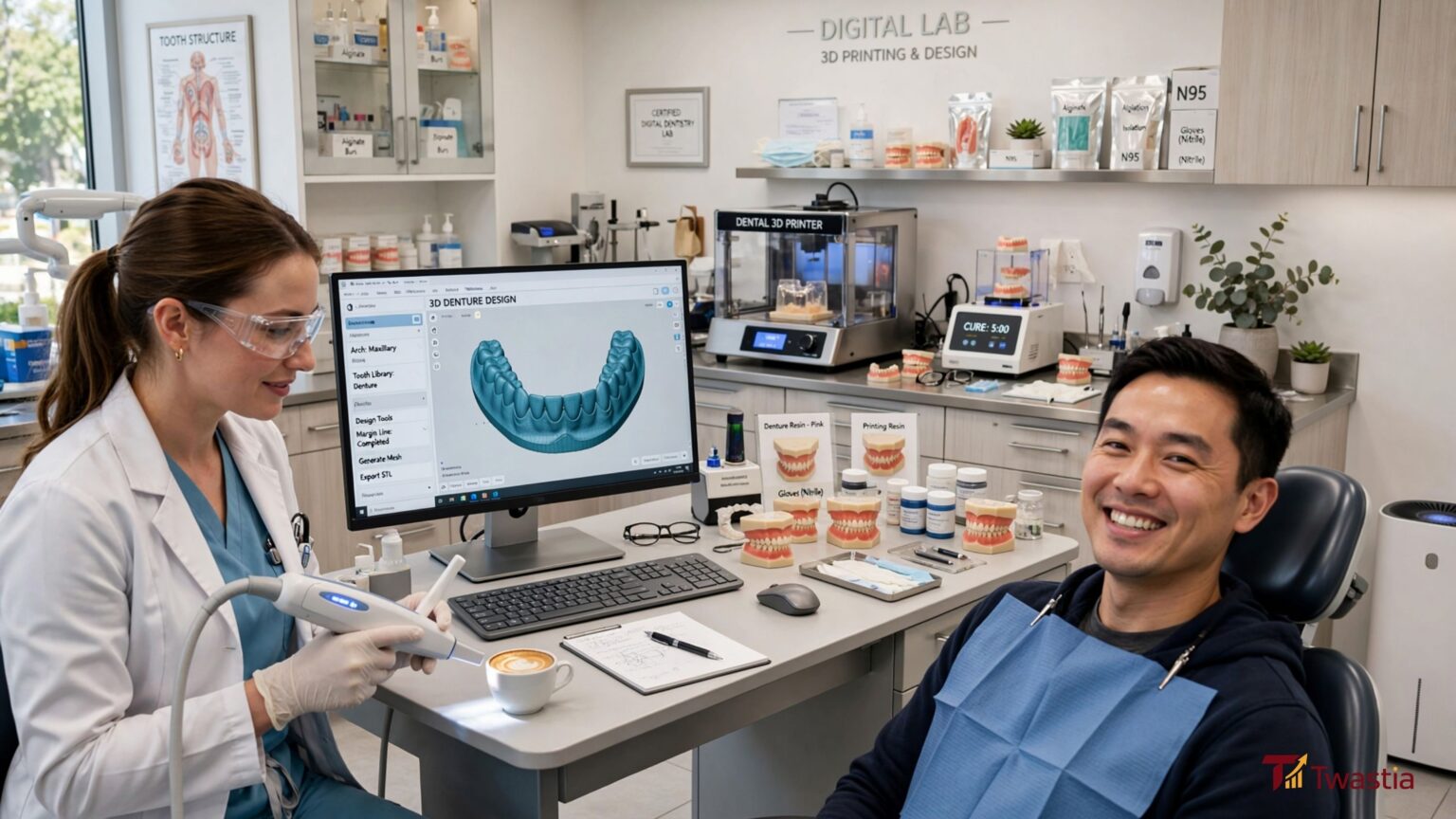
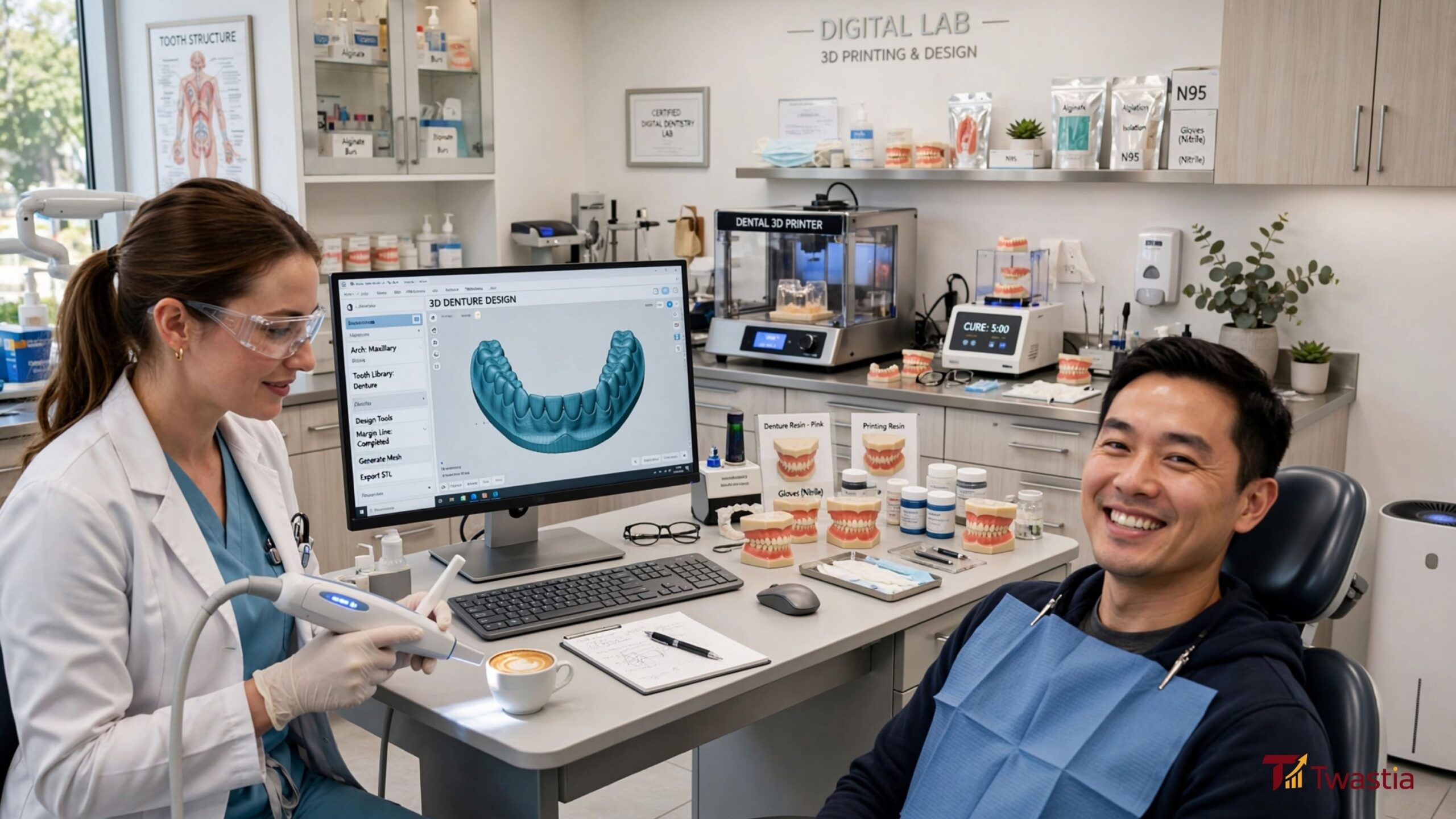
Dentists and dental laboratories use CAD software to design dentures digitally before manufacturing them using specialized equipment.
Potential benefits include:
- Consistent production
- Digital record storage
- Improved design precision
- Efficient laboratory workflows
3D Printing in Modern Denture Technology
3D printing has introduced new manufacturing possibilities within dentistry.
Applications may include:
- Denture prototypes
- Surgical guides
- Denture bases
- Custom dental models
The materials and techniques used depend on clinical requirements and regulatory approvals.
Advanced Denture Materials
Material science has contributed significantly to modern denture technology.
Today’s dentures may use improved materials that offer advantages such as:
- Better durability
- Enhanced aesthetics
- Reduced weight
- Improved stain resistance
Material selection should be based on individual patient needs and professional recommendations.
Implant-Supported Dentures
Some patients may be candidates for implant-supported dentures.
Unlike traditional removable dentures, these prostheses are supported by dental implants placed in the jawbone.
Potential advantages may include:
- Improved stability
- Reduced movement during eating
- Better chewing efficiency
- Increased comfort for some patients
Not every patient is a suitable candidate, and a comprehensive dental evaluation is necessary.
Benefits of Modern Denture Technology
Improved Fit
Digital planning and precision manufacturing can help produce dentures that more closely match the patient’s oral anatomy.
Natural Appearance
Modern materials and design techniques can create prosthetic teeth that resemble natural tooth shape, color, and alignment.
Better Comfort
A properly designed denture may improve comfort by reducing pressure points and enhancing overall fit.
Comfort varies depending on the individual and proper adjustment by a dental professional.
Faster Production
Digital workflows may reduce laboratory processing time for certain cases, although treatment timelines vary depending on complexity.
Who Can Benefit from Modern Denture Technology?
Modern denture solutions may be appropriate for:
- Individuals missing multiple teeth
- Patients requiring full dentures
- Patients needing partial dentures
- People replacing older dentures
- Individuals exploring implant-supported options
A dentist will evaluate oral health and recommend appropriate treatment based on each patient’s condition.
Caring for Modern Dentures
Proper maintenance supports long-term performance and oral health.
Recommended care includes:
- Clean dentures daily using products recommended by your dental professional.
- Remove dentures when instructed by your dentist.
- Store dentures properly when not in use.
- Attend regular dental checkups.
- Report discomfort or fit changes promptly.
Following professional care instructions helps maintain both the dentures and oral tissues.
Choosing a Dental Provider
When considering modern denture technology, ask about:
- Digital scanning capabilities
- Available treatment options
- Laboratory processes
- Experience with denture fabrication
- Follow-up care
- Maintenance recommendations
Open communication helps patients understand available options and expected outcomes.
Future Trends in Modern Denture Technology
Dentistry continues to evolve through advances in digital technology and materials.
Emerging developments include:
- Artificial intelligence-assisted treatment planning
- Improved digital workflows
- Enhanced 3D printing materials
- More durable prosthetic materials
- Greater personalization
The availability of these technologies varies by dental practice and region.
Frequently Asked Questions
1. What is modern denture technology?
Modern denture technology uses digital dentistry, advanced materials, and precision manufacturing techniques to create dentures that aim to improve fit, comfort, and appearance.
2. Are digital dentures more accurate than traditional dentures?
Digital workflows may improve manufacturing precision in many cases, but outcomes depend on the patient’s condition, treatment planning, and clinical expertise.
3. Can modern denture technology reduce the number of dental visits?
Some digital workflows may reduce certain steps in the denture fabrication process, although treatment requirements vary for each patient.
4. What materials are used in modern dentures?
Modern dentures may be made from advanced acrylics, polymers, and other dental materials selected according to clinical needs and professional recommendations.
5. Are implant-supported dentures suitable for everyone?
No. Eligibility depends on factors such as oral health, bone density, and a comprehensive dental evaluation.
6. How should I care for modern dentures?
Clean dentures daily, follow your dentist’s instructions, attend regular dental appointments, and report any discomfort or fit issues promptly.
Conclusion
Modern denture technology has transformed tooth replacement by combining digital design, advanced materials, and precision manufacturing to create dentures that can offer improved comfort, aesthetics, and functionality. While the most suitable treatment varies for each individual, these innovations provide dental professionals with more options to customize care based on a patient’s specific needs. By consulting a qualified dentist, following recommended maintenance practices, and exploring available treatment options, patients can make informed decisions about modern denture technology and achieve long-term oral health and confidence.

Written by Twastia Editorial Team
Twastia Editorial Team shares practical insights about website design, SEO services, Google Ads, content marketing, social media, conversion rate optimization, and digital marketing strategy.
Last updated: Jul 18, 2026
Related posts from Twastia
Explore more useful articles from twastia.com about digital marketing, SEO, websites, ads, content, and growth strategy.