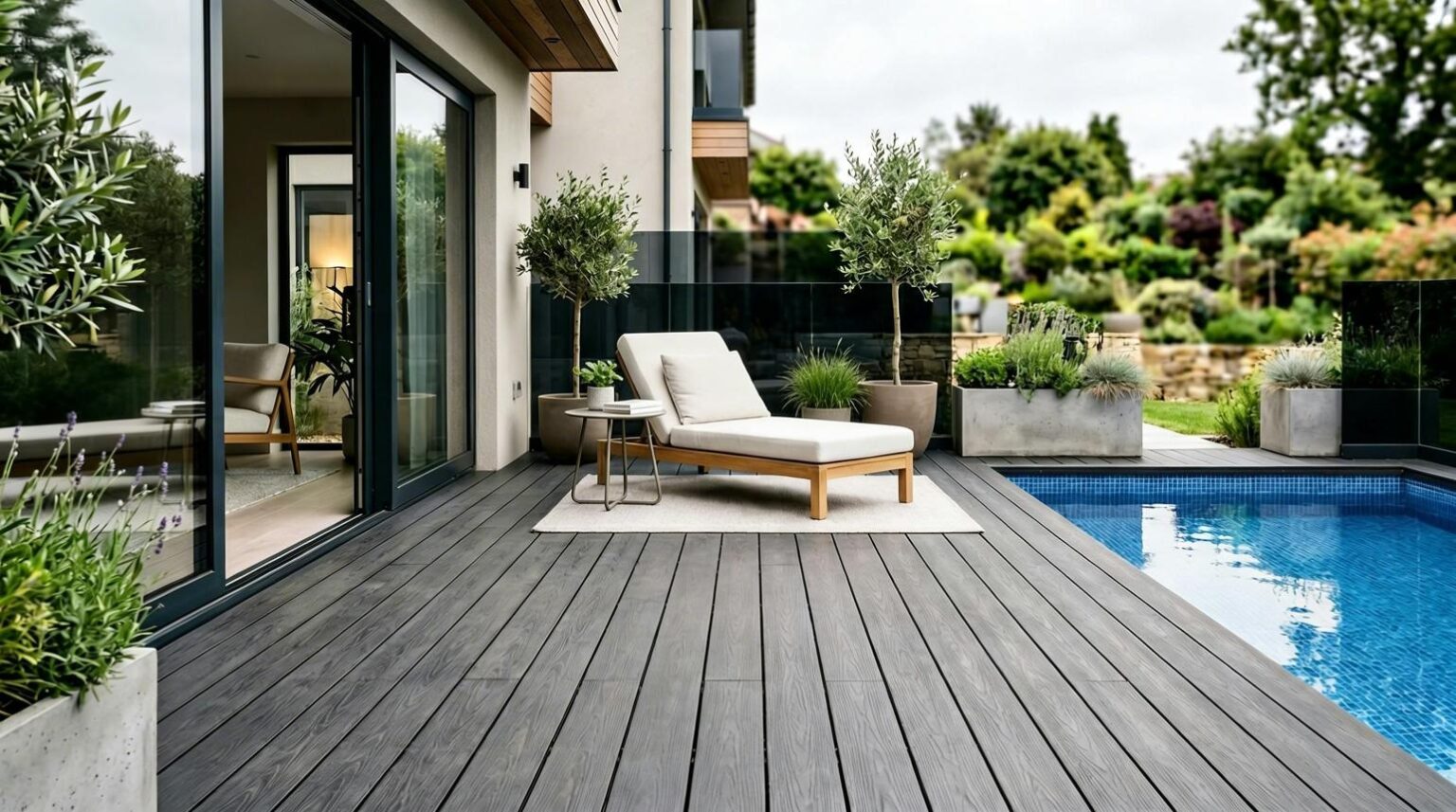
outdoor composite decking: Best Guide to Materials & Design
A beautiful outdoor deck can transform an ordinary backyard into a comfortable space for relaxing, entertaining guests, and enjoying time […]
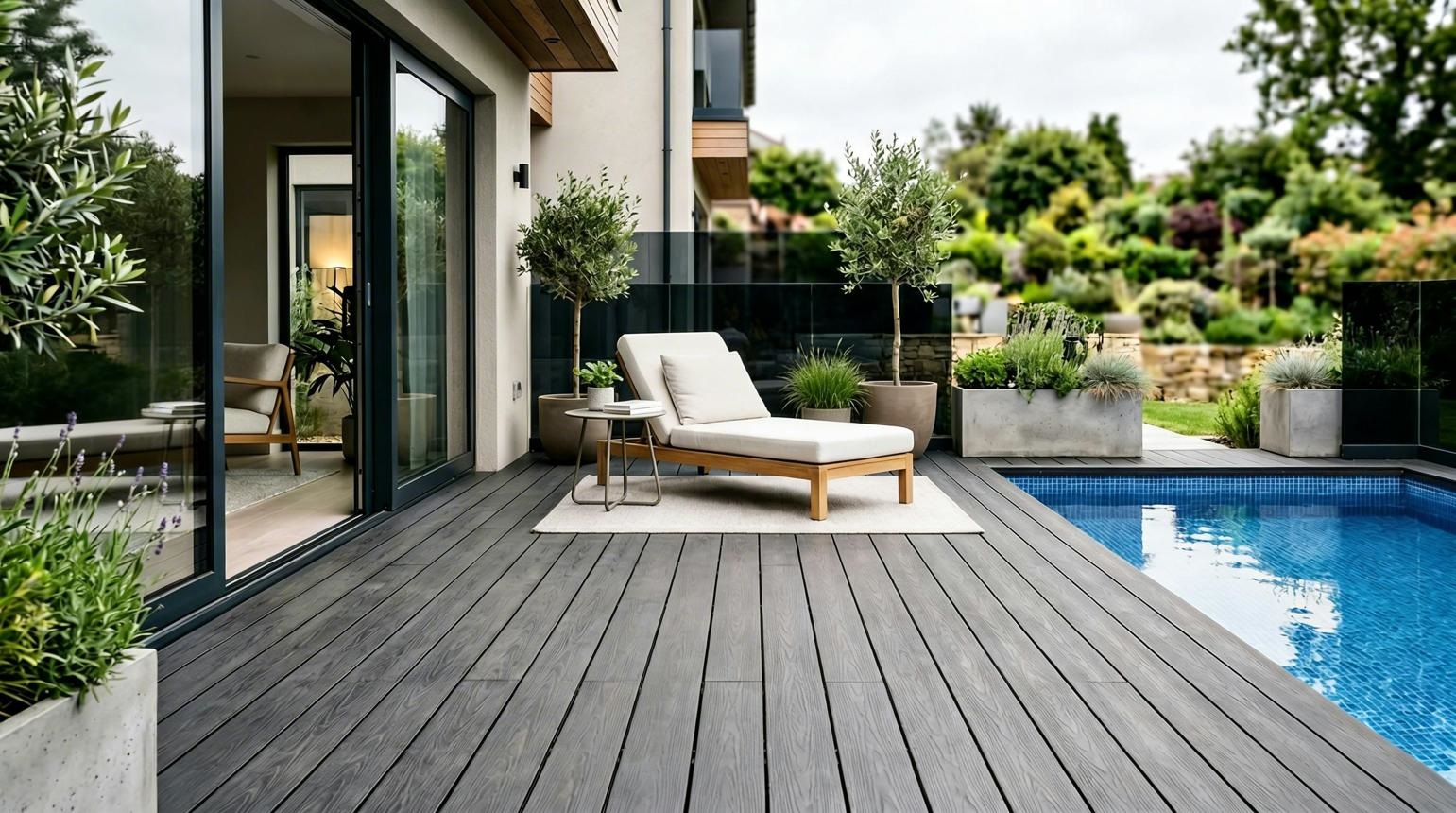
A beautiful outdoor deck can transform an ordinary backyard into a comfortable space for relaxing, entertaining guests, and enjoying time with family. Whether you are planning a small patio extension or a large outdoor living area, choosing the right decking material is an important decision.
Outdoor composite decking has become a popular alternative to traditional wooden decks because it combines attractive finishes with practical maintenance advantages. Many composite boards resemble natural timber while offering resistance to common problems such as splintering, insect damage, and moisture-related deterioration.
For American homeowners, composite decking can be particularly appealing in areas exposed to changing temperatures, rain, humidity, and strong sunlight.
However, not all composite products perform equally. Board construction, protective coatings, installation methods, and environmental conditions can influence durability and long-term appearance.
This guide explains the benefits, materials, costs, installation considerations, and maintenance requirements of outdoor composite decking. It also offers practical tips for selecting boards that complement your home and outdoor lifestyle.
What Is Outdoor Composite Decking?
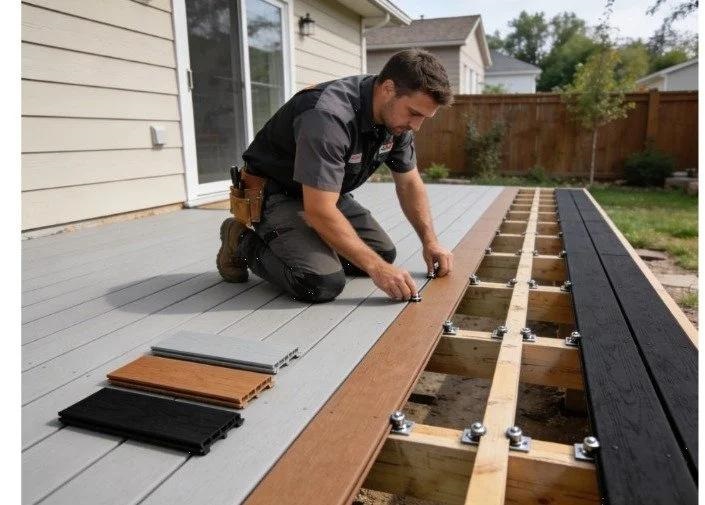
Outdoor composite decking is a manufactured building material designed for exterior deck surfaces.
Wood-plastic composite, commonly called WPC, typically combines wood fibers or wood flour with plastic polymers and additives. These ingredients are processed into boards that can resemble traditional timber.
Unlike natural wood, composite decking generally does not require regular staining or sealing to maintain its manufactured finish.
How Are Composite Deck Boards Made?
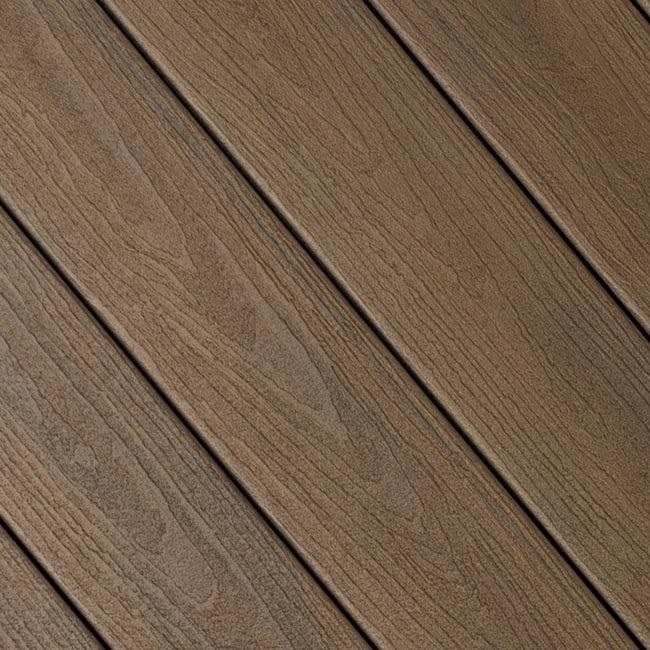
Manufacturers blend wood-based ingredients, polymers, color pigments, and other additives before forming the mixture into decking profiles.
Some products are made with a uniform composite material throughout the board.
Others feature an additional protective polymer layer surrounding the composite core.
Board surfaces may be embossed to reproduce the appearance of natural wood grain.
Actual material formulations and performance characteristics vary between manufacturers.
Why Is Composite Decking Popular?
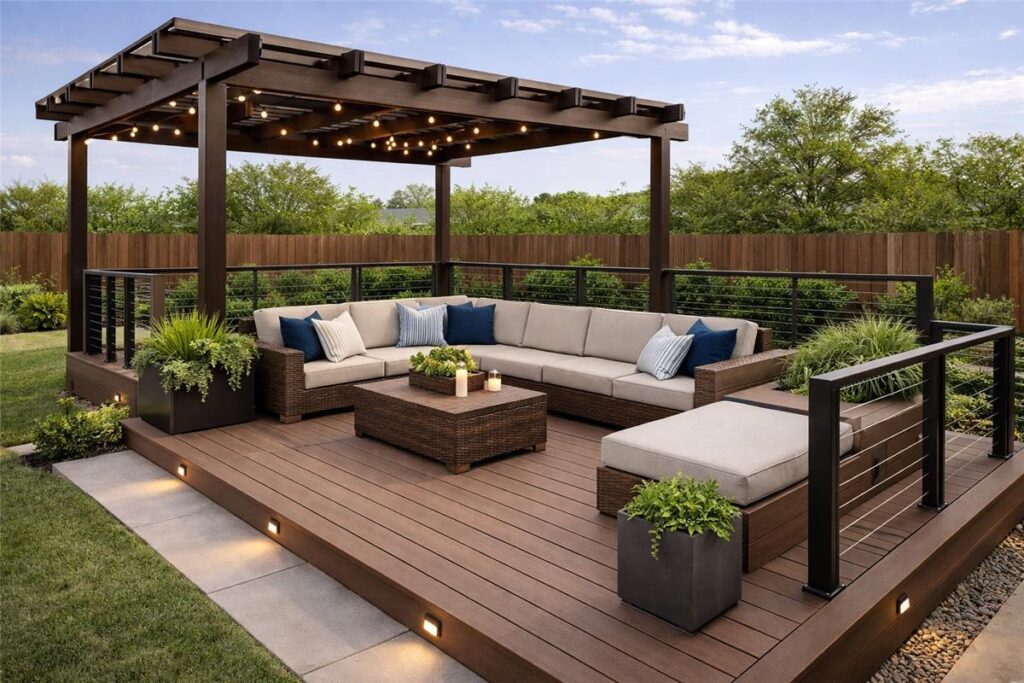
Homeowners increasingly value outdoor materials that offer convenient cleaning, consistent appearance, and reduced routine maintenance.
Composite decking can provide these benefits while supporting different design preferences.
It is commonly used for backyard decks, patios, terraces, pool surrounds, and certain commercial outdoor spaces.
Key Benefits of Outdoor Composite Decking
The advantages of composite materials extend beyond appearance.
1. Lower Maintenance Requirements
Traditional wood decks often require periodic staining or sealing, depending on the wood species, finish, and exposure.
Most composite decking products do not need these treatments.
Routine cleaning usually involves removing debris and washing the surface according to manufacturer instructions.
However, low maintenance does not mean maintenance-free. Dirt, algae, and stains can still develop if the surface is neglected.
2. Resistance to Moisture and Insects
Properly manufactured composite boards are designed to resist certain forms of moisture-related damage.
Many products also offer resistance to termite activity and ordinary surface deterioration.
Nevertheless, excessive moisture, poor ventilation, or incorrect installation can create problems.
Composite decking should not be assumed to be completely waterproof in every situation.
3. Attractive Wood-Like Appearance
Modern manufacturing methods allow composite decking to reproduce various timber-inspired colors and grain patterns.
Popular finishes include natural brown, teak-inspired shades, walnut tones, and contemporary gray.
Textured boards can create an appearance similar to traditional wood while offering a different maintenance routine.
4. Long-Term Convenience
Although some composite products cost more initially than pressure-treated lumber, reduced finishing requirements can provide practical benefits over time.
The long-term value depends on product quality, installation, maintenance, and the homeowner’s expectations.
Types of Composite Decking Materials
Understanding the available board types helps homeowners compare suitable options.
Capped Composite Decking
Capped composite decking features a protective polymer shell around part or all of the composite core.
The cap is designed to improve resistance to staining, moisture exposure, fading, and certain surface damage.
This type is often considered for exposed residential decks, particularly where easy cleaning is important.
The actual performance depends on the product’s construction and testing.
Uncapped Composite Decking
Uncapped boards contain composite material without an additional outer protective shell.
These products may have a more visible wood-fiber appearance and can offer a lower initial material cost.
However, some uncapped products are more vulnerable to staining, fading, and moisture absorption.
Homeowners should compare manufacturer specifications rather than assuming all uncapped boards perform identically.
Solid Composite Deck Boards
Solid boards have a continuous material profile.
They may provide a substantial appearance and are offered for various residential and commercial applications.
Because solid profiles contain more material than some hollow alternatives, they can also be heavier.
Hollow Composite Deck Boards
Hollow boards have internal cavities that reduce material usage and weight.
They can be easier to transport and handle in certain installations.
However, structural performance depends on the specific profile, framing, fastening system, and manufacturer’s requirements.
Composite Decking vs. Traditional Wood Decking
Both wood and composite materials can create attractive outdoor spaces.
The right choice depends on maintenance preferences, budget, appearance, and environmental exposure.
Maintenance Differences
Wood decking may require periodic cleaning, staining, or sealing.
Composite decking generally eliminates routine refinishing, although washing and surface care remain necessary.
Appearance and Texture
Natural wood offers unique grain variations and can often be refinished.
Composite products offer manufactured colors and textures that may provide a more consistent appearance.
Homeowners who prefer authentic natural materials may favor wood, while those seeking lower-maintenance alternatives may prefer composite.
Durability Considerations
Wood performance depends on species, treatment, drainage, and maintenance.
Composite performance depends on formulation, protective layers, installation, and environmental conditions.
Neither material is entirely immune to weathering or damage.
Long-Term Cost
Pressure-treated wood may cost less initially.
Composite materials can cost more upfront but may reduce future staining and sealing expenses.
Calculate the complete ownership cost before deciding.
Exploring COOWIN Composite Decking Products
Homeowners researching outdoor composite decking can explore the product collections offered by COOWIN, a manufacturer specializing in wood-plastic composite building materials.
Its catalog includes capped composite decking and three-dimensional wood-grain collections.
COOWIN Capped Series
The manufacturer’s Capped Series includes products identified as CO-01, CO-02, CO-03, and other model variations.
According to COOWIN, the CO-01 model features a solid profile, a three-dimensional embossed surface, and a polymer protective covering.
The CO-02 model uses a hollow construction intended to reduce weight and material consumption.
These differences allow buyers to compare board designs based on their project requirements.
Three-Dimensional Wood-Grain Options
COOWIN also offers 3D wood-grain decking collections, including CD-01 and TS-03.
These products emphasize textured surfaces designed to resemble natural timber.
Homeowners interested in a wood-inspired appearance can compare finishes and request product samples before purchasing.
Product Availability for American Projects
COOWIN is an international manufacturer rather than a verified nationwide U.S. installation contractor.
American buyers should confirm shipping options, current product availability, building-code documentation, warranty coverage, and local installer compatibility.
Do not assume that every listed board is approved for every U.S. deck application.
How to Choose the Best Composite Decking for Your Home
Choosing an appropriate product requires considering more than color.
Evaluate Your Climate
Decks in humid climates face different challenges from those in dry, sunny regions.
For example, homeowners in Florida may prioritize moisture resistance and surface cleaning, while buyers in Arizona may pay particular attention to heat buildup and UV exposure.
Review product specifications for the environmental conditions at your property.
Consider Foot Traffic
A small private patio may experience less traffic than a deck used for frequent gatherings.
Ask suppliers about intended applications, structural limitations, and surface durability.
Choose decking designed for the expected usage rather than relying only on thickness or appearance.
Compare Board Finishes
Textured surfaces can add visual character.
However, traction varies by product, footwear, surface condition, and moisture.
For steps and poolside areas, request applicable slip-resistance information rather than assuming a wood-grain pattern guarantees safety.
Request Physical Samples
Color samples help buyers understand the actual material texture and appearance.
Examine samples under direct sunlight and shade.
Consider how the selected finish complements your siding, outdoor furniture, and landscaping.
Outdoor Composite Decking Installation Guide
Proper installation is essential to successful decking performance.
Even high-quality boards may develop problems when framing or fastening requirements are ignored.
Prepare the Supporting Structure
The deck frame must be designed to carry the required loads.
Joist spacing, structural supports, footings, and connections should comply with applicable building codes and the selected manufacturer’s requirements.
Composite decking boards generally serve as the walking surface rather than replacing the structural framing.
Allow for Expansion and Drainage
Composite boards can expand and contract with temperature changes.
Manufacturers specify appropriate gaps between boards and around fixed structures.
For example, Trex’s installation guidance explains that gaps support drainage and thermal movement.
These dimensions apply to the relevant Trex products, not automatically to COOWIN boards.
Always follow the instructions for the exact material being installed.
Select Compatible Fasteners
Some composite boards support hidden fastening systems, while others require approved surface fasteners.
Using incorrect hardware may affect appearance, performance, and warranty coverage.
Check installation instructions before purchasing screws, clips, or accessories.
Understand Permit Requirements
Deck construction can involve local building permits, structural inspections, and safety requirements.
Elevated decks, stairs, and railings demand particular attention.
Consult your local building department and consider hiring an experienced deck contractor for structural work.
How Much Does Composite Decking Cost?
The cost of outdoor composite decking depends on several variables.
These include board construction, brand, project dimensions, labor, accessories, and site conditions.
Material Cost Factors
Capped boards may carry higher prices than certain uncapped alternatives.
Specialized finishes and premium collections can also affect pricing.
Imported products may involve additional shipping and distribution expenses.
Installation Expenses
Professional deck installation may require structural framing, footings, fasteners, trim, stairs, and railings.
Removing an existing deck can add labor and disposal costs.
Request itemized estimates to understand the complete project.
Budget for Long-Term Care
Include routine cleaning, possible repairs, and replacement parts when comparing materials.
A higher initial investment may be reasonable for a product that aligns with your maintenance preferences.
However, no specific savings or lifespan should be guaranteed without supporting product documentation.
Composite Decking Design Ideas for American Backyards
Composite decking works with a variety of outdoor design styles.
Contemporary Gray Decking
Gray boards pair well with modern architecture, black railings, and minimalist outdoor furniture.
They can create a clean, coordinated look around patios and landscaped areas.
Warm Wood-Look Decking
Brown and teak-inspired finishes complement traditional houses and garden spaces.
These tones work particularly well with natural landscaping and neutral outdoor furniture.
Multi-Level Outdoor Decks
Multi-level designs can help organize dining, seating, and recreational spaces.
They require careful structural planning and appropriate stairs and guards.
Poolside Outdoor Decking
Composite products may be suitable for certain pool surrounds when their installation and surface characteristics meet the project’s requirements.
Evaluate drainage, barefoot comfort, wet traction, and local safety rules.
Dark decking may become hot under direct sunlight.
How to Clean and Maintain Composite Decking
Composite decks still benefit from regular attention.
Remove Dirt and Debris
Sweep away leaves, dust, and accumulated organic material.
Keep board gaps clear to support drainage.
Wash With Approved Products
Use cleaning methods recommended by the manufacturer.
A soft brush, water, and a compatible cleaner may be appropriate for routine dirt.
Avoid harsh chemicals or pressure-washing methods unless the product instructions explicitly permit them.
Address Spills Promptly
Clean food residue, grease, and other spills before they become difficult to remove.
Follow the manufacturer’s stain-removal guidance.
Inspect the Deck Annually
Check for loose fasteners, damaged boards, drainage problems, and changes in the supporting structure.
Structural concerns should be evaluated by a qualified professional.
Common Composite Decking Mistakes to Avoid
Ignoring Installation Instructions
Incorrect gaps, fastening methods, or joist spacing can affect performance.
Always use the exact product’s installation guide.
Selecting Color Without Considering Heat
Dark surfaces may become uncomfortable under strong sunlight.
Test samples in conditions similar to your backyard.
Assuming Composite Is Maintenance-Free
Composite boards still collect dirt and may develop surface growth.
Regular cleaning remains important.
Buying Without Checking Documentation
Review warranty terms, installation requirements, structural suitability, and any applicable code evaluations.
Imported decking should be checked carefully for local project compatibility.
Frequently Asked Questions About Outdoor Composite Decking
1. What is outdoor composite decking made from?
Many composite decking products combine wood fibers with plastic polymers and other additives. Specific formulations vary by manufacturer.
2. Is composite decking better than wood?
Composite generally requires less routine refinishing, while natural wood may offer a lower upfront price and different repair options. The better material depends on project needs.
3. Does composite decking require staining?
Most composite decking does not require regular staining or sealing. Follow the manufacturer’s cleaning and maintenance instructions.
4. Can composite decking be installed around swimming pools?
Certain products are suitable for poolside applications. Verify wet traction, drainage, temperature characteristics, and installation requirements.
5. Does composite decking fade in sunlight?
Some color change may occur over time. UV resistance varies by formulation, protective coating, and exposure.
6. Can I install composite decking myself?
Experienced homeowners may handle some surface installation tasks, but structural construction and permitting may require qualified professionals.
7. How long does composite decking last?
Service life varies considerably by product, climate, installation quality, and maintenance. Review the manufacturer’s warranty and documented performance claims.
8. Is COOWIN composite decking available in the USA?
COOWIN markets its products internationally. U.S. availability, distribution, shipping charges, and product-specific building-code suitability should be confirmed directly.
Conclusion
Outdoor composite decking offers homeowners an attractive way to create comfortable outdoor living areas while reducing some of the routine refinishing associated with traditional wood.
With different board profiles, protective finishes, and wood-inspired textures available, composite materials can complement modern patios, established backyards, and a wide variety of residential designs.
However, successful projects depend on careful material selection, structural planning, and manufacturer-compliant installation.
Before purchasing, compare capped and uncapped options, review product documentation, examine samples, and request complete installation estimates.
Whether you are planning a small backyard retreat or a larger entertainment deck, choosing suitable composite decking can help create an outdoor space that combines visual appeal, practical maintenance, and long-term enjoyment.

Written by Twastia Editorial Team
Twastia Editorial Team shares practical insights about website design, SEO services, Google Ads, content marketing, social media, conversion rate optimization, and digital marketing strategy.
Last updated: Oct 27, 2026
Related posts from Twastia
Explore more useful articles from twastia.com about digital marketing, SEO, websites, ads, content, and growth strategy.