9 Signs Your Furnace Needs Repair: Complete 2026 Homeowner’s Guide
A reliable furnace helps keep your home comfortable during cold winter weather. However, heating equipment can develop problems as components […]
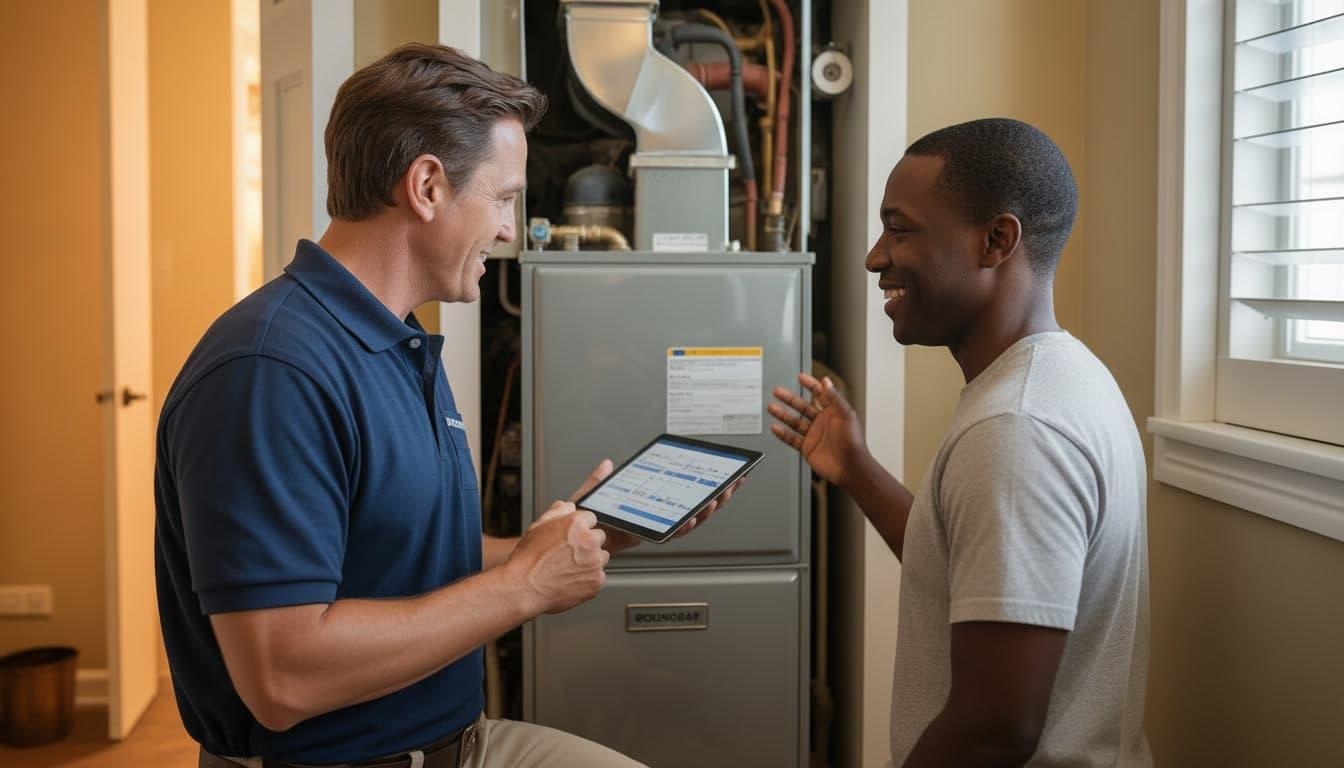
A reliable furnace helps keep your home comfortable during cold winter weather. However, heating equipment can develop problems as components age, airflow becomes restricted, or electrical and mechanical parts begin to malfunction.
Recognizing early warning signs can help homeowners arrange professional service before an uncomfortable heating problem becomes a major breakdown.
Whether you live in Vancouver, Washington, or another part of the United States, understanding when your furnace requires repair is an important part of seasonal home maintenance.
Unusual noises, inconsistent temperatures, rising utility bills, and repeated shutdowns can indicate that something needs attention. Some symptoms require routine diagnosis, while others may signal a serious safety hazard.
This guide explores nine common furnace warning signs, potential causes, repair costs, preventive maintenance, and how to choose a qualified heating technician.
Why Recognizing Furnace Problems Early Matters
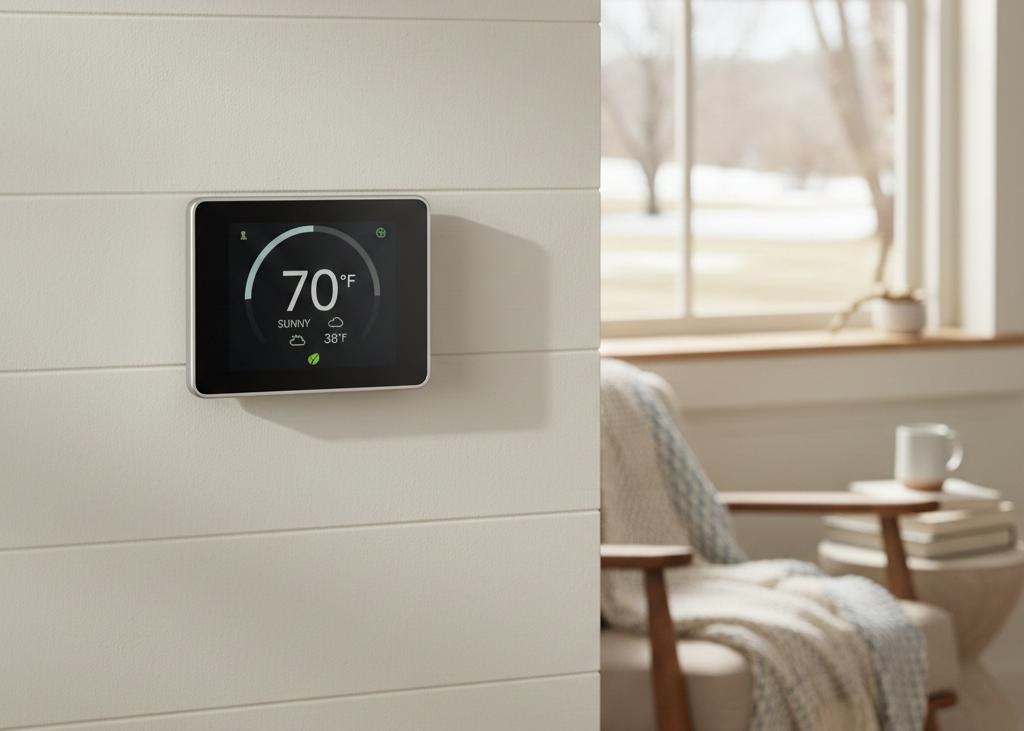
Your furnace contains several components that must work together to deliver heat throughout your home.
Depending on the equipment, these may include burners, heating elements, heat exchangers, blower motors, sensors, electrical controls, and safety switches.
When one component develops a problem, the system may operate inefficiently or stop heating altogether.
Reduce Unexpected Breakdowns
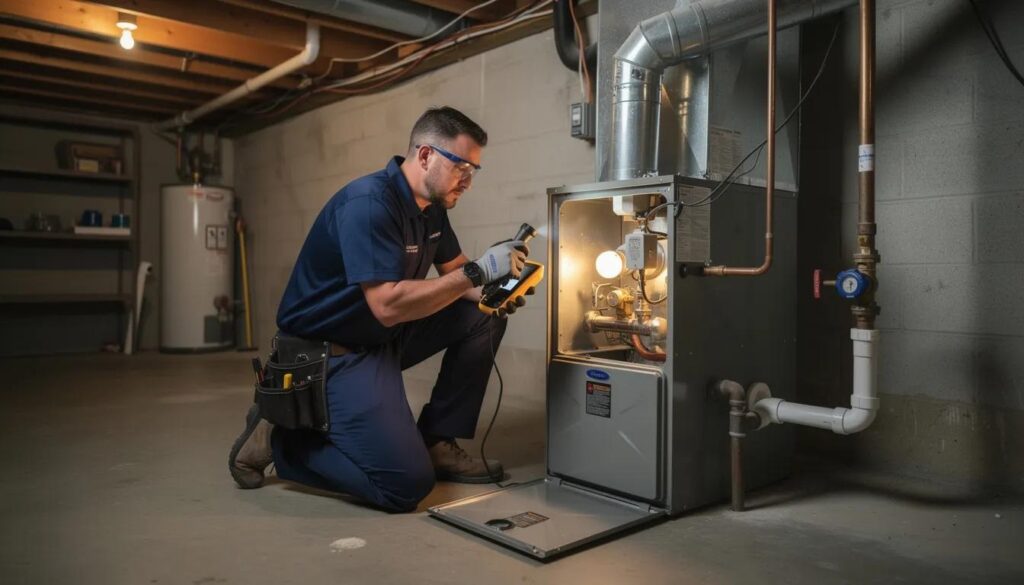
Prompt professional diagnosis may prevent certain minor problems from worsening.
However, not every malfunction can be predicted or prevented through maintenance.
Reduce Unexpected BreakdownsReduce Unexpected BreakdownsReduce Unexpected
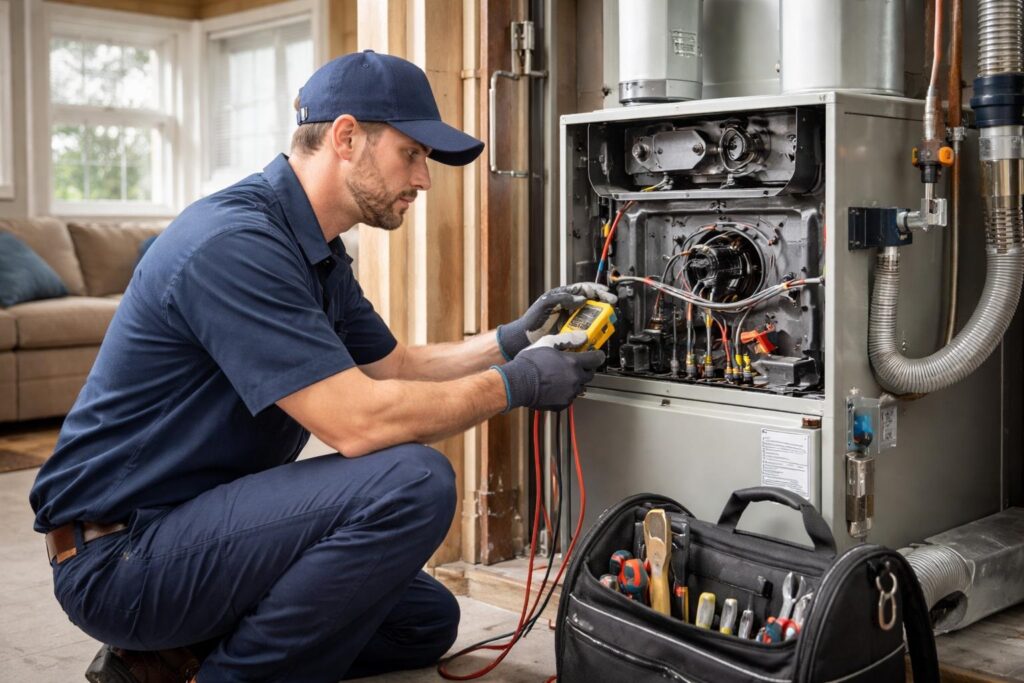
Breakdowns
A furnace struggling with restricted airflow or defective components may consume more energy than necessary.
Identifying the cause can help restore appropriate system performance.
Protect Household Safety
Fuel-burning heating equipment requires particular attention because combustion problems can create carbon monoxide hazards.
Annual professional maintenance is recommended by ENERGY STAR and the U.S. Consumer Product Safety Commission.
1. Your Furnace Stops Producing Warm Air
One of the clearest indications of a heating problem is a furnace that runs without delivering enough warmth.
You may notice cool air coming from the vents, an unusually low indoor temperature, or a heating cycle that never reaches the thermostat setting.
Possible Causes
Common possibilities include thermostat problems, ignition-system faults, restricted airflow, or malfunctioning heating components.
The actual cause depends on the furnace model and operating conditions.
What Homeowners Should Do
Check that the thermostat is set to heating mode and that the requested temperature is above the current room temperature.
If the system continues blowing cold air, arrange professional diagnosis rather than opening equipment panels or attempting burner repairs.
2. Your Home Has Uneven Heating or Cold Spots
Does one bedroom remain cold while the living room feels comfortable?
Uneven heating may indicate that warm air isn’t reaching all areas of the house effectively.
What Could Be Responsible?
Possible explanations include blocked registers, duct leakage, airflow restrictions, or an improperly balanced heating system.
Poor insulation and significant differences in sunlight exposure can also affect room temperatures.
When to Request Service
If temperature differences are new, worsening, or accompanied by weak airflow, ask an HVAC technician to investigate.
The technician should examine the complete heating and distribution system instead of assuming the furnace itself is defective.
3. Your Furnace Makes Strange Noises
Most furnaces make some ordinary operational sounds, including fan movement and occasional expansion of metal components.
However, new or unusually loud noises deserve attention.
Common Warning Sounds
Banging, rattling, scraping, squealing, or grinding may indicate loose components, blower problems, vibration, or other mechanical issues.
The sound alone cannot establish the exact diagnosis.
Why Prompt Inspection Helps
Continuing to operate equipment with a developing mechanical problem may cause additional damage.
If the noise is severe or suggests unsafe operation, turn the system off when it is safe to do so and contact a qualified technician.
4. Your Furnace Starts and Stops Repeatedly
Short cycling occurs when a heating system repeatedly starts and stops without completing normal heating cycles.
A short cycle may leave your home uncomfortable and increase wear on certain components.
Why Does Short Cycling Happen?
Possible causes include restricted airflow, control problems, overheating protection, or incorrect equipment sizing.
The thermostat is one possible factor, but the problem should not automatically be blamed on it.
What Should You Do?
Document how frequently the system starts and stops.
Check accessible air filters according to the manufacturer’s instructions, then schedule professional inspection if the behavior continues.
Repeatedly resetting safety controls without identifying the cause is not a suitable repair.
5. Your Energy Bills Increase Unexpectedly
A noticeable increase in heating expenses can indicate that your system is working harder to maintain comfortable temperatures.
However, utility bills can also change because of weather, energy prices, thermostat settings, or household usage.
Compare Similar Conditions
Review previous bills from comparable weather periods rather than comparing unrelated months.
An unusually high bill combined with weak heating or excessive operating time deserves further investigation.
Professional Efficiency Checks
An HVAC technician may assess airflow, system controls, burner operation, and other performance factors.
Proper diagnosis is necessary before assuming that replacing a particular component will reduce energy costs.
6. Your Furnace Produces Unusual Odors
Certain odors require immediate attention.
Dust accumulated during periods of inactivity may create a temporary smell when heating equipment first operates.
However, persistent burning odors, unusual chemical smells, or an odor resembling rotten eggs should not be ignored.
Natural Gas Leak Warning
A rotten-egg odor may indicate a natural gas leak.
If you suspect one, leave the building immediately. Avoid operating electrical switches, flames, or phones while inside.
Once safely outside, contact your gas utility’s emergency line or 911. Do not reenter until emergency responders authorize it.
Carbon Monoxide Is Different
Carbon monoxide is odorless.
You cannot rely on smell to determine whether a fuel-burning furnace is producing dangerous carbon monoxide.
Working CO alarms and properly maintained heating equipment are essential.
7. Your Carbon Monoxide Alarm Sounds
A carbon monoxide alarm requires an emergency response, not ordinary furnace troubleshooting.
Carbon monoxide exposure may cause headache, dizziness, weakness, nausea, confusion, or other symptoms.
What To Do Immediately
If a CO alarm sounds, everyone should move outside to fresh air immediately.
Call 911 or emergency services from a safe location.
Do not search the house for the source or return until emergency responders say it is safe.
If a heating appliance is identified as the source, it must be inspected and serviced by qualified personnel before reuse.
Never disable a carbon monoxide alarm to continue operating a furnace.
8. The Furnace Has Trouble Starting
A furnace that struggles to start or fails to respond to a normal heating request may have a problem with its controls or another operating component.
Sometimes the thermostat display may be blank or incorrectly configured.
In other cases, the issue could involve an ignition component, electrical connection, or safety control.
Safe Preliminary Checks
Homeowners can review visible thermostat settings and check whether their home has experienced a general power outage.
Follow the manufacturer’s instructions for accessible user controls.
Avoid bypassing protective switches, handling internal wiring, or attempting gas-system repairs.
If the furnace will not start normally, request a professional diagnostic visit.
9. Your Furnace Needs Frequent Repairs
Repeated service calls can indicate that aging equipment is becoming less reliable.
However, one repair does not automatically mean the complete system needs replacement.
Consider the Bigger Picture
Review the furnace’s age, maintenance history, repair costs, efficiency, and overall condition.
An older system needing a costly component replacement deserves a different evaluation from a relatively new furnace with a minor covered warranty issue.
A qualified contractor should explain whether repair remains practical and provide a replacement comparison when appropriate.
What to Do When Your Furnace Requires Repair
If the issue is not an emergency, begin with simple observations.
Check the thermostat settings, note any unusual noises, and record the symptoms.
Inspect or replace a user-accessible filter only when the manufacturer permits it and the equipment has been safely shut down as instructed.
Keep supply and return vents unobstructed.
Do not dismantle gas components, alter electrical wiring, or bypass safety controls.
If the furnace shows potentially dangerous symptoms, stop using it and follow the appropriate emergency guidance.
For ordinary malfunctions, contact a qualified heating contractor and describe what you have observed.
Professional Furnace Repair in Vancouver, Washington
Homeowners researching when your furnace requires repair can explore the furnace repair services offered by SureTech Heating & Cooling LLC.
The company is based in Vancouver, Washington, and advertises residential and commercial HVAC services across Clark County.
Services Offered by SureTech
According to its official website, SureTech provides gas and electric furnace repairs, heating system diagnostics, furnace installation, and general maintenance.
The company states that its technicians service all makes and models and have more than 20 years of industry experience.
These are company-reported descriptions rather than independently verified performance guarantees.
Emergency Heating Service
SureTech advertises 24/7 emergency dispatch for urgent heating problems.
Its published contact number is (360) 305-3690.
The company identifies Vancouver, Camas, Battle Ground, Ridgefield, Washougal, and several other Clark County communities among its service areas.
Customers should confirm their address, technician availability, and emergency service charges directly.
Verify Contractor Registration
SureTech lists Washington contractor registration number SURETHC827NU.
Before hiring any HVAC contractor, homeowners can use Washington’s Department of Labor & Industries verification service to confirm current registration, bond, and insurance information.
What Happens During a Professional Furnace Repair Visit?
A professional visit usually begins with a discussion of the symptoms and the equipment’s recent operating history.
The technician examines the heating system using appropriate safety procedures and diagnostic tools.
Depending on the symptoms, the evaluation may include thermostat operation, airflow, electrical controls, combustion performance, or other components.
After identifying the likely cause, the contractor should explain the proposed repair and expected cost.
Before approving the work, ask whether replacement parts, labor, follow-up testing, and warranty coverage are included.
Once repairs are completed, the technician should confirm that the system starts, operates, and shuts down appropriately.
How Much Does Furnace Repair Cost in 2026?
Furnace repair prices vary according to the actual malfunction, equipment type, required components, and labor involved.
A minor control adjustment may cost much less than a major blower motor or heat exchanger repair.
Service outside normal business hours may involve additional charges.
Questions About Pricing
Ask whether the contractor charges a diagnostic fee and whether that fee is credited toward approved repair work.
Request an itemized estimate before authorizing significant repairs.
Avoid relying on generic nationwide prices as a substitute for an actual diagnosis.
Furnace Repair vs. Replacement: Which Is Better?
Repair is often appropriate when the equipment remains in reasonable condition and the necessary work is affordable.
Replacement may deserve consideration when repairs become frequent, major safety defects are identified, or an older furnace requires expensive components.
Compare Operating Efficiency
Furnace efficiency is commonly expressed through Annual Fuel Utilization Efficiency, or AFUE, for combustion furnaces.
Higher AFUE ratings indicate a greater proportion of fuel energy converted into useful heat under standardized conditions.
However, replacement savings depend on climate, fuel prices, duct performance, and actual usage.
Ask a qualified contractor to compare realistic options, including appropriately sized replacement furnaces or heat pumps.
How to Prevent Common Furnace Problems
Preventive maintenance can support safer and more reliable heating.
ENERGY STAR recommends professional heating-system maintenance before the heating season.
Maintain Air Filters
Inspect the air filter monthly during heavy use.
Replace or clean it according to the equipment manufacturer’s instructions.
Keep Airflow Clear
Avoid blocking supply registers and return-air grilles with furniture or household items.
Schedule Professional Maintenance
A qualified technician can examine electrical connections, controls, airflow, and relevant combustion components.
Test Safety Alarms
Maintain working smoke and carbon monoxide alarms according to their manufacturer’s instructions.
These devices remain important even when the furnace appears to operate normally.
Common Mistakes Homeowners Should Avoid
One mistake is ignoring warning signs until heating stops completely.
Another is attempting repairs involving gas burners, electrical controls, or safety switches without appropriate qualifications.
Avoid repeatedly resetting a furnace that keeps shutting down.
Do not assume unusual odors are harmless or that a silent CO alarm proves the equipment is safe.
Finally, compare contractors based on registration, experience, diagnosis, and written service terms rather than advertising claims alone.
Frequently Asked Questions About Furnace Repair
What Are the Most Common Signs a Furnace Needs Repair?
Common warning signs include insufficient heat, unusual noises, short cycling, uneven room temperatures, unexpected energy increases, and repeated startup failures.
Is It Safe to Use a Furnace That Makes Noise?
Some operating sounds are normal, but new or severe noises require assessment. Stop using equipment that appears unsafe and arrange professional service.
How Often Should My Furnace Be Serviced?
ENERGY STAR recommends an annual professional heating-system checkup, ideally before the heating season begins.
Can a Dirty Air Filter Cause Furnace Problems?
Yes. Restricted airflow can increase operating demands and contribute to performance problems. Follow manufacturer instructions for inspecting and replacing filters.
When Should I Replace My Furnace Instead of Repairing It?
Consider replacement when major repairs are expensive relative to the system’s condition and remaining expected service life. A qualified technician can help compare options.
Does SureTech Offer Emergency Furnace Repair?
SureTech advertises 24/7 emergency dispatch in Vancouver and surrounding Clark County communities. Confirm availability and charges directly.
What Should I Do If I Smell Gas Near My Furnace?
Leave the building immediately without operating electrical switches or creating ignition sources. Once outside, call your gas utility’s emergency line or 911.
What Happens If My Carbon Monoxide Alarm Sounds?
Evacuate everyone to fresh air, call 911, and do not reenter until emergency responders authorize it. Do not operate a suspected appliance until it is professionally cleared.
Conclusion: Know When Your Furnace Needs Professional Attention
Recognizing when your furnace requires repair can help you respond appropriately to heating problems before they disrupt your comfort.
Unusual noises, rising energy bills, inconsistent heating, and repeated shutdowns are all reasons to investigate.
More serious warning signs, including suspected gas leaks and carbon monoxide alarms, require immediate safety action.
Regular maintenance, timely professional diagnosis, and careful contractor selection can support reliable heating throughout the winter.
Whether you live in Vancouver, Washington, or elsewhere in the United States, understanding your furnace’s warning signs is an important part of protecting your home and maintaining indoor comfort.

Written by Twastia Editorial Team
Twastia Editorial Team shares practical insights about website design, SEO services, Google Ads, content marketing, social media, conversion rate optimization, and digital marketing strategy.
Last updated: Oct 15, 2026
Related posts from Twastia
Explore more useful articles from twastia.com about digital marketing, SEO, websites, ads, content, and growth strategy.