Trestle Review: Features, Use Cases, and Honest Verdict
Bad phone numbers, fake leads, and anonymous callers quietly drain marketing budgets every single day. Sales teams dial disconnected lines, […]

Bad phone numbers, fake leads, and anonymous callers quietly drain marketing budgets every single day. Sales teams dial disconnected lines, call centers waste seconds on every unknown ring, and lead buyers pay for contacts that were never real. Identity data platforms promise to fix this, and Trestle has quickly become one of the most talked-about names in that space.
But marketing claims are cheap. Before you wire an API into your lead pipeline or call routing stack, you need to know what this platform actually delivers, what it costs per query, and where its limits are.
This hands-on Trestle review examines the company’s product lineup, pricing structure, ideal use cases, and honest drawbacks. Moreover, you will find a breakdown of legitimate alternatives if your needs fall outside its sweet spot.
Quick Verdict: In this Trestle review, we found a legitimate, well-built identity data provider offering phone verification, reverse lookup, and caller identification APIs with transparent pay-as-you-go pricing and a free trial. Founded by identity-industry veterans from Ekata and Twilio, it excels at US contactability and lead verification. Enrichment outside the US is limited, and per-query costs can climb at high volumes — but for US-focused lead and call operations, it is a strong, credible choice.
What Is Trestle?
Trestle is an identity data company that provides APIs for phone verification, reverse lookups, address enrichment, and caller identification. Its stated mission is to “accelerate trust and enable personalization through enterprise-grade identity data” — in plain terms, helping businesses confirm that the people behind phone numbers and addresses are real and reachable.
The company, legally Trestle Solutions Inc., launched in 2022 and was co-founded by Kushal Shah, whose background includes senior roles at Ekata and Twilio — two of the most respected names in identity and communications infrastructure. That pedigree matters, because building accurate identity graphs requires years of data licensing relationships and machine learning refinement that startups rarely shortcut successfully.
Today, the platform serves lead generation companies, marketing agencies, call tracking platforms, communications providers, and enterprises across real estate, healthcare, automotive, and government sectors. Data access is available two ways: real-time API integration for developers, or batch uploads for teams without engineering resources.
How Does Trestle Work in Practice?
The workflow is deliberately straightforward, and getting started carries no financial risk — the platform offers a free trial with no credit card required.
Step one — choose your access method. Developers integrate REST APIs directly into applications, CRMs, or dialers, usually within a few hours. Non-technical teams upload CSV files through the batch interface instead and receive enriched files back.
Step two — send your records. Each query submits a phone number, address, or name. The platform checks it against its identity graph and returns a structured response — typically in milliseconds, since low latency is a core design goal for real-time call routing use cases.
Step three — act on the intelligence. Responses include line type, carrier, prepaid status, an activity score flagging disconnected numbers, owner identity, demographics, and addresses. Businesses then route calls, prioritize leads, or reject junk records automatically based on these signals.
Notably, the company also offers a free Real Contact Data Assessment through its Labs program, which analyzes a batch of your records and benchmarks contact-data health against industry peers — a smart way to sample data quality before committing budget.
Trestle’s Core Products and APIs
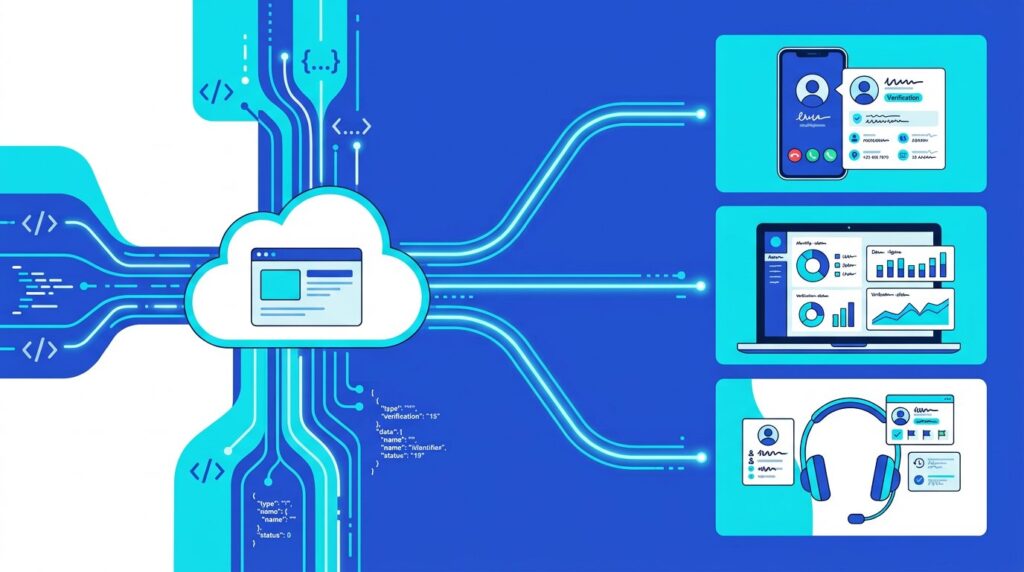
The product family divides neatly into validation, enrichment, and telephony categories. Here is what each API actually does.
Phone Validation API
The entry-level product validates a phone number and returns metadata: carrier name, line type — landline, mobile, or non-fixed VoIP — prepaid status, and a phone activity score that identifies disconnected lines. Typical applications include lead contactability scoring and dialing prioritization, which is why pay-per-lead buyers use it to reject dead numbers before paying for them. For outbound dialers, this single signal alone routinely saves double-digit percentages of wasted agent time.
Reverse Phone API
This deeper lookup validates the number and enriches it with owner name, demographics, current and historical addresses, email addresses, and associated people. Call routing platforms use it to identify callers in real time, while marketers use it to verify and append missing lead details.
Real Contact API
Positioned between the two, Real Contact combines the activity score and line type with name-match verification and an overall contact grade. It answers a deceptively simple question at scale: will a real person actually pick up this number? Lead verification and reputation management workflows rely on it heavily.
Caller Identification API
Built for inbound operations, this API enriches an incoming call with the caller’s name, demographics, current address, and phone metadata while the phone is still ringing. Contact centers use these signals for intelligent routing — sending high-value callers to senior agents — and for caller tracking and personalization. Response speed is critical here: lookups must return before the agent picks up, which is why latency budgets dominate telephony evaluations.
Reverse Address and Find Person APIs
Rounding out the enrichment line, the Reverse Address API validates and normalizes an address, then returns current residents with demographics, history, and phone numbers. Meanwhile, the Find Person API retrieves an individual’s contact details for identity resolution, lead append, and CRM cleansing. Both serve verification and data-hygiene use cases rather than real-time calling.
Who Uses Trestle?
Because the APIs solve contactability and identity problems, the customer base spans any industry where reaching real people drives revenue.
Lead generation companies validate form submissions instantly, rejecting fake or disconnected numbers before they enter sales pipelines. Call tracking and routing platforms enrich caller identity live, enabling smarter distribution and personalized greetings. Marketing agencies layer validation into their funnels — in one published customer case study, a global agency deployed both the Phone Validation and Reverse Phone APIs to cut returned leads and lift conversion rates, while a higher-education client reduced bad phone numbers in its pipeline by 50 percent.
Beyond marketing, the platform supports communications service providers, customer service operations, real estate and automotive sales teams, healthcare organizations, solar installers, and even government and law enforcement units. Common threads across all of them: outbound dialing optimization, inbound call verification, signup and onboarding checks, and lead qualification. Signup and onboarding flows use the same checks to block fake registrations at the form level, long before sales teams touch the record.
Is Trestle Legit and Worth It?

The Credibility Case
Several signals support genuine trust. The founding team comes from Ekata — the identity verification firm Mastercard acquired for its fraud-fighting data — and Twilio, the communications API giant. People who built identity infrastructure at that level do not typically stake their reputations on vaporware.
Customer feedback tells a consistent story as well. Reviews on G2 praise the accuracy of caller data for routing decisions, the flexibility of household-level data, and unusually hands-on support from the founding team during integration. Multiple reviewers describe immediately actionable quality checks that previously required waiting on external reports.
Transparency is another positive marker. Pricing is published openly per query, the free trial requires no credit card, and the documentation openly details what each API returns — practices that distinguish serious providers from the smoke-and-mirrors segment of the data industry.
The Honest Limitations
No platform suits everyone, and this Trestle review would be incomplete without its weak spots. First, coverage skews American: enrichment and verification focus on the United States, while phone validation works globally. Businesses with heavily international lead flows will need supplemental providers for non-US enrichment.
Second, per-query pricing rewards precision but punishes waste. High-volume operations that fail to deduplicate or pre-filter records can watch costs climb quickly — cost discipline matters with any usage-based vendor. Third, identity data is inherently probabilistic. No provider delivers a perfect match on every record, so plan for a share of no-match responses and verify accuracy on your own sample before scaling. Finally, because outputs draw on public and commercial data sources, records for very new numbers or recent movers can lag behind reality.
Trestle Pros and Cons
Here is the balanced summary of this Trestle review.
Pros
- Transparent pay-as-you-go pricing published per query
- Free trial with no credit card, plus batch access for non-developers
- Founded and supported by identity-industry veterans from Ekata and Twilio
- Low-latency responses suitable for real-time call routing
- Full product ladder from cheap validation to deep enrichment
- Strong reported support quality during onboarding
Cons
- Contact enrichment is US-focused; limited depth internationally
- Usage-based costs can escalate at very high volumes without filtering
- Consumer-brand recognition remains low, so internal stakeholders may need education
- Identity data accuracy varies record to record, as with every provider
Trestle Pricing Explained
Self-service pricing is pay-as-you-go, billed per query. Current published rates at the time of writing are:
| Product | Price per Query | Best For |
|---|---|---|
| Phone Validation API | $0.015 | Contactability scoring, dialing priority |
| Real Contact API | $0.03 | Lead verification, contact grading |
| Reverse Phone API | $0.07 | Caller ID, append, enrichment |
| Caller Identification API | $0.07 | Live inbound routing |
| Reverse Address API | $0.07 | Address verification, resident lookup |
Pricing for specialized products such as the Find Person API, plus volume discounts for enterprise workloads, is available on request. The ladder structure lets you filter cheaply first and enrich only records that pass — a workflow that keeps effective costs far below running every lead through deep lookups. As noted throughout this Trestle review, always confirm current rates on the official pricing page, since vendors adjust terms periodically.
Trestle Alternatives Worth Considering
Depending on your priorities, several credible competitors approach the same problem from different angles.
Twilio Lookup is the closest functional rival for phone metadata and line-type checks, backed by a massive developer ecosystem — attractive if you already build inside Twilio. Numverify and Abstract offer budget-friendly validation APIs suited to lighter, international workloads where enrichment depth matters less. Melissa brings decades of address hygiene expertise, making it strong where postal accuracy is the primary goal.
For enterprise-grade identity resolution and fraud scoring, TransUnion and its Neustar heritage operate at a scale and price point targeting the largest institutions. Enterprise buyers should also weigh contract minimums and data-refresh cadence, which vary more between vendors than feature lists suggest. IPQualityScore covers adjacent fraud signals such as IP risk and device fingerprinting, complementing phone-centric data nicely. Many sophisticated buyers layer tools: basic validation from one, enrichment from a specialist, and fraud scoring from another.
FAQs
Is Trestle legit or a scam?
Trestle is legit. It is a US-based identity data company, legally Trestle Solutions Inc., founded in 2022 by industry veterans with backgrounds at Ekata and Twilio. The company publishes transparent per-query pricing, offers a no-credit-card free trial, and has verified customer reviews on G2 describing real production use in call routing and lead verification.
What does the platform actually do?
The platform provides identity data APIs that validate and enrich phone numbers, addresses, and people records. Products include Phone Validation, Reverse Phone lookup, Real Contact grading, Caller Identification, Reverse Address, and Find Person APIs. Businesses use them to verify leads, identify inbound callers, route calls intelligently, and clean CRM data in real time.
Does the service offer a free trial?
Yes, and notably it requires no credit card. You can test the APIs with real queries before paying anything. Additionally, the Labs program offers a free Real Contact Data Assessment that analyzes a batch of your records and benchmarks the health of your contact data against peer companies.
How much does the service cost?
Pricing is pay-as-you-go per query, with published self-service rates ranging from $0.015 for Phone Validation to $0.07 for Reverse Phone, Caller Identification, and Reverse Address lookups at the time of writing; Real Contact sits at $0.03. Volume discounts are available for enterprise workloads, and rates can change, so verify numbers on the official pricing page.
What countries does the platform cover?
Identity enrichment and verification focus primarily on the United States — this includes reverse phone, address, and person lookups. Phone Validation works with global coverage for line-type and carrier metadata. If your lead flow is heavily international, expect to supplement with additional regional data providers for enrichment outside the US.
Do I need developers to use the APIs?
Not necessarily. While real-time integration requires engineering resources, the batch upload option lets revenue and operations teams process CSV files directly without writing code. Many customers start with batch processing to validate data quality, then invest in API integration once results justify a deeper deployment.
Conclusion
After examining the products, pricing, pedigree, and customer feedback, our Trestle review verdict is clear: this is a serious, well-executed identity data platform that solves real contactability problems with unusual pricing transparency. The product ladder is intelligently designed, the free trial removes evaluation risk, and the team’s identity-industry heritage shows in the details.
The limitations are equally clear. US-centric enrichment narrows the fit for international operations, per-query economics demand disciplined filtering at scale, and no identity provider guarantees a match on every record. Businesses that understand those boundaries tend to report strong returns; those expecting magic from any single API tend to learn expensively.
If your operation lives or dies on reaching real people — lead generation, call routing, contact centers, or performance marketing — Trestle belongs on your shortlist. Run the free trial against a real sample of your data, measure match rates and activity-score accuracy yourself, and let your own numbers decide. That is exactly the evaluation this platform is built to survive.

Written by Twastia Editorial Team
Twastia Editorial Team shares practical insights about website design, SEO services, Google Ads, content marketing, social media, conversion rate optimization, and digital marketing strategy.
Last updated: Jul 31, 2026
Related posts from Twastia
Explore more useful articles from twastia.com about digital marketing, SEO, websites, ads, content, and growth strategy.