Vcore Valve: An Industrial Valve Manufacturer for Project Procurement
Industrial projects live or die by the reliability of the components buried inside their pipelines, and valves are among the […]
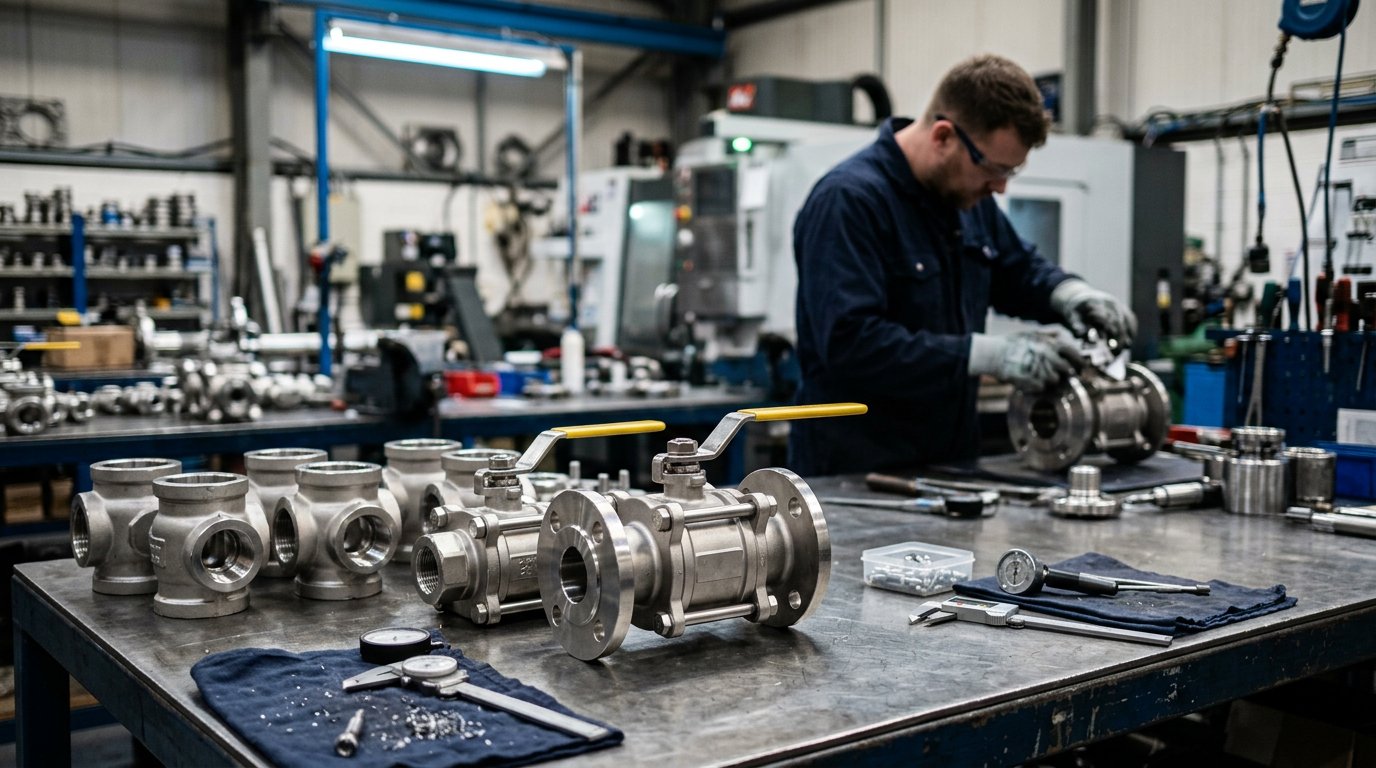
Industrial projects live or die by the reliability of the components buried inside their pipelines, and valves are among the most consequential of those components. Vcore Valve is a China-based industrial valve manufacturer and supplier that supports engineering, procurement, and construction contractors, distributors, and industrial project buyers with a broad range of valves for demanding pipeline applications. The company supplies ball valves, gate valves, globe valves, butterfly valves, check valves, control valves, and lined valves, backed by material selection support, pressure testing, inspection documentation, and export packing. This article explains who Vcore Valve is, what it manufactures, how it supports project procurement, and what buyers should look for when selecting an industrial valve supplier.
What Vcore Valve Does
Vcore Valve is an industrial valve manufacturer and supplier based in China, positioned specifically for project-based valve procurement. Rather than serving only retail or spot buyers, the company works with EPC contractors, distributors, and industrial project buyers who need valves for chemical processing, oil and gas, water treatment, power generation, steam systems, and general industrial fluid control.
The company’s stated role is to support valve configuration review, material selection, pressure testing, inspection documentation, export packing, and technical confirmation based on the service conditions and specifications of each project. This is a practical and important distinction: industrial valve buying is not simply about picking a model from a catalogue, but about matching a valve’s materials, pressure class, and construction to the fluid, temperature, and pressure it will actually face.
According to the company, Vcore Valve has more than 20 years of experience in industrial valve supply and project work, and its range spans more than 60 valve models across the main industrial valve types.
The Valve Range Vcore Valve Supplies
Industrial valve selection begins with the valve type, because each type performs a different function in a pipeline system. Vcore Valve’s range covers the most commonly specified categories.
Ball Valves
Ball valves use a rotating ball with a bore through its centre to open and close flow. They are valued for tight shutoff, quarter-turn operation, and low pressure drop, which makes them a standard choice for oil and gas, chemical, and general industrial service. They are widely used where a line must be opened or closed quickly and reliably.
Gate Valves
Gate valves use a flat or wedge-shaped gate that moves perpendicular to flow. They are designed primarily for fully open or fully closed service, where minimal flow restriction matters more than throttling. Gate valves are common in water systems, crude oil transfer, and isolation duty.
Globe Valves
Globe valves use a plug that moves against a seat, making them well suited to throttling and flow regulation. Their design provides good shutoff and precise control of flow rate, which is why they appear frequently in steam systems, power generation, and process control lines.
Butterfly Valves
Butterfly valves use a disc that rotates within the flow path. They are compact, lightweight, and economical, especially in larger diameters, and are used extensively in water treatment and general fluid handling where quick operation and low cost are priorities.
Check Valves
Check valves allow flow in one direction only and prevent reverse flow automatically. They protect pumps and compressors from damage caused by backflow, and they are a critical safety and protection element in almost every pipeline system.
Control Valves
Control valves regulate flow, pressure, or temperature in response to a signal from a control system. They are the precision instruments of the valve family, used where a process variable must be held within a specific range rather than simply switched on or off.
Lined Valves
For corrosive or aggressive media, lined valves are often the answer. Vcore Valve supplies rubber-lined and PTFE/PFA lined valves, which place a protective lining between the process fluid and the metal body. This extends service life in chemical processing where unprotected metal would corrode or contaminate the process.
Industries Vcore Valve Serves
Vcore Valve organises its products around the industries that use them, because the same valve type performs differently depending on the application. Its stated solution areas include petroleum, natural gas, slurry handling, water treatment, chemical processing, and power and steam systems.
In petroleum applications, common valve types include ball, gate, and check valves for crude oil transfer, refinery systems, storage lines, and pump stations. For natural gas, ball valves, gate valves, and control valves support transmission pipelines, distribution networks, compressor stations, and pressure regulation. Water treatment leans on butterfly and check valves, while chemical processing frequently requires lined valves to handle corrosive fluids. Power and steam systems rely on globe and control valves for throttling and regulation.
This industry-first organisation is useful for buyers, because it focuses selection on what a valve must withstand in service rather than on the valve type in isolation.
How Vcore Valve Supports Project Procurement
Industrial valve procurement involves far more than the valve itself. A serious supplier supports the process around the product, and this is where Vcore Valve concentrates much of its offering.
Valve Selection and Material Recommendation
The first step in any project order is configuration review. Vcore Valve supports valve selection and material recommendation based on service conditions, which means reviewing the fluid, pressure, temperature, and connection standards to confirm that the specified valve is appropriate. Getting this step right prevents both under-specification, which risks failure, and over-specification, which wastes budget.
Manufacturing and Quality Control
The company describes a controlled production sequence from raw material inspection and precision machining through assembly, pressure testing, surface treatment, and export packing. Its listed process includes material verification, dimensional checks, component treatment, professional assembly, hydrostatic pressure testing, functional operation testing, anti-corrosion coating, and secure packaging.
Testing and Inspection
Testing is where valve quality is proven rather than claimed. Vcore Valve lists shell pressure tests, seat leakage tests, functional operation tests, dimensional checks, and visual inspection as part of its testing and inspection scope. These tests confirm that a valve can hold its rated pressure and seal properly before it leaves the factory.
Documentation and Compliance
For project buyers, documentation is often as important as the valve itself. Vcore Valve states that it provides material test certificates, pressure test reports, seat leakage records, coating inspection records, and packing photos, along with export documents such as certificates of conformity, product data sheets, operation manuals, packing lists, and commercial invoices. The company also lists ISO 9001 quality management certification.
Export Packing and Shipment
Because Vcore Valve serves global buyers, export handling is part of its scope. The company describes export packing with protective wrapping and plywood cases, followed by crating, loading, and shipment, with packing photos provided so buyers can see the condition of goods before dispatch.
How to Evaluate an Industrial Valve Supplier
For buyers comparing Vcore Valve against other manufacturers, several criteria separate dependable suppliers from the rest.
The first is specification capability. A good supplier asks detailed questions about the service conditions before recommending a valve, and it can explain why a particular material or pressure class is appropriate. A supplier that quotes a price without understanding the application is a risk.
The second is testing transparency. Buyers should ask what tests are performed on each valve, what the acceptance criteria are, and what documentation will be provided. Shell and seat tests, documented in writing, are the minimum expectation for industrial valves.
The third is documentation discipline. In project environments, missing paperwork can delay acceptance and payment. A supplier that provides material certificates, test reports, and packing documentation as standard removes a common source of friction.
The fourth is traceability. Knowing the origin of materials and the batch history of a valve matters for quality assurance and for resolving any issue that arises after installation.
Finally, communication and support matter throughout the order. Valve procurement often spans weeks or months, with specification changes along the way, and a responsive supplier with clear technical communication is worth more than a marginally lower unit price.
Conclusion
Choosing an industrial valve manufacturer is a decision that affects the safety, efficiency, and longevity of an entire pipeline system, which is why it rewards careful evaluation rather than price-driven shortcuts. Vcore Valve positions itself as a project-focused supplier, offering a broad range of ball, gate, globe, butterfly, check, control, and lined valves, with material selection support, documented testing, and export packing for global buyers across chemical, oil and gas, water, and power applications. For project buyers evaluating suppliers, the key is to confirm the supplier’s specification capability, testing transparency, and documentation discipline, and to judge a manufacturer as much by its process as by its product. Buyers interested in Vcore Valve can review its product range and request a quotation directly through the company’s website.
Frequently Asked Questions
1. What types of valves does Vcore Valve manufacture?
Vcore Valve supplies ball, gate, globe, butterfly, check, control, and lined valves, including rubber-lined and PTFE/PFA lined options for corrosive service.
2. Which industries does Vcore Valve serve?
The company serves chemical processing, oil and gas, water treatment, power generation, steam systems, and general industrial fluid control projects.
3. Does Vcore Valve provide testing and inspection reports?
Yes, the company lists shell pressure tests, seat leakage tests, functional operation tests, and dimensional checks, with corresponding test reports and records.
4. Is Vcore Valve ISO certified?
Vcore Valve lists ISO 9001 quality management certification on its website, along with a documented factory quality control process.
5. Does Vcore Valve support export shipping?
Yes, the company describes export packing with protective wrapping and plywood cases, along with crating, loading, and shipment support for global buyers.
6. Who does Vcore Valve supply to?
Vcore Valve supports EPC contractors, distributors, and industrial project buyers with project-based valve selection and procurement support.

Written by Twastia Editorial Team
Twastia Editorial Team shares practical insights about website design, SEO services, Google Ads, content marketing, social media, conversion rate optimization, and digital marketing strategy.
Last updated: Aug 13, 2026
Related posts from Twastia
Explore more useful articles from twastia.com about digital marketing, SEO, websites, ads, content, and growth strategy.