Watertrucks: Best Uses, Types, Tank Sizes & Rental Guide for Construction
Construction and industrial projects often require large quantities of water in places where a reliable supply is not readily available. […]
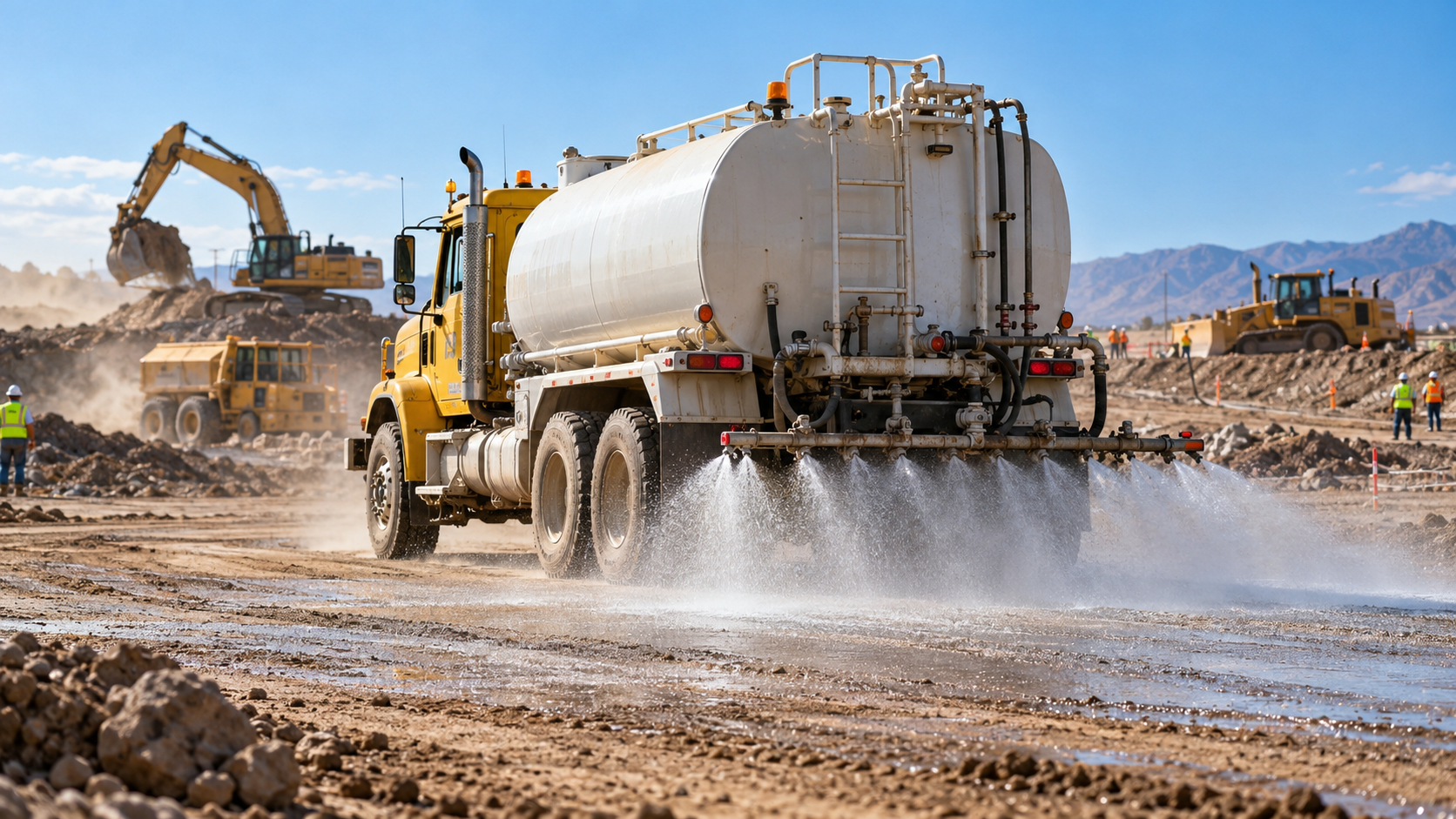
Construction and industrial projects often require large quantities of water in places where a reliable supply is not readily available. From dusty access roads to active earthmoving sites, controlled water delivery helps teams complete essential work and manage site conditions.
Watertrucks, also called water trucks, water carts, or water tankers, are specialized vehicles designed to transport and distribute water where it is needed.
These vehicles are widely used in construction, road maintenance, mining, landscaping, and selected emergency operations.
Unlike ordinary delivery vehicles, many water trucks feature integrated tanks, pumps, hoses, spray bars, and nozzles that allow operators to control how water is distributed.
For American construction managers and equipment buyers, understanding the different types of water trucks can help determine which vehicle is appropriate for a particular project.
A small site may require a compact water trailer, while a large infrastructure project could benefit from a heavy-duty truck with a much larger tank.
However, selecting the right equipment involves more than choosing the highest water capacity. Vehicle weight, site access, spray coverage, water availability, operator qualifications, and environmental requirements are equally important.
This guide explains the main applications of water trucks, common tank sizes, equipment features, rental considerations, safety practices, and practical tips for choosing a suitable vehicle.
What Are Watertrucks?
Watertrucks are purpose-built or modified vehicles equipped with tanks for transporting water and systems for distributing it.
Most construction water trucks combine a commercial vehicle chassis with a mounted tank and pumping equipment.
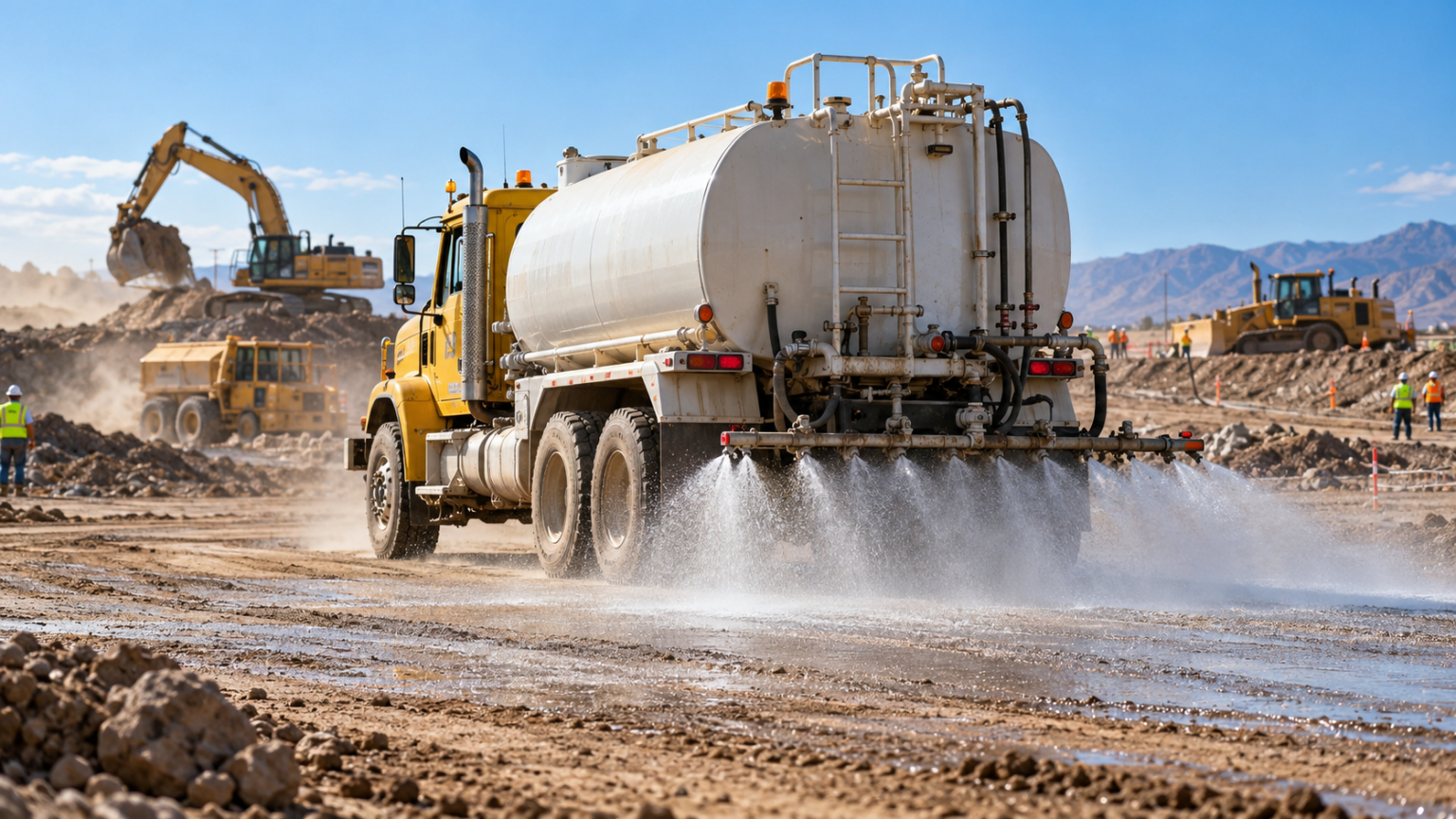
Depending on the configuration, water may be discharged through rear spray bars, side nozzles, hoses, or mounted water cannons.
These delivery methods serve different purposes.
For example, rear spray bars can dampen an unpaved roadway, while a hose may provide more targeted water application around equipment or specific work areas.
How Do Water Trucks Work?
Water is loaded into a designated tank from an authorized water source.
A pump or gravity-fed delivery arrangement then transfers the water through the chosen discharge system.
Operators control the water flow according to the task and equipment specifications.
Some modern vehicles include cab-controlled spray functions that allow adjustments without leaving the driver’s seat.
The exact operating process depends on tank design, pump configuration, and the manufacturer’s instructions.
6 Common Uses of Water Trucks
Water trucks support a wide variety of projects. Their versatility makes them useful for construction companies, municipalities, industrial facilities, and property maintenance operations.

1. Construction Dust Suppression
Water trucks dampen exposed soil and vehicle routes to help reduce airborne dust. The application rate must be controlled to avoid creating excessive runoff or muddy surfaces.

2. Road Construction and Maintenance
Road crews use water for selected grading, compaction, and surface preparation tasks. Water requirements depend on soil type and engineering specifications.

3. Mining and Quarry Operations
Large water trucks help manage dust on haul roads, material-handling areas, and other approved sections of mining or quarry sites.

4. Landscaping and Site Watering
Water trucks can supply water for newly planted landscapes, soil preparation, and projects without permanent water connections.

5. Municipal Maintenance
Local government crews may use water trucks for approved road maintenance, public works, and other infrastructure activities.

6. Emergency and Remote Water Support
Certain properly equipped vehicles can support emergency water supply or approved fire-support activities. Not every construction water truck is suitable for firefighting or potable water delivery.
The U.S. Environmental Protection Agency recognizes water spraying as a practical dust-control method for construction sites and unpaved traffic areas.
US EPA
Why Water Trucks Are Important for Dust Control
Dust management is one of the primary reasons water trucks are used.
Earthmoving, excavation, demolition, and vehicle movement can disturb dry soil and other materials, releasing airborne particles.
These particles can reduce visibility, affect neighboring properties, and create potential respiratory hazards.
OSHA identifies tank trucks equipped with spray hoses or nozzles among the wet methods used to control dust during applicable demolition activities.
OSHA
How Water Reduces Airborne Dust
Appropriate water application moistens loose material, making it less likely to become airborne.
However, the correct amount depends on weather, soil conditions, traffic, and the work being performed.
Too little water may leave dust uncontrolled. Too much water can create slippery surfaces, mud, and runoff problems.
Water trucks are therefore one part of a broader site dust-management strategy rather than a universal solution.
Types of Water Trucks and Common Tank Sizes
Water trucks are available in several configurations. Tank capacity is usually expressed in gallons in the United States and liters in Australia.

Compact Water Trailers
Towable water trailers are useful for smaller job sites, landscaping tasks, and locations where a full-size truck may not be necessary.

Medium-Duty Water Trucks
These vehicles balance tank capacity with maneuverability. They may suit residential development, road maintenance, and general construction projects.

Heavy-Duty Water Trucks
Larger vehicles transport greater water volumes per trip and may support extensive construction sites, quarry roads, and demanding industrial operations.
Understanding Tank Capacity
A higher-capacity truck can reduce the number of refill trips, but it may require additional operating space, a different driver qualification, and a suitable road or worksite surface.
Water Cart Specialists, operating as TWS Hire, lists several Australian water-cart sizes, including 3,500-liter, 4,500-liter, 5,000-liter, and 7,000-liter models.
The Watercart Specialists
For American readers, the approximate conversions are:
| Tank capacity | Approximate U.S. gallons |
|---|---|
| 3,500 liters | 925 gallons |
| 4,500 liters | 1,189 gallons |
| 5,000 liters | 1,321 gallons |
| 7,000 liters | 1,849 gallons |
These are examples from an Australian rental fleet, not standardized classifications for the U.S. market.
Essential Features to Look for in Water Trucks
A suitable water truck needs more than a large tank.
Baffled Water Tanks
Internal baffles help control water movement during vehicle operation.
This can contribute to load stability, although safe driving and correct loading remain essential.
Pumps and Spray Systems
The pump supplies water to the designated discharge equipment.
Rear sprays may suit road dampening, while hoses or mounted cannons allow different application patterns.
Operator Controls
Some vehicles feature conveniently positioned controls for adjusting water flow.
Depending on the configuration, operators may manage selected functions from the cab.
Safety Equipment
Relevant equipment can include reversing cameras, alarms, emergency stops, visibility markings, and fire extinguishers.
TWS Hire’s published specifications include baffled tanks, high-pressure pumps, hoses, reversing equipment, and emergency safety features on selected vehicles.
The Watercart Specialists
How to Choose the Right Water Truck for Your Project
Selecting equipment begins with identifying the worksite’s actual water requirements.
Step 1: Estimate Water Demand
Consider the area requiring treatment, expected working hours, soil conditions, traffic volume, and number of daily applications.
Step 2: Evaluate Site Access
Check available turning space, road conditions, ground-bearing capacity, and restrictions involving bridges or narrow routes.

Water Truck Selection
Compare tank capacity, maneuverability, refill access, vehicle weight, and spray equipment rather than selecting a truck solely by size.
Step 3: Confirm the Water Source
Determine where the truck can refill and whether permits, meters, or authorized water connections are required.
Step 4: Review Operator Requirements
Confirm the driver’s legal qualifications for the vehicle’s weight and configuration.
In the United States, applicable commercial driver’s license requirements differ from Australia’s licensing classifications.
Step 5: Compare Rental Terms
Ask about delivery, fuel, maintenance responsibilities, insurance, breakdown support, and the availability of suitable operators.
Renting vs. Buying a Water Truck
Whether renting or purchasing makes financial sense depends on project duration and expected utilization.
| Consideration | Renting | Buying |
|---|---|---|
| Initial financial commitment | Generally lower | Generally higher |
| Equipment ownership | Rental provider retains ownership | Buyer owns equipment |
| Maintenance | Depends on rental agreement | Owner responsibility |
| Fleet flexibility | Different units may be available | Limited to owned equipment |
| Long-term availability | Depends on supplier | Controlled by owner, subject to downtime |
Short-term projects may benefit from rental flexibility.
Businesses with continuous water-delivery requirements may consider ownership, provided maintenance and operating expenses are properly evaluated.
Exploring Water Cart Specialists and TWS Hire
The Water Cart Specialists’ watertrucks overview provides an example of how water-cart rental companies organize their fleets.
TWS Hire, based in Sydney, Australia, describes water trucks for dust suppression and construction water delivery.
Its fleet overview includes medium-sized water carts as well as 7,000-liter models intended for projects requiring greater capacity.
The company states that some 4,000–5,000-liter vehicles can be driven with an Australian car license, while its 7,000-liter units require an appropriate truck license because of vehicle weight.
The Watercart Specialists
These classifications refer to the company’s Australian vehicles and should not be applied to U.S. license rules.
TWS Hire also advertises equipment delivery in greater Sydney and selected surrounding regions.
Its website is useful as an example of practical equipment configurations, but U.S. contractors should obtain locally applicable specifications, rental quotes, and licensing guidance.
Water Truck Rental Costs: What Affects Pricing?
Rental prices vary significantly between regions and equipment providers.
Rather than assuming a universal daily rate, request quotations based on your project.
Important cost factors include tank capacity, rental duration, delivery distance, driver services, fuel, insurance, water sourcing, and equipment specifications.

Understanding Rental Expenses
Ask whether a quotation includes the vehicle, operator, delivery, water, fuel, and maintenance support. Unclear inclusions can make competing offers difficult to compare.
For longer projects, also consider how often the truck must leave the site for refilling.
Water supply logistics may significantly affect operational efficiency.
Water Truck Safety and Environmental Requirements
Water trucks are heavy vehicles carrying moving liquid loads. Their safe operation requires trained personnel, appropriate equipment, and attention to worksite conditions.
Drivers should account for vehicle weight, braking distance, slopes, soft ground, and other nearby machinery.
Pre-operation inspections should cover tires, brakes, tank attachments, hoses, pumps, and safety equipment.
Water application must also be controlled.
EPA guidance explains that construction sites must manage sediment and pollutants in stormwater runoff where applicable permits require it.
US EPA

Controlled Water Application
Apply enough water for the intended purpose without creating unsafe driving conditions, unnecessary runoff, or erosion.
Operators should follow the site’s environmental plan and comply with applicable local, state, and federal requirements.
Common Mistakes to Avoid When Using Water Trucks
One mistake is choosing a truck with insufficient capacity for a large worksite.
Another is selecting an oversized vehicle that cannot safely travel along available access routes.
Projects may also experience delays when managers overlook refill distances or rely on an unsuitable water source.
Poorly adjusted spray systems can waste water or leave dust inadequately controlled.
Finally, water trucks should not be treated as substitutes for all other dust-control measures.
Some operations require specialized controls near the point where hazardous dust is generated.
OSHA’s silica construction standard may require additional engineering controls, monitoring, work practices, and respiratory protection depending on the task.
Occupational Safety and Health Administration
Frequently Asked Questions About Watertrucks
What are watertrucks used for?
Watertrucks transport and distribute water for dust suppression, road construction, landscaping, mining, and other authorized industrial activities.
How much water can a water truck carry?
Capacity varies considerably. Smaller water carts may hold a few thousand liters, while heavy-duty trucks can carry substantially more.
Are water trucks good for construction dust control?
Yes. Controlled water application can help reduce airborne dust on suitable roads and worksite surfaces, although additional controls may be required.
How much does it cost to rent a water truck?
Prices depend on vehicle capacity, rental duration, location, delivery, and whether an operator or water supply is included.
Do water trucks require special licenses?
Requirements depend on the vehicle’s weight, configuration, and local regulations. U.S. commercial driving rules should be checked independently.
Can water trucks carry drinking water?
Only vehicles and tanks approved for potable water transport should be used for drinking-water delivery. Construction water trucks are not automatically suitable.
How often should a water truck be inspected?
Operators should perform appropriate pre-use inspections and follow manufacturer maintenance schedules and applicable regulatory requirements.
Is renting a water truck better than buying one?
Renting may suit temporary projects, while ownership may suit frequent long-term use. The best financial choice depends on operating needs and total costs.
Conclusion
Watertrucks play an important role in construction, road maintenance, mining, landscaping, and industrial operations.
Their ability to transport and distribute large quantities of water makes them valuable for managing dust, supporting soil preparation, and supplying water to remote work areas.
However, selecting the right truck requires evaluating tank capacity, pump equipment, site access, water availability, operator qualifications, and safety requirements.
Smaller water carts may be practical for limited projects, while larger trucks can support extensive industrial operations.
Suppliers such as Australia’s Water Cart Specialists demonstrate the variety of equipment configurations available, although American contractors must follow their own local licensing and operational regulations.
With proper planning, suitable equipment, and responsible water management, construction teams can use water trucks to support efficient and safer site operations.

Written by Twastia Editorial Team
Twastia Editorial Team shares practical insights about website design, SEO services, Google Ads, content marketing, social media, conversion rate optimization, and digital marketing strategy.
Last updated: Oct 26, 2026
Related posts from Twastia
Explore more useful articles from twastia.com about digital marketing, SEO, websites, ads, content, and growth strategy.