Ways to Raise Your House’s Water Pressure: Best Plumbing Solutions
Low water pressure can turn ordinary household activities into frustrating tasks. A shower may feel weak, a kitchen faucet may […]
Low water pressure can turn ordinary household activities into frustrating tasks. A shower may feel weak, a kitchen faucet may fill a pot slowly, and appliances may take longer than expected to receive water. Sometimes the issue affects only one fixture. In other cases, the problem involves the entire plumbing system.
Understanding Ways to Raise Your House’s Water Pressure begins with identifying the source of the problem rather than immediately purchasing a pump or adjusting plumbing equipment.
A clogged faucet aerator, partially closed valve, leaking supply line, or failing pressure regulator can all produce similar symptoms. The right solution depends on the actual cause.
According to the U.S. Environmental Protection Agency (EPA), incoming residential water pressure generally works best between 45 and 60 pounds per square inch (psi). The agency also warns that excessively high pressure can damage plumbing fixtures and appliances. US EPA
These Ways to Raise Your House’s Water Pressure focus on safe, practical improvements for American homeowners. They explain what you can inspect yourself, when professional assistance is necessary, and why increasing pressure beyond safe limits is not a sensible solution.
Understand the Difference Between Water Pressure and Flow
Before making changes, it helps to distinguish water pressure from water flow.
Water pressure describes the force pushing water through the plumbing system. Flow rate describes the volume delivered over time, often measured in gallons per minute.
A shower can have adequate supply pressure but weak flow because the showerhead is clogged or designed to limit consumption. Conversely, a household with low supply pressure may experience poor performance at multiple fixtures.
One of the most useful Ways to Raise Your House’s Water Pressure is therefore to establish whether the issue concerns pressure, flow restriction, or both.
Check Whether the Problem Affects One Fixture or the Entire House
Turn on the kitchen faucet, bathroom sink, and shower separately. Observe whether each produces noticeably weak flow.
Next, check whether the problem occurs only with hot water or with both hot and cold supplies.
If one faucet is affected, start with that fixture. If every outlet is weak, investigate the main supply, pressure regulator, or utility service.
Measure Actual Water Pressure
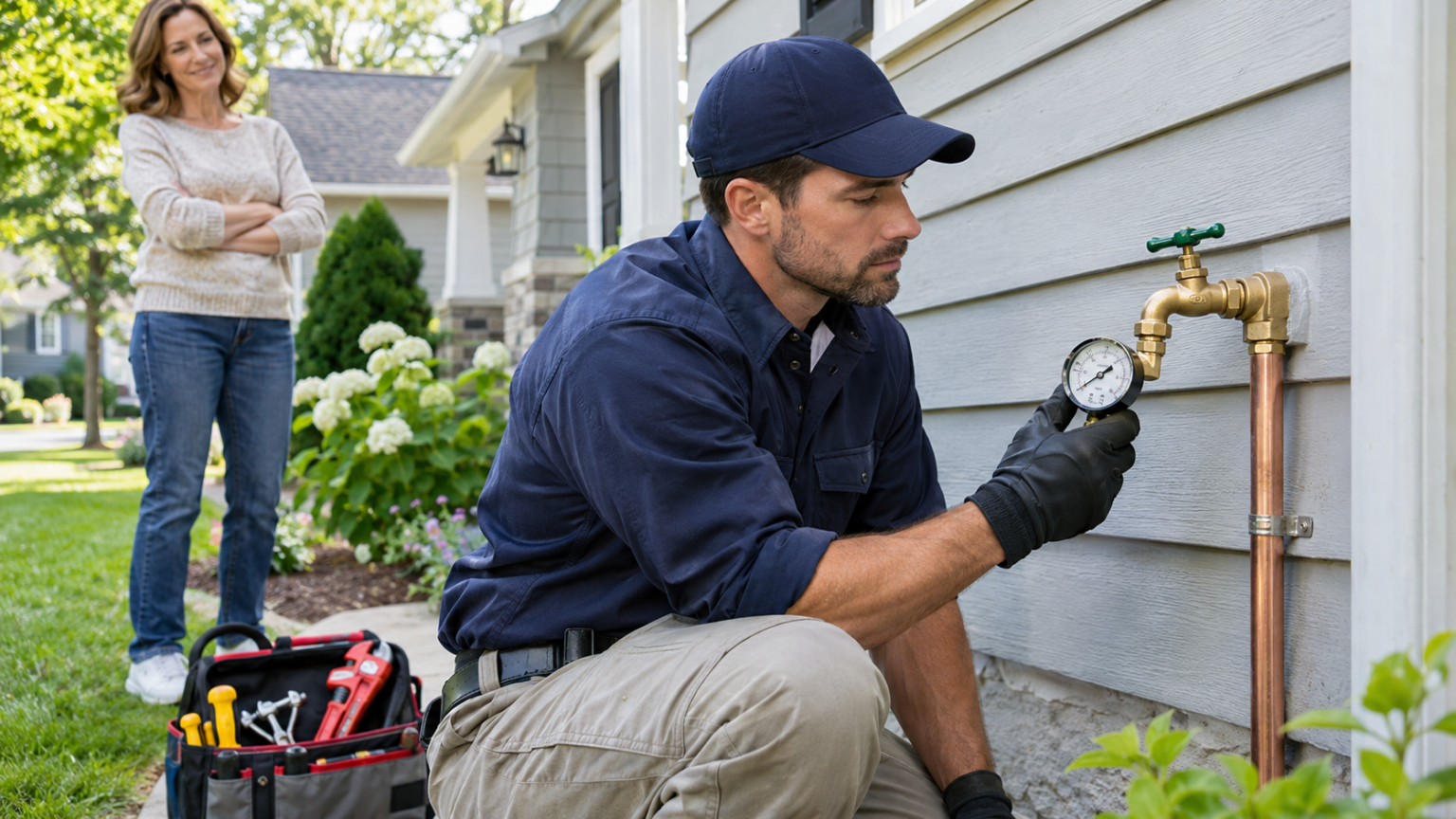
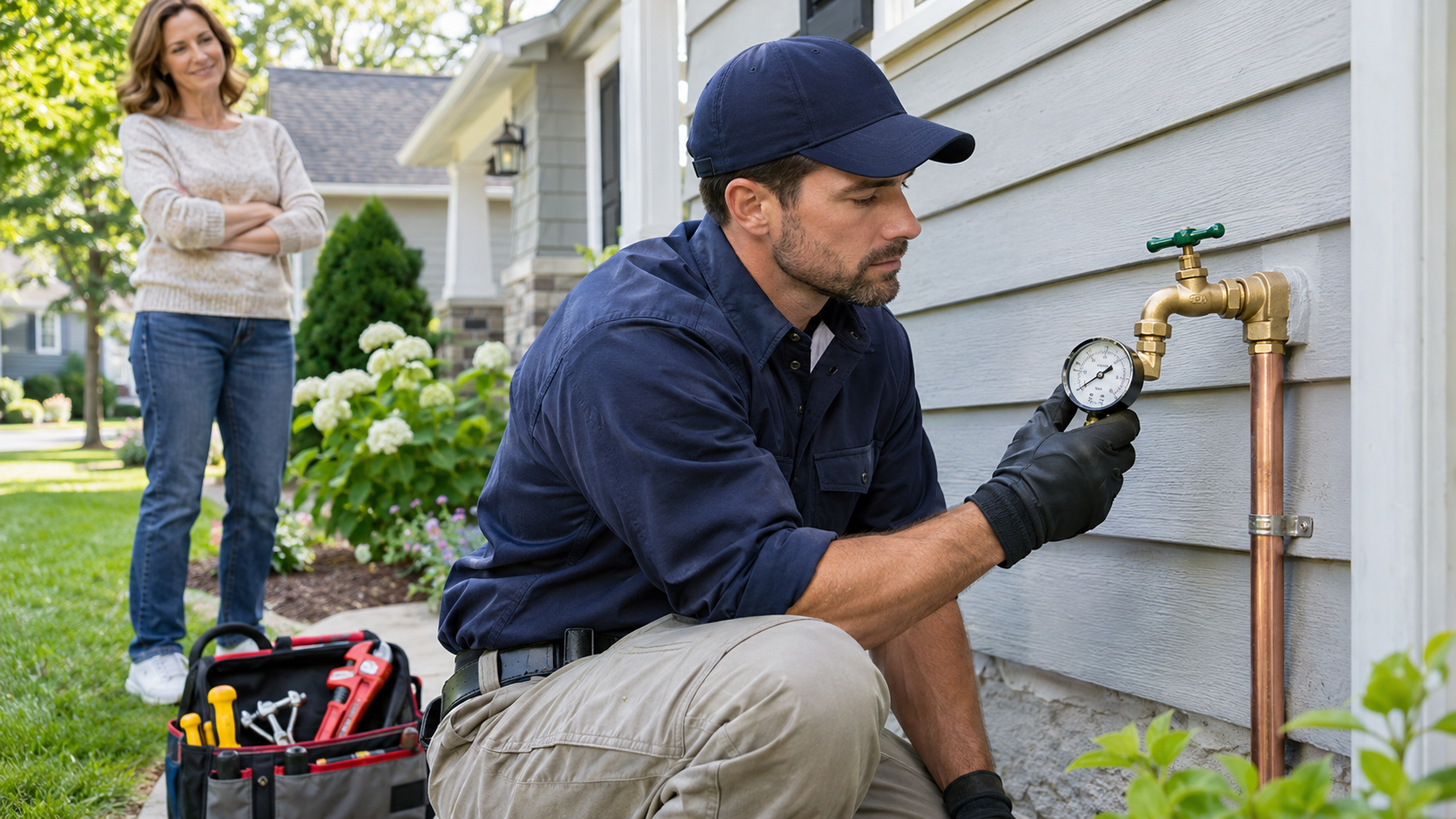
You can use a water pressure test gauge designed to connect to an accessible outdoor hose bibb.
The EPA recommends turning off water-using fixtures and appliances, connecting the gauge, opening the faucet completely, and reading the pressure. US EPA
For homeowners exploring Ways to Raise Your House’s Water Pressure, this simple measurement can prevent unnecessary spending.
A reading substantially below the EPA’s recommended 45–60 psi range deserves investigation, but the appropriate response depends on the local system and plumbing design.
1. Clean Clogged Faucet Aerators and Showerheads
Mineral deposits and debris can accumulate in faucet aerators and showerheads, restricting water flow. This is especially common in areas with hard water or after plumbing maintenance dislodges sediment.
The first of Ways to Raise Your House’s Water Pressure is to inspect the affected fixture before assuming the problem involves the entire house.
Remove Deposits From Accessible Components
If the manufacturer allows it, remove the aerator, inspect its screen, and rinse away loose sediment.
A soft brush and a cleaner approved for the material may help remove deposits. Follow the manufacturer’s instructions rather than using aggressive tools or incompatible chemicals.
For showerheads, check the spray openings and clean them according to the product guidance.
Avoid Removing Water-Saving Components
Some faucets and showerheads contain flow restrictors to meet water-efficiency standards.
Removing these components is not necessarily safe, legal, or effective. It can increase water consumption without addressing the actual supply problem.
A practical interpretation of Ways to Raise Your House’s Water Pressure is improving the function of existing equipment rather than defeating its intended design.
Compare Results After Cleaning
If water flow improves, the problem was probably localized. If nothing changes, the next step is examining supply valves and other possible restrictions.
2. Check That Supply Valves Are Fully Open
A partially closed shutoff valve can reduce flow to a fixture or an entire property.
Valves may be left partly closed after repairs, renovations, or appliance installations. Older valves can also become stiff or damaged.
Among Ways to Raise Your House’s Water Pressure, checking accessible valves is a straightforward troubleshooting step.
Inspect Fixture Shutoff Valves
Bathroom sinks, kitchen faucets, and toilets commonly have individual shutoff valves.
If one fixture has poor flow, check whether its valve is in the correct operating position.
Do not force a corroded or leaking valve. Older plumbing components can fail when handled roughly.
Examine the Main Water Shutoff
If multiple fixtures are affected, a partially closed main valve may be contributing to the restriction.
Locate the homeowner-operated shutoff valve and inspect its position if accessible.
Do not tamper with the utility meter, utility-owned valves, or unfamiliar equipment.
When following Ways to Raise Your House’s Water Pressure, remember that a valve problem may require repair rather than adjustment.
Contact a Professional for Damaged Valves
A plumber can replace a defective valve and inspect nearby connections without risking unnecessary damage.
3. Identify Hidden Leaks and Plumbing Restrictions
Leaks can reduce available flow and waste water even when they are not immediately visible.
A damaged underground service line, leaking connection, or failed pipe may affect household performance.
Likewise, internal pipe corrosion, mineral buildup, or damaged plumbing components may restrict water movement.
Finding these problems is an important part of Ways to Raise Your House’s Water Pressure, particularly in older properties.
Look for Common Leak Indicators
Possible warning signs include unexpectedly high water bills, damp walls, unexplained wet areas, persistent plumbing noises, or a water meter indicating usage when all fixtures are off.
The EPA recommends investigating leaks when residential water pressure is unusually low. US EPA
However, an unexpected bill or low-pressure reading does not establish where a leak is located.
Consider the Condition of Older Pipes
Certain older piping materials can develop internal restrictions over time.
A plumber may investigate whether corrosion, sediment, damaged fittings, or undersized supply piping is limiting flow.
A key lesson from Ways to Raise Your House’s Water Pressure is that replacing an entire plumbing system should not be the first recommendation without evidence.
Avoid Unnecessary Pipe Replacement
Request a diagnosis and clear explanation of the proposed repairs before approving expensive repiping work.
4. Have the Pressure-Reducing Valve Inspected
Many American homes have a pressure-reducing valve (PRV), sometimes called a pressure regulator, installed near the incoming water supply.
Its purpose is to limit excessive supply pressure and protect household plumbing.
A regulator can become improperly adjusted, worn, or defective. When that happens, water pressure may be lower than intended or fluctuate unexpectedly.
A significant element of Ways to Raise Your House’s Water Pressure is checking whether an existing regulator is functioning correctly before considering major upgrades.
Understand Safe Pressure Settings
The EPA recommends an incoming residential service-pressure range of 45–60 psi. Its technical guidance also notes that many U.S. plumbing codes require a pressure regulator where supplied pressure exceeds 80 psi. nepis.epa.gov
Higher pressure is not automatically better.
Excessive pressure can increase water waste, strain fittings, and contribute to leaks or premature equipment failure.
Let a Qualified Plumber Evaluate the Regulator
Although certain regulators have adjustment mechanisms, changing the setting without confirming actual pressure and system conditions can create problems.
A qualified plumber can measure pressure, check for regulator failure, and determine whether adjustment or replacement is appropriate.
The regulator may also affect thermal expansion in a closed water system. Related components sometimes need evaluation when the pressure-control arrangement changes.
Ways to Raise Your House’s Water Pressure should never involve bypassing a safety regulator simply to obtain a stronger shower.
Check Local Code Requirements
The plumbing code adopted in your jurisdiction may specify allowable pressure, approved regulators, and additional protective equipment.
5. Investigate Problems With the Municipal Water Supply
Sometimes low water pressure begins outside the property.
Water main maintenance, utility repairs, heavy local demand, and temporary distribution problems can reduce the pressure reaching a home.
If the whole house suddenly develops weak flow, ask whether nearby properties are experiencing the same issue.
One of the most practical Ways to Raise Your House’s Water Pressure is contacting the water utility before investing in household plumbing modifications.
Ask About Supply Interruptions
Check the utility’s official website or contact its customer service team for notices about maintenance, main breaks, or temporary pressure changes.
Report a sudden or prolonged decline, especially when neighboring homes are also affected.
If low pressure accompanies discoloration or a utility advisory, follow the utility’s water-quality instructions rather than assuming the problem is harmless.
Understand What Homeowners Can Control
A municipal supply issue cannot always be fixed by adjusting household plumbing.
A pressure booster may be appropriate in certain circumstances, but installation must satisfy local plumbing and water-utility rules.
When comparing Ways to Raise Your House’s Water Pressure, distinguish a permanent supply limitation from a temporary disruption that may resolve after utility repairs.
6. Evaluate Water Softener and Filtration Equipment
Whole-house filters, water softeners, and other treatment systems can restrict flow if a filter becomes clogged or equipment malfunctions.
These systems may be located near the main water line, utility room, or mechanical area.
If low flow began after installing a filtration system or has worsened as filters aged, the treatment equipment may deserve inspection.
Follow the Maintenance Schedule
Replace filters according to the manufacturer’s recommendations and the home’s actual water conditions.
A system that requires more frequent maintenance may need evaluation for sediment loading or inappropriate sizing.
An often-overlooked part of Ways to Raise Your House’s Water Pressure is maintaining equipment already installed in the water supply.
Avoid Unsafe Bypass Procedures
Some equipment includes a manufacturer-designed bypass for maintenance and troubleshooting.
Only use it according to the instructions, and do not bypass treatment systems when doing so could compromise water safety or create an unprotected plumbing connection.
Review Equipment Capacity
A qualified installer can assess whether the system is correctly sized for household demand and whether its pressure loss is excessive.
7. Consider a Booster Pump Only When Necessary
A water pressure booster pump can increase pressure when the incoming supply is genuinely inadequate and other causes have been ruled out.
However, a booster pump is not a universal solution.
Installing one without correcting blocked pipes, leaks, or defective valves may leave the underlying problem unresolved and potentially introduce additional stress.
The equipment-related aspect of Ways to Raise Your House’s Water Pressure requires professional planning.
Understand When Boosting Is Appropriate
The International Plumbing Code describes booster systems as an option when water from the public main or individual supply system cannot provide the pressure and flow required by the plumbing code. 2021 INTERNATIONAL PLUMBING CODE (IPC)
A plumber or plumbing designer should evaluate supply capacity, expected demand, permitted connections, backflow protection, equipment controls, and local regulations.
Consider Whole-House Water Demand
A house with multiple bathrooms, irrigation equipment, and appliances may require a different design from a small single-bathroom property.
Water pressure can also change depending on how many fixtures operate simultaneously.
One advantage of professional guidance on Ways to Raise Your House’s Water Pressure is determining whether a pump will solve the real problem or simply create a more complicated system.
Never Exceed Safe Operating Limits
A booster system must be selected and controlled so that pressure remains within the limits appropriate for the building and its components.
8. Examine Well Pumps and Pressure Tanks
Homes that receive water from private wells have additional equipment to consider.
A typical well system may include a pump, pressure tank, pressure switch, controls, and associated piping.
Problems with these components can produce low pressure, inconsistent flow, or frequent pump cycling.
For rural homeowners, Ways to Raise Your House’s Water Pressure may therefore involve well-system diagnosis rather than municipal service troubleshooting.
Recognize Well-System Warning Signs
A pump that cycles unusually frequently, fluctuating pressure, or a sudden decline in water delivery may indicate a system problem.
Possible causes include tank issues, pump performance problems, controls, or inadequate water availability.
A qualified well contractor can inspect the system and determine whether repairs or adjustments are justified.
Avoid Adjusting Electrical Pump Controls Yourself
Well pumps and pressure switches involve electrical and pressurized equipment.
Incorrect adjustments can damage components or introduce safety hazards.
The EPA’s WaterSense technical guidance discusses a 60-psi pressure-tank setting for certain single-family groundwater systems, but the correct configuration depends on the equipment and applicable requirements. US EPA
In this situation, Ways to Raise Your House’s Water Pressure should be guided by the pump manufacturer’s specifications and a qualified professional.
9. Maintain the Plumbing System for Consistent Performance
Good maintenance can help homeowners notice water-pressure problems before they become expensive.
Inspect accessible plumbing for visible leaks, check appliance hoses, maintain water-treatment equipment, and pay attention to unexplained changes in water flow.
The preventive side of Ways to Raise Your House’s Water Pressure is avoiding unnecessary deterioration and detecting developing restrictions early.
Schedule an Inspection When Symptoms Persist
A professional may measure static and flowing pressure, check the main supply, evaluate the regulator, inspect visible piping, and consider fixture-specific restrictions.
A complete assessment helps identify whether the issue comes from the municipal service, household distribution system, or individual fixture.
Keep a Record of Pressure Changes
Record gauge readings, affected fixtures, the times symptoms occur, and any recent plumbing work.
Sharing this information with a plumber can make troubleshooting more efficient.
Common Symptoms and Their Possible Causes
| Symptom | Possible explanation | Recommended next step |
|---|---|---|
| Only one faucet has weak flow | Clogged aerator or partly closed valve | Inspect accessible fixture components |
| Only hot water is weak | Water heater or hot-water piping restriction | Arrange qualified plumbing evaluation |
| Whole house has low pressure | Supply issue, regulator, leak, or main restriction | Check utility notices and measure pressure |
| Pressure drops when several fixtures run | Flow limitation or inadequate system capacity | Professional supply and pipe-sizing assessment |
| Water pressure fluctuates on a private well | Pump, tank, or control issue | Contact a qualified well contractor |
| Pressure is unusually high | Regulator malfunction or absent pressure control | Have a plumber inspect the system |
This checklist supports Ways to Raise Your House’s Water Pressure by matching symptoms with a sensible starting point. It is not a substitute for an actual diagnosis.
Frequently Asked Questions
What is normal water pressure for a house?
The EPA recommends incoming residential water pressure between 45 and 60 psi for efficient operation. Actual requirements can depend on the home’s plumbing system, fixtures, and local codes.
Can cleaning a showerhead improve water pressure?
Cleaning a clogged showerhead can improve water flow from that fixture. However, it does not increase the pressure entering the house.
Why is water pressure low in only one bathroom?
Possible causes include clogged fixture components, a partially closed valve, or a local piping restriction. A plumber can evaluate the issue if basic accessible checks do not help.
Is it safe to increase the pressure regulator setting?
Improper adjustment can expose plumbing and appliances to excessive pressure. Have a qualified plumber measure the system and determine whether adjustment is appropriate.
Will a booster pump fix low water pressure?
A properly designed booster system may help when the incoming supply is genuinely inadequate. It will not necessarily solve clogs, leaks, or defective fixture components.
When should I call a plumber about low water pressure?
Contact a plumber when low pressure affects the whole house, recurs without explanation, accompanies leaks, or persists after safe basic checks. Sudden pressure loss may also warrant contacting the water utility.
Conclusion
Low household water pressure can result from a simple clogged aerator or a more complicated supply-system problem. The best solution begins with identifying which fixtures are affected, checking accessible components, and measuring actual incoming pressure.
Ways to Raise Your House’s Water Pressure should focus on restoring proper function rather than achieving the highest possible reading.
Cleaning fixtures, inspecting valves, maintaining filters, and addressing leaks may resolve straightforward problems. Regulator repairs, well-system adjustments, pipe replacements, and booster installations require appropriate professional assessment.
A properly maintained plumbing system should deliver dependable flow without exposing household pipes, fittings, and appliances to unnecessary pressure.

Written by Twastia Editorial Team
Twastia Editorial Team shares practical insights about website design, SEO services, Google Ads, content marketing, social media, conversion rate optimization, and digital marketing strategy.
Last updated: Nov 6, 2026
Related posts from Twastia
Explore more useful articles from twastia.com about digital marketing, SEO, websites, ads, content, and growth strategy.