Young Living Essential Oils blend: Best Beginner’s Guide
Essential oils have become a popular addition to American households, especially among people who enjoy botanical fragrances, home aromatherapy, and […]
Essential oils have become a popular addition to American households, especially among people who enjoy botanical fragrances, home aromatherapy, and personalized scent experiences. From refreshing citrus aromas to warm, spicy combinations, different essential oils can help create a distinctive atmosphere.
A Young Living Essential Oils blend combines multiple aromatic plant extracts into one fragrance formula. Rather than purchasing every ingredient separately, users can choose a prepared combination designed around a particular scent profile.
Young Living offers several recognizable blends, including Stress Away, Thieves, Joy, and Peace & Calming. Each features a different collection of botanical ingredients and recommended uses.
However, essential oils are highly concentrated substances. Natural ingredients are not automatically harmless, and different formulas may require different precautions.
For beginners, understanding ingredient labels, appropriate dilution, diffuser instructions, and product limitations is just as important as choosing an appealing fragrance.
This guide explores popular Young Living blends, their aromatic characteristics, practical home uses, safety considerations, and helpful shopping tips for U.S. consumers.
What Is a Young Living Essential Oils Blend?
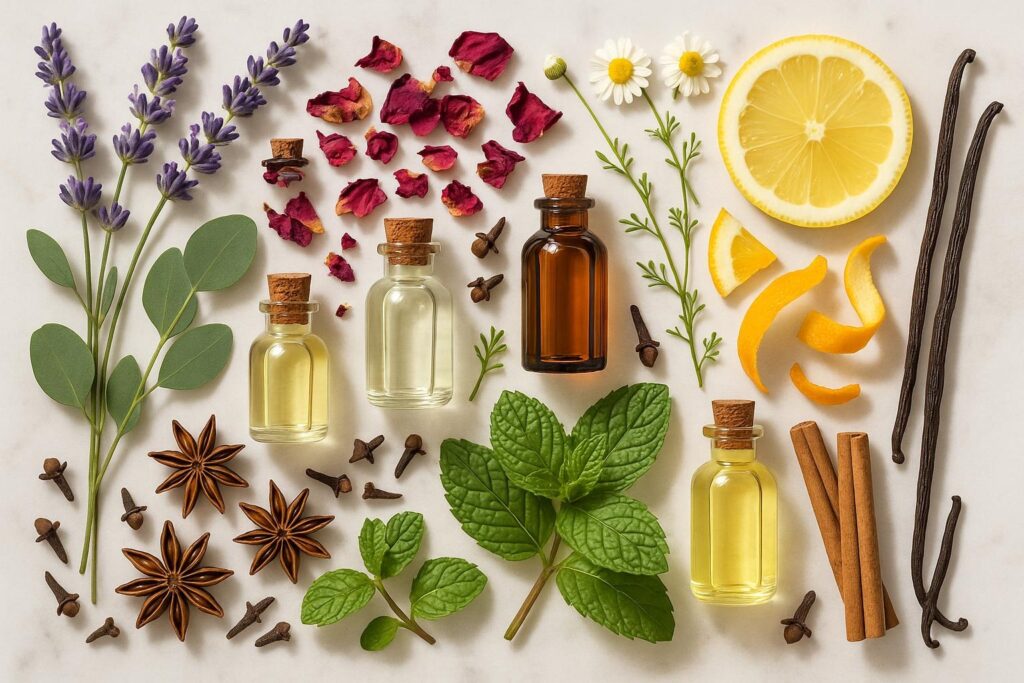
An essential oil blend combines two or more aromatic extracts to create a particular fragrance.
Individual oils may provide floral, herbal, citrus, woody, or spicy notes. Combining them produces more complex aromas than a single ingredient typically offers.
Young Living markets prepared blends designed for aromatic or other specifically labeled uses.
Essential Oil Blends vs. Single Oils
A single essential oil comes from one botanical source, such as lavender or peppermint.
A blend contains several ingredients in a defined formulation.
For example, lavender oil has a recognizable floral aroma, while Stress Away combines lavender with citrus, wood, vanilla, and other botanical notes.
Why Choose a Prepared Blend?
Prepared blends can save time and simplify scent selection.
They also provide consistent ingredient combinations when produced according to the manufacturer’s formulation.
However, consistency does not guarantee that everyone will enjoy the fragrance or tolerate its ingredients equally.
Popular Young Living Essential Oil Blends
Young Living offers different formulas for different aromatic preferences.
Stress Away Essential Oil Blend
Stress Away contains copaiba, lime, cedarwood, vanilla, ocotea, and lavender.
The company describes its aroma as calming, sweet, and tropical.
Its combination of citrus, botanical, and woody notes may appeal to people who prefer a softer home fragrance.
Young Living provides separate directions for aromatic and diluted topical use.
Thieves Essential Oil Blend
Thieves combines clove, lemon, cinnamon bark, eucalyptus radiata, and rosemary.
The resulting fragrance is warm, spicy, and herbal.
It is especially recognizable for its cinnamon-and-clove character.
Although Thieves appears in the company’s household product range, the essential oil blend itself should not be treated as a proven household disinfectant or a substitute for registered cleaning products.
Peace & Calming Essential Oil Blend
Peace & Calming is marketed as a gentle aromatic blend.
Its fragrance is commonly described through floral and citrus characteristics.
Consumers should check the current product label because ingredients, packaging, and availability can differ between formulations and markets.
Joy Essential Oil Blend
Joy contains ingredients including bergamot, ylang ylang, geranium, lemon, tangerine, jasmine, and other floral botanicals.
Its profile emphasizes sweet flowers and bright citrus.
This makes it an option for people who enjoy perfume-like aromatic combinations.
How Different Blend Ingredients Affect Fragrance
Understanding fragrance notes makes it easier to select a product.
Citrus Ingredients
Lemon, lime, orange, and bergamot can contribute fresh, bright aromatic notes.
These fragrances often pair well with floral and woody ingredients.
Certain citrus oils can also cause photosensitivity when applied to the skin, depending on the oil and formulation.
Floral Ingredients
Lavender, jasmine, geranium, and ylang ylang provide different floral characteristics.
Some are delicate and herbal, while others are richer and sweeter.
Woody Ingredients
Cedarwood, sandalwood, and related botanical materials can create warm, grounding base notes.
These may soften brighter citrus ingredients within a blend.
Herbal and Spicy Ingredients
Rosemary, eucalyptus, cinnamon, and clove add stronger aromatic accents.
Spicy oils can be especially irritating to skin and require careful attention to product-specific directions.
Understanding the Young Living Seed to Seal Program
Young Living uses the term Seed to Seal to describe its proprietary sourcing and quality commitment.
What the Company Describes
The program focuses on three areas: sourcing, science, and standards.
Young Living says these principles guide its botanical sourcing, production, testing, and supplier relationships.
What Quality Claims Do Not Mean
A company’s internal quality program should not be confused with independent proof that an essential oil treats disease or produces a particular health outcome.
Purity, safety, and therapeutic effectiveness are different questions.
Consumers should evaluate specific product claims and follow the actual instructions provided on the label.
How to Use Essential Oil Blends at Home
Essential oil blends can be enjoyed in several ways when the product is labeled for that method.
Aromatic Diffusion
Many people use compatible diffusers to disperse a fragrance into a room.
Follow both the diffuser manufacturer’s instructions and the essential oil label.
Young Living’s U.S. Stress Away product page, for example, describes diffusion sessions of up to 30 minutes, three times daily.
That instruction applies to the identified product and should not be generalized to every blend.
Personal Fragrance
Some products are labeled for use as personal fragrances after appropriate dilution.
Check the ingredients, warnings, and approved application areas.
Scented Home Accessories
Consumers sometimes enjoy aromatic products around decorative items or home accessories.
Avoid putting concentrated oils directly on finished furniture, sensitive fabrics, or surfaces that may become stained or damaged.
Never apply oils to objects that children or pets may chew or lick.
Choosing a Young Living Essential Oils Blend for Your Lifestyle
Selecting a blend should begin with fragrance preference rather than exaggerated wellness promises.
For Fresh, Bright Aromas
People who enjoy a clean, lively scent may prefer blends featuring citrus or herbal notes.
Review the full ingredient list because a bright opening fragrance can include stronger underlying ingredients.
For Warm, Spicy Aromas
Thieves may appeal to consumers who enjoy clove, cinnamon, and herbal fragrance combinations.
Its distinctive scent may be intense in small spaces.
For Soft Floral Fragrances
Joy and selected lavender-containing blends offer different floral profiles.
Personal preference matters, so sampling a fragrance before buying a larger bottle can be useful.
For Everyday Home Fragrance
Consider household preferences, ventilation, shared spaces, and sensitivity to fragrance.
A product that smells pleasant to one person may bother another.
Young Living’s Official Video Resources
The supplied link leads to the <Link url=”https://www.youtube.com/channel/UCdT6Q7kZNAq7CoXQrvdDK-w“>Young Living Essential Oils YouTube channel</Link>.
The channel is a brand-operated source for exploring the company’s video content.
What Brand Videos Can Offer
Official videos can provide product introductions, brand perspectives, educational demonstrations, and company updates.
They may be helpful for discovering how the brand presents its products.
Verify Instructions Against Product Labels
A YouTube demonstration should not replace current safety instructions.
Before using any blend, confirm its ingredients, permitted uses, recommended dilution, and warnings on the product’s current U.S. label.
The linked channel does not identify one particular blend or video, so no specific video demonstration is treated as verified evidence in this guide.
Essential Oil Safety for U.S. Households
Safety matters because essential oils contain concentrated plant compounds.
Dilute Before Topical Use
Some oils can cause irritation, allergic reactions, or burns when applied incorrectly.
Use a compatible carrier oil when instructed and follow the product’s specified dilution.
Avoid applying undiluted blends merely because they are described as natural.
Avoid Unapproved Ingestion
Do not swallow essential oils unless a specific product is explicitly labeled for that purpose and appropriate professional guidance supports its use.
Products intended for diffusion or external application are not automatically suitable for consumption.
Protect Children and Pets
Store essential oil bottles in secure locations away from children and animals.
Poison Control warns that misuse can cause serious poisoning.
Seek professional advice before diffusing around infants, children, pregnant individuals, or pets, particularly those with respiratory sensitivities.
Watch for Reactions
Stop using a product if it causes skin irritation, breathing discomfort, headaches, or another concerning reaction.
For a suspected poisoning in the United States, contact Poison Control at 1-800-222-1222. Seek emergency assistance for severe symptoms.
Can Essential Oils Improve Health?
Aromatherapy is sometimes discussed as a complementary wellness practice.
However, scientific evidence is limited for many specific health claims.
What Research Shows
The National Center for Complementary and Integrative Health notes that essential oils are commonly inhaled or applied in diluted form.
Research into their effects on sleep, stress, and other health concerns has produced limited or mixed findings.
Fragrance Enjoyment vs. Medical Treatment
Enjoying a pleasant scent is different from treating a medical condition.
A Young Living Essential Oils blend should not replace prescribed medication, professional care, or evidence-based treatment.
The U.S. Food and Drug Administration also explains that products marketed with disease-treatment claims can fall under drug regulations.
How to Compare Essential Oil Blends Before Buying
Marketing descriptions provide only part of the information shoppers need.
Read Every Ingredient
Check the complete list, particularly if you have known fragrance sensitivities.
Consider whether the blend includes citrus, eucalyptus, cinnamon, or other ingredients that require special precautions.
Confirm the Intended Use
A product designed for diffusion may have different instructions from a topical or specially formulated dietary product.
Never assume one blend can be used in all three ways.
Review Size and Price
Compare bottle sizes and the cost per milliliter rather than relying only on the total price.
Also consider how frequently you expect to use the product.
Buy From Reliable Sources
Use the manufacturer’s current U.S. website or another seller whose product authenticity and return terms you can verify.
Check packaging integrity and product information when the order arrives.
Common Mistakes to Avoid With Essential Oils
Beginners can improve their experience by avoiding a few preventable problems.
Using Too Much Oil
A stronger fragrance is not necessarily more enjoyable or safer.
Follow product directions and avoid excessive diffusion.
Ignoring Ingredient Sensitivities
Products containing multiple botanical oils may introduce several potential irritants.
Read the entire formula rather than focusing only on the featured fragrance note.
Applying Oils Directly to Skin
Concentrated oils can trigger irritation.
Use only approved topical methods and follow dilution instructions.
Believing Every Marketing Claim
Testimonials and attractive promotional language are not substitutes for reliable scientific evidence.
Separate fragrance preferences from medical claims.
Frequently Asked Questions About Young Living Essential Oils Blends
1. What is a Young Living Essential Oils blend?
It is a prepared formula combining multiple aromatic botanical ingredients into a particular fragrance profile.
2. Which Young Living blend is suitable for beginners?
Stress Away, Joy, and Peace & Calming are among the brand’s recognizable options. Choose according to fragrance preference, label instructions, and individual sensitivities.
3. What ingredients are in Stress Away?
Young Living lists copaiba, lime, cedarwood, vanilla, ocotea, and lavender.
4. What does Thieves essential oil smell like?
It has a warm, spicy, herbal scent associated with cinnamon, clove, lemon, eucalyptus, and rosemary.
5. Can Young Living essential oil blends be used in a diffuser?
Many are labeled for aromatic diffusion. Always follow the instructions for the particular blend and diffuser.
6. Are essential oil blends safe for children and pets?
Not automatically. Concentrated oils can pose risks, and suitability depends on the product and exposure. Consult appropriate professionals and store bottles securely.
7. Can essential oils treat anxiety or sleep problems?
Evidence for specific aromatherapy health benefits is limited. Essential oils should not replace qualified medical evaluation or treatment.
8. Where can I learn more about Young Living blends?
You can review current product pages on Young Living’s U.S. website and explore the brand’s official YouTube channel, while checking product labels for authoritative usage instructions.
Conclusion
A Young Living Essential Oils blend can offer a convenient way to explore botanical fragrance combinations without purchasing numerous individual oils.
Popular choices such as Stress Away, Thieves, Joy, and Peace & Calming have different ingredients and aromatic personalities, making them suitable for different scent preferences.
For beginners, the best approach is to compare ingredient lists, choose a fragrance you genuinely enjoy, and follow the current product instructions carefully.
Essential oils should be treated as concentrated substances rather than harmless household fragrances or substitutes for medical treatment.
By prioritizing product information, moderate use, safe storage, and realistic expectations, U.S. consumers can explore aromatherapy more responsibly while enjoying the variety of available scents.

Written by Twastia Editorial Team
Twastia Editorial Team shares practical insights about website design, SEO services, Google Ads, content marketing, social media, conversion rate optimization, and digital marketing strategy.
Last updated: Oct 28, 2026
Related posts from Twastia
Explore more useful articles from twastia.com about digital marketing, SEO, websites, ads, content, and growth strategy.