On-Page SEO Checklist for Small Business Service Pages
A service page can look professional, but it still may fail to rank or convert if the on-page SEO structure […]
A service page can look professional, but it still may fail to rank or convert if the on-page SEO structure is weak. Small businesses often publish service pages with nice design, but the page does not clearly explain the offer, target the right keyword, guide the reader, or connect to other useful pages.
On-page SEO helps each service page become easier for users and search engines to understand. It is not only about adding keywords. It is about building a complete page that answers the right questions, uses clear headings, includes useful internal links, and gives visitors a simple next step.
In this guide, Twastia shares a practical on-page SEO checklist for small business service pages. You can use this checklist when creating a new service page or improving an existing one.
Start with one clear primary keyword
Every service page should have one main keyword focus. This keyword should describe the service in a way that real customers may search for it. For example, a digital marketing agency may create a page around SEO services, website design services, Google Ads management, or content marketing services.
The primary keyword should guide the title, introduction, headings, body content, image alt text, internal links, and meta details. However, the keyword should feel natural. The goal is to make the page clear, not repetitive.
Twastia handles keyword planning as part of its SEO services. You can review the SEO service page here: SEO Services by Twastia.
Write a page title that explains the service
Your page title should quickly explain what the page is about. A vague title like “Solutions” or “What We Do” is not strong enough for a service page. A better title clearly names the service and gives visitors confidence that they are in the right place.
For example, “SEO Services for Small Businesses” is clearer than “Growth Solutions.” A clear title helps users understand the offer, and it also helps search engines understand the topic of the page.
The page title should usually be used as the main H1 heading. In WordPress, this means your post or page title field should carry the main title, while the article body should start with supporting paragraphs and H2 headings.
Use a strong opening section
The first section of a service page should explain the service, who it is for, and what problem it solves. Visitors should not need to scroll for a long time before they understand your offer.
A strong opening section usually includes a clear headline, a short supporting paragraph, and a main call to action. It may also include a trust point, short benefit line, or service summary.
If your service page is connected to paid traffic, the opening section becomes even more important. A Google Ads visitor may leave quickly if the page does not match the promise of the ad.
Organize content with helpful H2 and H3 headings
Headings make your service page easier to read. They also help search engines understand the structure of your content. Each H2 should introduce a useful section, and each H3 should support that section with more detail.
Good service page headings may explain benefits, process, pricing factors, FAQs, related services, service areas, deliverables, or reasons to choose the business. Avoid using headings only for decoration. Every heading should help the reader move forward.
For example, an SEO service page might include headings about keyword research, on-page SEO, technical checks, internal linking, content planning, and reporting.
Write service content that answers real customer questions
A thin service page usually does not answer enough questions. It may say that the business offers a service, but it does not explain how the service works, why it matters, who needs it, or what the customer should expect.
Useful service content should answer common customer questions before they contact you. This may include what the service includes, how the process works, what makes the service valuable, what problems it solves, and what the next step looks like.
Google Search Central explains that SEO is about helping search engines understand your content and helping users find your site through search. You can review the official guide here: Google Search Central SEO Starter Guide.
Add natural internal links to related pages
Internal links are important because they help visitors explore related pages. They also help search engines understand how your website pages connect to each other.
A service page should link to related services, useful blog posts, case studies, the contact page, and sometimes the main services page. For example, an SEO page can link to content marketing, website design, conversion rate optimization, and digital marketing strategy pages.
If your service pages are not connected, visitors may reach a dead end. Internal linking keeps the journey active and gives users more helpful options.
Use conversion-focused calls to action
A service page should not only educate. It should also guide visitors toward action. This action may be contacting the business, booking a consultation, requesting a quote, or reading another helpful page.
Your CTA should appear in logical places, not only at the very bottom. A good page may include a CTA in the hero section, after the service benefits, after the process section, and near the end of the page.
Twastia connects on-page SEO with conversion rate optimization so the page can support both visibility and leads. You can review the CRO service page here: Conversion Rate Optimization by Twastia.
Optimize images with useful file names and alt text
Images can improve trust and make a page more engaging. However, images should also be optimized. Large image files can slow down the page, and missing alt text can make the content less accessible.
Use descriptive file names when possible. Add simple alt text that explains the image in a useful way. Do not stuff keywords into alt text. The alt text should describe the image naturally.
For a small business service page, a relevant image can show the service, the result, the team, the process, or a visual explanation of the offer.
Create a clean meta title and meta description
The meta title and meta description help shape how your page may appear in search results. They should be clear, relevant, and written for real users.
A good meta title usually includes the service keyword and brand name. A good meta description explains the value of the page in a short and natural way. It should encourage the right person to click without making unrealistic promises.
For example, a service page about SEO can use a title such as “SEO Services for Business Growth | twastia.com.” The description can explain what the service includes and why it is useful.
Make the page mobile-friendly and easy to scan
Many users will visit your service pages from mobile devices. If the page is hard to read, the buttons are too small, or the layout feels crowded, visitors may leave before they contact you.
Use short paragraphs, readable headings, clear spacing, simple buttons, and mobile-friendly forms. The page should feel smooth on both desktop and mobile.
A clean website design can make on-page SEO stronger because visitors can understand and use the content more easily. You can review the website design service page here: Website Design by Twastia.
Add FAQs near the end of the service page
FAQs are useful because they answer objections and common questions. They can also help you include helpful topic coverage without making the main page content feel heavy.
A service page FAQ section may answer questions about process, timeline, pricing factors, deliverables, results, maintenance, or whether the service is suitable for a specific business.
Keep FAQ answers clear and honest. Avoid exaggerated guarantees, especially for SEO, ads, or conversion results.
Review the full page before publishing
Before publishing a service page, review it from the user’s point of view. Ask whether the page explains the service clearly, answers important questions, includes useful internal links, and gives visitors a clear next step.
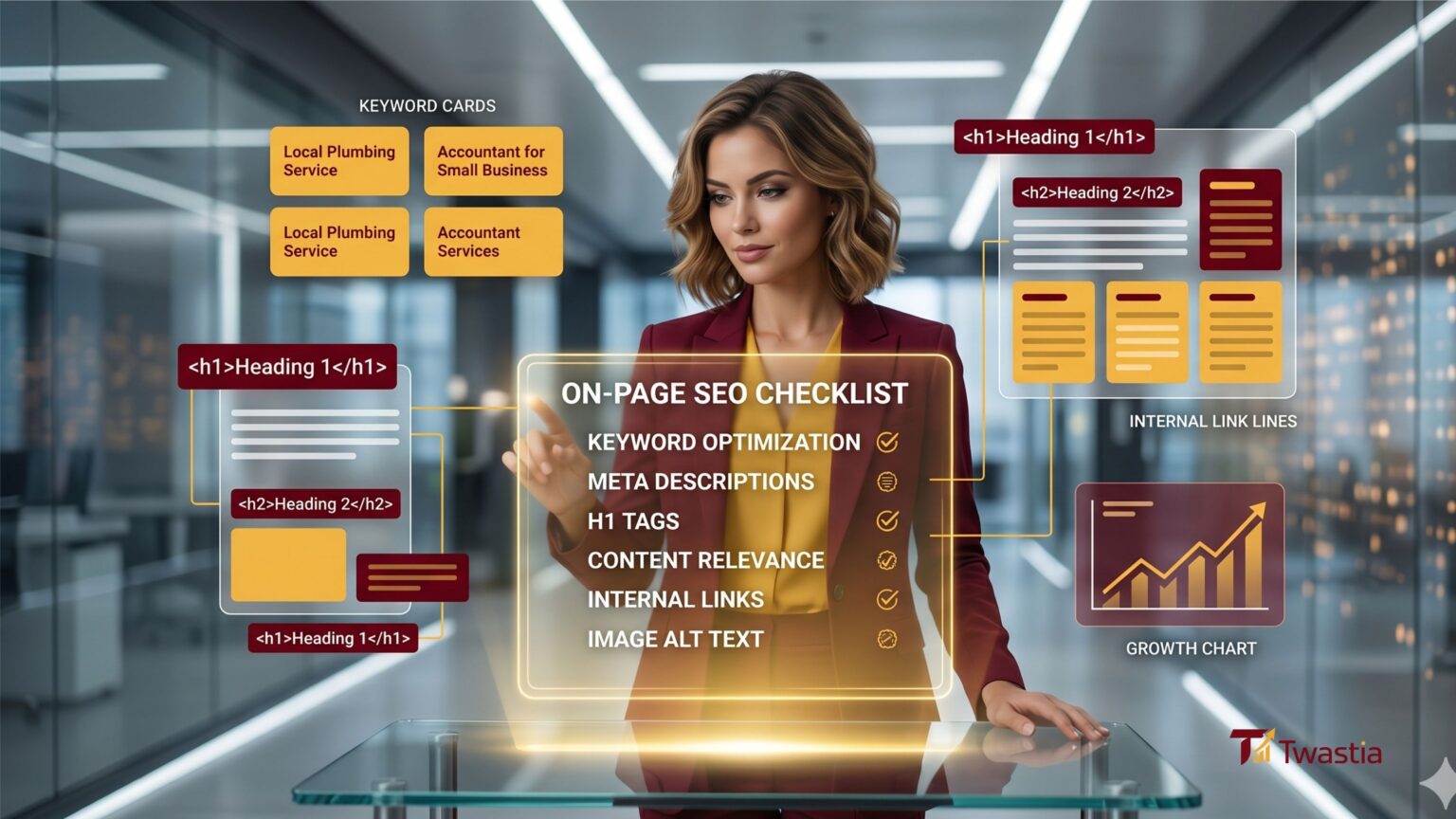
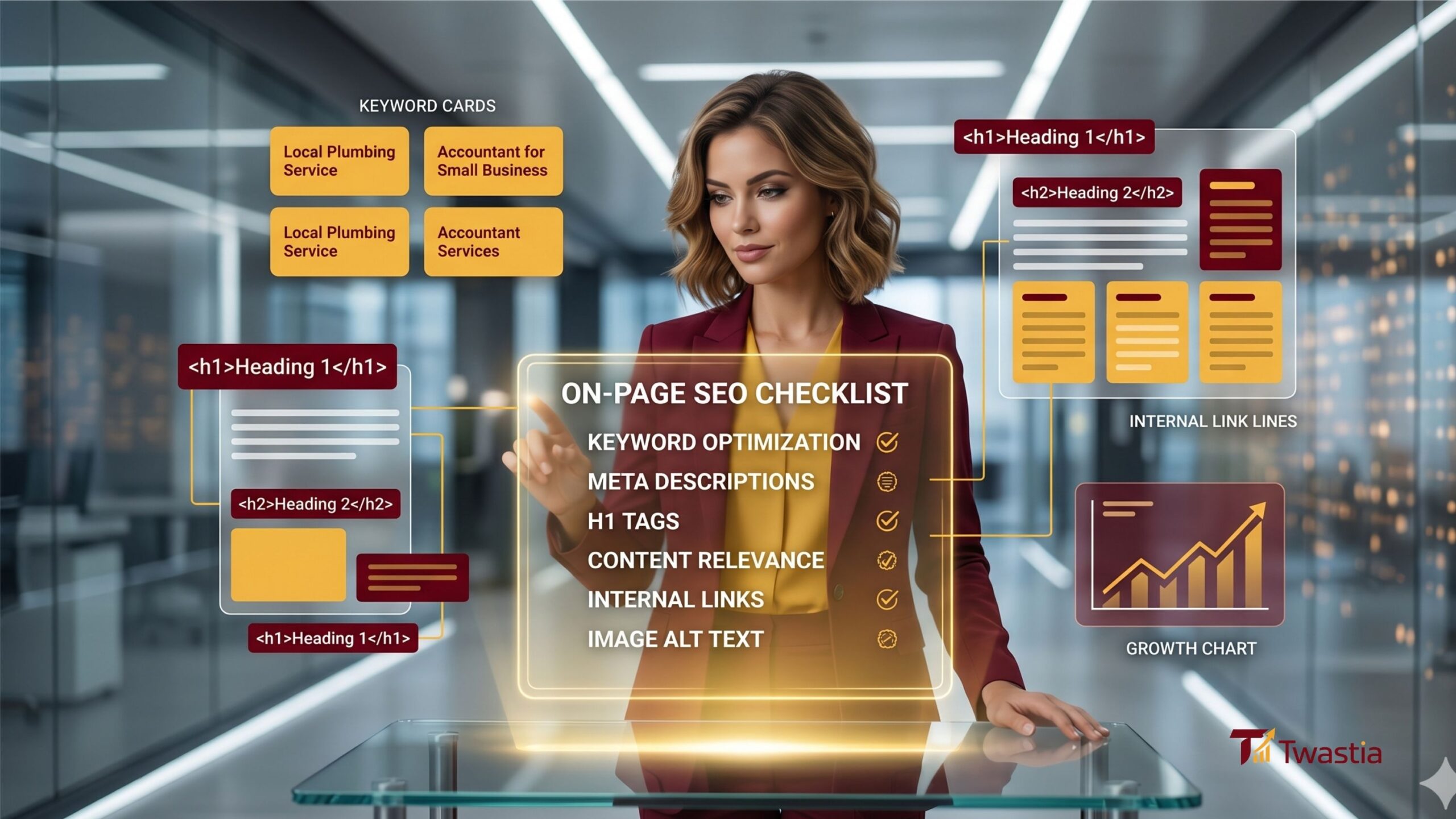
Also check the SEO basics: one main keyword, clear headings, natural content, optimized images, meta title, meta description, internal links, mobile layout, and a strong CTA.
If the page supports a larger marketing plan, connect it with blog content, social media posts, Google Ads landing pages, and your overall digital marketing strategy. You can review Twastia’s strategy service here: Digital Marketing Strategy by Twastia.
Final thoughts
On-page SEO is one of the most important foundations for small business service pages. A well-structured page can help users understand your service, help search engines understand your content, and help your website support better inquiries.
The best service pages are clear, helpful, connected, and action-focused. They do not rely on keywords alone. They combine SEO, content, website design, and conversion strategy into one useful experience.
If you want help improving your service pages, contact Twastia to discuss SEO services, website design, content marketing, and conversion-focused digital strategy.

Written by Twastia Editorial Team
Twastia Editorial Team shares practical insights about website design, SEO services, Google Ads, content marketing, social media, conversion rate optimization, and digital marketing strategy.
Last updated: Jun 2, 2026
Related posts from Twastia
Explore more useful articles from twastia.com about digital marketing, SEO, websites, ads, content, and growth strategy.