Google Maps SEO: Dominating Local Search Results
For brick-and-mortar businesses, visibility in local search results directly dictates foot traffic and revenue. Consequently, mastering Google Maps SEO is no longer […]

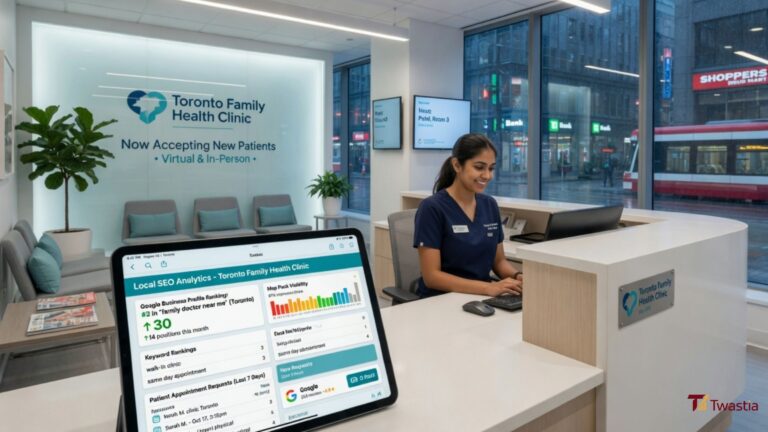
For brick-and-mortar businesses, visibility in local search results directly dictates foot traffic and revenue. Consequently, mastering Google Maps SEO is no longer optional for companies looking to dominate their geographic market. This specialized branch of local search engine optimization focuses on optimizing your Google Business Profile and local citations to appear in the coveted local pack. Furthermore, as mobile search behavior evolves, appearing at the top of map results ensures potential customers find your business exactly when they need it. Therefore, implementing a strategic local ranking framework is essential for sustainable growth.
The Core Mechanics of Google Maps SEO
Google Maps ranking relies on three primary factors: relevance, distance, and prominence. Relevance determines how well a business matches the user’s search intent. Distance measures the proximity between the searcher and the business location. Prominence evaluates how well-known and reputable the business is offline and online. Therefore, algorithms weigh these three variables to populate the local map pack. Consequently, businesses must optimize their digital footprint across all three dimensions to achieve top placement.
Understanding Local Search Ranking Factors in Google Maps SEO
Local algorithms behave differently than traditional organic search algorithms. For example, a business with a weaker website can still outrank a highly optimized site if it has a more robust Google Business Profile and closer proximity to the searcher. Therefore, local search ranking factors heavily favor hyper-local signals. These signals include accurate category selection, review velocity, and local citation consistency. Consequently, a hyper-focused strategy targeting these specific metrics yields faster results than traditional organic SEO tactics. Thus, understanding the localized nature of the algorithm is the first step to success.
Optimizing Your Google Business Profile
The Google Business Profile (GBP) acts as the central hub for local visibility. Claiming and verifying this profile is the absolute prerequisite for appearing on Google Maps. However, merely claiming the profile is insufficient. Operators must fully optimize every available field. Therefore, filling out the description, adding service lists, and publishing regular updates signals active management to the algorithm. Furthermore, a fully completed profile provides users with immediate answers, reducing bounce rates and increasing engagement.
Categories, Attributes, and Accurate NAP Data in Google Maps SEO
Selecting the correct primary category is the single most important ranking factor. The primary category should describe the core business function accurately. Secondary categories expand the search relevance without misrepresenting the business. Furthermore, attributes allow businesses to specify specific amenities or services, like “women-led” or “outdoor seating.” Therefore, detailed attribute selection matches highly specific long-tail queries. Additionally, NAP data (Name, Address, Phone number) must exactly match the information on the website and all external directories. Consequently, inconsistent NAP data confuses crawlers and severely damages local trust signals. Thus, absolute consistency across all platforms is mandatory.
The Role of Customer Reviews in Google Maps SEO
Customer reviews serve as a massive trust signal for both consumers and search algorithms. The quantity, velocity, and diversity of reviews directly impact local prominence. Furthermore, reviews containing keywords naturally boost the profile relevance for those specific search terms. Therefore, businesses must implement systematic strategies to generate consistent feedback. Waiting passively for reviews rarely scales effectively. Consequently, proactive reputation management accelerates map ranking growth.
Generating and Managing Local Reputation
Generating reviews requires lowering the friction for the customer. Sending direct links via SMS or email immediately after a service completion drastically increases conversion rates. Furthermore, business owners must respond to every review, both positive and negative. Responding to reviews demonstrates active engagement and customer care. Therefore, thoughtful responses add fresh user-generated content to the profile regularly. Consequently, handling negative reviews professionally signals to potential customers that the business values feedback and resolves issues. Thus, active reputation management builds a compounding local asset.
Local Citations and Backlink Strategies for Google Maps SEO
Beyond the Google Business Profile, local algorithms scan the broader web for mentions of the business. These mentions, known as local citations, appear on directories like Yelp, Yellow Pages, and industry-specific platforms. Consistent citations reinforce the validity of the NAP data. Furthermore, traditional backlinks from local news sites, chambers of commerce, and regional blogs boost the overall domain authority linked to the profile. Therefore, a hybrid approach of directory submissions and local PR strengthens the local link profile. Consequently, higher authority domains outrank competitors in tied proximity scenarios.
Building Consistency Across Local Directories
Submitting business information to hundreds of low-quality directories no longer works and can actually harm rankings. Instead, businesses must prioritize high-tier, authoritative directories. Ensuring the exact formatting of the business name and address across these top-tier platforms is critical. Therefore, using an automated citation management tool helps maintain consistency and prevents data drift over time. Consequently, unified directory data solidifies the business geographical footprint in the algorithm eyes. Thus, quality and consistency outweigh sheer volume in modern citation building.
Website Optimization for Google Maps SEO
While the Google Business Profile handles much of the heavy lifting for Maps rankings, the underlying website still plays a vital role. The algorithm analyzes the website to understand the depth of services offered and the geographic areas served. A poorly optimized or slow website can drag down an otherwise perfect local profile. Therefore, aligning on-page SEO with local intent bridges the gap between organic and map pack rankings. Consequently, businesses must treat their website as an extension of their Google Maps presence.
On-Page Signals and Location Pages
Title tags, meta descriptions, and H1 tags must include the primary service and the target city name. Furthermore, embedding a Google Map on the contact page reinforces the geographic location. For businesses serving multiple cities, creating dedicated location pages is essential. These pages must feature unique content tailored to the specific locale, not duplicate boilerplate text. Therefore, localized content signals relevance for users searching from or for those specific areas. Consequently, schema markup for local businesses helps search engines parse NAP data and operating hours effortlessly. Thus, technical on-page optimization amplifies local map visibility.
Generative Engine Optimization and the Future of Google Maps SEO
The integration of generative AI into search results is altering how users interact with local search. Generative Engine Optimization (GEO) focuses on structuring data so AI models can easily parse and recommend local businesses. Google AI Overviews increasingly synthesize local business information directly into the search results, pulling data from the GBP and website. Therefore, businesses must ensure their profile data is immaculate and easily machine-readable. Consequently, providing clear, concise answers to common local queries on the website increases the chances of being featured in AI-generated snapshots. Thus, preparing for AI-driven search ensures long-term map visibility.
AI Overviews and Local Search Visibility
AI models prioritize authoritative, well-structured information when generating local recommendations. If a user asks an AI assistant for the best plumber in a specific zip code, the AI evaluates GBP completeness, review sentiment, and website authority. Therefore, businesses must optimize for conversational, question-based queries. Including an FAQ section on the website that directly answers local intent questions provides perfect fodder for AI synthesis. Consequently, businesses that adapt their local SEO strategy to accommodate generative AI will capture a disproportionate share of emerging search behaviors. Thus, the future of local search blends traditional map optimization with sophisticated data structuring.
FAQs
1. What is Google Maps SEO?
It is the process of optimizing your Google Business Profile and local citations to rank higher in local map pack results.
2. How long does it take to rank on Google Maps?
Most local businesses see initial ranking improvements within four to twelve weeks, depending on competition and category optimization.
3. What is the most important ranking factor for Google Maps?
Selecting the correct primary category on your Google Business Profile is the most critical ranking factor for local relevance.
4. Do customer reviews impact Google Maps rankings?
Yes, the quantity, velocity, and keyword diversity of customer reviews significantly boost local prominence and map visibility.
5. What is NAP consistency in local SEO?
NAP consistency ensures your business Name, Address, and Phone number are identical across your website and all online directories.
6. How does AI affect local search and Google Maps SEO?
Generative AI models synthesize profile data and reviews to answer user queries, making structured data and positive sentiment crucial for visibility.
Conclusion
Dominating local search requires a meticulous and multifaceted approach to online visibility. Mastering Google Maps SEO ensures that your business captures high-intent local customers exactly when they are ready to make a purchase. By optimizing your Google Business Profile, maintaining strict NAP consistency, generating authentic reviews, and aligning your website with local intent, you build a robust local presence. Furthermore, adapting to the rise of generative AI in search results guarantees that your business remains visible as user behavior evolves. Ultimately, a strategic local SEO framework transforms map visibility into sustained foot traffic and long-term revenue growth.

Written by Twastia Editorial Team
Twastia Editorial Team shares practical insights about website design, SEO services, Google Ads, content marketing, social media, conversion rate optimization, and digital marketing strategy.
Last updated: Jul 24, 2026
Related posts from Twastia
Explore more useful articles from twastia.com about digital marketing, SEO, websites, ads, content, and growth strategy.