Fencing in the Derby: Garden Fence & Installation Guide
For homeowners researching fencing in the derby, a new garden boundary is about much more than choosing attractive panels. A […]
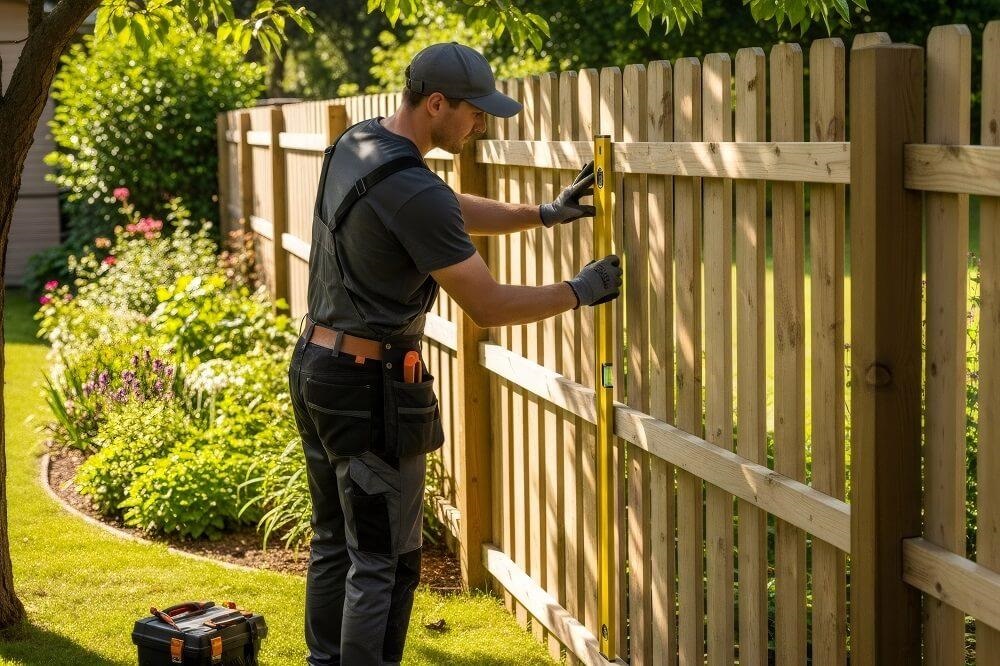
For homeowners researching fencing in the derby, a new garden boundary is about much more than choosing attractive panels. A well-planned fence can improve privacy, define outdoor space, provide a practical barrier, and complement patios or decking. Poorly chosen materials or weak posts, however, can turn an apparently inexpensive project into repeated repairs.
This guide focuses on Derby, England, and its surrounding area. It explains common fence styles, site preparation, planning rules, boundary questions, quotations, and maintenance. American readers with a property in the UK should note that local terms, dimensions, and permissions differ from typical U.S. practices.
Start With the Job Your Fence Must Do
Before comparing fencing in the derby, decide whether the priority is privacy, a safe garden for children or pets, a neater frontage, or replacing a damaged boundary. These are related goals, but they may require different heights, panel designs, gates, and foundations.
A rear garden overlooking neighboring homes may benefit from solid closeboard construction. A narrow front garden might need a lower, more open style that preserves visibility. On an exposed site, wind pressure and drainage can be more important than decorative details. Consider where sunlight falls, how the garden is used, and how much access an installer will have to transport materials.
Sketch the approximate fence line, measure its length, and mark gates, slopes, walls, trees, and corners. Treat this drawing as a planning aid, not proof of the legal boundary.
Popular Types of Garden Fencing in Derby
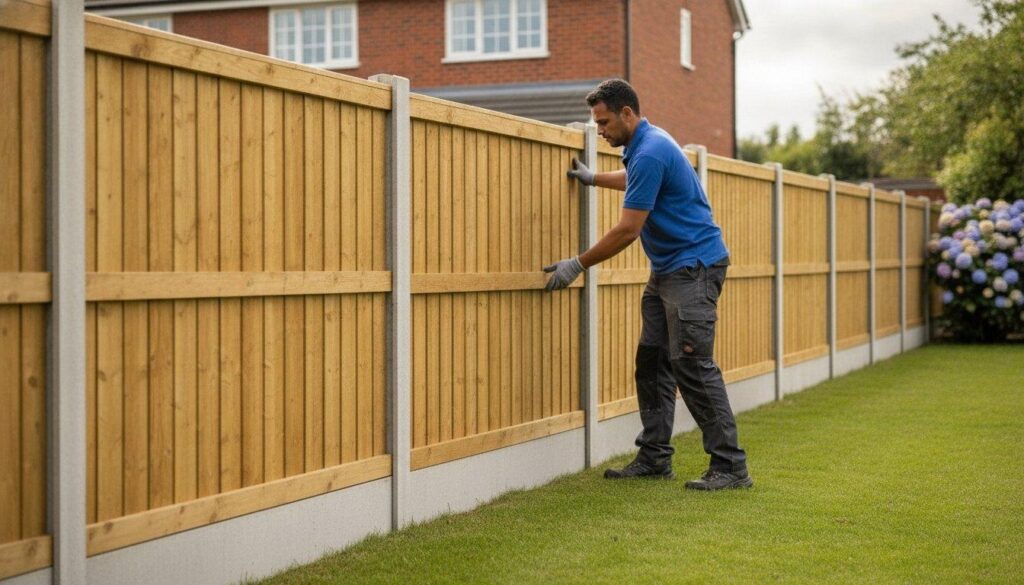
Closeboard and Feather-Edge Fencing
Closeboard fencing uses overlapping vertical boards to form a relatively solid barrier. Feather-edge boards are tapered and commonly fixed to supporting rails. These options appeal to homeowners who want privacy and a traditional appearance. Quality depends on board thickness, adequate fixings, supported spans, and correctly specified posts.
When researching fencing in the derby, ask whether a quote covers site-built closeboard fencing or prefabricated closeboard panels. Both approaches can work, but they differ in how they accommodate awkward lengths and sloping ground.
Overlap Fence Panels
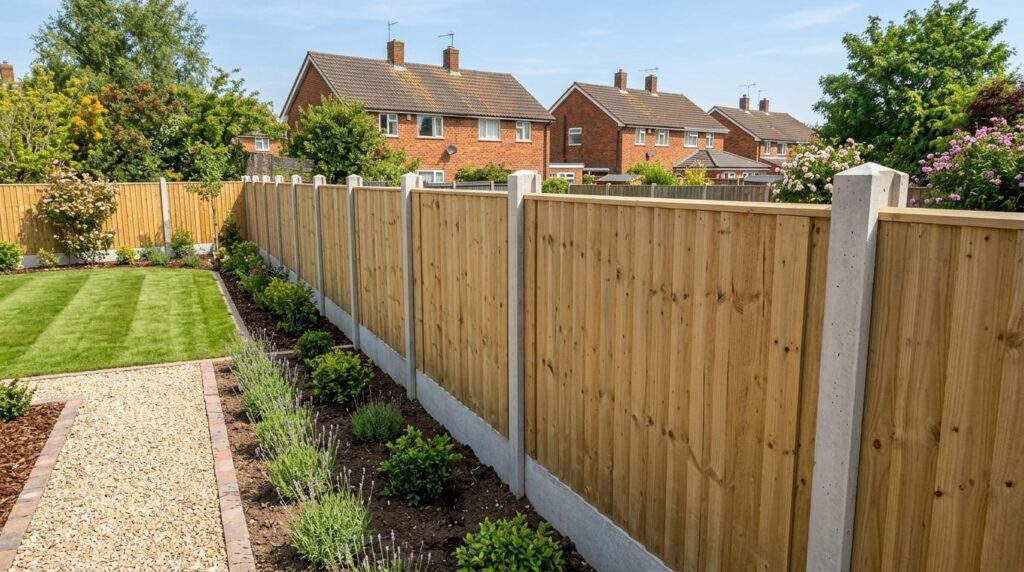
Overlap panels are recognizable horizontal timber designs that can suit a straightforward garden boundary. Compare the frame, timber treatment, rigidity, and manufacturer specifications rather than assuming all panels have the same strength. Budget products may require more frequent attention in exposed positions.
Contemporary Slatted Fences
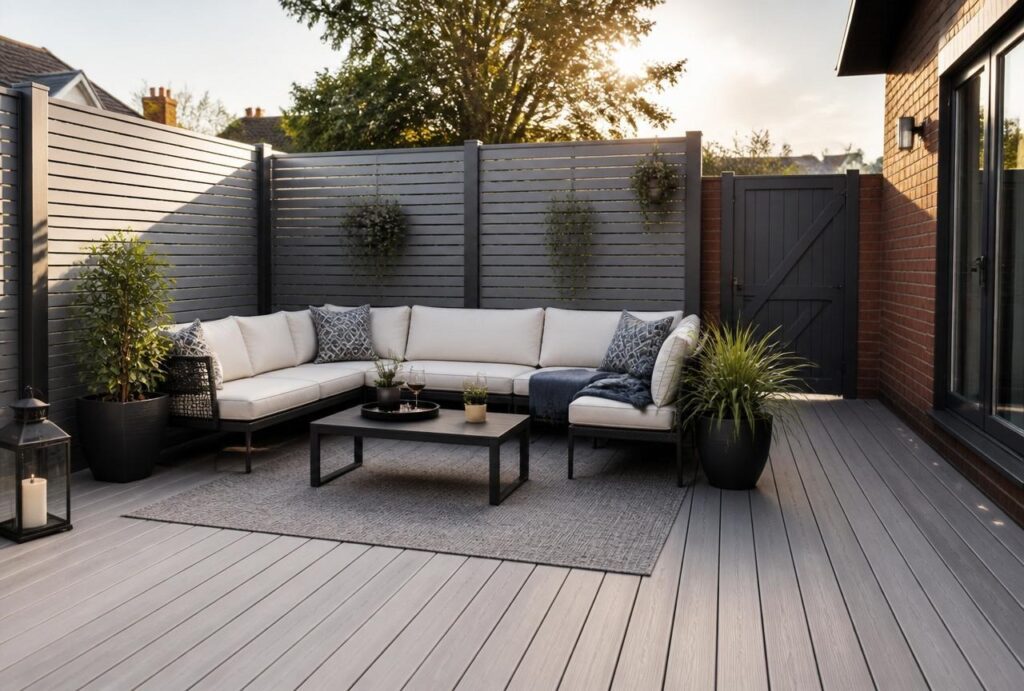
Horizontal slats offer a modern look and can coordinate with outdoor seating or decking. Gaps between slats affect privacy, airflow, and the view through the fence. If seclusion is essential, check the design from both sides and from different angles before buying.
Composite and Metal Options
For fencing in the derby, composite panels can be worth comparing where minimal routine painting matters. Composite panels often require different posts and mounting systems from traditional timber. Their maintenance needs depend on the product, and color changes or movement may still occur. Metal railings or mesh may suit frontages, visibility needs, or particular security applications. Compare whole-system warranties and installation requirements, not a single material claim.
Posts and Foundations Matter More Than Appearance
A handsome panel will not stay upright if its supporting posts move. For fencing in the derby, examine ground conditions, exposure to wind, existing paving, tree roots, and the condition of any old foundations. A contractor should explain how posts will be installed and whether concrete or suitable alternative supports are proposed.
Concrete posts and gravel boards are popular where homeowners want timber panels raised clear of persistently wet soil. Treated timber posts offer a different look, but the grade of preservative treatment must match their use. The Wood Protection Association emphasizes that posts placed in ground contact need appropriate treatment and that the ground-line zone is particularly vulnerable to decay.
Ask how cut ends, fixings, drainage, and post caps will be handled. If a builder recommends retaining existing posts, request an assessment of their alignment, integrity, and suitability for new panels. Saving on posts is not a bargain if the new fence soon leans.
Planning Permission: Check the Rules Before Building
Anyone arranging fencing in the derby should understand the basic planning rules for England. According to the Planning Portal, a new fence or gate will generally not require planning permission when it is no higher than one metre next to a highway used by vehicles or its footpath, or two metres elsewhere, provided the other applicable conditions are satisfied. Existing taller structures may be treated differently when their height is not increased.
Those limits are not unconditional approval. Restrictions can apply near listed buildings, through planning conditions, or where permitted development rights have been removed. Conservation areas and Article 4 directions can bring additional controls. Derby City Council specifically identifies local conservation-area restrictions, so the property’s exact location matters.
For fencing in the derby, the safest planning assumption is to check the rules for the exact site before ordering. Before ordering tall panels or altering a street-facing boundary, use the official Planning Portal guidance and check with Derby City Council when necessary. If the property lies outside the city, confirm which Derbyshire district or borough council is responsible instead of assuming Derby City Council makes every decision.
Who Owns the Fence and Where Is the Boundary?
Boundary confusion can delay fencing in the derby even when both neighbors want a tidy garden. England and Wales do not have a universal rule saying that the left-hand or right-hand fence belongs to a particular homeowner. Nor does the side showing posts establish ownership.
HM Land Registry explains that title plans normally show general boundaries, not a survey-accurate legal line. Start with your title register, deeds, and any relevant documents from your conveyancer. Speak with the neighboring owner before removing or relocating an existing feature. Where the boundary is genuinely disputed, obtain suitable survey or legal advice rather than relying on a contractor’s estimate.
A friendly agreement about access, replacement, and future maintenance can prevent misunderstandings. However, a conversation does not by itself transfer ownership of land. Written legal arrangements may be appropriate when the position is complicated.
What Determines the Cost of a New Fence?
The price of fencing in the derby varies with the installed length, height, panel style, post material, number of gates, removal of old fencing, disposal arrangements, and access. Sloping ground or buried obstructions can add work. A short project with several corners and gates may involve more labor per metre than a long straight run.
Ask for a written, itemized quotation in pounds sterling. Ideally, it should specify the materials, dimensions, post and foundation approach, labor, waste removal, VAT treatment where applicable, and expected schedule. Also clarify who supplies the gate hardware, whether painting or staining is included, and what happens if hidden site conditions require extra work.
Do not rely on a national online calculator as a firm Derby price. Obtain comparable on-site assessments and compare the scope, not just the final total. A cheaper quote that omits waste removal or adequate posts can produce higher costs after work begins.
A Sensible Fence Installation Process
A successful fencing in the derby project usually follows a predictable order. First, confirm permissions and boundary arrangements. Next, walk the fence line with the installer and identify slopes, buried services, drainage, trees, and access limitations. Agree the finished height and style before materials are ordered.
Once the old fence has been safely removed, posts are set in accordance with the selected system and ground conditions. Panels or rails are then fitted, gates aligned, and cut surfaces treated where required by the manufacturer. The final inspection should check stability, straightness, fixing quality, gate swing, gaps at ground level, and site cleanup.
Homeowners considering a do-it-yourself project should be realistic about underground utilities, heavy concrete components, power tools, and lifting. Professional installation is especially worth considering for tall fencing, difficult slopes, uncertain foundations, and restricted access.
Choose a Contractor With Evidence, Not Just Promises
When choosing a provider for fencing in the derby, ask for a site survey, clearly defined written scope, relevant insurance details, examples of comparable completed work, and a transparent explanation of guarantees. Verify that any warranty specifies what is covered and whether it includes labor as well as materials.
A Derby business named Supreme Fencing & Decking Ltd appears in independent fencing directories. Its website link is fencing in the derby, but the live site returned an error during research. Therefore, its current trading status, precise service list, recent projects, prices, and warranty terms could not be confirmed from that website. Contact details from third-party listings should also be independently checked before booking.
Read recent, substantive customer feedback where available, but do not confuse a directory presence with proof of workmanship. Ask how delays, unexpected ground conditions, and any damage to neighboring property will be handled.
Match Your Fence to Decking and Garden Design
Good fencing in the derby should work with the rest of the outdoor layout. If your garden includes a raised deck, consider sightlines from that elevated level: a fence that feels private from the lawn may not provide the same screening from the deck. Avoid fixing heavy fencing to decking without confirming the structure is engineered to support it.
Choose a restrained palette of timber shades, stone, metal, and planting. Decorative trellis may soften a solid boundary, while climbing plants require appropriate support and space for maintenance. Leave access for cleaning gutters, maintaining neighboring walls, and inspecting the back of the fence where possible.
Maintenance for Derby’s Changing Weather
Regular attention protects investment in fencing in the derby. After strong winds, examine panels, fasteners, posts, and gates for looseness. Keep soil and accumulated leaves away from timber where feasible, and address water collecting at the base of posts.
Pressure-treated wood is not automatically maintenance-free. Follow the timber supplier’s guidance before applying a stain or coating, particularly if newly treated wood is still damp. Clean dirt gently, monitor cracks or decay, and repair small defects before they spread. Composite or metal fencing should be maintained according to its specific manufacturer instructions.
If a post is badly decayed or leaning, replacing decorative boards alone is unlikely to solve the structural problem. Make repairs safely and seek professional assessment when the fence appears unstable.
Frequently Asked Questions
1. Do I need permission to install a garden fence in Derby?
Often not, if the proposal meets England’s permitted-development conditions. The usual height thresholds are one metre beside a vehicle highway or its footpath and two metres elsewhere, but listed-building, conservation-area, and local restrictions can change the answer. Check your particular property.
2. Which type of fence is best for privacy?
Closeboard and solid-panel designs are common choices. The appropriate height, board spacing, neighboring ground levels, and planning rules will determine how much privacy they actually provide.
3. Is timber or composite fencing better?
For fencing in the derby, neither is automatically better. Compare upfront expense, appearance, supporting structure, cleaning requirements, repairability, and the manufacturer’s warranty. Well-specified treated timber can be durable, while composite has its own installation and maintenance considerations.
4. How do I know which boundary fence is mine?
Check the deeds and title register first. HM Land Registry says title plans usually indicate general rather than exact legal boundaries. Speak with your neighbor and seek advice if the documents do not settle the question.
5. Can a contractor reuse my existing concrete posts?
Possibly, if they are sound, correctly positioned, and compatible with the new panels. Have their condition assessed before assuming that replacing panels alone is sufficient.
6. What should a professional fence quote include?
For fencing in the derby, request dimensions, materials, post specification, gate details, removal and disposal costs, VAT information, installation timing, and written workmanship or product warranty terms where offered.
7. How long should a garden fence last?
There is no reliable universal lifespan. Durability depends on treatment suitability, post installation, drainage, exposure, workmanship, and maintenance. Compare documented product specifications instead of accepting an unsupported lifetime promise.
Conclusion
Choosing fencing in the derby means balancing appearance, practical use, structural strength, and legal responsibilities. Start with the boundary and planning checks, choose materials suited to the site, and insist on a clear installation quotation. Whether the goal is a private family garden or an updated outdoor entertaining area, the details beneath the panels often matter as much as the finished look.

Written by Twastia Editorial Team
Twastia Editorial Team shares practical insights about website design, SEO services, Google Ads, content marketing, social media, conversion rate optimization, and digital marketing strategy.
Last updated: Oct 17, 2026
Related posts from Twastia
Explore more useful articles from twastia.com about digital marketing, SEO, websites, ads, content, and growth strategy.