What Is a Tattoo Flash Book? History, Design & Collecting
Step into any classic, street-facing tattoo shop anywhere in the United States, and you will instantly encounter a visual feast […]
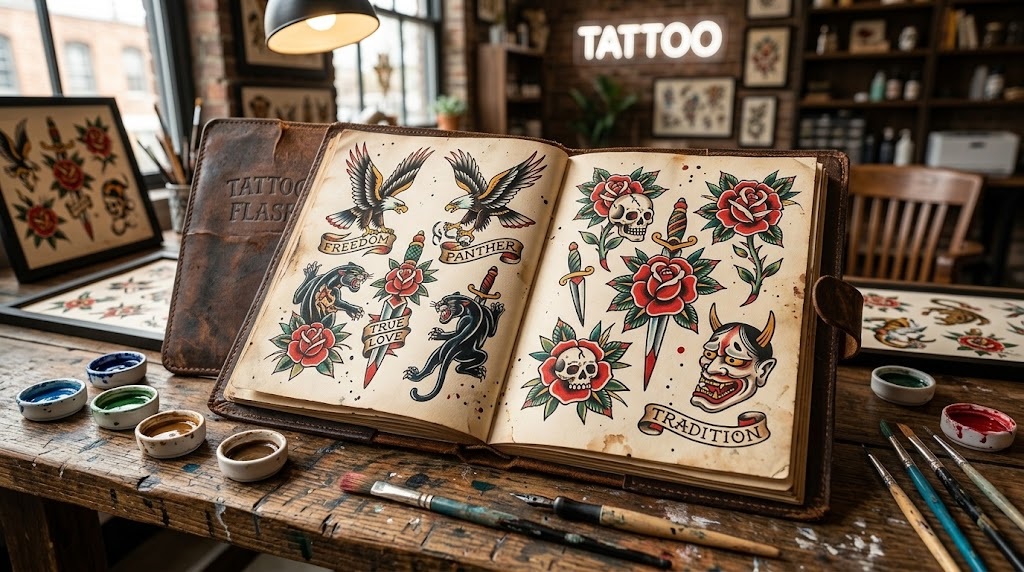
Step into any classic, street-facing tattoo shop anywhere in the United States, and you will instantly encounter a visual feast of vibrant artwork covering the walls. From snarling panthers and roaring eagles to nautical stars, blooming roses, and pin-up girls, these iconic designs form the visual bedrock of modern body art. But long before high-resolution digital tablets, Pinterest boards, and custom digital consultations dominated the industry, tattoo artists relied on a portable, highly revered archive of designs known as the flash book.
If you have ever wondered what is a tattoo flash book, the answer lies at the very heart of tattoo history and studio culture. At its core, a flash book is a curated portfolio—often bound in leather or heavy cardboard—containing hundreds or thousands of individual tattoo designs painted or drawn on paper sheets. These portfolios served as both a menu of options for walk-in clients and an essential artistic reference manual for generations of tattooers. This comprehensive guide explores the origins of flash books, their enduring cultural significance, how they are used, and why they remain prized collector’s items today.
Defining Tattoo Flash: Art on Demand
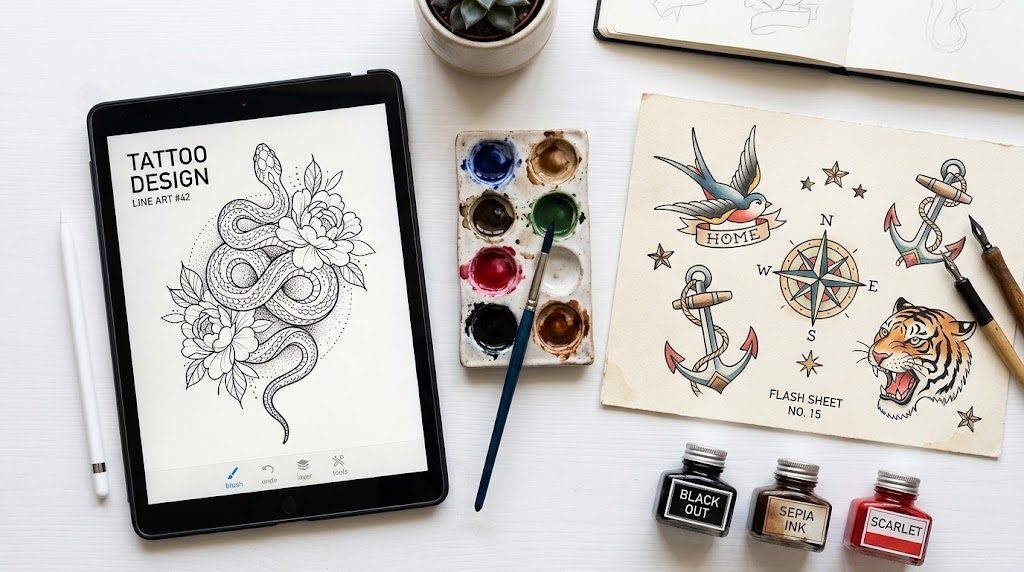
To understand the flash book, one must first understand “tattoo flash.” In the early days of tattooing, artists needed ready-to-go designs that could be tattooed quickly, efficiently, and consistently on walk-in customers. “Flash” refers to pre-drawn designs displayed on sheets of paper or cardboard that clients could browse and select on the spot.
The term itself is believed to originate from the early carnival and circus days, where tattoo artists traveled with shows and needed to quickly display their artistic repertoire. They would pin or “flash” their painted designs up on the walls of their tents or booths so passing crowds could see what was available instantly. As artists transitioned from traveling carnivals to permanent storefronts, these loose sheets were collected, organized, and bound together into comprehensive portfolios, creating the traditional tattoo flash book.
The Rich History and Evolution of Flash Portfolios

The history of the flash book is deeply intertwined with the evolution of American tattooing, particularly the bold, saturated style known as American Traditional. In the late 19th and early 20th centuries, legendary pioneers operating out of ports in New York, San Francisco, and Honolulu began standardizing tattoo imagery. Artists like Sailor Jerry Collins, Bert Grimm, and Don Ed Hardy perfected the art of the flash sheet, creating standardized outlines and color palettes that translated flawlessly onto human skin.
In those eras, tattoo flash was fiercely guarded intellectual property. Artists would trade sheets with peers across the country, mail designs to distant shops, or collect rare originals from mentors. Because photocopying technology did not exist, every single sheet in a vintage flash book was hand-painted using watercolor, acrylic, or ink, often featuring notes on shading, color saturation, and historical lineage. Owning a rare, authentic flash book from an iconic master was equivalent to holding a master blueprint of tattooing history.
What Makes Up a Classic Flash Book?
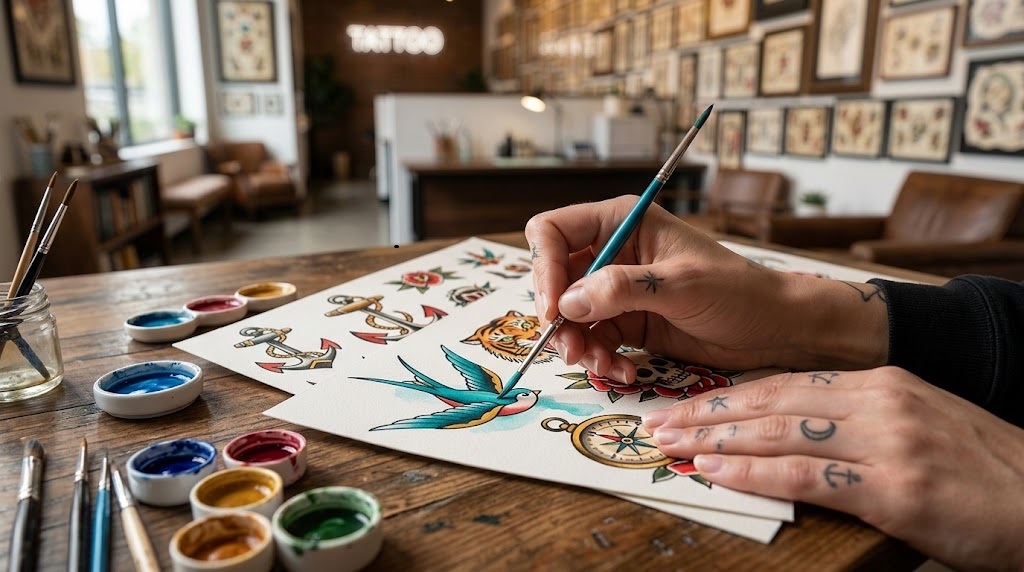
A traditional flash book is structured logically to serve both the client choosing a design and the artist executing it. Flipping through the pages of a vintage or contemporary flash book reveals a fascinating structure of recurring motifs and artistic techniques.
The Anatomy of a Flash Sheet
A standard flash sheet typically measures around 11×14 inches or larger, heavy watercolor paper filled with multiple cohesive designs. Most sheets feature a central focal piece surrounded by smaller, complementary filler designs—such as daggers, hearts, spiderwebs, and swallows. Artists carefully outline these designs in waterproof black ink and fill them with a limited, high-contrast palette of red, yellow, green, and brown, ensuring the tattoo ages gracefully on the skin.
Iconic Themes and Motifs
Flash books are treasure troves of symbolic imagery. Classic American traditional flash is heavily populated by nautical themes (tall ships, lighthouses, anchors, mermaids), patriotic symbols (e.gling bald eagles, flags, military insignias), flora and fauna (panthers, snakes, tigers, roses), and lucky charms (horseshoes, dice, 8-balls). Each motif carries decades of cultural meaning, representing toughness, safe travels, good fortune, or personal resilience.
The Dual Purpose: Client Menu and Artist Reference
In a modern studio, flash books serve two distinct, vital functions that bridge the gap between customer inspiration and professional execution.
The Client Experience and Walk-In Culture
For decades, flash books acted as the ultimate menu for walk-in clientele. Instead of spending hours discussing abstract custom concepts, a client walking into a shop could sit down on the couch, open a heavy leather-bound flash book, point to a design they loved, and say, “I want that on my arm.” This streamlined the tattooing process, allowing artists to perform clean, efficient work while maintaining a lively, communal shop atmosphere.
The Professional Blueprint for Tattooers
Beyond serving clients, flash books are essential working tools for tattoo practitioners. When executing a classic design, an artist references the flash sheet for proper line weight, composition, and color placement. Furthermore, painting flash is a foundational training exercise for apprentice tattooers. Copying master flash sheets teaches aspiring artists hand-steadying line work, color theory, and how to simplify complex imagery into bold, readable tattoos that will withstand the test of time.
Digital Flash vs. Physical Hand-Painted Books
In today’s digital age, the tattoo industry has undergone a massive technological shift. Tablets, digital pens, and design software have revolutionized how artists create and display art. Many modern shops now present their flash portfolios on iPads, touchscreens, or digital Instagram galleries rather than physical paper books.
Despite the convenience of digital media, there is a powerful resurgence and deep reverence for physical, hand-painted flash books. The tactile experience of turning thick watercolor pages, smelling the old ink and paper, and appreciating the brush strokes of a master artist cannot be replicated on a glass screen. Many contemporary tattooers still dedicate their Sundays to painting physical flash sheets, keeping the rich tactile heritage of the craft alive in an increasingly digital world.
Collecting Flash Books as Fine Art
Because original, hand-painted flash sheets by legendary artists are finite and irreplaceable, flash books have evolved from utilitarian shop tools into highly coveted collectible fine art. Rare volumes compiled by historical tattoo icons command thousands of years at fine art auctions and private collector markets.
Publishing houses regularly release high-quality, hardbound flash books featuring archival collections from famous historical shops and contemporary masters, allowing tattoo enthusiasts and aspiring artists to build impressive library collections at home. Displaying a beautifully bound flash book on a coffee table or studio shelf instantly signals an appreciation for tattoo heritage and underground art history.
Frequently Asked Questions
What is the difference between custom tattoos and flash tattoos?
Custom tattoos are one-of-a-kind designs created specifically for an individual client after a consultation with an artist. Flash tattoos are pre-designed pieces created ahead of time by the artist, displayed in a flash book or on a wall, and can be tattooed on multiple clients with minor modifications.
Are flash tattoos cheaper than custom tattoos?
Often, yes. Because flash designs are already drawn, sized, and optimized for quick execution, artists usually price them at a flat rate or lower hourly cost compared to the extensive drawing and design hours required for complex custom body art.
Can I alter a design I find in a flash book?
In many cases, yes! While traditional purists prefer getting flash tattooed exactly as painted on the sheet, most modern tattoo artists are happy to make minor adjustments—such as changing color schemes, altering sizing, or adding small personalized elements—while keeping the core integrity of the design intact.
Where did the term “tattoo flash” come from?
The term originates from early 20th-century carnival and circus sideshow tattoo artists who traveled frequently. They needed their artwork displayed quickly (“in a flash”) on the walls of their tents so temporary visitors could easily view and choose designs.
Do tattoo artists still paint physical flash sheets today?
Absolutely. While digital art is widespread, painting physical flash with watercolors, inks, and acrylics remains a revered rite of passage and a foundational artistic discipline for traditional tattoo apprentices and master craftsmen alike.
Can I buy blank flash books to create my own collection?
Yes, many art supply stores and specialized publishers sell blank or lightly lined watercolor artist journals marketed specifically as tattoo flash books, allowing artists and collectors to compile their own hand-drawn designs.
Why are traditional flash designs so bold and simple?
Early tattooing equipment, inks, and needle configurations were much simpler than modern technology. Bold black outlines and saturated, high-contrast primary colors were essential to ensure that the tattoo remained legible, crisp, and clear as the skin aged over decades.
Conclusion
The tattoo flash book is far more than a simple catalog of pictures; it is a living archive of American folk art, cultural history, and technical craftsmanship. From its gritty origins in circus tents and port-city parlors to its status as a revered collector’s item in modern fine art, the flash book remains a foundational pillar of tattooing culture. Whether you are browsing a classic leather-bound portfolio to select your next piece of body art or studying the bold lines of historical masters, understanding what is a tattoo flash book deepens your appreciation for the rich, rebellious, and beautiful world of professional tattooing.

Written by Twastia Editorial Team
Twastia Editorial Team shares practical insights about website design, SEO services, Google Ads, content marketing, social media, conversion rate optimization, and digital marketing strategy.
Last updated: Oct 18, 2026
Related posts from Twastia
Explore more useful articles from twastia.com about digital marketing, SEO, websites, ads, content, and growth strategy.