Mysticism Among the Ancient Greeks: Beliefs & Rituals
Ancient Greece is remembered for its remarkable achievements in philosophy, art, literature, and democracy. Yet beneath its famous temples and […]
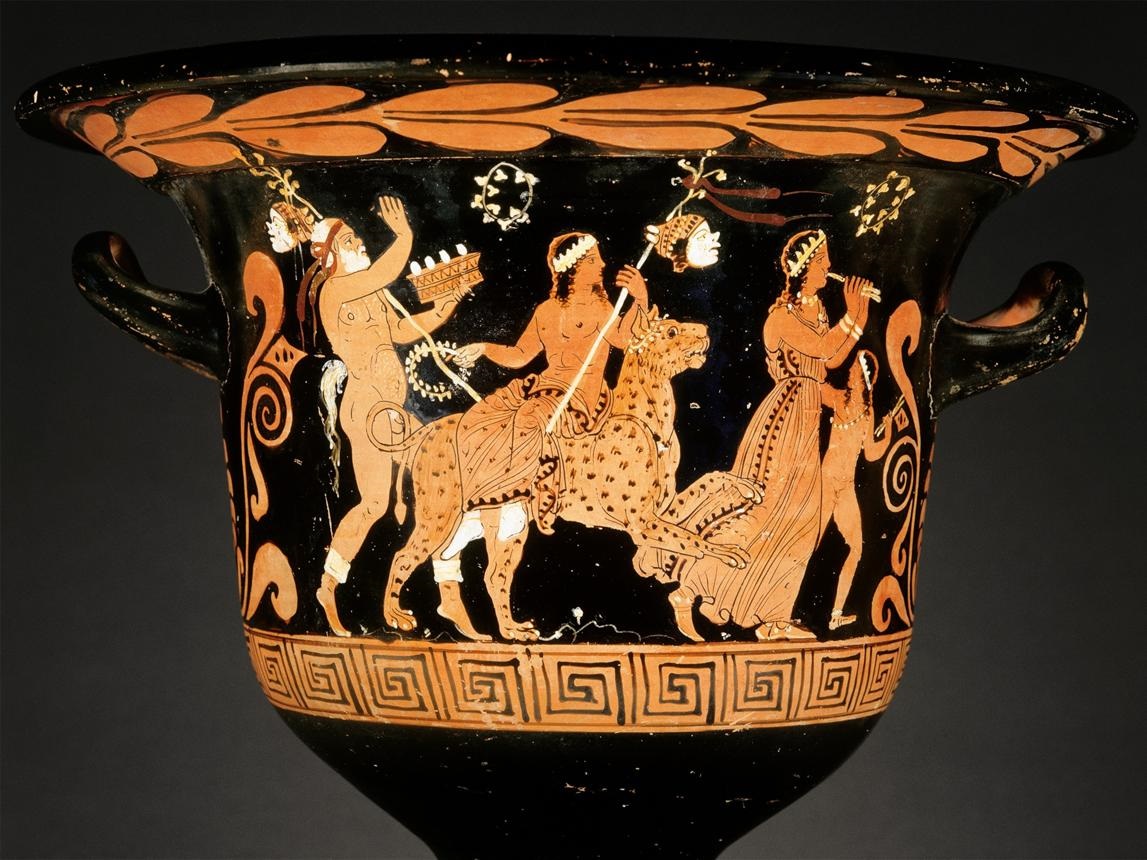
Ancient Greece is remembered for its remarkable achievements in philosophy, art, literature, and democracy. Yet beneath its famous temples and public festivals existed another fascinating dimension of religious life: mystical traditions that explored divine revelation, initiation, death, and the possibility of a better existence beyond this world.
For many ancient Greeks, religion involved honoring the gods through sacrifices, prayers, offerings, and community celebrations. However, certain religious traditions offered participants more personal experiences through initiation ceremonies and sacred knowledge.
These traditions are commonly associated with the mystery religions of ancient Greece.
Mysticism among the ancient Greeks included the celebrated Eleusinian Mysteries, religious traditions associated with Orpheus, and certain forms of Dionysian worship.
Participants sometimes sought purification, closer relationships with divine powers, or hope concerning their fate after death.
Because many rituals were kept secret, historians cannot reconstruct every ceremony with certainty. Nevertheless, archaeological discoveries, ancient writings, and surviving artworks provide valuable evidence.
This guide explores the origins, beliefs, practices, and lasting significance of ancient Greek mysticism while distinguishing documented history from modern interpretations.
What Was Mysticism in Ancient Greece?
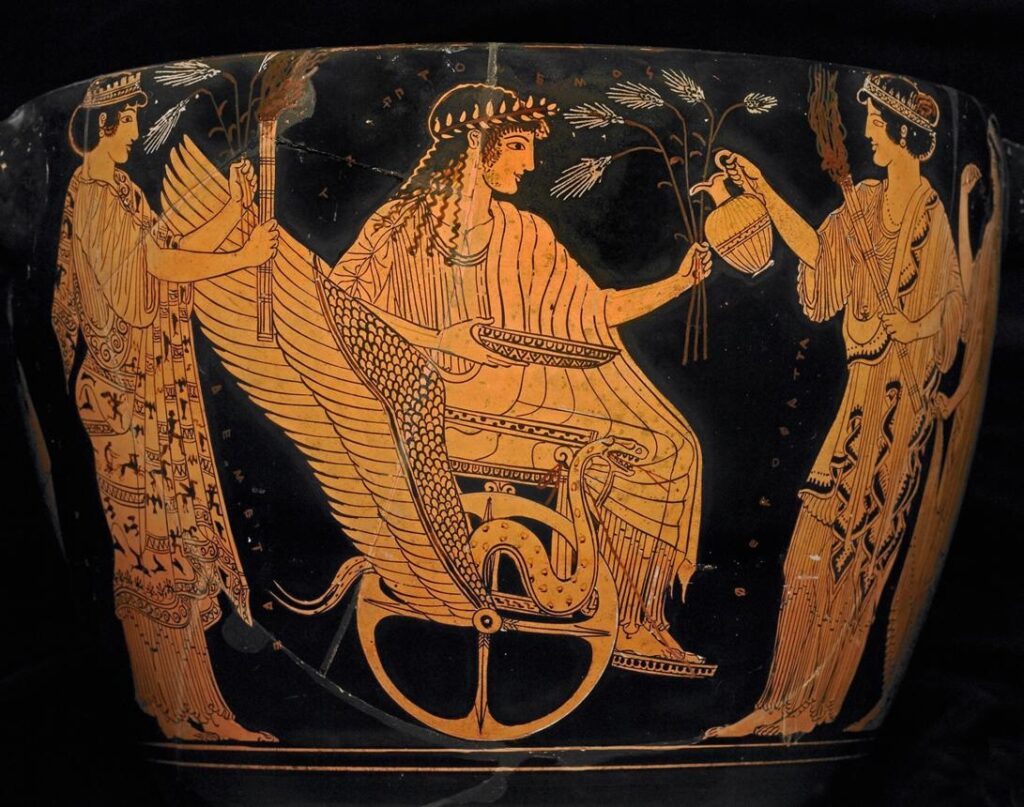
Mysticism in ancient Greece can refer to religious experiences and practices involving initiation, sacred revelation, and a perceived relationship with divine realities.
It is important not to confuse ancient Greek mystery religions with every modern definition of mystical spirituality.
Understanding Mystery Religions
The Greek word mysteria is associated with rites into which people were initiated.
Participants were often called mystai, meaning initiates.
These ceremonies sometimes involved experiences and teachings that participants were forbidden to reveal to outsiders.
Public Religion vs. Mystery Traditions
Public Greek religion included festivals, sacrifices, temple worship, and communal ceremonies.
Mystery traditions added a different dimension by restricting certain experiences to initiated participants.
The two were not necessarily competitors. Individuals could participate in both.
Why Were the Rituals Secret?
Secrecy helped define the special status of initiation and the sacred character of certain religious experiences.
However, because many participants respected these restrictions, modern historians possess incomplete information about what occurred.
The Origins of Ancient Greek Mystery Traditions
Mystery practices developed within a wider religious culture shaped by mythology, agricultural festivals, and local cult traditions.
Connections to Nature
Greek religious ceremonies frequently reflected agriculture, seasonal change, fertility, and the relationship between human communities and the natural environment.
Local Religious Traditions
Different regions maintained their own sanctuaries, festivals, and religious customs.
Mystery practices were not controlled by a single authority throughout Greece.
Personal Religious Participation
Some ceremonies attracted people seeking experiences beyond ordinary public worship.
Initiation could create a distinctive relationship between the participant, the deity, and the religious community.
Historical Development
Certain mystery traditions became prominent during the classical period and continued developing during the Hellenistic and Roman eras.
Their practices and meanings could change over time.
1. The Eleusinian Mysteries: Sacred Rites of Demeter and Persephone
The Eleusinian Mysteries were among the most famous religious initiation traditions of ancient Greece.
They took place at Eleusis, near Athens, and centered on the goddesses Demeter and Persephone.
The Myth of Demeter and Persephone
According to Greek mythology, Persephone was taken into the underworld by Hades.
Her mother, Demeter, the goddess closely associated with agriculture and grain, searched for her daughter.
Demeter’s grief caused suffering in the natural world, and the story eventually led to an arrangement allowing Persephone to return for part of the year.
The myth connected separation, reunion, agricultural renewal, and the passage between life and death.
The Sacred Sanctuary at Eleusis
Eleusis became an important religious center.
Its sanctuary included the Telesterion, a large building associated with initiation ceremonies.
Who Could Participate?
The Eleusinian Mysteries were notably inclusive compared with some civic institutions.
Women, enslaved people, and non-Athenians could participate under appropriate religious conditions.
The Meaning of Initiation
Ancient sources associate initiation with religious experience and more hopeful expectations about death.
However, the precise content of the innermost rites remains uncertain.
2. How the Eleusinian Mysteries Were Celebrated
The Eleusinian festival included both public events and restricted ceremonies.
The Sacred Procession
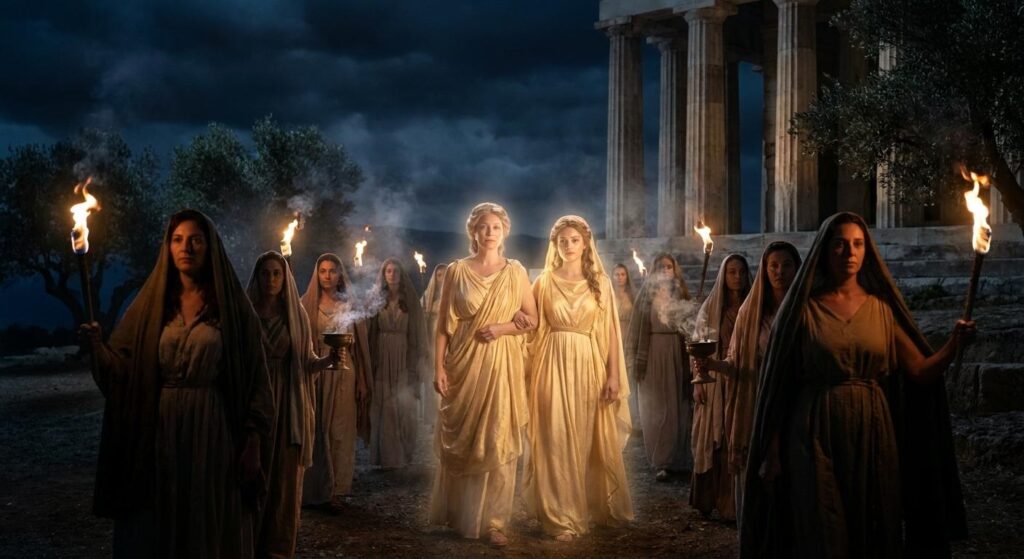
Participants traveled from Athens toward Eleusis along the Sacred Way.
The procession was a visible expression of the festival’s importance.
Ritual Preparations
Ancient evidence refers to purification and other preparations before initiation.
These activities distinguished participants from ordinary spectators.
The Role of the Telesterion
The Telesterion served as the central setting for secret ceremonies.
Its architectural importance reflects the scale and institutional organization of the cult.
Ritual Drama and Sacred Experience
Some historical reconstructions suggest that ceremonial acts reflected the story of Demeter and Persephone.
Researchers also discuss the importance of things performed, spoken, and shown.
Nevertheless, the surviving evidence does not justify presenting a complete step-by-step initiation ceremony as established fact.
3. Orphism and the Search for Spiritual Purification
Orphism is the modern name applied to various ancient beliefs, writings, and religious practices associated with the legendary figure Orpheus.
Who Was Orpheus?
In Greek mythology, Orpheus was a gifted musician and poet whose music could influence humans, animals, and even supernatural powers.
His famous journey into the underworld to retrieve Eurydice became one of the best-known Greek stories about death and loss.
Orphic Religious Literature
Certain ancient poems and religious writings were attributed to Orpheus.
These texts could address divine origins, ritual practices, and the relationship between mortal existence and the gods.
Ideas About the Soul
Some traditions associated with Orphic material emphasized purification and the soul’s destiny.
Certain sources connect these ideas with repeated existence or liberation from an unfavorable postmortem condition.
Was Orphism a Unified Religion?
Modern scholars disagree about whether Orphism should be understood as a coherent religious movement.
The evidence suggests considerable variation in beliefs and practices.
It is therefore more accurate to discuss Orphic traditions than assume all followers shared one formal doctrine.
4. Orphic Gold Tablets and Ancient Greek Beliefs About Death
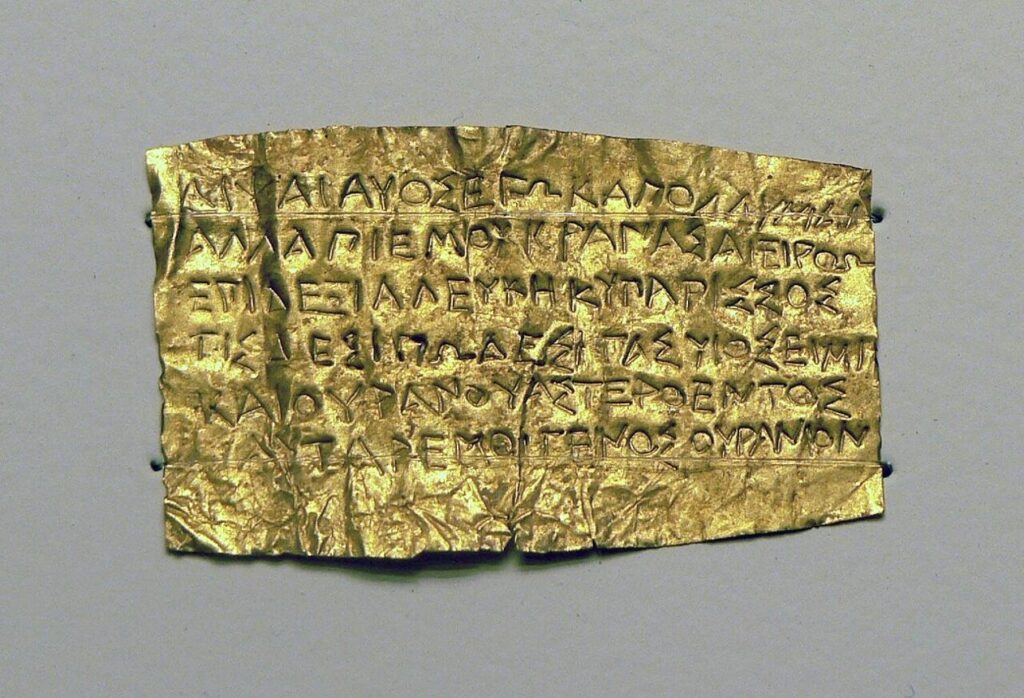
One of the most fascinating archaeological discoveries associated with Greek mystery religion is a collection of inscribed gold tablets.
What Were the Gold Tablets?
These were small, thin pieces of gold foil placed in certain graves.
Examples have been discovered in different parts of the Greek world, including southern Italy, Thessaly, and Crete.
Instructions for the Afterlife
Some inscriptions contain guidance intended for a deceased person traveling through the underworld.
Their content may refer to sacred water, divine ancestry, or particular encounters in the realm of the dead.
Hope Beyond Death
The tablets indicate that at least some ancient Greeks imagined a more favorable destiny after death through special religious knowledge or status.
Interpreting the Evidence
Not every tablet can confidently be assigned to a single religious group.
Scholars have connected different examples with Orphic, Dionysian, and other religious environments.
These artifacts reveal important beliefs but do not establish one universal Greek understanding of the afterlife.
5. Dionysian Mysteries and Religious Ecstasy
Dionysus was associated with wine, vegetation, theater, transformation, and forms of religious celebration.
Certain Dionysian practices also involved mystery initiation.
Music and Dance
Ancient representations frequently connect Dionysian worship with music, dancing, and groups of followers.
These elements could contribute to intense communal experiences.
Religious Ecstasy
The term ecstasy is often used when discussing religious experiences in which participants felt transformed or moved beyond ordinary awareness.
However, not every Dionysian ritual involved the same experiences.
Dionysus and the Afterlife
Some evidence associates Dionysian initiation with hopes for a more favorable existence after death.
The gold tablets provide important clues about connections between Dionysian rites and postmortem expectations.
Avoiding Sensational Interpretations
Popular accounts sometimes portray Dionysian worship as uniformly chaotic or uncontrolled.
The historical evidence describes diverse traditions, and dramatic literary depictions should not automatically be treated as records of ordinary ritual behavior.
6. Pythagoreanism and the Mystical Understanding of the Soul
Pythagoras is widely remembered for his connection with mathematics, but ancient traditions also associate him and his followers with religious and philosophical practices.
Philosophy and Religious Discipline
Pythagorean communities were described as following distinctive rules of conduct and ways of life.
Transmigration of the Soul
Ancient accounts associate Pythagorean thought with the idea that the soul could pass into another living being after death.
This concept is commonly called metempsychosis.
Purification Through Conduct
Certain Pythagorean traditions emphasized disciplined behavior and the relationship between one’s manner of living and the condition of the soul.
Connections With Orphic Thought
Scholars have examined similarities between Pythagorean and Orphic ideas.
However, those similarities do not establish that the two were identical movements or that every attributed practice is historically certain.
7. The Role of the Soul in Greek Mysticism
Questions about the soul and death were central to several Greek religious and philosophical traditions.
Ordinary Views of the Underworld
Greek literature frequently describes the underworld as a place inhabited by the dead.
However, Greek views varied across periods, authors, and regions.
Different Postmortem Destinies
Some mystery traditions offered hope that initiates might experience a better fate after death.
Purification
Religious purification could involve bodily preparations, ritual actions, or broader ideas about spiritual condition.
Its meaning depended on the specific tradition.
The Search for Divine Knowledge
Certain religious experiences were understood as providing access to sacred knowledge unavailable through ordinary participation.
These ideas helped establish the distinctive character of mystery initiation.
8. Greek Philosophy and Mystical Ideas
Ancient Greek philosophy and religion were deeply interconnected, although philosophical arguments should not be confused with religious ceremonies.
Plato and the Immortality of the Soul
Plato explored the soul, death, moral responsibility, and the possibility of existence beyond the body.
Philosophical Myths
Several Platonic dialogues use stories about judgment after death and the destiny of souls.
Possible Religious Influences
Scholars have investigated connections between Platonic thought and Orphic or Pythagorean traditions.
The nature and extent of these influences remain subjects of interpretation.
Philosophy as a Different Approach
Philosophers often used reasoned discussion to examine questions that also appeared in religious myths.
Both approaches contributed to ancient debates about human existence and divine reality.
9. Symbols and Sacred Objects in Greek Mystery Religions
Religious symbols helped express ideas that were important to worshippers.
Torches
Torches appear in artistic representations connected with Demeter and Persephone.
They can evoke the search for Persephone and the movement between darkness and light.
Grain and Agricultural Imagery
Grain was closely connected with Demeter and the agricultural meaning of the Eleusinian tradition.
Ivy and Dionysian Imagery
Ivy, wine vessels, and related objects frequently appear in representations of Dionysian worship.
Gold Funerary Tablets
These small inscriptions provide rare material evidence for religious ideas concerning the journey after death.
Symbols must be interpreted in context rather than treated as proof that all Greek mystery cults shared the same beliefs.
10. How Historians Study Ancient Greek Mysticism
Because initiation ceremonies were often secret, researchers must examine several different kinds of evidence.
Ancient Literary Sources
Greek hymns, historical writings, philosophical discussions, and later accounts preserve descriptions of religious beliefs and practices.
Archaeological Discoveries
Sanctuary ruins, inscriptions, votive objects, and funerary artifacts help establish where and how religious activities occurred.
Artistic Representations
Vase paintings, sculptures, and reliefs can provide information about deities, ritual objects, and participants.
Challenges of Interpretation
Ancient authors sometimes criticized or misunderstood traditions outside their own communities.
Later texts may describe practices differently from earlier sources.
Historians therefore compare evidence carefully and distinguish documented activities from uncertain reconstructions.
Did Ancient Greek Mysticism Influence Later Religions?
Greek mystery religions continued during periods of extensive cultural interaction across the Mediterranean.
Religious Exchange
Greek traditions developed alongside other Mediterranean religious practices during the Hellenistic and Roman periods.
Shared Religious Themes
Initiation, purification, divine revelation, and expectations about the afterlife appeared in several ancient traditions.
Similarity Does Not Prove Direct Influence
Some older interpretations suggested that mystery religions directly anticipated later religious systems.
Modern scholarship treats such claims cautiously.
Similar concepts may develop through several historical processes, and specific influence requires convincing evidence.
A Lasting Historical Importance
Greek mystery practices remain important for understanding how ancient Mediterranean societies expressed religious belonging and hope concerning death.
Why Ancient Greek Mysticism Still Fascinates Us
Greek mystical traditions continue to attract interest because they reveal a more personal side of ancient religious life.
Questions About Life and Death
Ancient participants confronted questions that remain important today: What happens after death? Can human beings approach the divine? How should people live?
Secrecy and Historical Mystery
The fact that some ceremonies were never fully recorded makes them especially intriguing.
Rich Archaeological Evidence
Gold tablets, sanctuary remains, and visual art provide opportunities to examine ancient religious beliefs through material objects.
Connections With Philosophy
The intersection of religion, mythology, and philosophy makes ancient Greek mysticism an engaging field for students of history and culture.
Frequently Asked Questions About Ancient Greek Mysticism
1. What was mysticism among the ancient Greeks?
It included religious traditions involving initiation, sacred experiences, purification, and beliefs about the gods and the afterlife.
2. What were the Eleusinian Mysteries?
They were initiation ceremonies celebrated at Eleusis in honor of Demeter and Persephone.
3. Why were Greek mystery rituals kept secret?
Secrecy helped preserve the sacred and restricted character of initiation, although its precise purposes varied.
4. Who could join the Eleusinian Mysteries?
Participation was broader than Athenian male citizenship and included women, non-Athenians, and enslaved people under appropriate conditions.
5. What was Orphism in ancient Greece?
Orphism is a modern scholarly category covering diverse writings and practices associated with Orpheus, including beliefs about the soul and purification.
6. What were Orphic gold tablets used for?
Some were placed in graves and contained instructions or statements concerning the deceased person’s journey through the underworld.
7. Did ancient Greeks believe in reincarnation?
Certain philosophical and religious traditions, particularly those associated with Pythagoreanism, discussed the transmigration of souls. This was not a universal Greek belief.
8. Do we know what happened during Greek mystery initiations?
Only partly. Ancient descriptions and archaeological evidence reveal important features, but many secret details remain unknown.
Conclusion
Mysticism among the ancient Greeks reveals a fascinating dimension of a civilization often celebrated primarily for its philosophy, politics, and artistic achievements.
Through the Eleusinian Mysteries, traditions associated with Orpheus, Dionysian initiation, and certain philosophical teachings, ancient Greeks explored sacred experience, purification, and the destiny of the soul.
These traditions were diverse rather than parts of a single religious system.
Some emphasized relationships with particular deities, while others explored questions about death, divine knowledge, and personal transformation.
Although the secrecy surrounding many ceremonies limits what historians can establish, ancient literature and archaeological discoveries continue to provide valuable insights.
Studying these practices helps us better understand the religious diversity of ancient Greece and the enduring human desire to explore questions beyond ordinary experience.

Written by Twastia Editorial Team
Twastia Editorial Team shares practical insights about website design, SEO services, Google Ads, content marketing, social media, conversion rate optimization, and digital marketing strategy.
Last updated: Oct 29, 2026
Related posts from Twastia
Explore more useful articles from twastia.com about digital marketing, SEO, websites, ads, content, and growth strategy.