Isn’t a Soft Mattress Hurting Your Back?: Best Guide to Mattress Support
A soft, comfortable mattress can make climbing into bed feel like the best part of your day. Plush cushioning, gentle […]
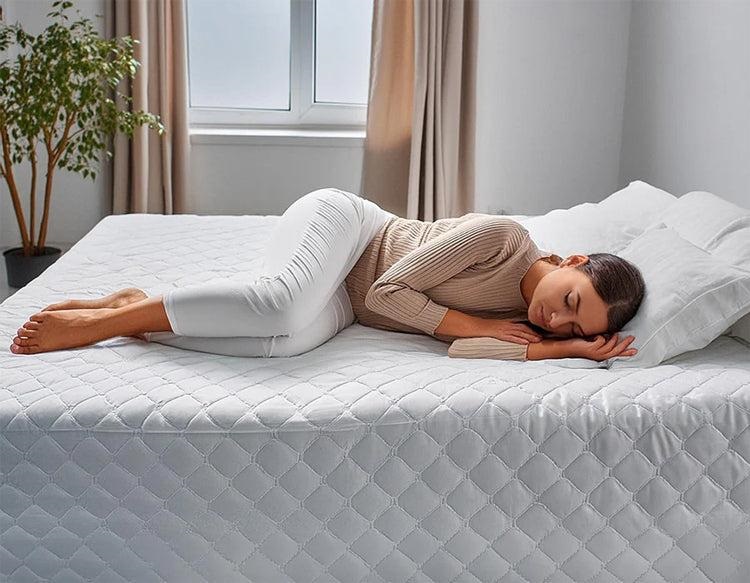
A soft, comfortable mattress can make climbing into bed feel like the best part of your day. Plush cushioning, gentle pressure relief, and a cozy sleeping surface are attractive features, especially after a long day. However, if you regularly wake up with lower back discomfort or morning stiffness, you may begin wondering: Isn’t a soft mattress hurting your back?
The answer is not as simple as assuming that soft mattresses are harmful. A mattress that feels comfortable to one person may not provide enough support for another. Your sleeping position, body weight, mattress construction, and personal comfort preferences all influence how your body responds to a sleeping surface.
Mattresses that allow excessive sinking may contribute to uncomfortable spinal positioning for some sleepers. On the other hand, an extremely firm mattress may create pressure around the shoulders, hips, and other sensitive areas.
Research generally suggests that medium-firm mattresses can provide a useful balance of comfort and support for many adults experiencing nonspecific lower back pain. PubMed+1
Understanding the relationship between mattress softness and spinal support can help you make better decisions about your sleeping environment.
Can a Soft Mattress Really Cause Back Pain?
A soft mattress does not automatically cause back pain. However, a sleeping surface that lacks sufficient support may contribute to discomfort in certain individuals.
The spine has natural curves that should be supported during rest. Ideally, your mattress should distribute body weight while limiting excessive sinking or twisting.
When a mattress is too soft for your needs, heavier body areas may sink farther than surrounding areas.
For example, your pelvis might settle deeply into the mattress while your upper body remains relatively elevated. This could create an uncomfortable sleeping posture.
Over several hours, maintaining that position may contribute to stiffness or discomfort.
Nevertheless, back pain has many possible causes, including muscular strain, underlying health conditions, injuries, and daily activities.
A mattress should therefore be considered one potential contributing factor rather than the automatic explanation for every episode of morning pain.
How Mattress Firmness Affects Spinal Alignment
Understanding spinal alignment is essential when considering whether a soft mattress is hurting your back.
Your spine naturally curves through the neck, upper back, and lower back. A supportive mattress accommodates these curves without forcing the body into an uncomfortable position.
What Happens When a Mattress Is Too Soft?
An excessively soft or worn sleeping surface may allow your hips or torso to sink deeply.
Depending on your position, this can alter how the lower back is supported.
Some sleepers may experience discomfort because their body remains in an awkward position throughout the night.
Excessive sinkage can also make turning over or changing positions more difficult.
However, mattress feel alone does not reveal how well it supports the body. A plush mattress with a well-designed support core may perform differently from an inexpensive mattress with deteriorating foam.
Can a Mattress Be Too Firm?
Yes. Greater firmness does not necessarily mean better spinal support.
A very firm surface may provide insufficient cushioning around the shoulders and hips, particularly for side sleepers.
Pressure discomfort can interrupt sleep or encourage repeated position changes.
A suitable mattress should offer enough cushioning for comfort while maintaining appropriate support beneath the body.
What Does Research Say About Mattress Firmness?
Research examining mattress firmness has produced useful findings, although individual preferences and study limitations remain important.
A randomized clinical trial published in The Lancet studied 313 adults with chronic nonspecific lower back pain.
Participants used either firm or medium-firm mattresses.
After 90 days, those assigned medium-firm mattresses generally experienced better outcomes for pain and disability than participants using firm mattresses. The Lancet
A separate systematic review examining mattress characteristics also concluded that medium-firm mattresses tended to support comfort, sleep quality, and spinal alignment. PubMed
More recently, a 2026 review of 47 studies found that medium-firm mattresses were the most consistently supported general option compared with very soft or very firm surfaces.
However, the researchers also noted differences in study methods and individual characteristics that limited definitive conclusions. Springer Nature Link
These findings do not mean everyone should purchase an identical mattress.
Instead, they suggest that balancing cushioning and support is generally more useful than automatically choosing the softest or firmest available model.
5 Signs Your Soft Mattress May Not Be Supporting Your Back
If you are asking, “Isn’t a soft mattress hurting your back?” it may help to examine how your body feels before, during, and after sleep.
Several warning signs can suggest that your mattress deserves closer attention.
1. You Regularly Wake Up With Back Stiffness
Occasional morning stiffness is common and can have several causes.
However, persistent discomfort that repeatedly appears after sleeping may suggest that your sleeping position or mattress support is not ideal.
Notice whether the discomfort improves after you begin moving around.
2. Your Hips Sink Noticeably Into the Mattress
A mattress should contour to your body, but excessive sinking can create uneven support.
If your hips settle much deeper than the rest of your body, the mattress may not suit your weight or sleeping position.
3. You Notice Visible Sagging
Permanent depressions, uneven surfaces, or deteriorated cushioning can affect mattress comfort.
Sagging may indicate that the support materials have lost some of their original resilience.
4. You Struggle to Change Sleeping Positions
A deeply cushioned mattress can sometimes make movement difficult.
If turning over requires considerable effort, the sleeping surface may be allowing too much sinkage for your preferences.
5. You Feel More Comfortable on Another Mattress
If you consistently sleep more comfortably elsewhere, your current mattress may deserve evaluation.
However, a few comfortable nights on a different bed cannot prove that your original mattress is the cause of back pain.
Soft vs. Medium-Firm vs. Firm Mattresses
When evaluating mattress firmness, it helps to understand the general differences between common comfort levels.
| Mattress type | Typical feel | Potential consideration |
|---|---|---|
| Soft | Deep cushioning and body contouring | May allow excessive sinkage for some sleepers |
| Medium-firm | Balanced cushioning and support | Often a useful starting point for back comfort |
| Firm | Limited surface sinkage | May create pressure discomfort for some body types |
These descriptions are general. Firmness labels are not standardized across all mattress manufacturers.
One company’s medium-firm model may feel softer or firmer than another company’s equivalent.
The construction beneath the comfort layers also matters.
A soft mattress with responsive support materials may maintain body positioning better than a firm mattress with poor-quality or deteriorated components.
How Your Sleeping Position Influences Mattress Choice
Your preferred sleeping position affects how pressure and weight are distributed across the mattress.
This makes sleeping posture an important consideration when deciding whether a soft mattress is hurting your back.
Side Sleepers
Side sleepers usually place more pressure on their shoulders and hips.
A mattress needs enough cushioning to accommodate these areas while supporting the waist and torso.
A surface that is too firm may feel uncomfortable around pressure points, while one that is excessively soft may permit uneven sinking.
Back Sleepers
Back sleepers generally benefit from a mattress that supports the natural curve of the lower back.
Too much sinkage around the pelvis may feel uncomfortable.
A balanced mattress that supports the torso while allowing modest contouring is often a reasonable starting point.
Stomach Sleepers
Sleeping on the stomach can create challenges for comfortable spinal positioning.
A very soft mattress may allow the midsection to sink, potentially increasing discomfort in some sleepers.
A more supportive surface and appropriate pillow arrangement may help, although individual needs vary.
Does Body Weight Affect Mattress Firmness?
Body weight and body shape can influence how deeply someone sinks into a mattress.
A relatively lightweight sleeper may experience a medium-firm mattress as quite firm because their body compresses the materials less.
A heavier sleeper may sink more deeply into the same mattress and require a different support design.
This does not mean people within a particular weight category must choose one specific firmness level.
Body proportions, sleep position, materials, and individual comfort all contribute to the experience.
When shopping for a new mattress, consider how the sleeping surface supports your body in your usual resting position.
Can a Mattress Topper Fix an Unsupportive Mattress?
Mattress toppers are commonly used to adjust the feel of an existing bed.
A topper may add cushioning, improve surface comfort, or modestly change how pressure is distributed.
However, it cannot reliably repair a mattress with a damaged support core or substantial permanent sagging.
When a Topper May Help
If your mattress remains structurally sound but feels slightly too firm, a cushioning topper may improve comfort.
A firmer topper may alter the surface feel of a softer mattress, but it cannot necessarily prevent excessive sinking into the underlying mattress.
Before purchasing an accessory, inspect the condition of the mattress and its foundation.
A poorly supported bed frame or damaged slats may also affect how the mattress performs.
How to Choose a Mattress That Supports Your Back
Choosing a mattress should involve more than checking online ratings or sitting on a showroom model for a few seconds.
If you suspect that a soft mattress is hurting your back, evaluate the sleeping surface carefully before buying a replacement.
Test Your Normal Sleeping Position
When possible, lie on a mattress in your usual sleeping position for several minutes.
Pay attention to pressure around your shoulders, hips, and lower back.
Notice whether your body feels supported and whether changing positions is comfortable.
Consider the Mattress Construction
Foam, latex, hybrid, and innerspring mattresses can all provide suitable support when well designed.
There is no single material that guarantees relief from back pain.
The interaction between comfort layers, support layers, body weight, and sleeping position matters more than the material category alone.
Review Trial and Return Policies
Many mattress retailers offer trial periods, although conditions vary.
Before purchasing, confirm the return window, eligibility requirements, fees, and warranty limitations.
A generous trial period can help because mattress comfort may take several nights to evaluate.
Simple Ways to Improve Sleep Comfort
Replacing your mattress is not always the first or only step toward improving back comfort.
You may be able to make practical adjustments to your current sleeping environment.
For example, side sleepers sometimes find it comfortable to place a pillow between their knees. Back sleepers may benefit from placing a pillow beneath their knees.
Pillow thickness and sleeping posture can also influence neck and back comfort.
Check whether the mattress rests on an appropriate, stable foundation.
If the mattress has a removable or replaceable support component, follow the manufacturer’s instructions.
Regular physical activity and avoiding prolonged bed rest can also support back health, depending on the cause of discomfort. NIAMS
When Should You See a Healthcare Professional?
Not all back pain comes from a mattress.
Persistent discomfort may involve muscular, joint-related, nerve-related, or other medical conditions.
According to the National Institute of Arthritis and Musculoskeletal and Skin Diseases, medical evaluation is recommended when back pain does not improve or occurs with symptoms such as numbness, weakness, fever, or unexplained weight loss. NIAMS
Seek immediate medical attention for new loss of bladder or bowel control, numbness around the groin, or rapidly worsening leg weakness. American Academy of Pain Medicine
A healthcare professional can help determine whether changes to your sleeping environment are appropriate or whether additional treatment is needed.
Frequently Asked Questions
Isn’t a soft mattress hurting your back if you wake up sore?
Possibly, but morning soreness does not prove that your mattress is responsible. Excessive sinkage may contribute to discomfort, while other medical or lifestyle factors can also cause back pain.
Is a firm mattress better for lower back pain?
Not necessarily. Research generally suggests that medium-firm mattresses may provide better outcomes than very firm mattresses for some people with nonspecific lower back pain.
Can memory foam mattresses cause back pain?
Memory foam itself does not automatically cause back pain. Comfort depends on the foam’s density, support structure, responsiveness, and how well the mattress accommodates your body.
How do I know if my mattress is too soft?
Possible signs include excessive hip sinkage, noticeable sagging, difficulty changing positions, or repeated discomfort after sleeping. These signs should be considered alongside other possible causes.
Can sleeping on a soft mattress damage your spine permanently?
There is insufficient evidence to conclude that ordinary use of a soft mattress causes permanent spinal damage in otherwise healthy adults. However, an unsuitable mattress may contribute to discomfort or aggravate existing symptoms.
What mattress firmness is best for back support?
Medium-firm mattresses are often a reasonable starting point, particularly for adults experiencing nonspecific lower back pain. Individual comfort, body size, sleep position, and medical needs should guide the final choice.
Conclusion
So, isn’t a soft mattress hurting your back? The answer depends on whether the mattress provides adequate support for your body.
A soft mattress is not inherently harmful. Some sleepers prefer substantial cushioning and experience excellent comfort on plush surfaces. Problems may arise when excessive sinkage, worn materials, or unsuitable construction contribute to uncomfortable sleeping positions.
Research suggests that medium-firm mattresses offer a useful balance of cushioning and support for many adults, although individual preferences remain important.
Instead of choosing a mattress based solely on its firmness label, consider your sleeping position, body weight, pressure comfort, and the quality of its support system.
If you regularly wake with discomfort, examine your mattress and sleeping habits, but avoid assuming that bedding is the only possible cause.
A well-chosen mattress can contribute to more comfortable rest, while persistent or concerning back pain deserves appropriate medical attention.

Written by Twastia Editorial Team
Twastia Editorial Team shares practical insights about website design, SEO services, Google Ads, content marketing, social media, conversion rate optimization, and digital marketing strategy.
Last updated: Nov 5, 2026
Related posts from Twastia
Explore more useful articles from twastia.com about digital marketing, SEO, websites, ads, content, and growth strategy.