7 Latest Commercial Real-Estate Trends In 2026: Best Investment Insights
The U.S. commercial property market is becoming more selective. Offices, warehouses, retail, apartments, and digital infrastructure face different conditions. Location, […]
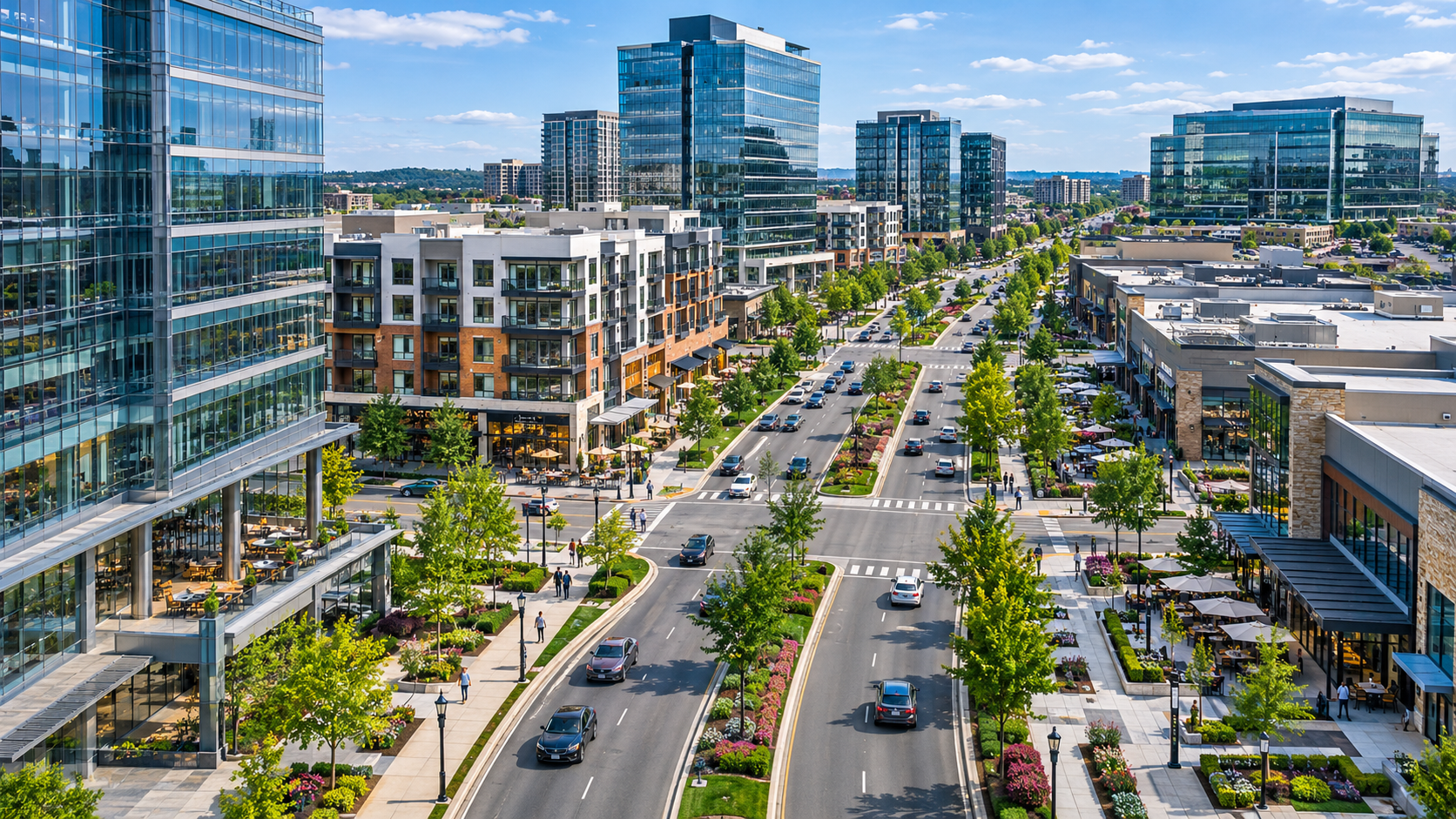
The U.S. commercial property market is becoming more selective. Offices, warehouses, retail, apartments, and digital infrastructure face different conditions. Location, building quality, financing, and tenant demand determine performance.
The discussion around 7 Latest Commercial Real-Estate Trends In 2026 centers on a recovery that is uneven rather than universal. CBRE’s August 2026 midyear outlook maintained a forecast of 16% growth in U.S. commercial real estate investment activity for the year, but emphasized elevated interest rates and substantial differences between property sectors. CBRE
Understanding 7 Latest Commercial Real-Estate Trends In 2026 helps investors distinguish structural change from short-term fluctuations. These seven themes offer practical considerations, not promises of returns.
1. Quality Office Buildings Attract Renewed Attention
Office real estate is showing signs of recovery, but not every property is benefiting. Major employers are committing to well-located offices with modern amenities, efficient layouts, and access to transportation. Older buildings with outdated systems can face different conditions, including costly upgrades and prolonged vacancies.
Among 7 Latest Commercial Real-Estate Trends In 2026, this divide between prime and secondary offices is especially important. CBRE reported in its midyear outlook that technology firms represented 21% of office leasing activity in the first half of 2026. This is evidence of renewed demand in selected markets, not a nationwide return to pre-pandemic office patterns. CBRE
Tenants Want More Than Square Footage
Modern tenants may consider energy performance, employee experience, collaboration areas, and surrounding amenities alongside base rent. Buildings that require significant tenant improvements may struggle unless ownership can finance upgrades and offer competitive lease packages.
For anyone studying 7 Latest Commercial Real-Estate Trends In 2026, the lesson is to examine property-level leasing rather than assume that every downtown office is recovering equally. Compare occupancy, lease expiration schedules, tenant credit quality, operating costs, and capital expenditure requirements before deciding whether a building is attractively priced.
Assess Adaptive Reuse Realistically
Office-to-residential conversion attracts interest, but physical layout, window access, plumbing, zoning, and construction costs can limit feasibility. Conversion is an opportunity for certain buildings, not a straightforward solution for every vacant tower.
2. Industrial Tenants Favor Modern, Efficient Space
Warehouse and logistics demand has evolved since the pandemic-era construction surge. Businesses still need distribution capacity, but many prefer newer buildings with suitable loading facilities, clear heights, power access, and transportation connections. Older industrial stock can become less competitive even while overall leasing improves.
A major element of 7 Latest Commercial Real-Estate Trends In 2026 is the movement toward functional industrial property. CBRE’s August 2026 research forecast roughly one billion square feet of annual industrial leasing, supported by domestic manufacturing, logistics outsourcing, and companies replacing obsolete space. The forecast remained subject to economic and market uncertainty. CBRE
Logistics Costs Influence Location Decisions
Tenants weigh proximity to highways, customers, labor, ports, and suppliers. Lower rent in a remote location may not offset increased transportation expenses. Smaller distributors may also have needs that differ from large national warehouse operators.
Within 7 Latest Commercial Real-Estate Trends In 2026, investors should distinguish big-box distribution facilities from smaller flex and light-industrial properties. Each has its own tenant pool, renewal dynamics, build-out needs, and operating costs.
Watch Building Obsolescence
A property may be technically occupied yet require expensive upgrades when its tenant leaves. Inspect roof conditions, truck courts, electrical capacity, and lease obligations before relying on historical rental income.
3. Retail Centers Benefit From Essential Services
Predictions that physical retail would disappear have not matched the performance of every shopping format. Grocery-anchored centers, neighborhood retail, discount stores, and service-oriented tenants continue to draw attention. At the same time, weaker shopping locations and older formats can face expensive vacancies and uncertain leasing prospects.
In 7 Latest Commercial Real-Estate Trends In 2026, limited new retail development is helping support occupancy in many markets. CBRE’s midyear retail outlook cited historically low construction completions and continued demand from grocery, off-price, discount, and service retailers. It also noted differences between suburban and downtown locations. CBRE
Tenant Mix Matters More Than Store Count
A center with a reliable grocery anchor and complementary neighborhood services may have different demand characteristics from one dependent on discretionary shopping. Investors should examine tenant sales where available, co-tenancy clauses, lease terms, and how vacancies affect foot traffic.
For readers reviewing 7 Latest Commercial Real-Estate Trends In 2026, retail resilience should not be confused with guaranteed rent growth. Consumer budgets, local competition, property taxes, insurance, and redevelopment costs still influence returns.
Evaluate the Surrounding Community
Population growth alone is insufficient. Household income, traffic patterns, competing centers, and customer convenience can help determine whether a particular retail site remains relevant.
4. Multifamily Markets Continue to Diverge
Apartment properties benefit from the continued need for rental housing, but local supply matters. Markets that recently added large numbers of units may offer concessions to attract tenants, while supply-constrained locations can maintain stronger pricing. Job growth, household formation, and affordability also influence leasing.
The multifamily chapter of 7 Latest Commercial Real-Estate Trends In 2026 is therefore about selective stabilization. CBRE’s August 2026 forecast projected average annual rent growth of 1.4%, with operators prioritizing occupancy and tenant renewals. It identified stronger prospects in several coastal and Midwestern markets than in some Sun Belt locations still absorbing newly delivered apartments. CBRE
Retention Can Protect Operating Income
Replacing a resident often involves marketing expense, vacancy time, and unit preparation. Property managers may benefit from responsive maintenance, transparent communication, and realistic renewal offers. The appropriate strategy varies with local rents and property condition.
As 7 Latest Commercial Real-Estate Trends In 2026 demonstrates, national averages can hide neighborhood-level differences. Compare recently completed supply, concessions, renewal rates, and wage growth before forecasting rent increases.
Consider Insurance and Maintenance
Operating expenses can materially affect net income. A property with appealing headline rent growth may still disappoint if maintenance, taxes, insurance, and borrowing costs rise faster.
5. Artificial Intelligence Drives Data Center Demand
Demand for artificial intelligence computing and cloud services is changing the real estate market for data centers. These facilities require suitable land, utility connections, cooling systems, network access, and substantial capital. High demand does not mean every proposed site can be developed on schedule.
One of the most distinctive 7 Latest Commercial Real-Estate Trends In 2026 is that power availability has become a critical real estate constraint. CBRE’s midyear data center research notes very long power procurement timelines in certain markets and growing interest in sites with access to dependable generation. CBRE
Preleasing Does Not Remove Development Risk
A tenant commitment may improve revenue visibility, but projects can still face utility delays, equipment shortages, permitting problems, or changes in technology requirements. The PwC and Urban Land Institute 2026 outlook also highlighted data centers as a leading sector while identifying electrical capacity as a limiting factor. PwC
In 7 Latest Commercial Real-Estate Trends In 2026, investors should assess tenant concentration, contractual obligations, power costs, construction contingencies, and the risk that a building becomes technologically outdated. Data centers combine real estate with highly specialized infrastructure operations.
Match Expertise to the Asset
A traditional office or warehouse investment team may need additional engineering, power-market, and technology expertise before evaluating this sector.
6. Financing Conditions Reward Conservative Underwriting
Capital markets have improved from the most difficult periods of the recent cycle, but borrowing costs remain consequential. Property values depend on debt terms, refinancing assumptions, occupancy, operating income, and required investment returns. A deal that appeared attractive when interest rates were lower may need revised pricing today.
For 7 Latest Commercial Real-Estate Trends In 2026, financing discipline is a central theme. In its August midyear review, CBRE retained its prediction of a 16% increase in investment volume during 2026 while expecting capitalization rates to remain broadly stable for the rest of the year. These are forecasts rather than completed full-year outcomes. CBRE
Prioritize Durable Cash Flow
Investors should stress-test leases, debt-service coverage, vacancy, renewal costs, and capital improvements. Review what happens if an important tenant leaves, refinancing becomes expensive, or a planned renovation exceeds budget.
7 Latest Commercial Real-Estate Trends In 2026 also highlights the growing importance of lender selection. Banks, insurers, and private credit providers may offer different structures, covenants, fees, and reserve requirements. Compare total borrowing obligations rather than focusing on the quoted interest rate alone.
Avoid Confusing Forecasts With Guarantees
A projected increase in investment volume does not imply that every property will appreciate. Individual markets and assets can still experience losses.
7. Investors Look Beyond Traditional Property Types
Property investors are exploring specialized assets whose demand comes from demographics, healthcare, technology, and evolving household needs. Senior housing, medical office facilities, self-storage, and selected mixed-use developments offer different demand drivers from conventional office or retail properties.
The final theme in 7 Latest Commercial Real-Estate Trends In 2026 is diversification by business model, not simply buying more buildings. PwC and the Urban Land Institute identified senior housing and data centers among the prominent opportunities in their 2026 report. Specialized properties require knowledge of operators, regulations, maintenance, and customer needs. PwC
Operational Complexity Changes the Risk Profile
Senior housing depends heavily on staffing, service quality, and resident needs. Medical office properties may have specialized building systems and tenant improvements. Self-storage performance can depend on local competition and customer turnover. These are not passive investments simply because they involve real estate.
When evaluating 7 Latest Commercial Real-Estate Trends In 2026, compare the durability of tenant demand with the cost and complexity of operating the asset. A popular sector can become overpriced if investors overlook execution risk.
Diversify With Purpose
Choose investments that fit the portfolio’s risk tolerance, available expertise, and expected holding period rather than chasing a fashionable category.
A Practical Checklist for Investors and Owners
Begin with the local market. Examine tenant demand, new development, employment patterns, and recent comparable transactions. Review the physical condition of the asset and obtain realistic estimates for repairs and tenant improvements. Assess leases, expense reimbursements, property taxes, insurance, and environmental concerns.
Use 7 Latest Commercial Real-Estate Trends In 2026 as a starting framework, not an automatic ranking of investments. Build scenarios for lower occupancy, higher borrowing costs, and slower rent growth. Seek appropriate legal, tax, engineering, and financial expertise before committing significant capital.
Frequently Asked Questions
Is U.S. commercial real estate recovering in 2026?
Many segments show improving activity, but recovery differs by market and property type. Office performance is particularly divided between prime and older secondary properties, while financing remains an important constraint.
Which property sectors have strong demand?
Data centers, selected logistics facilities, grocery-anchored retail, and specialized housing attract attention. Strong sector demand does not guarantee an attractive purchase price or investment return.
Are office buildings still risky investments?
Some are. Lease quality, renovation needs, submarket demand, and debt terms matter more than a broad national label. Thorough due diligence is essential.
What is affecting apartment investments?
New supply, local employment, affordability, tenant retention, and operating expenses all influence performance. Some markets are still absorbing recently delivered housing.
Why are data centers such a major trend?
AI and cloud computing need computing capacity, but suitable electrical infrastructure, land, cooling, and specialized operators are not available everywhere.
Should investors expect interest rates to fall?
Rates are uncertain. Underwrite transactions using current financing terms and realistic alternative scenarios instead of relying on an assumed future rate cut.
Conclusion
Commercial real estate in 2026 is defined by differences rather than one universal trend. High-quality offices and warehouses may gain share, essential retail remains resilient in selected locations, apartments face uneven supply conditions, and data centers are constrained by power as much as demand. Meanwhile, financing costs and asset-level income remain central to investment decisions.
Ultimately, 7 Latest Commercial Real-Estate Trends In 2026 provides a useful lens for evaluating opportunities, but the strongest decisions still depend on local research, disciplined underwriting, capable management, and realistic expectations. Investors who understand the business behind each property are better prepared for an uneven market.

Written by Twastia Editorial Team
Twastia Editorial Team shares practical insights about website design, SEO services, Google Ads, content marketing, social media, conversion rate optimization, and digital marketing strategy.
Last updated: Nov 5, 2026
Related posts from Twastia
Explore more useful articles from twastia.com about digital marketing, SEO, websites, ads, content, and growth strategy.