Eyebrow tools most recommended by brow artists: Best Picks
Eyebrows play an important role in facial expression and overall appearance. Whether someone prefers soft, natural brows or a carefully […]
Eyebrows play an important role in facial expression and overall appearance. Whether someone prefers soft, natural brows or a carefully defined shape, the right grooming tools can make the process more controlled and consistent.
Professional brow artists understand that attractive eyebrows are not achieved simply by removing unwanted hairs. Brow styling involves evaluating natural growth patterns, preserving suitable fullness, balancing facial proportions, and selecting techniques that complement the client’s preferences.
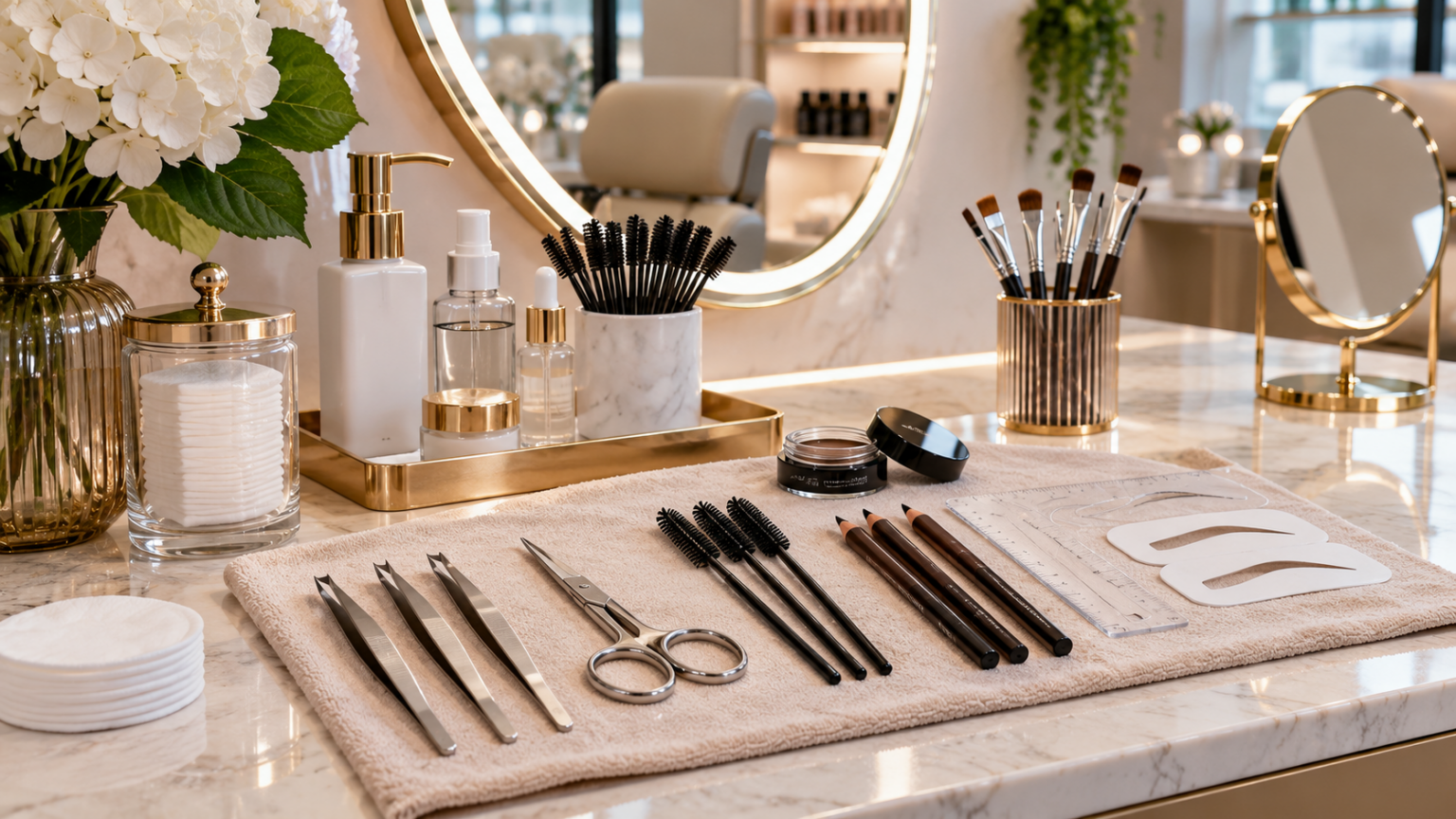
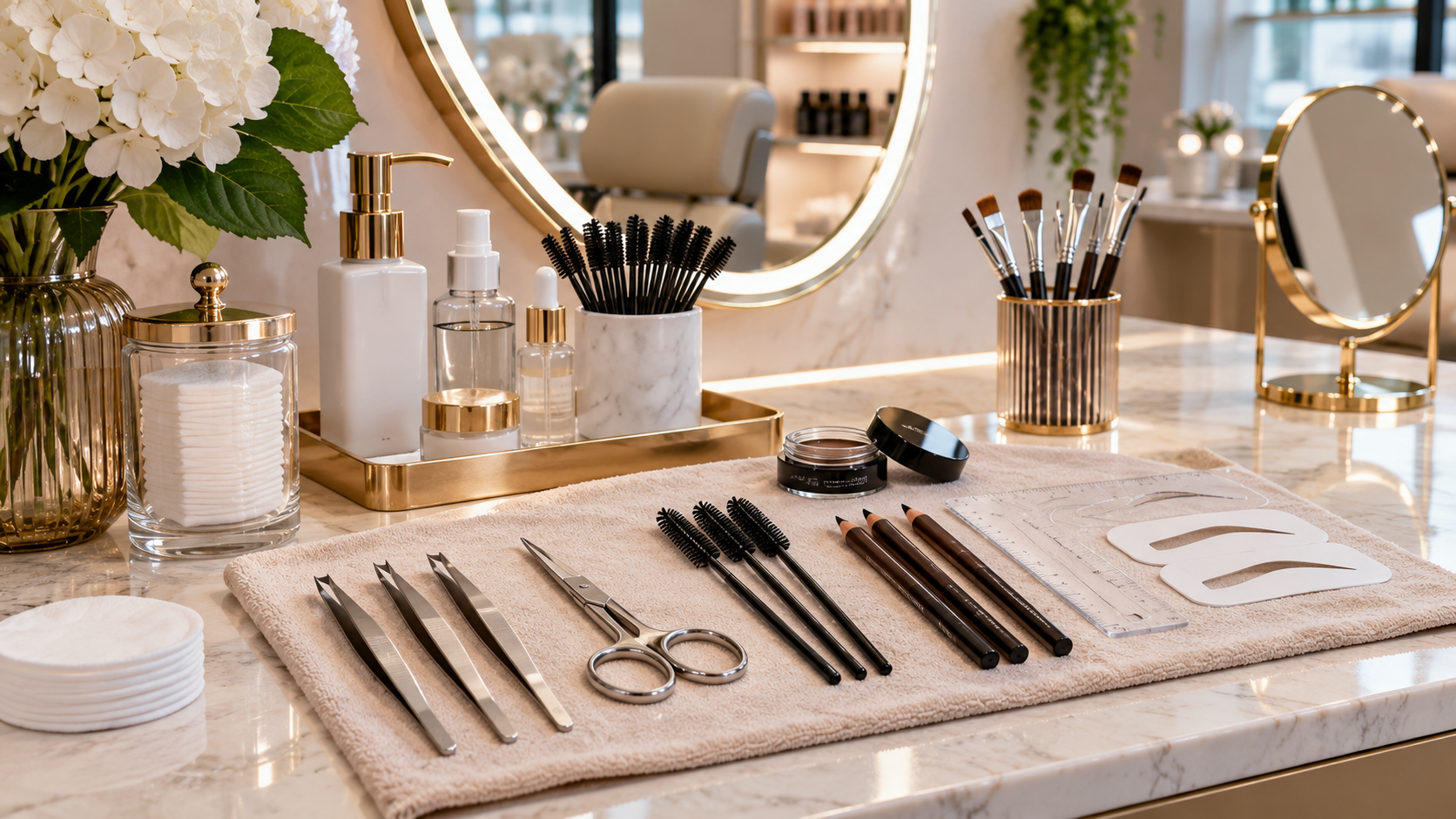
A professional brow kit may contain several different tools, each designed for a specific stage of grooming or makeup application.
Understanding Eyebrow tools most recommended by brow artists helps beauty enthusiasts distinguish essential equipment from accessories that may not be necessary for everyday use.
High-quality tweezers, spoolie brushes, eyebrow scissors, and angled makeup brushes are often the foundation of a practical grooming routine. More specialized tools, including mapping rulers and cosmetic pencils, can assist professionals when planning detailed brow shapes.
In a 2025 Vogue guide, brow specialists and makeup artists highlighted slant-tip tweezers for their precision and ability to grip individual hairs. Vogue
This guide explores Eyebrow tools most recommended by brow artists, explains how each tool works, and provides practical advice for building a useful brow grooming collection while maintaining appropriate hygiene and safety.
1. Precision Tweezers for Professional Brow Shaping
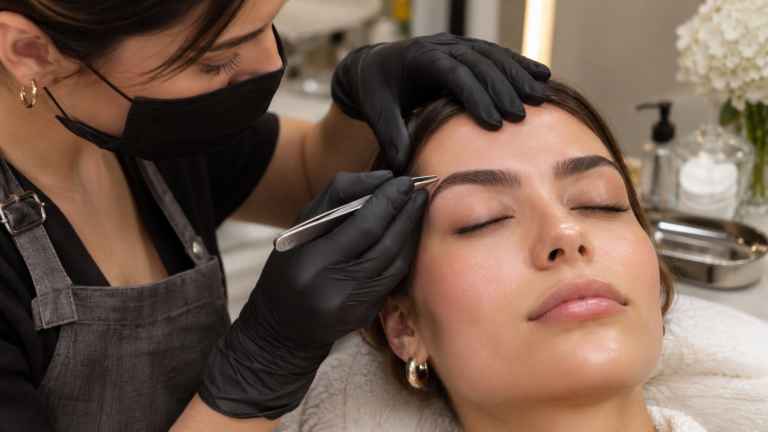
Tweezers are among the most recognizable tools used by eyebrow specialists. They allow individual hairs to be gripped and removed, helping create a cleaner outline without removing large sections of eyebrow hair.
For anyone exploring Eyebrow tools most recommended by brow artists, precision tweezers are an excellent place to begin.
Why Slant-Tip Tweezers Are Popular
Slant-tip tweezers feature an angled gripping edge designed for controlled hair removal.
Their shape makes them versatile for removing visible stray hairs along the brow boundary. When manufactured correctly, the tips should meet evenly and grip hairs securely without excessive pressure.
Brow stylist Sania Vucetaj and makeup artists interviewed by Vogue recommend well-made slant-tip tweezers for accurate shaping. Vogue
When Pointed Tweezers May Be Useful
Pointed tweezers provide a narrower contact area for specialized detail work.
However, the pointed tips require greater care because they can scratch or puncture the skin.
They should not be used to dig underneath the skin to extract embedded hairs.
Choosing a Quality Pair
Look for stainless-steel construction, correctly aligned tips, comfortable tension, and a secure grip.
A poorly made tweezer may slip repeatedly or break hairs instead of gripping them effectively.
The value of Eyebrow tools most recommended by brow artists comes from precision and control rather than decorative appearance or brand recognition alone.
Avoid Removing Too Much Hair
Work conservatively and check the overall shape frequently.
Excessive tweezing can create sparse areas that may take considerable time to grow back.
2. Spoolie Brushes for Natural-Looking Brows
A spoolie is a small spiral-shaped brush commonly used to groom eyebrows and blend cosmetic products.
Although inexpensive, it can make a considerable difference to the final appearance of styled brows.
Spoolies are consistently included in Eyebrow tools most recommended by brow artists because they perform several useful tasks.
Organize Brow Hairs Before Shaping
Brushing eyebrow hairs upward and outward helps reveal their natural length and direction.
This makes it easier to identify hairs that extend beyond the intended outline.
A clean spoolie can also help a brow artist evaluate the density and overall condition of the eyebrows before beginning grooming.
Blend Makeup for a Softer Finish
Eyebrow pencils, powders, and pomades may leave visible lines when applied heavily.
A spoolie helps distribute some products and soften the edges of makeup.
This can create a more natural appearance without removing the definition entirely.
Reusable Versus Disposable Spoolies
Reusable spoolies can be appropriate for individual personal grooming when cleaned according to the manufacturer’s instructions.
Professional salons may use disposable applicators to reduce the risk of transferring cosmetic products or contaminants between clients.
A major practical benefit of Eyebrow tools most recommended by brow artists is that several effective accessories are simple and affordable.
3. Small Brow Scissors for Careful Trimming
Some eyebrows contain longer hairs that extend beyond the surrounding natural brow shape.
Eyebrow scissors allow carefully selected hairs to be shortened without removing them from the follicle.
Small trimming scissors are another essential item among Eyebrow tools most recommended by brow artists.
Why Ordinary Household Scissors Are Not Ideal
Household scissors are usually too large for detailed work close to the eyebrow area.
Purpose-designed brow scissors feature compact blades and handles that can offer better control.
However, their sharp edges still require careful use.
How Professionals Approach Brow Trimming
A professional may brush the hairs into their natural position and identify only the longest strands.
Rather than cutting every hair to the same short length, the artist can make conservative adjustments to preserve a natural appearance.
In Allure’s eyebrow grooming guide, brow artists Sania Vucetaj and Robin Evans recommend brushing brow hairs upward and trimming only hairs that are especially long or unruly. Allure
Common Mistakes to Avoid
Trimming too much hair can produce a visibly uneven brow.
Cutting close to the skin may also create an uncomfortable or unsafe situation.
The trimming component of Eyebrow tools most recommended by brow artists is about maintaining the natural brow structure rather than attempting to create a completely new shape with scissors.
Prioritize Safety Near the Eyes
Use a stable mirror and sufficient lighting.
Never attempt eyebrow trimming in a moving vehicle or when your hands are unsteady.
If you are uncomfortable handling sharp tools near the eyes, arrange professional grooming instead.
4. Angled Eyebrow Brushes for Detailed Makeup
An angled brow brush helps apply eyebrow cosmetics precisely.
Its narrow, slanted bristles can be useful for working with suitable powders, creams, and pomades.
Professional makeup artists often use angled brushes when a client wants a defined shape with a controlled application.
This makes them an important part of Eyebrow tools most recommended by brow artists for makeup-focused services.
Create Controlled Definition
An angled brush can help add definition along the lower brow boundary or fill areas that appear sparse.
Applying small amounts of product allows the artist to build the color gradually.
Heavy application is not necessary for an attractive result.
Choose the Right Bristle Firmness
A brush with suitable firmness helps deposit product in a controlled area.
Extremely soft bristles may spread pigment too broadly, while excessively stiff bristles can feel uncomfortable.
Consider the type of makeup product you use most often when choosing a brush.
Consider Dual-Ended Designs
Some brushes combine an angled applicator on one side with a spoolie on the other.
This arrangement makes it convenient to apply product and blend it immediately afterward.
The angled brush demonstrates why Eyebrow tools most recommended by brow artists should be selected according to the technique rather than the size of the tool collection.
5. Brow Pencils for Filling Sparse Areas
Brow pencils are among the most accessible tools for everyday eyebrow makeup.
They are available in different tip shapes, textures, and colors.
Some produce soft shading, while others are designed for short, fine strokes.
Fine-Tip Mechanical Pencils
A fine-tip pencil can help create subtle strokes that resemble individual hairs.
This may be useful for filling small gaps without covering the entire brow in heavy pigment.
Traditional Sharpenable Pencils
Sharpenable brow pencils offer another option for controlled definition.
Their performance depends on the pencil formula, tip shape, and application pressure.
Selecting a Suitable Shade
Consider your natural brow color, hair color, skin undertone, and preferred makeup style.
For many people, a slightly softer shade produces a more natural result than an extremely dark pencil.
The makeup-related advantage of Eyebrow tools most recommended by brow artists is that controlled application allows the final look to remain balanced and personal.
Blend After Application
Use a clean spoolie to soften obvious pencil marks.
This helps create an integrated appearance instead of sharply drawn lines.
6. Brow Mapping Rulers and Pencils for Shape Planning
Eyebrow mapping is a method used to plan the intended shape before beginning certain grooming or professional beauty services.
The technique involves observing facial proportions, brow growth, and the desired beginning, arch, and tail positions.
Mapping accessories are among Eyebrow tools most recommended by brow artists for professionals who provide structured brow shaping.
Brow Measuring Rulers
A brow ruler can help compare reference points and approximate distances across the face.
It may assist with marking planned shaping boundaries.
However, human faces are naturally asymmetrical. A perfectly mathematical measurement does not always create the most flattering result.
Cosmetic Mapping Pencils
White or light-colored mapping pencils allow an artist to draw visible guidelines.
These markings help the professional and client review a proposed brow shape before any hair is removed.
Brow Mapping String
Some professionals use pre-inked cosmetic mapping string to establish reference lines.
The string is intended as a visual planning aid, not a replacement for careful assessment.
Understanding Facial Proportions
The starting point, arch, and tail can be evaluated using the person’s facial features and natural hair growth.
A 2026 brow-shaping guide from Toolsmith highlights the role of precision tweezers, scissors, spoolies, and measuring tools in professional brow planning. UK
The mapping process reinforces a central principle behind Eyebrow tools most recommended by brow artists: tools should support the artist’s judgment rather than force every client into the same shape.
7. Brow Stencils for Beginners
Eyebrow stencils provide a shaped opening through which makeup can be applied.
They are most useful as guides for makeup placement rather than templates for aggressively removing natural eyebrow hair.
For people new to brow styling, stencils offer a simple introduction to different eyebrow shapes.
Practice Different Looks
Stencils can help beginners experiment with a softer arch, a straighter brow, or a fuller appearance.
Their usefulness depends on whether the shape suits the user’s natural eyebrows.
Combine With Suitable Makeup
A stencil may be used with appropriate eyebrow powder or pencil products.
Remove the stencil carefully and blend the edges afterward.
Recognize Their Limitations
A template cannot account perfectly for every face shape, brow density, or natural asymmetry.
Stencils are therefore optional rather than essential.
When comparing Eyebrow tools most recommended by brow artists, beginners should prioritize the tools they will use regularly rather than purchasing every available accessory.
8. Brow Gel Applicators for Styling and Hold
Brow gels help maintain the direction of eyebrow hairs and may provide clear or tinted definition.
A suitable applicator can help distribute the product evenly.
Clear Brow Gels
Clear gels are often used to hold naturally groomed hairs in place without adding substantial color.
They can be useful for people who want a minimal makeup routine.
Tinted Brow Gels
Tinted formulas may add subtle color and make individual eyebrow hairs more noticeable.
The effect depends on the product’s pigmentation and applicator design.
Application Control
Using too much gel may create visible buildup or make hairs feel overly stiff.
Start with a small amount and add more only if needed.
The styling accessories within Eyebrow tools most recommended by brow artists are useful because they can support a polished appearance without requiring extensive makeup.
9. Professional Sanitation and Disposable Accessories
Professional eyebrow services require suitable sanitation practices.
Tools used repeatedly across different clients can carry contamination if they are not cleaned and disinfected correctly.
A professional workstation may therefore include disposable spoolies, applicators, clean storage containers, and appropriate tool sanitation supplies.
Separate Clean and Used Equipment
Salon professionals should maintain a clear distinction between prepared tools and items that have already been used.
Reusable equipment must be handled according to applicable regulations and manufacturer instructions.
Use Single-Use Products Correctly
Disposable applicators should not be reused between clients.
Avoid returning a used applicator to a shared cosmetic container.
Understand the Risks of Chemical Brow Services
Eyebrow tinting and certain professional treatments require specialized knowledge and regulated products.
The FDA states that eyebrow and eyelash dyes can cause serious eye injuries. In the United States, silver nitrate is permitted for certain professional-use eyebrow and eyelash coloring cosmetics only under specific regulatory restrictions. The FDA advises consumers not to dye or tint their eyebrows at home. FDA+1
The safety requirements associated with Eyebrow tools most recommended by brow artists are important because owning professional equipment does not automatically make someone qualified to perform chemical or invasive treatments.
10. Build a Practical Kit for Home or Salon Use
A professional brow artist and a beginner grooming their eyebrows at home do not necessarily need the same equipment.
The best approach is to begin with a few reliable essentials and add specialized tools only when they serve a specific purpose.
For home grooming, a quality pair of tweezers, a spoolie, and an optional angled brush or brow pencil may provide everything necessary for routine maintenance.
Professional artists offering additional services may require mapping equipment, disposable applicators, multiple brush types, and specialist products permitted for their services.
The key to selecting Eyebrow tools most recommended by brow artists is understanding how each item contributes to safer, more accurate grooming.
Essential Tool Comparison
| Eyebrow tool | Main purpose | Suitable for |
|---|---|---|
| Slant-tip tweezers | Removing individual stray hairs | Beginners and professionals |
| Pointed tweezers | Specialized detail work | Experienced users |
| Spoolie brush | Brushing and blending | Everyone |
| Eyebrow scissors | Carefully trimming long hairs | Confident users and professionals |
| Angled brow brush | Applying powders and pomades | Makeup users and professionals |
| Fine-tip brow pencil | Adding natural-looking definition | Beginners and professionals |
| Mapping ruler | Planning brow proportions | Professional shaping |
| Mapping pencil | Marking proposed outlines | Professional shaping |
| Eyebrow stencils | Guiding makeup application | Beginners |
| Brow gel applicator | Styling hairs and adding hold | Everyday makeup users |
| Disposable applicators | Hygienic single-use application | Professional salons |
How to Choose Quality Brow Equipment
When purchasing eyebrow tools, prioritize functionality over the number of pieces included in a kit.
Tweezers should have accurately aligned tips and comfortable tension. Scissors should be small enough for detailed grooming and easy to handle without losing control.
Brushes should have appropriately shaped bristles, secure handles, and construction suitable for their intended cleaning procedures.
Before purchasing, also consider how often you will use the tool and whether it requires specialized training.
For example, a casual makeup user may not need mapping calipers or elaborate salon equipment.
For professionals, reliable equipment can improve consistency, but technique, experience, hygiene, and client communication remain equally important.
Common Eyebrow Grooming Mistakes to Avoid
Even well-made tools can cause disappointing results when used incorrectly.
Removing too many hairs is one of the most common mistakes. Brows may become uneven, and repeated excessive plucking can sometimes contribute to persistent thinning.
Another mistake is trimming every hair to the same short length. This can create gaps once the remaining hairs settle into their natural growth direction.
Using dirty applicators, sharing cosmetics, applying unsuitable products near the eyes, and attempting chemical procedures without proper qualifications can also create unnecessary risks.
People with irritated or injured skin should avoid grooming the affected area until it has been appropriately assessed or healed.
The greatest benefit of Eyebrow tools most recommended by brow artists is not simply achieving a sharper brow outline. It is making the grooming process more controlled, consistent, and appropriate for the individual.
Frequently Asked Questions
What eyebrow tools do professional brow artists use most often?
Common tools include precision slant-tip tweezers, spoolie brushes, eyebrow scissors, angled makeup brushes, brow pencils, and mapping accessories. The exact selection depends on the services offered.
Are expensive eyebrow tweezers worth buying?
High-quality tweezers may provide better alignment, grip, and durability, but price alone does not guarantee performance. Choose a pair that feels comfortable and grips hairs securely.
What is the best eyebrow tool for beginners?
A clean spoolie and well-aligned slant-tip tweezers are useful starting points. A fine-tip brow pencil can provide definition without removing natural hairs.
Should eyebrow hairs be trimmed or tweezed?
The techniques serve different purposes. Trimming shortens long hairs, while tweezing removes individual hairs from the follicle. Neither should be performed excessively.
Are eyebrow mapping tools necessary for a natural look?
No. Mapping tools may help professionals plan a shape, but simple everyday grooming does not usually require measuring rulers, strings, or calipers.
How should eyebrow grooming tools be cleaned?
Follow the tool manufacturer’s instructions. Reusable brushes and metal tools require suitable cleaning, while professional salon equipment must also meet applicable disinfection rules. Single-use applicators should be discarded after use.
Conclusion
Beautifully groomed eyebrows depend on careful technique, suitable tools, and an understanding of each person’s natural facial features.
Precision tweezers help refine the shape, spoolie brushes organize and blend hairs, scissors allow controlled trimming, and angled brushes and pencils support cosmetic definition.
Professional brow artists may also use mapping accessories and specialized applicators when providing additional services.
Understanding Eyebrow tools most recommended by brow artists helps beginners build a simple grooming routine while allowing aspiring professionals to select equipment suited to their work.
The best tools are not necessarily the most expensive or elaborate. They are those that provide control, comfortable handling, reliable performance, and appropriate hygiene.
By focusing on quality rather than quantity, eyebrow enthusiasts can achieve natural-looking results while reducing unnecessary grooming mistakes.

Written by Twastia Editorial Team
Twastia Editorial Team shares practical insights about website design, SEO services, Google Ads, content marketing, social media, conversion rate optimization, and digital marketing strategy.
Last updated: Nov 7, 2026
Related posts from Twastia
Explore more useful articles from twastia.com about digital marketing, SEO, websites, ads, content, and growth strategy.