Laundry Room Design Tips: Best 6 Ways to Create a Space You’ll Love
The laundry room might not be the most exciting part of your home, but it is one of the most […]
The laundry room might not be the most exciting part of your home, but it is one of the most frequently used. Between sorting clothes, washing bedding, drying towels, and folding everyday essentials, a poorly organized laundry area can quickly become frustrating.
Fortunately, transforming this space does not always require an expensive renovation. With the right laundry room design tips, even a small utility room or hallway laundry closet can become more functional, organized, and visually appealing.
The secret is to combine practical features with thoughtful design. Instead of focusing only on decorative cabinets or attractive countertops, consider how you move through the space, where supplies belong, and what would make laundry easier.
Here are six practical ways to create a laundry room that works for your household and feels like a natural extension of your home’s interior.
1. Start With a Practical and Efficient Layout
Before choosing paint colors or purchasing storage containers, evaluate the layout of your laundry room.
An efficient arrangement makes it easier to transfer clothes between appliances, organize loads, and complete everyday tasks without unnecessary movement.
One of the most valuable laundry room design tips is to arrange the space according to your actual laundry routine.
Choose the Right Washer and Dryer Arrangement
Your appliance configuration will influence how much usable space remains.
Common options include placing the washer and dryer side by side, stacking compatible units, or using an all-in-one washer-dryer combination where appropriate.
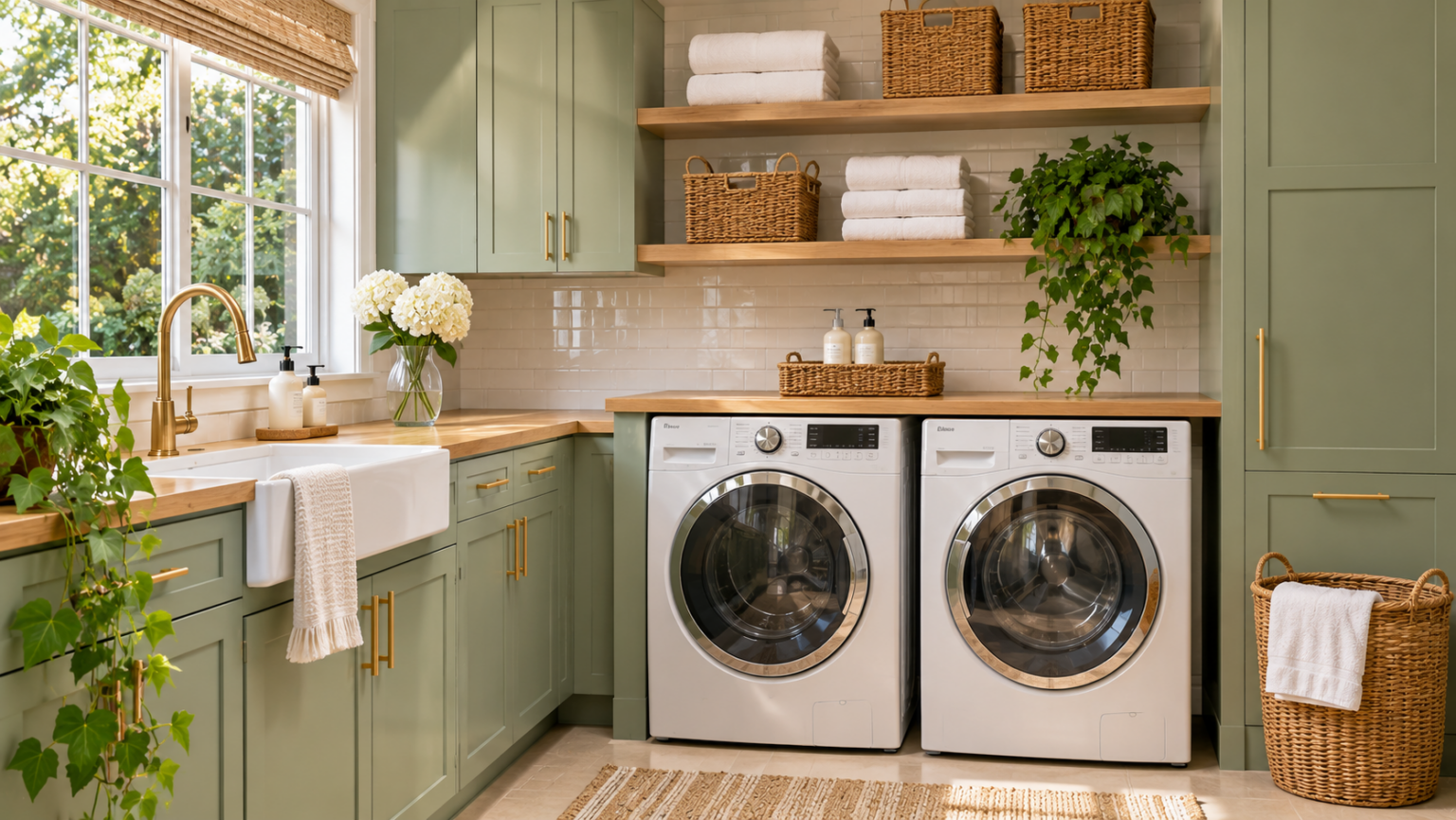
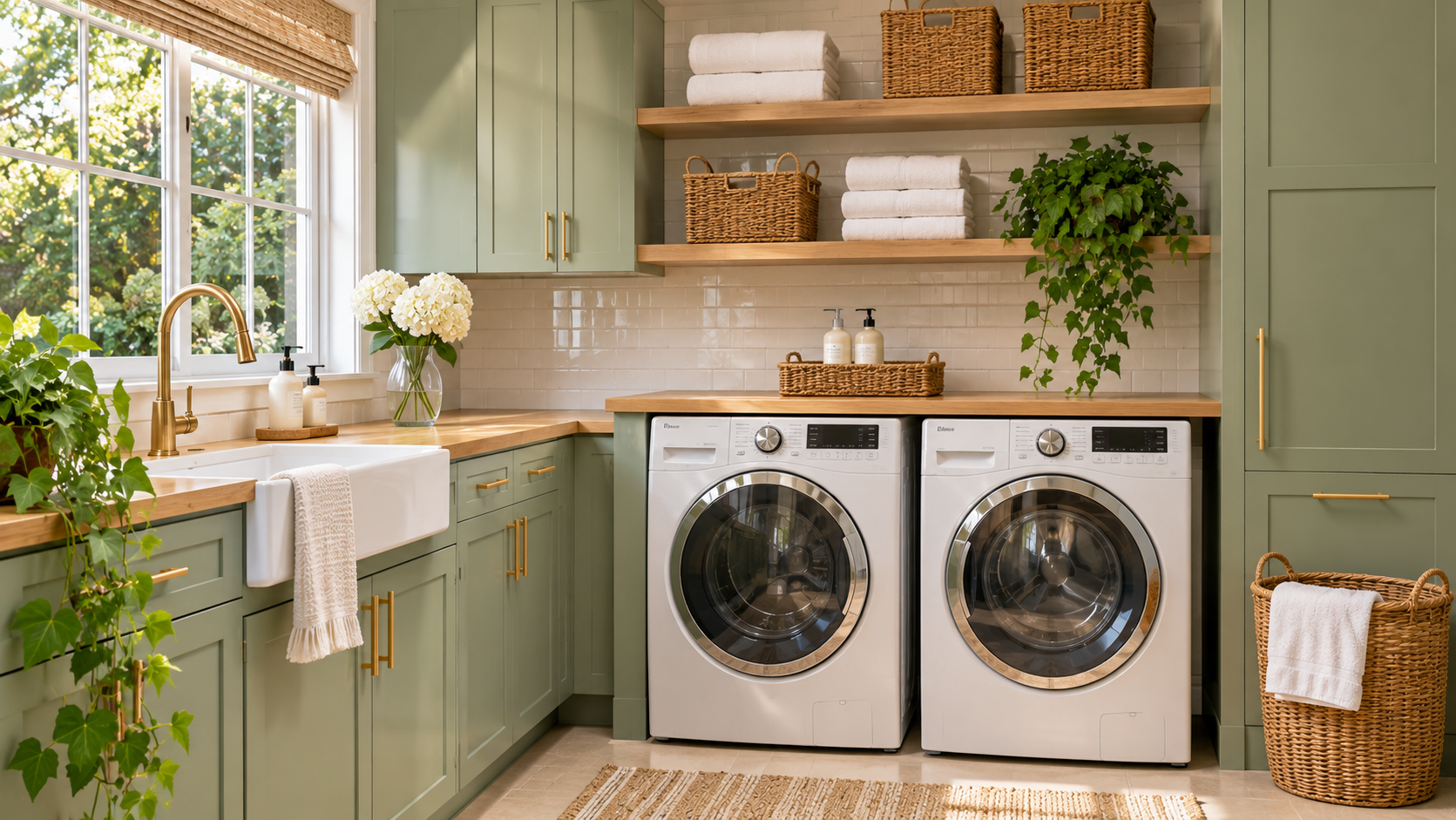
Side-by-side appliances are convenient when you want a continuous countertop for folding clothes. They generally require more horizontal space but can provide a comfortable working surface.
Stacked appliances can free up valuable floor space in smaller laundry rooms. However, the washer and dryer must be approved for stacking, and the correct manufacturer-specified stacking kit should be used.
An all-in-one unit may suit a particularly compact home, although wash and dry capacities, cycle times, and installation requirements vary.
Measure Before Installing Anything
Record the width, height, and depth of your available space, including door openings and nearby fixtures.
Allow for the manufacturer’s required ventilation, service access, hoses, electrical connections, and door-swing clearance.
When considering laundry room design tips, avoid designing cabinetry so tightly around the appliances that maintenance becomes difficult.
Create an Easy Workflow
Try to provide a natural sequence: collect dirty clothes, sort laundry, wash, dry, fold, and put everything away.
Keep frequently used supplies within convenient reach, while reserving less accessible storage for occasional-use items.
The best layout reduces unnecessary steps without making the room feel overcrowded.
2. Maximize Storage Without Creating Clutter
Laundry rooms often collect more than dirty clothes.
Detergents, cleaning products, reusable bags, spare towels, ironing supplies, and household essentials can quickly fill cabinets and countertops.
Smart storage is therefore one of the most practical laundry room design tips for homeowners looking to improve both functionality and appearance.
Use Wall Cabinets and Vertical Shelving
When floor space is limited, look upward.
Wall-mounted cabinets can provide concealed storage for laundry products and cleaning supplies. Open shelving can display folded towels, baskets, and decorative accessories.
A combination of closed and open storage often works better than either option alone.
Closed cabinets hide visual clutter, while accessible shelving keeps frequently used, nonhazardous items within reach.
Add Pull-Out Organizers
Narrow spaces beside appliances can sometimes accommodate purpose-built pull-out shelves or organizers.
These are useful for laundry accessories and other appropriate supplies, provided they do not block ventilation, connections, or service access.
Choose storage products that fit your available dimensions and can safely support their intended contents.
Use Baskets to Organize Laundry
Separate baskets can help organize whites, dark clothing, towels, and delicate items.
Choose baskets that fit under shelves or within cabinets rather than leaving them scattered across the floor.
Among the easiest laundry room design tips to implement is giving every item a designated place.
Keep detergents, pods, bleach, and other hazardous cleaning products in their original containers and secured out of children’s and pets’ reach. Decorative containers should never compromise product identification or safety.
3. Create a Convenient Folding and Sorting Station
Folding clothes on a bed or dining table can turn laundry into an unnecessarily complicated activity.
A dedicated folding area helps keep clean clothing organized and prevents unfinished piles from spreading throughout the house.
Adding a practical folding surface is one of those laundry room design tips that can make an immediate difference in everyday convenience.
Install a Countertop Above Your Appliances
If you have compatible front-loading appliances positioned side by side, consider adding a countertop above them.
Wood, laminate, and properly supported engineered surfaces are common design choices.
The countertop should be installed with the required clearances and without transferring inappropriate weight or vibrations to the machines.
A properly designed surface gives you room to fold clothes, organize clean loads, and temporarily place laundry baskets.
Consider Fold-Down Work Surfaces
For narrow laundry rooms, a wall-mounted folding table may be more practical than permanent cabinetry.
When not in use, the surface can fold away to preserve movement space.
Make sure the table is securely installed and rated for the loads you intend to place on it.
Include a Hanging and Drying Area
Some garments should not go into a tumble dryer.
A retractable clothesline, wall-mounted drying rack, or hanging rail can make air-drying easier.
For homeowners exploring laundry room design tips, these simple additions can reduce clutter and provide a dedicated place for delicate clothing.
Avoid placing wet garments where dripping water could damage electrical equipment, cabinetry, or flooring.
4. Improve Lighting and Ventilation
Laundry tasks involve inspecting stains, reading care labels, sorting colors, and working around water and electrical appliances.
Good lighting and proper ventilation can make these activities more comfortable and safer.
Unfortunately, both are frequently overlooked during renovations.
Combine Natural and Artificial Lighting
Natural daylight can make a utility space feel larger and more welcoming.
If your laundry room has a window, avoid blocking it with oversized cabinets or unnecessary shelving.
For artificial lighting, consider bright general illumination supplemented by suitable task lighting above countertops or sinks.
LED fixtures can offer efficient lighting, while moisture-appropriate products should be chosen where exposure is possible.
Thoughtful lighting belongs among the most useful laundry room design tips because it improves visibility without requiring a complicated redesign.
Pay Attention to Moisture Control
Washing and drying activities can contribute moisture to a room, particularly when ventilation is inadequate or leaks go unnoticed.
The U.S. Environmental Protection Agency recommends keeping indoor relative humidity below 60%, ideally around 30%–50%, to help control moisture and mold. US EPA
Inspect washing-machine hoses, drain connections, walls, and floors for leaks or recurring condensation.
Use suitable ventilation or dehumidification when necessary.
Keep Dryer Venting Safe
Conventional vented dryers must exhaust according to the appliance manufacturer’s instructions and applicable codes.
The U.S. Consumer Product Safety Commission warns that lint accumulation and restricted exhaust ducts can contribute to dryer fires. It recommends cleaning lint screens and maintaining appropriate dryer venting. Overheated Clothes Dryers SAfety Alert
Ventless heat-pump dryers work differently and generally do not require an exterior exhaust duct, but they still need suitable installation conditions, filter maintenance, and a way to handle condensed water. ENERGY STAR
These safety considerations should remain a priority when applying laundry room design tips.
5. Choose Durable Materials and Attractive Finishes
A laundry room should look appealing, but it also needs materials capable of handling occasional splashes, detergent spills, and regular cleaning.
The right finishes can create a coordinated design without sacrificing practicality.
Select Moisture-Resistant Flooring
Porcelain and ceramic tiles are popular laundry room flooring options because they are relatively easy to clean and available in numerous styles.
Some properly specified luxury vinyl flooring products may also be suitable, depending on installation conditions.
Whatever material you choose, consider slip resistance, water exposure, maintenance, and the condition of the subfloor.
For long-term performance, avoid assuming a waterproof floor covering makes the entire floor assembly waterproof.
Use a Coordinated Color Palette
Neutral shades such as cream, white, pale gray, and soft beige can make compact rooms feel open and bright.
For more personality, consider sage-green cabinets, muted blue walls, or a subtle patterned tile backsplash.
The most effective laundry room design tips balance decorative features with a timeless foundation.
You can introduce stronger colors through baskets, artwork, cabinet handles, or washable accessories rather than changing every permanent surface.
Add Small Decorative Details
Laundry rooms deserve the same attention to detail as kitchens and bathrooms.
Matching cabinet hardware, a framed print placed away from moisture, attractive storage baskets, or a small plant can create a more inviting atmosphere.
However, avoid decorations that block appliance ventilation, interfere with service access, or introduce combustible clutter near the dryer.
The goal is a room that feels finished without becoming difficult to maintain.
6. Make the Space Energy-Efficient and Easy to Maintain
A stylish laundry room becomes more valuable when it supports efficient everyday operation.
Choosing suitable appliances and creating manageable cleaning routines can improve convenience and potentially reduce utility expenses.
One of the most practical laundry room design tips is to think about ongoing operating costs before investing in new equipment.
Consider Energy-Efficient Appliances
When replacing a washer or dryer, look for models with appropriate energy-efficiency certifications and capacities.
ENERGY STAR notes that certified dryers use features such as moisture sensing to reduce unnecessary drying. It also provides guidance on comparing drum sizes, energy ratings, and heat-pump dryer options. ENERGY STAR
A larger appliance is not automatically better. Choose equipment that fits your usual load sizes and available installation space.
Make Everyday Maintenance Easier
Keep the lint screen accessible and clean it according to the manufacturer’s instructions, generally after every drying load.
Check the dryer exhaust system periodically and arrange professional cleaning or service when appropriate.
Inspect hoses and water connections for signs of leaks, and avoid storing boxes or other combustible materials against the dryer.
Build a Simple Maintenance Routine
A practical laundry room maintenance schedule might include checking the floor for standing water, cleaning countertop surfaces, inspecting appliance connections, and reviewing filters and vents.
These routine tasks help preserve your improvements and make potential problems easier to identify.
For households following laundry room design tips, choosing accessible storage and easy-to-clean finishes can make maintenance considerably less frustrating.
How to Improve a Laundry Room on a Budget
Not every laundry room needs custom cabinetry or expensive appliances.
Start with the changes that will make the greatest difference to your routine.
A fresh coat of suitable paint, a few carefully placed shelves, better lighting, or more practical sorting baskets can improve a room without major remodeling.
Prioritize functional problems before decorative upgrades.
For example, inadequate storage may be more frustrating than an outdated backsplash. Similarly, an inconvenient folding area might deserve attention before replacing cabinet handles.
When reviewing laundry room design tips, separate projects into essential repairs, functional improvements, and optional decoration.
That approach helps you control costs while still making visible progress.
Common Laundry Room Design Mistakes to Avoid
One frequent mistake is choosing appliances before measuring doorways and available space.
Another is filling every wall with cabinets without considering ventilation, access, or comfortable movement.
Some homeowners also prioritize appearance over practical features such as lighting, moisture protection, and storage.
Avoid creating a beautiful room where opening a cabinet blocks the washer door or removing the dryer for service requires dismantling permanent cabinetry.
The smartest laundry room design tips account for how the room functions during a busy week, not merely how it looks in photographs.
Frequently Asked Questions
How can I make a small laundry room look bigger?
Use light colors, vertical storage, coordinated cabinetry, and uncluttered countertops.
Stacked appliances may help save floor space when the manufacturer permits that arrangement.
What is the best flooring for a laundry room?
Porcelain or ceramic tile is often a practical choice because it is durable and relatively easy to clean.
The best option depends on moisture exposure, installation requirements, budget, and maintenance preferences.
Should I install cabinets or open shelves?
A combination often works well.
Cabinets provide secure concealed storage, while open shelves are useful for folded towels and decorative items.
Keep hazardous laundry products inaccessible to children and pets.
Is a utility sink necessary?
No, but it can be helpful for handwashing garments, treating stains, and handling certain cleaning tasks.
Consider whether you have enough space and whether additional plumbing costs are justified.
How can I improve laundry room ventilation?
Ensure that the dryer is installed and vented according to its manufacturer requirements, control excessive humidity, and address moisture problems.
The correct ventilation approach depends on the appliances and the room’s design.
What is the most important feature of a functional laundry room?
An efficient layout is a strong starting point because it influences movement, storage, appliance access, and daily convenience.
However, the best laundry room design tips also consider safety, moisture control, and proper maintenance.
Conclusion
A great laundry room does not need to be enormous or luxurious. It needs to make everyday household tasks easier while providing an organized and comfortable environment.
Start with a practical layout, maximize storage, create a folding station, improve lighting and ventilation, choose durable finishes, and consider efficient appliances.
By applying these six laundry room design tips, you can transform an overlooked utility area into a space that feels more inviting and works better for your household.
The best laundry room is not necessarily the one with the most expensive cabinets or the trendiest design. It is the one that fits your routine, supports safe appliance use, and makes laundry day a little more manageable.

Written by Twastia Editorial Team
Twastia Editorial Team shares practical insights about website design, SEO services, Google Ads, content marketing, social media, conversion rate optimization, and digital marketing strategy.
Last updated: Nov 10, 2026
Related posts from Twastia
Explore more useful articles from twastia.com about digital marketing, SEO, websites, ads, content, and growth strategy.