How Do You Test Social Media Ad Creative Without Producing Videos?
Every advertiser has heard that creative testing matters. Fewer have the budget to produce ten finished videos before knowing which […]
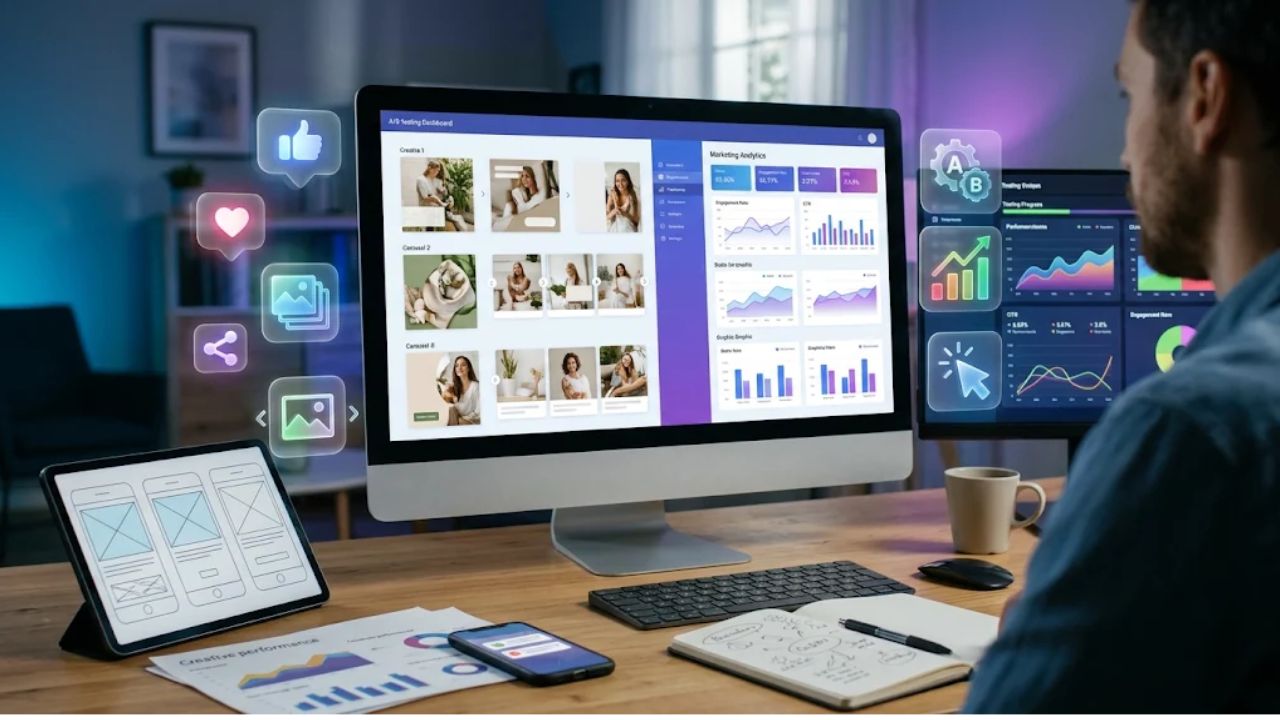
Every advertiser has heard that creative testing matters. Fewer have the budget to produce ten finished videos before knowing which idea works.
So most teams make one ad, run it, and learn almost nothing. If it fails, was it the hook, the visual, the offer, or the format? One video cannot tell you.
The way out is to separate testing the idea from producing the video. Here is how that works in practice.
Why Most Ad Tests Teach You Nothing
A test only teaches something if it isolates a single change. Most do not.
- Two ads differ in the hook, the footage, the music, and the length at once
- Each version costs so much to make that only two get built
- Budget gets split too thinly to reach a clear result
- The winner cannot be explained, so it cannot be repeated
The fix is cheaper variants, not a bigger production budget.
Build Variants From One Concept
Every ad starts as one concept, such as a product, an offer, and a promise. The variants are different ways of presenting it.
With the best ai video generator for the job, a single product photo becomes several short clips, each changing one element while everything else stays fixed. That turns a shoot you could not afford into an afternoon of generating.
Start With a Still
A strong product photograph is the best raw material. Animating it keeps your real product in the frame, which matters because the ad has to match what arrives at the door.
Change One Variable
Pick the element you want to learn about and hold the rest steady.
- Hook, meaning the first line or movement in the opening seconds
- Visual, such as a slow push in versus a rotation
- Setting, meaning a studio backdrop versus a lifestyle scene
- Format, meaning vertical, square, or widescreen
- Call to action, such as a different closing line
A Simple Test Matrix
Keep the first round small enough to read.
- Take one product photograph
- Generate three clips with three different opening movements
- Export each in vertical and square
- That gives six ads, all sharing the same offer and copy
Six variants from one photograph is a manageable test. Ten finished productions is not.
What the Full Workspace Offers
Variants only help if making them is fast, and single-purpose tools slow that down, whereas ImagineArt keeps images, video, editing, and export in one workspace.
Models
ImagineArt runs around forty models, so each variant can use the engine that suits it.
- Video engines including Runway, Veo, Kling, Seedance, and Gemini Omni Flash
- Image engines including Nano Banana, Flux, Seedream, Recraft, and Ideogram
- Image to video, which animates a product photograph into a short clip
- Brand kits that store colours and logos so every variant looks consistent
Studios
Four purpose-built workspaces cover specific jobs.
- Ad Studio turns a product into ready-to-run video ads, built for exactly this kind of testing
- Film Studio directs longer sequences scene by scene
- Fashion Studio styles models, outfits, and scenes for apparel
- Audio Studio handles voiceover, sound, and lip sync
Apps and Integrations
A desktop app, a browser extension, and plugins let a marketer work where they already are. An MCP server and an API suit teams that want variant generation inside their own tools.
Editing and Finishing
Winning variants usually need a clean-up before they get real budget.
- Remove clutter or an unwanted object from the shot
- Replace or tidy the background
- Relight a dim product photograph
- Upscale the winner to 4K before scaling spend
Reading the Results
- Judge by cost per result, not by likes or comments
- Let each variant gather enough spend before calling it
- Cut clear losers early and keep the budget on contenders
- Rebuild the winner at higher quality once the idea is proven
What Not to Fake
Testing is not permission to mislead, and platforms review ads closely.
- Show only what the product genuinely does
- Do not present generated people as real customers or testimonials
- Do not generate recognisable real people without their consent
- Follow each platform’s rules on labelling generated content
- Remember clips run around ten seconds, and first attempts are often wrong
Conclusion
Testing ad creative stops being expensive once the idea and the production are separated. Start with one concept and one strong photograph, change a single variable per clip, and read the results by cost per result. ImagineArt suits that routine because the video and image models, Ad Studio, the editing tools, and the desktop and extension apps sit in one place, so a small team can build six variants in an afternoon and spend real budget only on the winner. Start with the free daily credits, take your best product photograph, and build your first test matrix this week.
Frequently Asked Questions
How many ad variants should you test at once?
Start with a small number you can read clearly, such as four to six, changing one element at a time. More variants dilute the budget and make results harder to interpret.
Can you run AI generated video as paid social ads?
Yes, with normal care. Claims must match what the product does, and each platform has its own rules on generated content and disclosure.
What should you change first when testing a video ad?
The hook, meaning the opening seconds. It decides whether anyone keeps watching, so it usually moves results more than any other single element.

Written by Twastia Editorial Team
Twastia Editorial Team shares practical insights about website design, SEO services, Google Ads, content marketing, social media, conversion rate optimization, and digital marketing strategy.
Last updated: Nov 19, 2026
Related posts from Twastia
Explore more useful articles from twastia.com about digital marketing, SEO, websites, ads, content, and growth strategy.