When Growing Businesses Need Stronger Expense Controls
Your growing business needs stronger expense controls when finance can’t reliably check expenses or enforce approvals within its usual reporting […]

Your growing business needs stronger expense controls when finance can’t reliably check expenses or enforce approvals within its usual reporting cycle. A simple expense management process can work for one team, but each separate entity has its own tax and record-keeping obligations. Australian business expense claims also need records to back them up. As volume increases, use an expense manager to standardise receipt requirements, coding rules, and approval paths before claims reach finance.
The breaking point is a recurring control failure
Manual handling becomes unreliable when routine claims require reconstruction before finance can check them. Growing transaction volumes make that harder to contain. A manager who could once check every receipt personally may start signing off batches without examining the supporting evidence.
Watch for reconciliation work that runs into the next reporting period. Pay attention to missing receipts and card charges with no clear owner, as well as approvals recorded only in private messages. Compare similar claims across managers to spot inconsistent decisions, such as one department accepting an expense that another rejects.
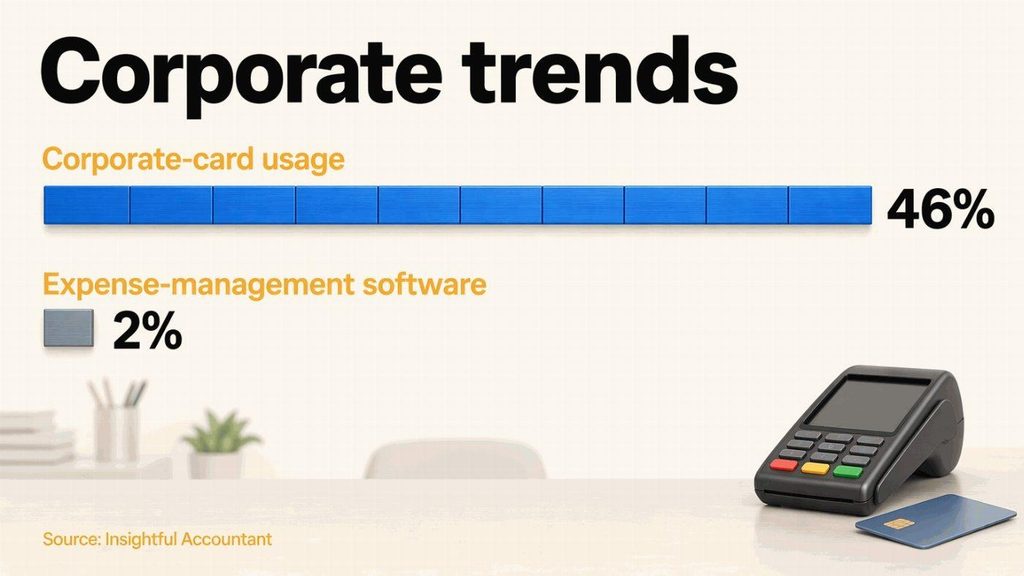
A 2024 corporate trends survey that Insightful Accountant reported found that 46% of respondents had increased corporate-card usage, while only 2% had increased their adoption of expense-management software. The findings show that adoption patterns differ; they don’t prove that increased card usage caused weaker controls.
Track where your own process gets stuck. Record how long claims sit with employees and approvers, and count evidence corrections separately from coding errors. Compare successive closes so you can distinguish a persistent bottleneck from a temporary absence or an unusually busy travel period.
When you assess business loan interest rate options, include planned repayments in your cash forecast alongside pending expense commitments. Your card statement won’t show reimbursement claims that are still sitting in an employee’s inbox.
What expense controls should a growing business put in place before spreadsheets stop working?
Put required evidence and coding fields in place before errors become routine, along with spending limits, approval thresholds, exception rules, and an audit trail. Name a finance policy owner, and make sure the person approving a reimbursement isn’t the person claiming the money.
Evidence and tax treatment
Set receipt requirements for employee expenses when they’re submitted. Require the supplier’s identity and transaction date. Capture the amount and tax details, then ask for the business purpose in a separate field. Employees should know what they’ll need to supply before incurring the expense.

Check the receipt fields you use for Australian claims against ATO tax invoice guidance, and set retention rules using its record-keeping guidance. Approval and tax treatment are separate decisions; a manager’s sign-off doesn’t replace missing tax evidence. Keep supporting records with the claim rather than in an employee’s mailbox.
Capture contextual details that finance needs, such as attendees for an entertainment expense. New Zealand entities need tax settings and evidence rules of their own. Don’t copy Australian GST or fringe benefits tax classifications into their workflows.
Authority and exceptions
Your spending limits define what someone may spend; your approval thresholds show who must authorise it. Base those thresholds on budget responsibility and expense risk rather than job title alone. A senior signature shouldn’t automatically make a prohibited expense type acceptable. Require a reason and an authorised exception decision for any claim that exceeds policy.

Use a controlled cost-center selection list rather than free text, and give finance responsibility for changes. Keep the original receipt attached to the claim, along with every approval. Your audit trail should keep the earlier value alongside the correction.
Match the workflow to your operating model
Choose controls that reflect budget ownership and the legal entity that incurred the cost. Workflows that span multiple departments need to route claims by organizational responsibility, while group operations also need records for each entity. You can keep the same claim form and use different approval paths.
| Operating model | Policy ownership | Approval routing | Control focus | Reporting needs |
|---|---|---|---|---|
| Single team | Named finance owner with a backup | Employee submits to an independent manager | Required evidence and a recorded exception path | Outstanding claims and spending by category |
| Multiple departments | Central policy owner with departmental budget owners | Department-based routing with escalation above approval thresholds | Shared coding rules and department-specific spending authority | Department spending against budgets and overdue approvals |
| Multi-entity operations | Entity finance owners overseen by group finance | Entity selection determines authorized approvers and escalation | Separate tax settings and entity-specific payment authority | Entity-level records alongside consolidated group reporting |
A shared finance team can handle claims across entities without owning every spending decision. Keep each entity’s authorised approver visible in the record, and preserve the underlying transactions when producing consolidated reports. Group totals shouldn’t obscure which entity incurred a particular expense.
How do I decide when my business needs a more formal expense management process?
You need a formal process when finance keeps having to repair claims or can’t establish who authorised an expense.
Treat a written process and a software purchase as separate decisions. A single team can use a fixed claim form and approval register as long as those records remain complete. Automated routing becomes more useful when changes across departments or delegated authority make that register hard to maintain.
Test your proposed workflow using a missing receipt and an absent manager. Add a case with the wrong entity for group operations. The process should stop an incomplete claim or route an exception to the responsible person, and show finance where the claim is waiting.
Require demonstrations using those cases rather than a clean sample claim. Check that the backup approver receives the task and the claimant can’t authorise their own reimbursement.
How can AI help with receipt matching and expense coding without slowing down approvals?
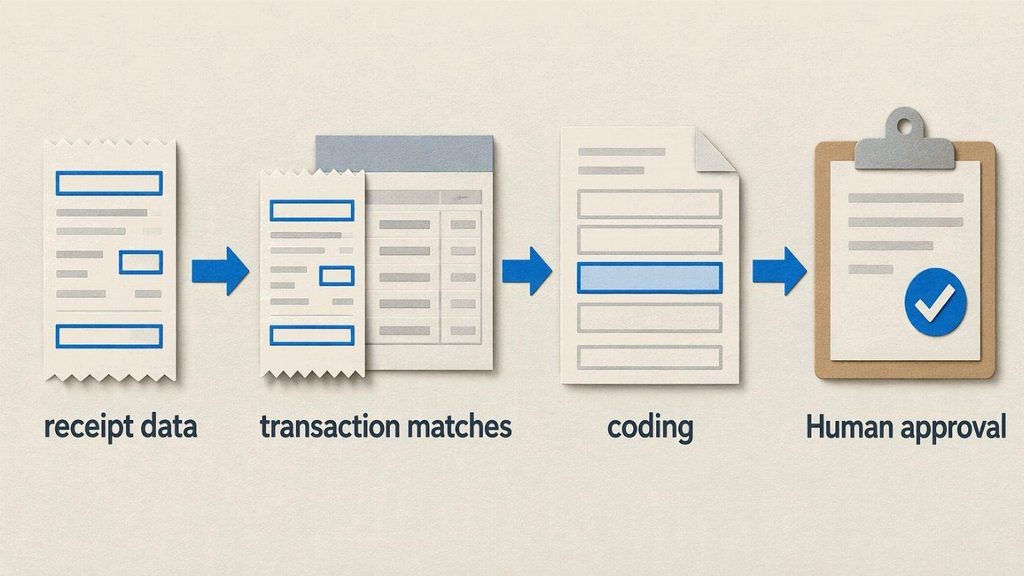
AI can read receipt data and suggest transaction matches. Policy rules suggest coding and send claims to the correct approver. Human approval stays separate; uncertain matches should enter an exception queue rather than delay approvals for every claim.
A 2024 KPMG global survey found that 71% of organizations use artificial intelligence to some degree in running their financial operations. The survey found that 41% use it to a moderate or large degree.
Optical character recognition, or OCR, converts receipt text into fields, so employees can check the details instead of typing them in again. Matching can compare the amount and transaction date while keeping the source receipt for the approver. Merchant-based rules can propose a category, while the employee supplies the business purpose.
Finance needs that context when similar purchases need different treatment. A restaurant receipt, for example, needs an explanation before finance can distinguish staff entertainment from another kind of business expense. Automation can gather that explanation at submission and display it beside the receipt.
Log corrected matches and coding overrides during your trial. Give finance responsibility for rule changes, and test them against previously approved claims. Keep ordinary claims on their assigned approval path while the named exception owner deals with unresolved items.
Test the controls before expanding them
Start with claims that required repair at your last close. A named policy owner should use those failures to build test cases for a limited pilot that includes a backup approver. Expand only when you have clear evidence that the proposed controls work in ordinary operating conditions. Your process should show who’s responsible without adding any approval layers that your spending decisions don’t require.

Written by Twastia Editorial Team
Twastia Editorial Team shares practical insights about website design, SEO services, Google Ads, content marketing, social media, conversion rate optimization, and digital marketing strategy.
Last updated: Nov 18, 2026
Related posts from Twastia
Explore more useful articles from twastia.com about digital marketing, SEO, websites, ads, content, and growth strategy.