Semurg AI Drug Discovery: Accelerating Generative Molecular Design Strategies
Developing novel pharmaceuticals remains an incredibly expensive and time-consuming endeavor. Traditional research methodologies struggle with staggering failure rates and massive […]
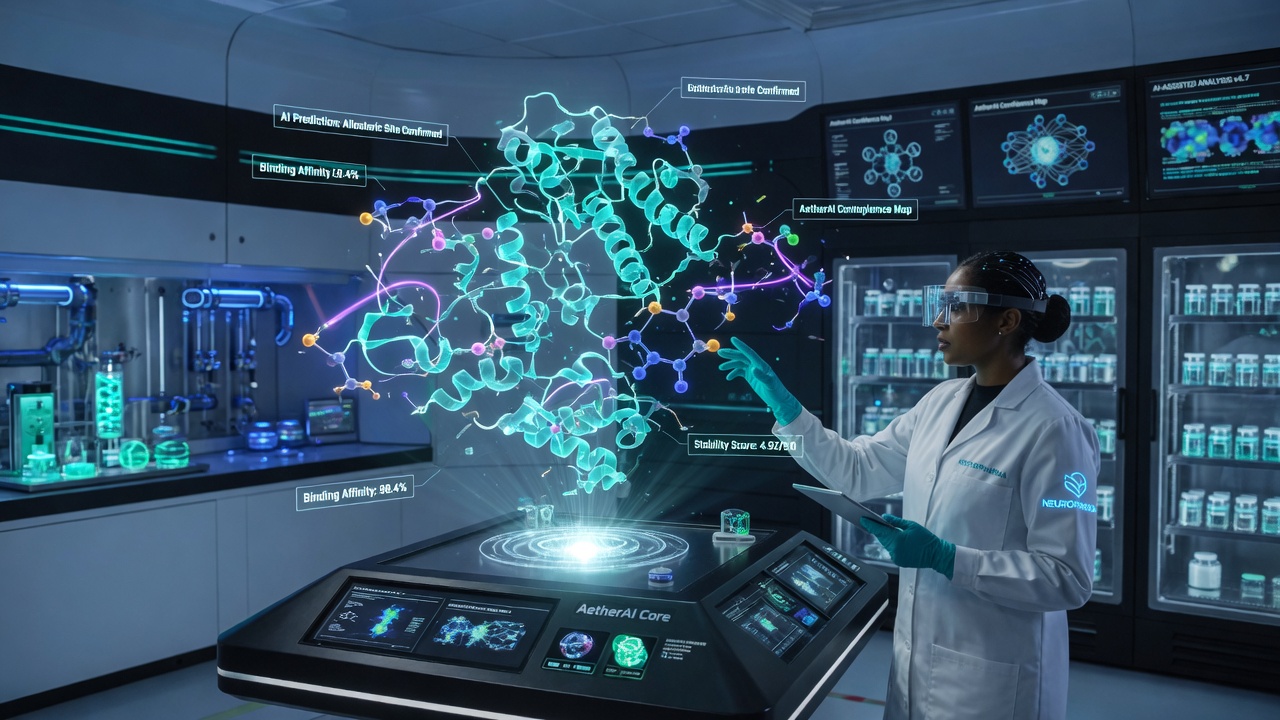
Developing novel pharmaceuticals remains an incredibly expensive and time-consuming endeavor. Traditional research methodologies struggle with staggering failure rates and massive financial risks. Therefore, the biotechnology sector desperately requires innovative paradigm shifts. This is exactly where Semurg AI transforms the entire drug discovery landscape. This pioneering platform leverages advanced generative artificial intelligence to design novel molecular structures. Furthermore, it optimizes lead compounds with unprecedented computational precision. Consequently, pharmaceutical companies accelerate preclinical timelines and slash research costs dramatically. In this comprehensive guide, we will explore the advanced tactics driving this revolutionary platform. Ultimately, understanding these computational strategies illuminates the future of intelligent pharmacology.
Semurg AI Drug Discovery: Revolutionizing Pharmaceutical Research
The traditional drug development pipeline suffers from severe systemic inefficiencies. Discovering a single new medication often requires over a decade and billions of dollars. Furthermore, approximately ninety percent of clinical candidates ultimately fail. Therefore, the industry demands a radically more efficient approach. Semurg AI provides this crucial efficiency by deploying sophisticated machine learning algorithms. These models analyze vast biological datasets to predict molecular behavior accurately. Consequently, researchers navigate the complex chemical space with targeted precision rather than blind trial and error.
Overcoming Traditional Drug Discovery Bottlenecks
Conventional high-throughput screening tests millions of compounds physically. This brute-force method requires immense robotic infrastructure and exhaustive time. Furthermore, it explores only a tiny fraction of the available chemical universe. Therefore, it frequently misses potentially therapeutic molecules. However, Semurg AI bypasses this bottleneck entirely using computational screening. The platform virtually evaluates billions of molecular structures in silico. It identifies promising candidates before scientists ever synthesize them physically. Consequently, laboratories focus their resources exclusively on high-probability candidates. As a result, the entire discovery pipeline accelerates exponentially. Ultimately, virtual screening democratizes access to vast chemical diversity.
The Power of Artificial Intelligence in Pharmacology
Artificial intelligence fundamentally alters how scientists approach molecular design. Instead of searching through existing chemical libraries, algorithms generate entirely new molecules. Therefore, researchers explore uncharted territories of chemical space. Semurg AI utilizes deep generative models to create novel structures from scratch. These models learn the intricate rules of chemical syntax and biological activity. Furthermore, they optimize multiple molecular properties simultaneously. Consequently, the generated compounds possess high potency and favorable safety profiles inherently. As a result, the starting point for medicinal chemistry improves drastically. Ultimately, generative AI empowers chemists to invent rather than merely discover.
Core Capabilities of the Semurg AI Platform
A robust artificial intelligence platform must integrate seamlessly across the discovery lifecycle. Therefore, isolated algorithms provide insufficient value. Semurg AI offers a comprehensive suite of computational tools. These modules span from initial target identification through late-stage lead optimization. Furthermore, they share data continuously to refine predictive accuracy. Consequently, pharmaceutical teams execute cohesive, data-driven research campaigns.
Advanced Target Identification and Validation
All drug discovery begins with selecting a biological target. Therefore, choosing the wrong protein dooms the entire project from the start. Semurg AI analyzes massive omics datasets to identify disease-driving mechanisms. It uncovers hidden correlations between genetic mutations and pathological phenotypes. Furthermore, the platform assesses target druggability using structural bioinformatics. It predicts whether a small molecule can effectively bind the active site. Consequently, researchers validate targets with rigorous computational evidence before committing resources. As a result, early-stage attrition rates plummet significantly. Ultimately, intelligent target selection anchors successful development programs.
Generative Chemistry for Novel Molecular Design
The flagship capability of the platform involves generative chemistry. Traditional medicinal chemistry modifies existing scaffolds incrementally. However, this approach often fails against complex undruggable targets. Semurg AI generates entirely novel molecular scaffolds that satisfy multiple constraints. The algorithm treats molecular design as a probabilistic optimization problem. It iteratively proposes new chemical structures and predicts their biological activity. Furthermore, it ensures the generated molecules are synthetically accessible. Consequently, chemists receive highly optimized, buildable designs directly from the software. As a result, innovation accelerates far beyond traditional human intuition. Ultimately, generative chemistry shatters the limitations of historical libraries.
Predictive ADMET Modeling for Lead Optimization
A molecule must survive the human body to deliver therapeutic benefit. Therefore, favorable ADMET properties prove absolutely critical. ADMET stands for Absorption, Distribution, Metabolism, Excretion, and Toxicity. Semurg AI integrates sophisticated predictive models for each parameter. The algorithms forecast hepatic clearance and plasma protein binding accurately. Furthermore, they flag potential cardiotoxicity or mutagenicity risks early. Consequently, researchers eliminate unsafe compounds before costly animal testing. As a result, clinical trial failures due to pharmacokinetic deficits decrease dramatically. Ultimately, multiparameter optimization ensures generated molecules survive biological gauntlets.
How Semurg AI Transforms Preclinical Development
Transitioning from computational design to physical reality demands rigorous validation. Therefore, the platform seamlessly integrates with laboratory information systems. This connection creates a closed-loop learning cycle. Algorithms generate hypotheses, and wet-lab experiments generate data. This data then feeds back to retrain the artificial intelligence models. Consequently, the system grows smarter with every experimental iteration.
Streamlining Hit-to-Lead and Lead Optimization Phases
The hit-to-lead transition requires optimizing thousands of chemical analogs. Therefore, traditional structure-activity relationship studies consume months of labor. Semurg AI accelerates this phase using active learning algorithms. The platform identifies the most informative molecules to synthesize next. It prioritizes compounds that maximize structural diversity and property improvement! Furthermore, it predicts synthetic routes using retrosynthetic analysis engines. Consequently, chemists synthesize the most impactful analogs rapidly. As a result, lead optimization campaigns converge on optimal candidates in weeks rather than years. Ultimately, intelligent experimental design eliminates wasteful synthesis.
Reducing Attrition Rates in Oncology and Complex Diseases
Oncology targets present uniquely challenging molecular surfaces. Therefore, designing selective inhibitors proves incredibly difficult. Traditional small molecules often lack the specificity required to avoid off-target toxicity. Semurg AI tackles this challenge by modeling complex protein dynamics. It simulates target flexibility and allosteric modulation precisely. Furthermore, it designs molecules that exploit subtle binding pocket nuances. Consequently, the generated inhibitors achieve exceptional selectivity against closely related isoforms. As a result, patients receive more efficacious treatments with fewer side effects. Ultimately, computational precision translates into clinical safety.
The Technology Behind Semurg AI Generative Models
The algorithmic architecture determines the quality of generated molecules. Therefore, Semurg AI employs state-of-the-art deep learning frameworks. These models transcend traditional quantitative structure-activity relationships. They capture highly nonlinear relationships between chemical structure and biological response. Furthermore, they operate directly on molecular graphs. Consequently, they avoid information loss associated with fingerprint descriptors.
Deep Learning Architectures for Molecular Generation
The platform utilizes variational autoencoders and generative adversarial networks. These architectures learn continuous latent representations of chemical space. Therefore, researchers smoothly interpolate between different molecular scaffolds. The models generate chemically valid graphs by enforcing valency and bonding rules. Furthermore, transformer architectures enable conditional generation based on target protein sequences. Consequently, the platform tailors molecular designs specifically for the intended biological receptor. As a result, hit rates for virtual screening campaigns skyrocket. Ultimately, advanced neural networks power intelligent molecular creativity.
Reinforcement Learning for Multi-Parameter Optimization
Drug design requires balancing competing objectives. Therefore, maximizing potency often compromises metabolic stability. Semurg AI resolves this tension using reinforcement learning. The algorithm treats molecular design as a sequential decision-making process. It receives rewards for improving desired properties and penalties for introducing flaws. Furthermore, it navigates Pareto fronts to identify optimal trade-offs. Consequently, the final candidates represent the absolute best achievable compromise. As a result, medicinal chemists receive perfectly balanced starting points for synthesis. Ultimately, reinforcement learning achieves simultaneous multiparameter excellence.
Integrating Semurg AI into Existing R&D Workflows
Software platforms must integrate smoothly into established corporate infrastructure. Therefore, disruptive technology requires seamless adoption pathways. Semurg AI offers flexible deployment options and robust application programming interfaces. It connects directly with electronic lab notebooks and corporate chemical registries. Furthermore, data scientists can access the models via Python software development kits. Consequently, pharmaceutical teams adopt the technology without overhauling their entire infrastructure.
Seamless Data Integration and Computational Biology
The platform ingests diverse data formats effortlessly. It processes internal assay data, public literature, and structural databases simultaneously. Furthermore, proprietary data pipelines sanitize and standardize heterogeneous information. This harmonization ensures the machine learning models train on high-quality inputs. Therefore, garbage in strictly produces garbage out is mitigated entirely. Consequently, predictive models maintain exceptional accuracy across diverse therapeutic areas. As a result, organizations leverage their historical data assets fully. Ultimately, seamless integration unlocks trapped institutional knowledge.
Collaborative Human-AI Iterative Design Cycles
Artificial intelligence will never replace human scientific intuition entirely. Therefore, the most productive workflows combine computational power with expert judgment. Semurg AI facilitates interactive design sessions where scientists guide the algorithms. Chemists sketch core scaffolds and define boundary conditions. The algorithm then populates the design space around these constraints. Furthermore, researchers accept or reject proposals, training the model in real-time. Consequently, the human and the algorithm collaborate synergistically. As a result, productivity surges beyond what either could achieve independently. Ultimately, augmented intelligence elevates human creativity.
Strategic Advantages for Pharmaceutical Companies
Adopting artificial intelligence delivers measurable financial and competitive benefits. Therefore, executive leadership demands clear return on investment metrics. Semurg AI provides these quantifiable advantages across the portfolio. It accelerates timelines, reduces expenditures, and expands intellectual property landscapes. Consequently, forward-thinking enterprises secure massive competitive moats.
Slashing R&D Costs and Accelerating Time-to-Market
Every day of delayed market entry costs millions in lost patent life. Therefore, speed represents the ultimate competitive advantage. Semurg AI compresses early discovery timelines from years to months. It achieves this by parallelizing computational experiments and minimizing physical synthesis. Furthermore, it reduces the number of expensive late-stage failures. Consequently, organizations allocate capital more efficiently towards winning programs. As a result, drugs reach patients faster while generating higher revenues. Ultimately, computational acceleration maximizes both clinical impact and commercial success.
Expanding Chemical Space Exploration
Human chemists inherently favor familiar chemical scaffolds. Therefore, traditional libraries suffer from severe structural bias. Semurg AI explodes these artificial constraints by exploring the vastness of chemical space. The algorithm generates molecules with unprecedented ring systems and stereochemical complexity. Furthermore, it rigorously validates the synthetic accessibility of these novel structures. Consequently, companies file patents on entirely new chemical classes. As a result, they build robust intellectual property portfolios that block competitors. Ultimately, algorithmic exploration reveals the hidden chemical dark matter.
Overcoming Challenges in AI-Driven Drug Discovery
Implementing artificial intelligence faces legitimate scientific and organizational hurdles. Therefore, acknowledging these challenges builds trust and ensures realistic expectations. Semurg AI addresses these obstacles with rigorous engineering and transparent methodologies. The platform prioritizes model interpretability and experimental validation equally.
Data Quality and Algorithmic Bias in Training Sets
Machine learning models inherit biases from their training data. Therefore, noisy or incomplete datasets generate unreliable predictions. Semurg AI employs advanced data curation pipelines to mitigate this risk. It identifies and corrects systematic experimental errors in historical data. Furthermore, it utilizes transfer learning to overcome data scarcity in novel targets. The algorithms leverage knowledge from well-studied proteins to inform predictions about obscure targets. Consequently, predictive performance remains robust even with limited initial data. As a result, researchers trust the computational guidance confidently. Ultimately, meticulous data governance prevents algorithmic hallucinations.
Validating AI-Generated Hypotheses Experimentally
Computational predictions remain theoretical until physically tested. Therefore, rigorous wet-lab validation proves absolutely essential. Semurg AI partners with contract research organizations to synthesize and test generated molecules rapidly. This experimental feedback loop validates model accuracy objectively. Furthermore, discrepancies between predicted and observed results refine the underlying algorithms. Consequently, the system continuously improves its predictive power through real-world grounding. As a result,> As a result, the gap between computational design and clinical reality shrinks consistently. Ultimately, empirical validation separates genuine innovation from computational fantasy.
The Future of Biotechnology with Semurg AI
The convergence of biology and computation accelerates relentlessly. Therefore, artificial intelligence will increasingly dominate pharmaceutical innovation. Semurg AI stands at the forefront of this transformative movement. The platform continuously evolves to tackle increasingly complex biological challenges. Furthermore, it expands its capabilities beyond small molecules into novel modalities.
Advancing Precision Medicine and Targeted Therapies
Future therapeutics must treat individual patients rather than average populations. Therefore, precision medicine demands highly targeted molecular interventions. Semurg AI designs molecules that discriminate between subtle genetic mutations. It accounts for patient-specific protein polymorphisms during the design process. Furthermore, it identifies potential biomarkers for patient stratification simultaneously. Consequently, clinical trials enroll only the most responsive patient cohorts. As a result, regulatory approval probabilities increase while development costs decrease. Ultimately, computational design enables truly personalized healthcare.
Expanding into Protein Design and Biologics
Small molecules cannot target every disease mechanism. Therefore, large biomolecules like antibodies and enzymes gain increasing importance. Semurg AI extends its generative capabilities into protein engineering. The algorithms design novel amino acid sequences with optimized folding stability. Furthermore, they engineer binding affinities against specified antigen targets. Consequently, the platform accelerates the development of next-generation biologics. As a result, previously undruggable targets become accessible via computational protein design. Ultimately, generative biology transcends the limitations of traditional small molecules.
Conclusion
Discovering life-saving medications requires every available technological advantage. Therefore, relying solely on traditional intuition guarantees stagnation. By leveraging Semurg AI, pharmaceutical organizations unlock unprecedented computational power. The platform accelerates preclinical timelines through generative chemistry and predictive modeling. Furthermore, it slashes research costs by eliminating intractable candidates early. Ultimately, this intelligent platform transforms drug discovery from a chaotic gamble into a precise engineering discipline. Embrace these advanced computational strategies, and deliver transformative therapies to patients faster.
Frequently Asked Questions (FAQs)
1. What is Semurg AI?
Semurg AI is an advanced artificial intelligence platform specializing in generative molecular design and predictive modeling for drug discovery.
2. How does generative chemistry work?
It uses deep learning algorithms to create entirely novel molecular structures from scratch that satisfy specific biological and chemical constraints.
3. Can AI predict drug toxicity?
Yes, predictive ADMET models forecast absorption, distribution, metabolism, excretion, and toxicity profiles before physical synthesis occurs.
4. Does Semurg AI replace medicinal chemists?
No, it augments human expertise by proposing optimized molecular designs that chemists then validate and refine in the laboratory.
5. How does AI reduce drug development costs?
It minimizes expensive late-stage clinical failures by identifying and eliminating unsafe or ineffective compounds during early computational screening.
6. What diseases does the platform target?
The platform is disease-agnostic but excels at complex targets in oncology, immunology, and neurology where traditional discovery struggles.

Written by Twastia Editorial Team
Twastia Editorial Team shares practical insights about website design, SEO services, Google Ads, content marketing, social media, conversion rate optimization, and digital marketing strategy.
Last updated: Aug 4, 2026
Related posts from Twastia
Explore more useful articles from twastia.com about digital marketing, SEO, websites, ads, content, and growth strategy.