
A “Buy and Hold” investment: The Best Guide to Long-Term Wealth
In the fast-paced world of modern financial markets, investors are constantly bombarded with breaking news alerts, dramatic stock ticker drops, […]

In the fast-paced world of modern financial markets, investors are constantly bombarded with breaking news alerts, dramatic stock ticker drops, and viral social media trading trends promising overnight riches. From high-frequency day trading and crypto speculation to options flipping, market timing attempts can feel exhilarating. However, decades of market research, historical data, and empirical evidence from legendary financial figures confirm a quieter, far more dependable reality: patient, long-term asset ownership outperforms market speculation for the vast majority of individuals. Choosing a “Buy and Hold” investment approach remains the most proven, stress-free strategy for building generational wealth, funding comfortable retirements, and achieving financial independence.
A long-term ownership model eliminates the chaos of day-to-day market volatility by shifting your perspective from short-term price guessing to long-term business and asset ownership. Rather than panic-selling during economic downturns or chasing overvalued market bubbles, investors who execute a “Buy and Hold” investment plan harness the power of compounding interest, corporate earnings growth, dividend reinvestment, and favorable tax treatments across multi-decade horizons. Whether you invest through low-cost broad-market index funds, blue-chip dividend growth stocks, or cash-flowing residential rental real estate, adopting a patient ownership mindset transforms how you interact with wealth creation.
In this ultimate comprehensive guide, we will analyze the core philosophy behind patient long-term investing, break down its primary financial advantages over active market timing, explore key asset classes ideal for long-term holding, outline a step-by-step implementation strategy for USA investors, and answer the most frequently asked questions about long-term portfolio management.
Understanding the Core Philosophy of a Buy and Hold Strategy

To build wealth successfully over several decades, investors must understand the foundational economic principles that make long-term asset ownership so effective.
Passive Ownership vs. Active Speculation
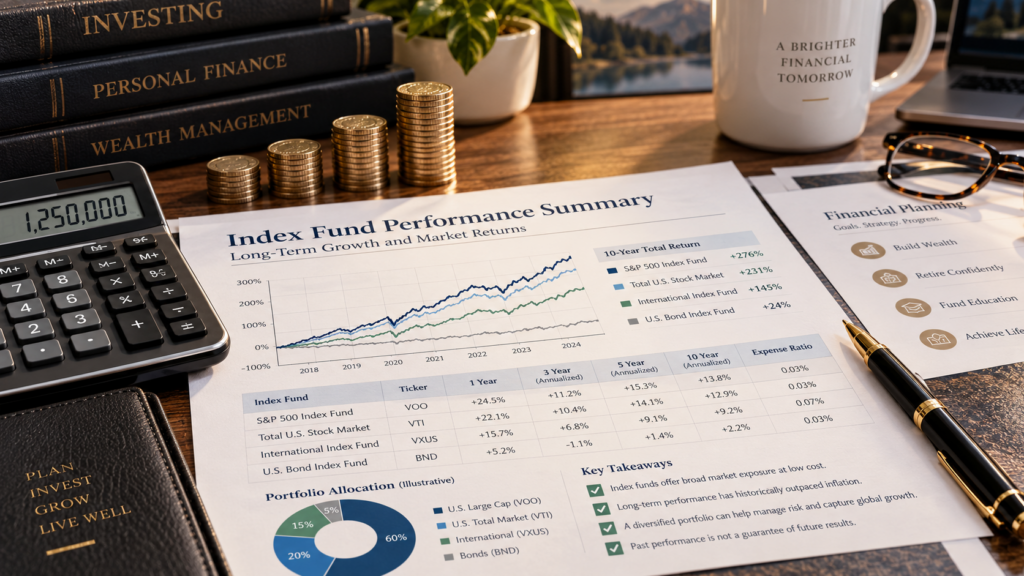
At its core, a “Buy and Hold” investment strategy is a passive, long-term investment framework where an investor buys equity shares, real estate, or index funds and retains them across extended timeframes—typically 5, 10, 20, or 30+ years—regardless of short-term market fluctuations, geopolitical tensions, or economic recessions.
This philosophy stands in sharp contrast to active trading or market timing:
- Active Speculation: Involves buying and selling assets frequently over hours, days, or weeks in an attempt to predict short-term price movements. Active traders rely heavily on technical chart patterns, news cycles, and momentum indicators, incurring high transaction costs, short-term capital gains taxes, and significant psychological stress.
- Passive Ownership: Treats stock purchases as buying fractional ownership in real, revenue-generating businesses or tangible real estate assets. A long-term investor recognizes that while short-term stock prices fluctuate wildly due to investor emotion, long-term asset value eventually tracks the underlying cash flows, earnings growth, and economic output of those businesses.
By committing to a “Buy and Hold” investment strategy, you align your personal net worth with overall macroeconomic productivity and human innovation rather than gambling on daily market swings.
The Power of Compound Interest and Dividend Reinvestment
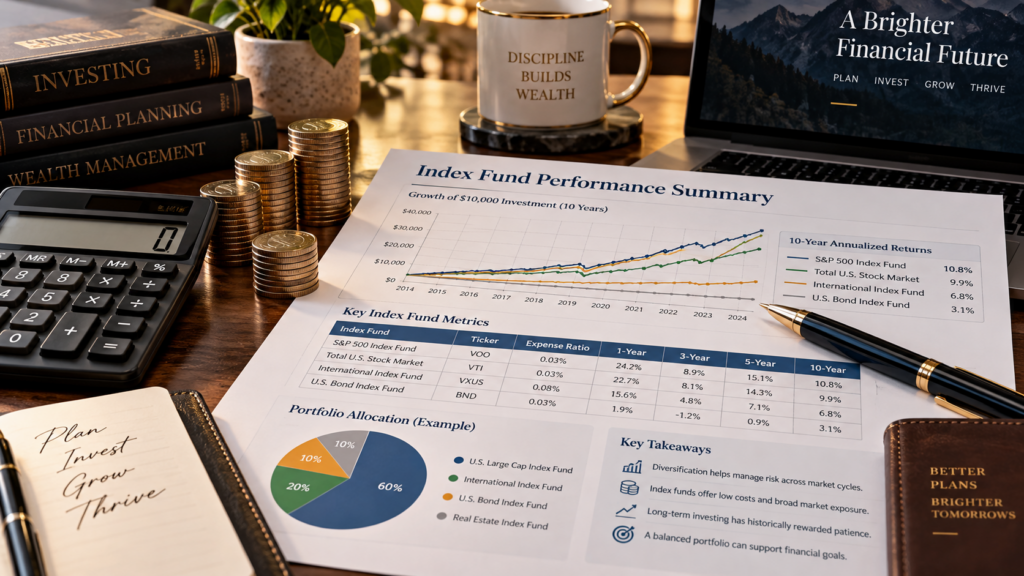
The true engine powering long-term market wealth is the mathematical principle of compound interest—what legendary physicist Albert Einstein famously called “the eighth wonder of the world.” When you hold assets for decades and continuously reinvest dividend payouts or rental cash flows, your earnings begin generating their own earnings.
In the early years of a portfolio, compounding growth appears slow and gradual. However, as the asset base expands over 15 to 30 years, the compounding growth curve bends sharply upward. For example, a single lump-sum investment in a broad S&P 500 index fund historical average return of roughly 10% annually doubles approximately every seven years. Reinvesting quarterly dividends accelerates this exponential curve, creating substantial wealth acceleration in the final decade of ownership.
Key Advantages of a Buy and Hold Strategy for USA Investors
Adopting a patient, long-term ownership model delivers major financial, tax, and emotional benefits that active trading simply cannot match.
Historical Outperformance Over Active Market Timing
Attempting to time the market—selling before a crash and buying back at the exact bottom—is notoriously difficult, even for professional Wall Street hedge fund managers. According to annual SPIVA (S&P Indices Versus Active) scorecard reports, over 90% of actively managed US equity funds fail to beat benchmark index funds over a 15-year period after accounting for management fees.
When individual investors attempt to time the market, they frequently sell out during market declines at a loss and miss the explosive recovery rallies that follow. Historical stock market data shows that missing just the 10 best trading days of the S&P 500 over a 20-year period cuts an investor’s final total returns by nearly half. Maintaining a “Buy and Hold” investment posture ensures you remain fully invested during every major market recovery rally.
Tax Efficiency and Favorable Capital Gains Rates
For investors operating in the United States, tax laws heavily favor long-term asset ownership over rapid trading:
- Short-Term Capital Gains: Profits earned from assets held for one year or less are taxed as ordinary income, reaching tax rates as high as 37% depending on your federal tax bracket.
- Long-Term Capital Gains: Profits from assets held for longer than one year qualify for preferential long-term capital gains tax rates—typically 0%, 15%, or 20% depending on taxable income.
Furthermore, as long as you do not sell your assets, your unrealized capital gains compound tax-free year after year inside taxable accounts. In tax-advantaged accounts like a Roth IRA, Traditional IRA, or 401(k), holding assets long-term maximizes growth tax-free or tax-deferred.
Lower Transaction Fees and Reduced Mental Stress
Trading frequently incurs bid-ask spreads, trading commissions, and fund turnover costs that erode net portfolio returns over time. A passive ownership model drastically minimizes trading fees.
Beyond direct financial savings, executing a “Buy and Hold” investment plan eliminates the immense psychological toll of monitoring daily stock market swings. You no longer need to spend hours checking financial news headlines or stressing over red market charts, allowing you to focus on your career, family, and personal life while your capital works quietly in the background.
Top Asset Classes for a Buy and Hold Portfolio
Not all financial assets are suitable for long-term holding. The best long-term investments possess durable competitive advantages, tangible cash flows, and intrinsic growth value.
Broad-Market Index Funds and ETFs
For the vast majority of individual investors, low-cost broad-market index funds and Exchange-Traded Funds (ETFs)—such as those tracking the S&P 500 or Total US Stock Market—represent the cornerstone of a successful strategy. Index funds provide instant diversification across hundreds of top US corporations (including Apple, Microsoft, Amazon, and Berkshire Hathaway) at microscopic expense ratios (often under 0.05%). Holding the entire market ensures you capture overall national economic expansion without risking single-stock collapse.
Blue-Chip Dividend Growth Stocks
Investors seeking passive income often build portfolios centered around “Dividend Aristocrats”—established S&P 500 companies that have increased their cash dividend payouts for at least 25 consecutive years. Companies like Procter & Gamble, Johnson & Johnson, and Coca-Cola possess deep economic moats, steady consumer demand, and strong balance sheets, making them ideal long-term holdings that generate reliable, growing income streams.
Cash-Flowing Residential Real Estate
Real estate represents another classic long-term asset class. Acquiring residential rental properties—such as single-family homes or multi-family duplexes—allows real estate investors to build wealth through four simultaneous drivers:
- Rental Cash Flow: Net income remaining after paying mortgage debts and operating expenses.
- Mortgage Amortization: Tenants pay down your property mortgage debt each month, building equity automatically.
- Long-Term Property Appreciation: Real estate historically appreciates over multi-decade periods, matching or beating inflation.
- Tax Benefits: Depreciation deductions, 1031 tax-deferred exchanges, and mortgage interest deductions reduce tax burdens significantly.
How to Build and Execute Your Buy and Hold Strategy
Building a resilient long-term portfolio requires a disciplined framework designed to weather economic recessions and market pullbacks.
Step 1: Establish a Financial Safety Net
Before committing capital to long-term illiquid or market-exposed assets, build a liquid emergency fund containing 3 to 6 months of essential living expenses inside a high-yield savings account (HYSA). Having a cash buffer ensures you never have to liquidate your long-term investments prematurely during a personal financial crisis or job loss during a market downturn.
Step 2: Implement Dollar-Cost Averaging (DCA)
Trying to time the best day to invest a lump sum creates unnecessary anxiety. Instead, utilize Dollar-Cost Averaging (DCA)—automatically investing a fixed dollar amount into your portfolio on a regular recurring schedule (e.g., bi-weekly or monthly), regardless of market conditions. DCA forces you to buy more shares when market prices are low and fewer shares when prices are high, lowering your average cost basis over time.
Step 3: Maintain Annual Rebalancing and Asset Allocation
Select an asset allocation that reflects your personal risk tolerance and time horizon—such as an 80% equity and 20% bond/cash split for younger investors, shifting toward a more conservative allocation as you approach retirement. Review your portfolio once a year to rebalance back to your target allocation, selling overperforming assets slightly to buy underperforming ones, keeping your overall risk profile aligned with your goals.
Common Pitfalls to Avoid in Long-Term Investing
Even with a simple long-term plan, behavioral emotional biases can derail progress if investors are not mindful.
Panicking During Market Downturns and Recessions
Stock market corrections (10% drops) and bear markets (20%+ drops) are completely normal, healthy components of the economic cycle. During market panics, media headlines amplify fear. Selling off quality assets during market panics locks in temporary paper losses into permanent financial destruction. Remind yourself that every single bear market in US history has eventually been followed by a bull market that reached new all-time highs.
Yield Chasing and Value Traps
Not every stock or real estate property qualifies as a solid long-term hold. Avoid chasing ultra-high dividend yields on financially distressed companies whose underlying business models are declining. Always analyze fundamental balance sheet health, debt levels, and competitive moats before holding single-stock assets for the long haul.
Frequently Asked Questions
What does a Buy and Hold investment mean?
It is a passive investment strategy where an investor purchases financial assets—such as stocks, broad-market index funds, or real estate—and holds them over extended timeframes (typically decades) regardless of short-term market volatility.
Is Buy and Hold better than day trading?
Yes. Historical research consistently demonstrates that passive long-term holding outperforms active day trading for over 90% of retail investors after accounting for management fees, transaction costs, and capital gains taxes.
How long should you keep a Buy and Hold asset?
Ideally, a long-term asset should be held for at least 5 to 10 years, and often 20 to 30+ years until you reach your specific financial goal, such as funding retirement or achieving passive cash flow independence.
Does Buy and Hold mean you never sell your assets?
No. While the primary goal is long-term holding, you may sell assets to rebalance your portfolio risk, fund retirement living expenses, eliminate a deteriorating business holding, or execute tax-loss harvesting strategies.
How does Dollar-Cost Averaging work with a long-term investment strategy?
Dollar-Cost Averaging involves investing a fixed dollar amount into your portfolio at regular intervals (such as every payday). This removes emotion from investing, ensuring you buy shares continuously through market highs and market lows.
What are the best accounts in the USA for long-term investments?
Tax-advantaged retirement accounts—such as Roth IRAs, Traditional IRAs, 401(k)s, and Health Savings Accounts (HSAs)—are ideal for long-term holding due to their tax-free or tax-deferred compound growth benefits.
Can you lose money with a Buy and Hold strategy?
While short-term price drops can cause temporary paper losses, holding a broadly diversified index portfolio across a 20-year period in US stock market history has consistently yielded positive total returns.
Conclusion
Building lasting wealth does not require complex trading algorithms, stock tips, or timing market tops and bottoms. By committing to a “Buy and Hold” investment framework, you leverage the historical growth of top productive businesses and real estate assets while letting compound growth expand your wealth over time. This approach eliminates high trading fees, reduces capital gains tax burdens, and insulates you from emotional investment decisions. Whether you automate bi-weekly contributions into a low-cost index fund or build a portfolio of income-producing rental properties, consistency, patience, and time are your greatest financial allies. Establish your emergency fund, automate your regular contributions, hold through market cycles, and let time build the financial security you deserve.

Written by Twastia Editorial Team
Twastia Editorial Team shares practical insights about website design, SEO services, Google Ads, content marketing, social media, conversion rate optimization, and digital marketing strategy.
Last updated: Oct 22, 2026
Related posts from Twastia
Explore more useful articles from twastia.com about digital marketing, SEO, websites, ads, content, and growth strategy.