CBD vs THC Law in the UK: What’s Legal and What’s Not
Few areas of UK law cause as much confusion as cannabis. CBD vs THC law in the UK draws a sharp line […]
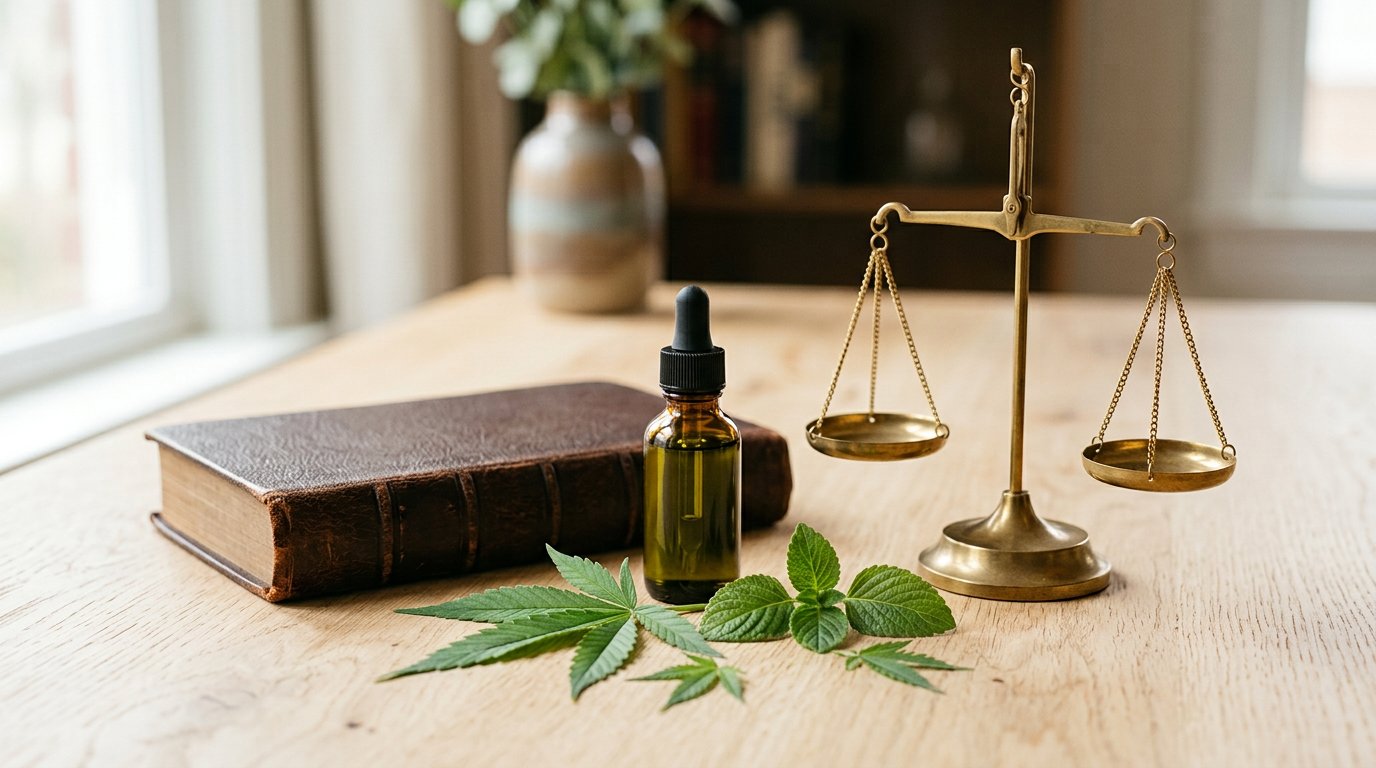
Few areas of UK law cause as much confusion as cannabis. CBD vs THC law in the UK draws a sharp line between two compounds that come from the same plant family: one that sits openly on high street shelves, and one that remains a controlled substance unless a specialist doctor prescribes it. Many people use CBD products without ever questioning their legality, while many others who could benefit from prescribed, THC-containing medicine do not realise it is available to them. This guide explains the legal status of both cannabinoids, the rules that govern them, how medical cannabis fits into the picture, and where to turn if over-the-counter CBD is no longer enough.
What CBD and THC Actually Are
Understanding the law starts with understanding the compounds themselves.
CBD (cannabidiol) and THC (tetrahydrocannabinol) are both cannabinoids, natural compounds found in cannabis plants. The defining difference is that THC is psychoactive, producing the intoxication associated with cannabis, while CBD is not. In legal terms, this single difference has enormous consequences: it is why CBD is widely available and why THC is tightly controlled.
Both compounds are used in products sold in the UK, but the routes to access them could hardly be more different. CBD is sold over the counter as a food supplement. THC-containing products, by contrast, can only be obtained lawfully as prescribed medicines.
CBD Is Legal in the UK, With Conditions
CBD is legal to buy and sell over the counter in the UK, but only when a product meets a specific set of requirements. The legality is not unconditional.
The most important condition is the source. Over-the-counter CBD must be derived from industrial hemp, specifically from strains of the Cannabis sativa L. plant that are approved for cultivation and naturally produce only trace levels of THC. Industrial hemp is grown under licence and has been a legitimate crop in Britain for centuries, historically for fibre and seeds.
The second condition concerns THC content. To be sold legally over the counter, a CBD product must contain no more than 0.2% THC, a threshold widely applied in the UK for years. There is also a common interpretation that no more than 1 milligram of THC should be present per product container. Recent discussions have raised the possibility of tightening this to zero detectable THC, but at the time of writing no formal change has been confirmed.
The third condition applies to ingestible products. Oils, capsules, drinks, and edibles must comply with the Food Standards Agency’s novel food rules for CBD, which means the product should be covered by a validated novel food application. This is a food safety framework rather than a medicine framework, and it exists because CBD was not widely consumed in the UK before 1997.
In practice, a CBD product is legal for over-the-counter sale in the UK if it is derived from industrial hemp, contains no more than 0.2% THC, complies with Food Standards Agency requirements where applicable, and is correctly labelled without making medical claims.
THC Is a Controlled Substance in the UK
THC sits on the other side of the legal line, and the law is unambiguous about it.
THC is a controlled drug under the Misuse of Drugs Act 1971 and the Misuse of Drugs Regulations 2001. Producing, supplying, or possessing THC, or any product containing more than 0.2% of it, is illegal unless the person holding it has a valid prescription from a specialist doctor. This is not a grey area: without a prescription, THC is simply unlawful.
The reason for this dates back decades. Cannabis has been controlled in the UK since the 1920s, and THC has remained a controlled substance even as public understanding of the plant has evolved. The law treats THC as something to be tightly managed, which is why it appears in Schedule 2 of the Misuse of Drugs Regulations, the schedule used for substances with recognised medical uses that nonetheless require strict control.
When Is THC Legal in the UK?
THC is legal only when prescribed as a medicine. Since November 2018, cannabis-based products for medicinal use have been available on prescription from specialist doctors, following a change that rescheduled them to allow medical use. This means a patient with a valid prescription can lawfully possess and use a THC-containing product for medical purposes.
The route to a prescription matters. A prescription must come from a specialist doctor registered on the General Medical Council’s Specialist Register, not from a GP. In practice, this means most patients access medical cannabis through private clinics, because NHS prescribing remains rare and highly restricted. Once prescribed, however, possession and use are lawful as long as the patient follows the terms of the prescription.
Why THC Requires a Prescription While CBD Does Not
The different treatment of the two compounds is not arbitrary. It comes down to risk.
THC is psychoactive and can impair judgement, coordination, and memory, which is why it is controlled and why its medical use is supervised. Prescribing ensures that a doctor has assessed the patient, determined that the potential benefit justifies the treatment, and set a dosage and monitoring plan. CBD, which is not intoxicating, is treated as a food supplement rather than a medicine, which places it under food safety regulation instead.
The same logic explains why medical cannabis products, which often contain both CBD and THC, are regulated differently from shop-bought CBD. A prescribed product is made to pharmaceutical standards, with defined cannabinoid content and clinical oversight, while an over-the-counter CBD product varies considerably in quality and labelling.
Where Medical Cannabis Fits In
Medical cannabis occupies the space between the two: it is legally available, but only through a clinical route.
In the UK, medical cannabis products can contain THC, CBD, or a combination of both. Many prescribed products are THC-dominant, while balanced products, such as those with equal parts THC and CBD, are also common. The specific formulation depends on the patient and the condition being treated.
Access is assessed case by case. A patient consults a specialist doctor, who reviews their medical history and decides whether cannabis-based treatment is appropriate. Because NHS prescribing is limited, most patients are treated through private clinics, where consultations, prescriptions, and follow-up care are delivered online and by post.
Releaf: Legal Access to Medical Cannabis in the UK
For people who have found over-the-counter CBD insufficient and want to explore a clinically guided alternative, Releaf is a UK medical cannabis clinic that provides private specialist consultations and prescriptions. The clinic is regulated by the Care Quality Commission, the independent regulator of health services in England, and it holds a 4.8 out of 5 rating on Trustpilot from more than 9,600 reviews, with a community of more than 240,000 people according to the company.
Releaf’s process is designed to be straightforward. There is no GP referral required, consultations are conducted online, and prescribed products are delivered directly to the patient’s door. The clinic offers a money-back eligibility guarantee, meaning patients receive a refund if they are found ineligible, and at the time of writing it is promoting initial consultations at a reduced rate. As with any medical decision, eligibility is assessed individually by a specialist doctor, and no treatment is guaranteed.
The Risks of the Grey Market
Understanding CBD vs THC law in the UK also means understanding what is definitely illegal.
Unregulated THC products, such as vapes and edibles sold outside the medical system, are illegal in the UK. They are not prescribed, not quality-controlled, and not legal to buy or possess. Beyond the legal risk, these products carry practical dangers: their contents are unverified, their dosages are unknown, and they may contain contaminants or undeclared substances. The only lawful way to access THC in the UK is through a specialist prescription, where products are regulated and clinical oversight is ongoing.
What Could Change in the Future
The legal landscape around cannabis is not static. Discussions continue about tightening CBD limits, as noted above, and the medical cannabis sector has grown steadily since 2018. Anyone relying on this information should treat it as a snapshot rather than a guarantee, because both food safety rules and drug regulations can and do change. The Home Office, the Food Standards Agency, and the Care Quality Commission are the relevant authorities for the rules described here, and their published guidance is the best place to confirm the current position.
Conclusion
CBD vs THC law in the UK comes down to a simple principle: CBD is legal as a food supplement when it meets strict sourcing and labelling requirements, while THC is a controlled substance that is only lawful when prescribed as a medicine by a specialist doctor. The distinction exists because the two compounds carry very different risks, and it is why over-the-counter CBD and prescribed medical cannabis are regulated so differently. For anyone whose CBD supplement is no longer enough, legal, clinically supervised options exist through CQC-regulated clinics such as Releaf, where specialist doctors assess eligibility and prescribe with ongoing support. The most important step is to understand the rules, avoid the unregulated grey market, and seek advice through legitimate channels.
Frequently Asked Questions
1. Is CBD legal in the UK?
Yes, over-the-counter CBD is legal if it is hemp-derived, contains no more than 0.2% THC, and complies with Food Standards Agency rules for ingestible products.
2. Is THC legal in the UK?
THC is only legal with a prescription from a specialist doctor; otherwise it is a controlled substance and illegal to possess, supply, or sell.
3. When did medical cannabis become legal in the UK?
Medical cannabis became available on prescription in November 2018, when cannabis-based products for medicinal use were rescheduled to allow specialist prescribing.
4. Can a GP prescribe medical cannabis in the UK?
No, prescriptions must be issued by a specialist doctor on the General Medical Council’s Specialist Register, which is why most patients use private clinics.
5. What is the difference between CBD oil and medical cannabis?
CBD oil is an over-the-counter food supplement with negligible THC, while medical cannabis is a prescribed medicine that may contain THC and is clinically supervised.
6. Are THC vapes and edibles legal in the UK?
No, grey-market THC vapes and edibles are illegal and unregulated; lawful THC access in the UK is only available through a specialist prescription.

Written by Twastia Editorial Team
Twastia Editorial Team shares practical insights about website design, SEO services, Google Ads, content marketing, social media, conversion rate optimization, and digital marketing strategy.
Last updated: Aug 13, 2026
Related posts from Twastia
Explore more useful articles from twastia.com about digital marketing, SEO, websites, ads, content, and growth strategy.