Eye Doctor Calgary: Choosing the Right Eye Specialist for Your Needs
Most people think about their eyes when something becomes difficult to see. Maybe road signs are no longer as sharp […]
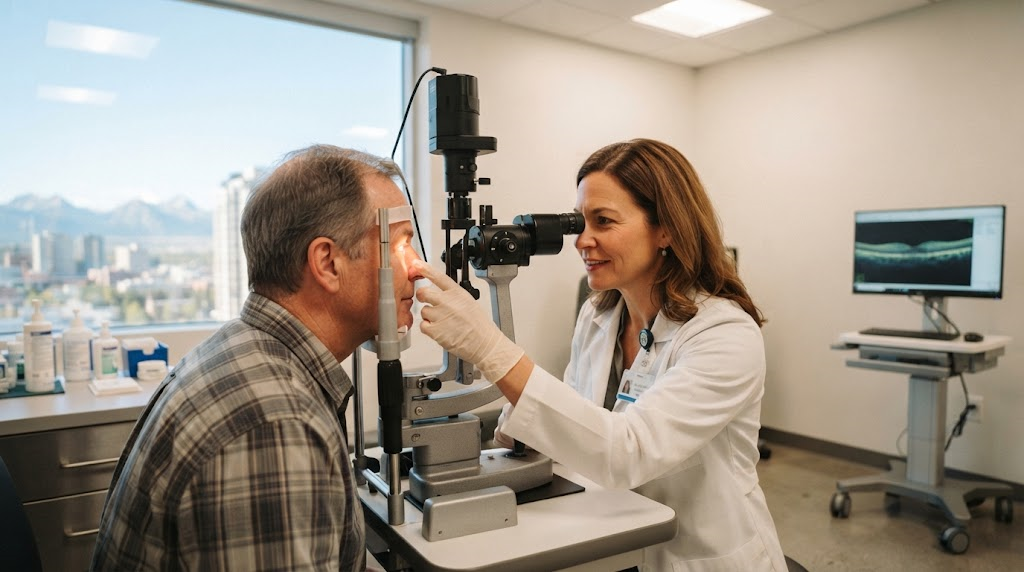
Most people think about their eyes when something becomes difficult to see.
Maybe road signs are no longer as sharp as they used to be. Your eyes feel dry after working on a computer. An eyelid keeps becoming irritated. You notice flashes or floaters. A family member has been diagnosed with glaucoma. Or your regular eye-care provider recommends that you see a medical eye specialist.
Searching for an eye doctor Calgary patients can rely on becomes much easier when you understand what type of professional you actually need.
The phrase “eye doctor” can refer to different healthcare professionals. Optometrists provide most primary vision and eye-health care in Alberta, while ophthalmologists are medical doctors who diagnose and treat more complex eye diseases and can perform surgery. The Alberta College of Optometrists confirms that optometrists assess vision, diagnose and manage eye disorders, prescribe medications, and provide primary eye care.
Orbit Eye Centre in Calgary is an ophthalmology clinic rather than a routine eyeglasses shop. Its current team provides specialty medical and surgical care in areas such as glaucoma, retinal disease, cataracts, eyelid disorders, orbital conditions, tearing problems, and dry eye.
For U.S. readers researching Canadian eye care, the professional roles will feel familiar, although referral systems, insurance coverage, and provincial regulations differ from those in the United States.
Here is what to consider when selecting the right eye professional.
What Does an Eye Doctor Do?
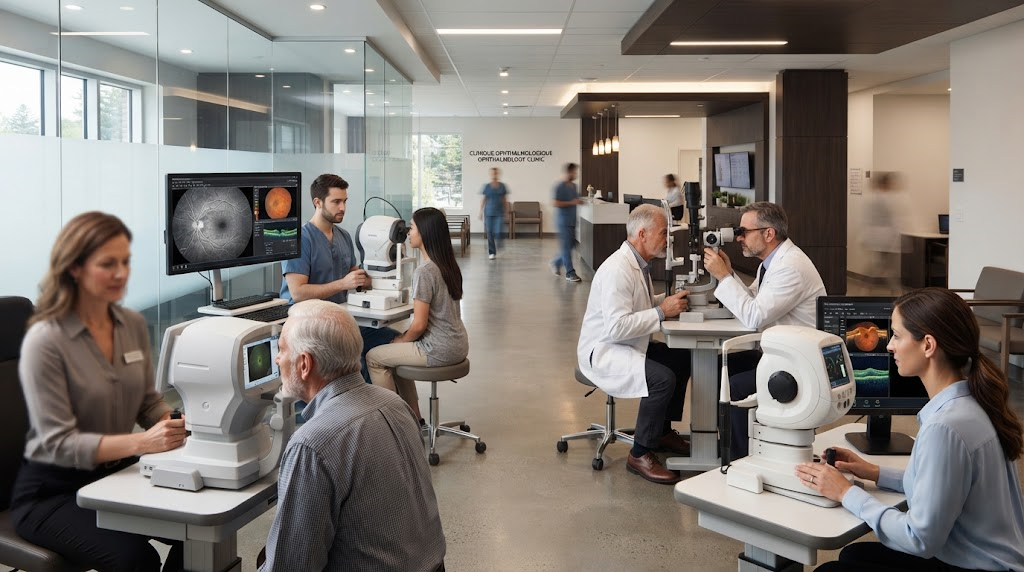
The answer depends on the provider’s professional training.
Optometrists
Optometrists are primary eye-care professionals.
According to the Alberta College of Optometrists, they can examine the complete visual system and identify conditions involving vision and eye health. Their scope includes diagnosing and managing eye disease as well as prescribing appropriate medications and corrective lenses.
A comprehensive optometric examination can evaluate:
- Visual acuity
- Prescription changes
- Eye coordination
- Internal eye health
- External eye health
- Peripheral vision
- Focusing ability
- Signs of glaucoma
- Cataracts
- Retinal abnormalities
For routine eye exams, glasses, contact lenses, and initial eye-health concerns, an optometrist is often the appropriate starting point.
Ophthalmologists
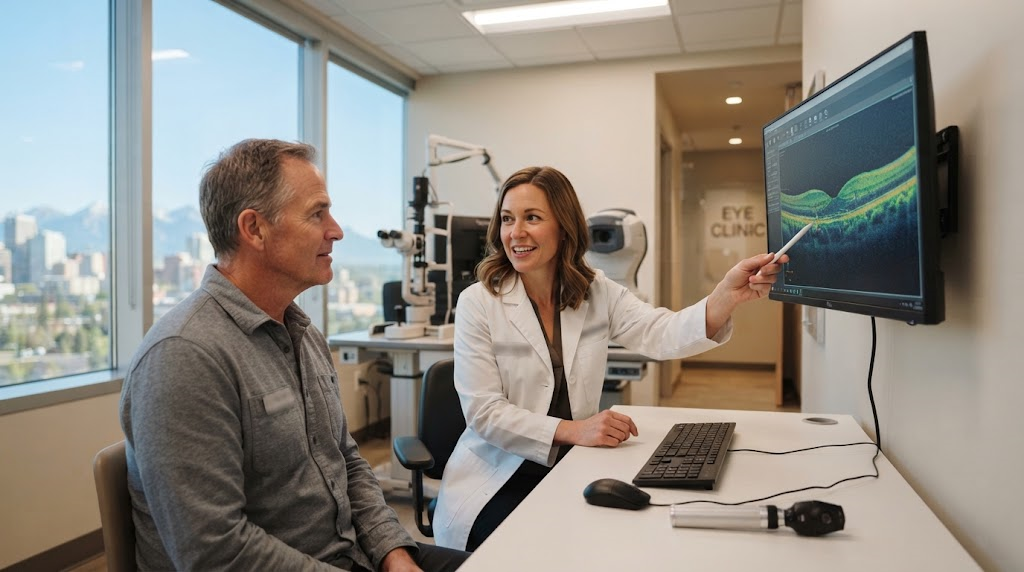
An ophthalmologist is a physician who specializes in medical and surgical eye care.
Ophthalmologists can treat complex diseases and perform procedures such as:
- Cataract surgery
- Glaucoma treatment
- Retinal treatment
- Eyelid surgery
- Laser procedures
- Orbital surgery
Orbit Eye Centre’s current ophthalmology services cover cataract surgery, glaucoma monitoring and procedures, medical retina care, oculoplastic surgery, lacrimal procedures, and several eyelid conditions.
Why Regular Eye Care Matters
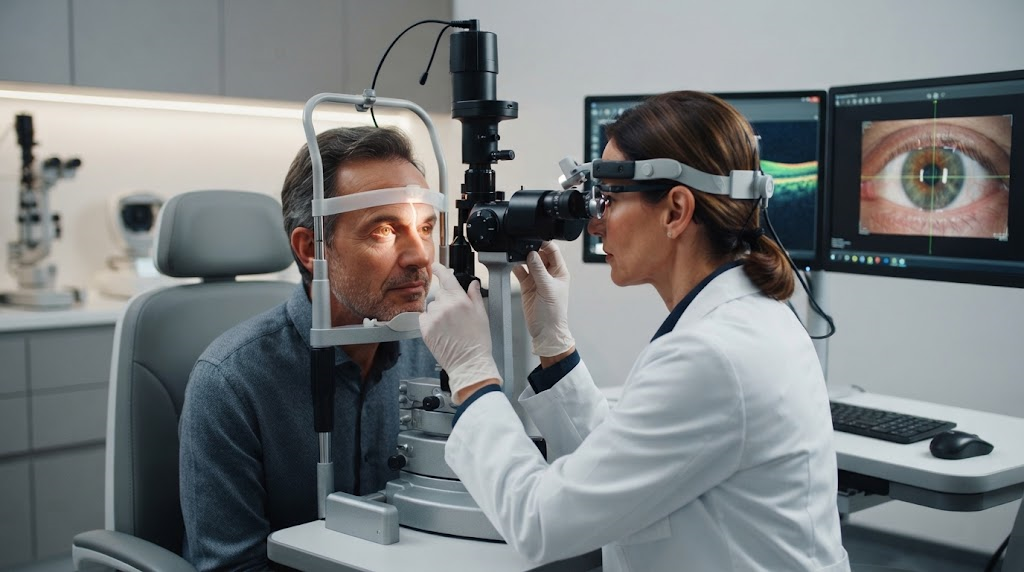
Clear vision does not always mean completely healthy eyes.
The Alberta College of Optometrists specifically notes that achieving 20/20 vision does not rule out underlying eye or systemic health problems. A comprehensive eye examination can identify conditions affecting the retina, optic nerve, lens, and other structures.
Some eye diseases develop gradually and may cause few noticeable symptoms during their early stages.
Glaucoma is one important example.
A person may feel perfectly normal while damage develops.
That is why regular professional eye care matters even when you are not experiencing obvious vision loss.
When Should You See an Ophthalmologist?
Not every vision problem requires a medical specialist.
You may be referred to an ophthalmologist when a condition requires more specialized diagnosis, monitoring, medication, laser treatment, or surgery.
Reasons can include:
- Cataracts
- Glaucoma
- Retinal disease
- Sudden visual changes
- Eyelid abnormalities
- Persistent tearing
- Eye injuries
- Suspicious lesions
- Complicated dry eye
- Orbital disorders
Orbit Eye Centre currently has physicians specializing in several of these areas.
Glaucoma Care in Calgary
Glaucoma is a group of eye diseases that damage the optic nerve.
One reason glaucoma receives so much attention is that some common forms may progress without pain or obvious early symptoms.
Orbit Eye Centre’s glaucoma service currently evaluates factors such as eye pressure, corneal thickness, optic nerve appearance, the drainage angle, and peripheral vision. Imaging may also be used when appropriate.
Who May Be at Higher Risk?
Orbit lists several factors associated with increased glaucoma risk, including:
- Age over 40
- Family history
- Certain ethnic backgrounds
- High eye pressure
- Previous eye injury
- Long-term steroid use
- Thin cornea
- Diabetes
- High blood pressure
- Circulation concerns
Having a risk factor does not automatically mean you have glaucoma, and people without obvious risk factors can still develop the disease.
Glaucoma Treatment
Treatment depends on the type and severity of disease.
It may involve:
- Prescription eye drops
- Laser treatment
- Surgical procedures
- Ongoing monitoring
Orbit currently offers glaucoma-focused ophthalmology care through Dr. Ammar Khan, who completed fellowship training in glaucoma at the University of Calgary and is certified in Canada and the United States.
Cataract Evaluation and Surgery
A cataract occurs when the natural lens inside the eye becomes cloudy.
People with cataracts may experience:
- Blurry vision
- Glare
- Difficulty driving at night
- Faded colors
- Changes in prescription
The condition becomes increasingly common with age.
When cataracts begin significantly interfering with everyday activities, surgery may be discussed.
Orbit Eye Centre currently provides cataract removal and lens replacement as part of its ophthalmology services, along with YAG laser capsulotomy for appropriate patients after cataract surgery.
A complete evaluation is necessary before determining whether surgery is appropriate.
Retinal Eye Care
The retina is the light-sensitive tissue at the back of the eye.
Retinal conditions can affect central or peripheral vision and may require specialist management.
Orbit Eye Centre’s Dr. Chirag Shah focuses on medical retina and general ophthalmology. His listed areas include:
- Age-related macular degeneration
- Retinal detachments
- Diabetic retinopathy
- Hypertensive retinopathy
- Hereditary retinal disease
- Retinopathy of prematurity
The clinic currently provides anti-VEGF injections for appropriate retinal conditions.
Diabetes and Eye Health
Diabetes can damage small blood vessels in the retina.
Even if vision feels normal, people with diabetes may require ongoing retinal examinations based on their healthcare provider’s recommendations.
This is another example of why eye care is not only about glasses.
Dry Eye Treatment in Calgary
Dry eye can sound minor until you experience it every day.
Symptoms may include:
- Burning
- Grittiness
- Irritation
- Redness
- Fluctuating vision
- Excess watering
- Sensitivity
Dry eye can have several causes, including problems with the oil-producing meibomian glands along the eyelids.
Orbit Eye Centre currently provides dry-eye screening and treatments that can include IPL and BlephEx lid-care therapy.
The clinic also treats related eyelid problems such as blepharitis, styes, chalazia, and meibomian gland dysfunction.
Why Watering Eyes Can Still Mean Dry Eye
This can seem contradictory.
Some people with dry eye actually experience excessive tearing because irritation triggers reflex tear production.
Persistent watering may also have other causes, including problems with the tear drainage system, so a professional examination is important.
Eyelid Problems and Oculoplastic Surgery
Eyelids protect the eye and play an important role in distributing tears.
Problems with their position or structure can affect both appearance and vision.
Orbit Eye Centre’s oculoplastic services include treatment for:
- Ptosis
- Entropion
- Ectropion
- Eyelid lesions
- Eyelid reconstruction
- Tearing disorders
- Orbital conditions
Dr. Karim Punja’s practice focuses on oculoplastic surgery, including cosmetic and reconstructive eyelid procedures.
Ptosis
Ptosis refers to a drooping upper eyelid.
In mild cases it may mostly affect appearance.
In more significant cases, the eyelid can interfere with the upper field of vision.
Orbit currently evaluates and treats ptosis and offers functional eyelid surgery for appropriate cases.
Tearing and Lacrimal Conditions
Persistent watery eyes are not always caused by allergies.
Problems within the tear drainage system can prevent tears from draining normally.
Orbit’s current lacrimal services include procedures such as DCR, punctoplasty, and canalicular reconstruction, depending on the underlying problem.
If excessive tearing continues for a long time, particularly when accompanied by irritation or recurrent infections, professional assessment may help identify the cause.
Eyelid Lesions and Styes
Small bumps around the eyelids are common, but not every lesion is the same.
A persistent or changing eyelid lesion should be examined rather than repeatedly treated at home without a diagnosis.
Orbit currently provides treatment for styes and benign eyelid lesions as well as surgical removal when appropriate.
The clinic also encourages professional evaluation of new or changing areas around the eyelid because the tissues are delicate and different conditions can appear similar.
Cosmetic Eye Care
Some ophthalmology clinics also provide cosmetic services involving the eyelids and surrounding face.
Orbit Eye Centre currently offers options such as:
- Upper and lower blepharoplasty
- Botox
- Fillers
- Chemical peels
- IPL skin treatment
- Brow lift
- Skin-care consultations
- Benign lesion removal
If you are considering a cosmetic procedure around the eye, choosing a provider who understands eyelid anatomy and ocular health can be especially important.
What to Look for When Choosing an Eye Doctor in Calgary
Searching online can produce dozens of options.
Use a few practical criteria to narrow them down.
Match the Doctor to the Problem
Start by understanding whether you need:
- Routine optometry
- Glaucoma care
- Cataract evaluation
- Retinal treatment
- Eyelid surgery
- Dry-eye treatment
- Cosmetic eyelid care
A specialist who focuses on your specific problem may be more appropriate than choosing a clinic based only on location.
Review Professional Credentials
Look for information about:
- Medical training
- Residency
- Fellowship training
- Professional certification
- Areas of specialty
- Hospital or university affiliations
Orbit’s current physician information highlights subspecialty backgrounds in oculoplastic surgery, retina, and glaucoma.
Consider Diagnostic Technology
Eye diseases may require more than a basic vision chart.
Depending on your condition, testing can involve:
- Eye-pressure measurement
- Retinal imaging
- Visual field testing
- Corneal measurements
- Optic nerve analysis
- Slit-lamp examination
The appropriate tests depend on your symptoms and diagnosis.
Preparing for an Eye Appointment
Bring useful information with you.
Consider preparing:
- Current medications
- Medical conditions
- Previous eye surgery history
- Family eye-health history
- Current glasses
- Current eye drops
- List of symptoms
- Referral information
Be specific about when symptoms started.
Instead of saying, “My vision is bad,” explain whether you notice:
- Blur at distance
- Blur at near
- Double vision
- Glare
- Flashes
- Floaters
- Pain
- Redness
- Dryness
- Tearing
Specific information helps the doctor understand the problem more quickly.
Orbit Eye Centre Location and Hours
People specifically searching for an eye doctor Calgary specialist can review Orbit Eye Centre’s ophthalmology services.
The clinic currently lists its address as:
Suite 300, 5 Richard Way SW, Calgary, Alberta T3E 7M8
Its regular published hours are:
Monday to Friday: 8:00 AM–4:00 PM
Saturday and Sunday: Closed
The clinic notes that it is occasionally open on Saturdays for scheduled appointments, although its phone lines are not answered on Saturdays.
Because specialist availability can vary, patients should confirm appointment requirements directly with the clinic.
Calgary Eye Care vs. U.S. Eye Care
American readers will recognize the same basic professional categories.
In the United States, optometrists commonly provide primary eye care while ophthalmologists provide medical and surgical eye care.
However, referral requirements, coverage, provincial healthcare rules, private insurance, and payment arrangements in Alberta differ from U.S. healthcare systems.
If you are an American temporarily living in or visiting Calgary, confirm insurance and payment arrangements before non-emergency treatment.
When Eye Symptoms Need Prompt Attention
Some symptoms should not simply be monitored for several weeks.
Prompt professional assessment may be appropriate for:
- Sudden major vision loss
- New flashes of light
- Sudden increase in floaters
- A curtain-like shadow in vision
- Significant eye injury
- Severe eye pain
- Sudden double vision
- Chemical exposure
These symptoms can have many causes, but some may require urgent evaluation.
Do not depend on an online article to diagnose sudden vision changes.
Frequently Asked Questions About Finding an Eye Doctor Calgary Patients Can Visit
What type of eye doctor should I see for a routine eye exam?
An optometrist generally provides primary eye examinations, vision correction, and assessment of common eye conditions in Alberta.
What is an ophthalmologist?
An ophthalmologist is a medical doctor specializing in eye diseases, medical treatment, and eye surgery.
Does Orbit Eye Centre provide routine optometry?
Orbit Eye Centre primarily presents itself as an ophthalmology clinic specializing in medical, surgical, retinal, glaucoma, eyelid, cataract, and related eye care. Patients seeking routine glasses or contact-lens services may begin with an optometrist.
Does Orbit Eye Centre treat glaucoma?
Yes. The clinic currently provides glaucoma diagnosis, monitoring, medical care, laser treatment, and surgical management where appropriate.
Does Orbit Eye Centre treat retinal conditions?
Yes. Its listed retina services include management of conditions such as age-related macular degeneration, diabetic retinopathy, retinal detachments, and other retinal diseases.
Can I get treatment for dry eyes?
Orbit currently offers dry-eye assessment and treatments including IPL and BlephEx for appropriate patients.
Does Orbit perform eyelid surgery?
Yes. Its current services include ptosis repair, blepharoplasty, entropion and ectropion treatment, lesion removal, and reconstructive eyelid procedures.
What are Orbit Eye Centre’s current hours?
The clinic currently lists regular hours of 8:00 AM to 4:00 PM Monday through Friday, with weekends generally closed. Occasional scheduled Saturday appointments may occur.
Conclusion
Finding the right eye doctor Calgary patients can depend on understanding the type of eye care you need.
For routine vision examinations, eyeglasses, contact lenses, and primary eye-health assessments, an optometrist is often the logical starting point.
For more complex conditions involving cataracts, glaucoma, retinal disease, eyelid disorders, tear drainage, orbital problems, or eye surgery, an ophthalmologist may be the appropriate specialist.
That distinction can save time and help patients reach the right level of care.
Orbit Eye Centre is currently positioned as a specialist ophthalmology clinic in Calgary rather than simply a general vision-testing office. Its services include glaucoma management, medical retina care, cataract treatment, dry-eye services, oculoplastic surgery, eyelid reconstruction, lesion removal, and treatment of tearing disorders.
The clinic’s physicians also have different areas of focus, including oculoplastic surgery, retinal disease, and glaucoma, allowing patients to receive more specialized assessment depending on their diagnosis.
The larger lesson is that eye care should not begin only when your vision becomes noticeably poor.
Many important conditions can develop gradually.
Regular examinations can help identify changes earlier, while prompt assessment of sudden symptoms can be especially important.
Pay attention to your eyes.
Know your family history.
Mention medical conditions such as diabetes and high blood pressure to your eye-care provider.
And when a problem requires specialist management, look for a physician whose experience matches the condition rather than choosing solely on convenience.
Good vision is important, but comprehensive eye care is about more than reading the smallest line on a chart.
It is about protecting the health of the entire visual system for the years ahead.

Written by Twastia Editorial Team
Twastia Editorial Team shares practical insights about website design, SEO services, Google Ads, content marketing, social media, conversion rate optimization, and digital marketing strategy.
Last updated: Oct 6, 2026
Related posts from Twastia
Explore more useful articles from twastia.com about digital marketing, SEO, websites, ads, content, and growth strategy.