Gutter Maintenance Guide: Cleaning, Repair & Replacement
Your home’s gutter system might not be the most noticeable part of your property, but it plays an essential role […]
Your home’s gutter system might not be the most noticeable part of your property, but it plays an essential role in protecting your roof, walls, landscaping, and foundation. When gutters become clogged, damaged, or poorly installed, rainwater can flow into areas where it causes expensive problems.
For homeowners across the United States, regular gutter maintenance is an important part of protecting a property’s long-term condition. Whether you live in a rainy coastal region, a snowy northern state, or an area that experiences seasonal storms, an effective drainage system helps manage roof runoff.
Understanding how gutters work, recognizing early warning signs, and knowing when to hire a professional can save time and money.
This guide explores gutter cleaning, repairs, replacement options, drainage improvements, and practical ways to keep your home’s exterior in excellent condition.
Why Are Gutters Important for Your Home?

Gutters collect rainwater flowing from the roof and direct it toward downspouts. These vertical pipes carry water to designated discharge areas away from the building.
Without proper drainage, rainwater can accumulate around a home’s foundation, potentially contributing to basement moisture, soil erosion, and structural problems.
The U.S. Department of Energy’s Building America Solution Center recommends appropriate gutters, downspouts, and drainage systems to help prevent water from saturating the soil surrounding foundations.
Protect Your Foundation
Water collecting near foundation walls can increase moisture pressure and contribute to leaks, especially in homes with basements or crawl spaces.
Properly positioned downspouts help reduce this risk.
Prevent Exterior Water Damage
Overflowing gutters can repeatedly soak siding, fascia boards, and other exterior materials.
Over time, persistent moisture may contribute to peeling paint, wood deterioration, and unwanted water intrusion.
Understanding Your Gutter System
A residential gutter system includes several connected components.
Gutter channels collect roof runoff, while downspouts transport it toward the ground. End caps close gutter sections, hangers secure them to the building, and outlets connect horizontal channels to vertical pipes.
Some installations also include gutter guards, splash blocks, or drainage extensions.
In Canada, gutters are commonly called eavestroughs. Both terms describe essentially the same roof drainage function.
Understanding these components helps homeowners communicate more effectively with contractors.
Common Signs Your Gutters Need Attention
Recognizing drainage problems early can prevent more serious damage.
Water Overflowing During Rainfall
Water spilling over gutter edges may indicate blockages, insufficient capacity, incorrect slope, or damaged connections.
Observe the system from a safe location during rainfall to identify potential trouble spots.
Sagging or Detached Sections
Gutters pulling away from the fascia may have weakened hangers, deteriorated mounting surfaces, or excessive accumulated debris.
Sagging sections can also prevent water from flowing toward downspouts.
Visible Rust, Cracks, or Leaks
Metal corrosion, separated seams, and cracked components can allow water to escape before reaching the downspout.
Minor defects may be repairable, while widespread deterioration can make replacement more practical.
Water Pooling Near the Foundation
Puddles beside the house after rainfall may suggest that downspouts are too short or drainage conditions are inadequate.
Check whether the ground slopes away from the building.
How Often Should You Clean Your Gutters?
Many homeowners benefit from cleaning gutters at least twice annually, usually during spring and fall.
However, the appropriate schedule depends on the surrounding environment.
Properties near large trees may require more frequent cleaning because leaves, twigs, and seeds accumulate quickly.
Homes exposed to severe storms should also receive additional inspections.
A practical maintenance schedule includes:
- Spring: Remove winter debris and inspect for damage.
- Summer: Check drainage after significant storms.
- Fall: Clear accumulated leaves before winter.
- Winter: Watch for ice buildup and damaged components where temperatures freeze.
Regular inspections are particularly valuable after strong winds or unusually heavy rainfall.
Safe Gutter Cleaning Practices
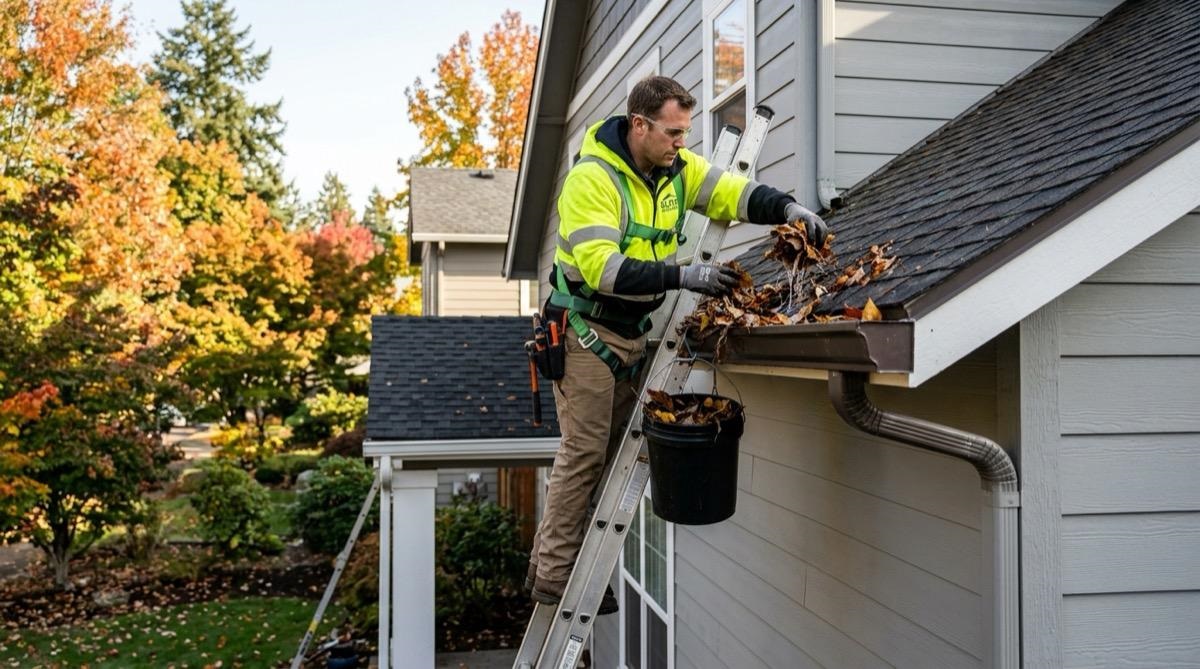
Gutter cleaning can involve working at dangerous heights.
Falls from ladders are a serious risk, so homeowners should avoid climbing onto roofs or attempting work beyond their abilities.
If your home has multiple stories, steep rooflines, unstable ground, or difficult access, hiring a qualified professional is generally safer.
Basic Cleaning Process
Professional gutter cleaning usually involves removing leaves and debris, checking outlets, clearing downspouts, and testing water flow.
Technicians may also identify loose fasteners, leaking joints, or damaged fascia.
Cleaning should not involve forcing water into roof openings or directing runoff toward sensitive exterior areas.
Afterward, confirm that water flows freely and exits at an appropriate drainage point.
Choosing the Right Gutter Materials
Different gutter materials offer advantages depending on climate, appearance, and budget.
Aluminum Gutters
Aluminum is popular because it resists rust, is relatively lightweight, and comes in various colors.
Seamless aluminum systems are frequently installed on residential properties.
Vinyl Gutters
Vinyl gutters are generally lightweight and affordable.
However, they may become brittle in extreme cold or lose shape under certain weather conditions.
Steel Gutters
Steel offers strength and can be suitable for demanding environments.
Protective coatings are important because some steel products are vulnerable to corrosion.
Copper Gutters
Copper provides a distinctive architectural appearance and can last for many years when properly installed.
Its higher initial cost makes it more common on premium residential properties.
Are Seamless Gutters Worth Considering?
Seamless gutters are manufactured in long sections designed to fit the home’s roofline.
Unlike sectional systems, they have fewer joints along straight runs, which can reduce opportunities for leakage.
However, corners, outlets, and end caps still require proper sealing.
Seamless installation often involves specialized equipment and professional measurements.
Homeowners should compare material thickness, fastening methods, gutter sizing, and warranty details before purchasing.
A correctly sized and installed gutter system matters more than appearance alone.
Do Gutter Guards Reduce Maintenance?
Gutter guards are designed to limit the amount of leaves and larger debris entering gutters.
Common options include mesh screens, perforated covers, and other protective systems.
These products may reduce cleaning frequency, particularly in properties surrounded by trees.
However, no gutter guard should automatically be considered completely maintenance-free.
Small debris, roof sediment, and organic material can still accumulate.
Before installing guards, examine their compatibility with your roofing system and ask how future inspections and cleaning will be performed.
Gutter Repair vs. Replacement: Which Is Better?
Not every drainage problem requires installing a completely new system.
When Repair May Be Enough
Localized leaks, loose hangers, minor separation, and small damaged sections can sometimes be repaired.
A contractor may reseal joints, replace brackets, or adjust gutter alignment.
The decision depends on the existing system’s condition.
When Replacement Makes More Sense
Replacement may be appropriate when gutters have extensive corrosion, repeated leaks, major deformation, or widespread structural damage.
An older system that frequently requires repairs may also be less economical to maintain.
Request an inspection before deciding. A professional should explain whether the problem is limited to individual components or affects the entire drainage system.
Why Downspout Placement Matters
Even perfectly clean gutters cannot protect a property if their downspouts release water beside the foundation.
Downspout extensions help transport runoff away from vulnerable areas.
The U.S. Department of Energy’s Building America guidance describes drainage arrangements that carry surface runoff at least five feet away from foundations, with different recommendations for underground collection systems.
Actual requirements depend on grading, soil, property boundaries, and local regulations.
Water should not be redirected onto neighboring properties or into unsuitable drainage areas.
Where serious pooling persists, a drainage specialist may recommend grading improvements, additional outlets, or an approved underground drainage system.
Gutter Maintenance for Different U.S. Climates
Northern States and Snowy Regions
Snow and freezing temperatures introduce additional challenges.
Ice dams can develop when melting roof snow refreezes near colder roof edges, potentially allowing water to back up beneath roofing materials.
According to the U.S. Department of Energy, attic air sealing, suitable insulation, and appropriate ventilation are important measures for reducing ice-dam risk.
Gutter cleaning alone cannot solve underlying attic heat-loss problems.
Southern and Coastal Regions
Heavy rainfall and seasonal storms can place substantial demands on gutter systems.
Homeowners should check that gutters are securely attached, appropriately sized, and draining freely.
Coastal conditions may also influence the choice of corrosion-resistant materials.
Dry and Desert Regions
Even properties in relatively dry climates may experience intense seasonal downpours.
Sudden runoff can overwhelm poorly designed drainage routes.
Homeowners should evaluate actual rainfall patterns and local building conditions rather than assuming gutters are unnecessary everywhere.
How Much Does Gutter Installation Cost?
Gutter installation prices vary across the United States.
Important pricing factors include roofline length, building height, gutter material, system capacity, downspout requirements, and labor costs.
Removing an existing system or repairing damaged fascia can increase the project’s total expense.
Seamless aluminum, copper, and specialty systems may have different installation costs.
Rather than relying on a universal price estimate, request detailed quotations from several local contractors.
Ask each provider to separate material costs, labor, removal charges, drainage accessories, and optional gutter guards.
This makes comparisons easier and reduces the possibility of unexpected expenses.
How to Choose a Professional Gutter Contractor
Hiring a dependable contractor is important for both installation quality and safety.
Look for businesses with relevant experience, clear communication, and documented service details.
Before accepting an estimate:
- Verify licensing requirements and insurance coverage.
- Ask for recent customer references.
- Request a written explanation of the proposed materials.
- Confirm whether fascia repairs are included.
- Review warranty terms and payment conditions.
- Compare several detailed quotations.
The Federal Trade Commission recommends checking contractor credentials and obtaining written estimates before beginning home improvement work.
Avoid making decisions solely because a contractor offers a large temporary discount.
When Should You Visit This Website for Eavestrough Information?
Researching professional installations can help homeowners understand what services to discuss with local contractors.
For an example of a specialized eavestrough provider, visit this website to explore Niagara Roof Masters’ gutter repair and installation information.
The company serves St. Catharines and the Niagara Region in Ontario, Canada, rather than advertising itself as a U.S. installation provider.
Its website describes eavestrough cleaning, repairs, seamless aluminum installations, gutter guards, and soffit and fascia services.
The company also explains its process of inspecting existing gutters, preparing an estimate, fabricating aluminum sections, and checking completed installations.
American homeowners can use these service descriptions as examples when researching similar providers in their own communities.
Common Gutter Maintenance Mistakes
One frequent mistake is waiting until water enters the house before inspecting the gutter system.
Another is assuming that gutter guards eliminate the need for maintenance.
Homeowners may also overlook damaged downspouts or drainage outlets that discharge too close to foundations.
Choosing an incorrectly sized gutter system can create recurring overflow problems.
Finally, attempting dangerous roof-level repairs without appropriate equipment can result in serious injuries.
Routine inspections and professional assistance when necessary help avoid these problems.
Frequently Asked Questions About Gutters
1. How Often Should Residential Gutters Be Replaced?
There is no universal replacement schedule.
A gutter system’s lifespan depends on material quality, installation, environmental exposure, and maintenance.
Inspect existing systems regularly and consider replacement when deterioration becomes widespread.
2. What Is the Difference Between Gutters and Eavestroughs?
The terms generally describe the same roof drainage components.
“Gutter” is more common in the United States, while “eavestrough” is frequently used in Canada.
Both collect roof runoff and direct it toward downspouts.
3. Can Clogged Gutters Cause Foundation Problems?
Yes. Overflowing gutters can allow rainwater to accumulate near foundations.
Over time, persistent moisture may contribute to basement leaks, soil erosion, and other water-related problems.
Proper drainage helps reduce these risks.
4. Are Seamless Gutters Better Than Sectional Gutters?
Seamless systems have fewer joints along straight sections, potentially reducing leakage points.
However, performance depends on proper sizing, installation quality, materials, and ongoing maintenance.
Both systems can work when installed correctly.
5. Are Gutter Guards Worth Installing?
Gutter guards may reduce the amount of debris entering gutter channels.
Their value depends on nearby trees, roof design, weather conditions, and maintenance expectations.
They generally reduce rather than eliminate cleaning requirements.
6. Should I Clean Gutters Myself or Hire a Professional?
Homeowners may handle some accessible maintenance, but elevated gutter cleaning carries fall risks.
Professional cleaning is advisable for multistory homes, steep roofs, and difficult-to-reach areas.
Safety should take priority over potential cost savings.
7. What Should I Ask Before Hiring a Gutter Installer?
Ask about materials, system sizing, downspout locations, installation methods, warranties, insurance, and the complete project price.
Request a detailed written estimate and clarify who handles any related fascia or drainage repairs.
Conclusion: Protect Your Property With Proper Gutter Maintenance
A dependable gutter system is an important part of protecting your home from rainwater damage.
Regular cleaning, timely repairs, correctly positioned downspouts, and suitable installation materials all contribute to effective drainage.
Homeowners should inspect their systems throughout the year, particularly after storms and during seasonal changes.
Whether you need a minor repair or a complete gutter replacement, understanding your options helps you make informed decisions.
By investing in appropriate maintenance and working with qualified professionals when necessary, you can protect your roofline, foundation, landscaping, and overall property condition for years to come.

Written by Twastia Editorial Team
Twastia Editorial Team shares practical insights about website design, SEO services, Google Ads, content marketing, social media, conversion rate optimization, and digital marketing strategy.
Last updated: Oct 13, 2026
Related posts from Twastia
Explore more useful articles from twastia.com about digital marketing, SEO, websites, ads, content, and growth strategy.