How to Choose the Right Roofing Company: Tips for Homeowners: Best Hiring Guide
Your roof is one of the most important parts of your home. It protects your family, belongings, and property from […]
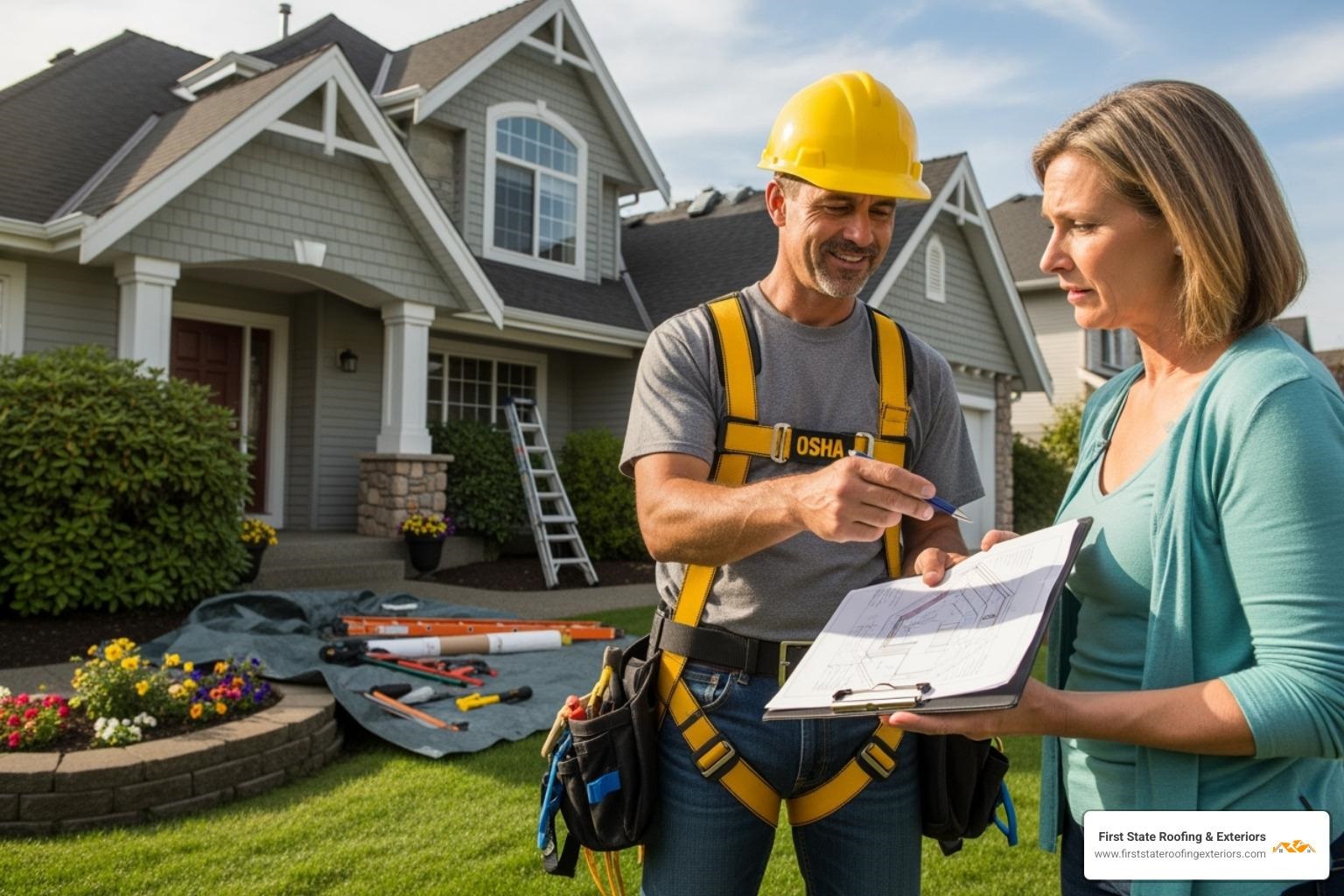
Your roof is one of the most important parts of your home. It protects your family, belongings, and property from rain, wind, sunlight, and other environmental conditions. Whether you need minor repairs, storm damage restoration, or a complete roof replacement, choosing a qualified roofing contractor is essential.
However, finding a trustworthy company can be challenging. Numerous contractors may advertise similar services, competitive prices, and impressive warranties. Determining which company can actually deliver reliable workmanship requires careful research.
Understanding how to choose the right roofing company: tips for homeowners can help you avoid unnecessary expenses, poor installation, unreliable contractors, and potential roofing scams.
The National Roofing Contractors Association (NRCA) recommends reviewing a contractor’s business credentials, insurance coverage, references, written proposals, and quality control procedures before signing an agreement. National Roofing Contractors Association
A roofing project represents a significant investment, and the quality of installation can affect the roof’s durability and performance for years.
This guide explains what to look for when hiring a roofing company, which questions to ask, and how to compare contractors before making your final decision.
Why Choosing the Right Roofing Company Matters
Roofing work requires specialized knowledge, appropriate materials, installation techniques, and safety procedures.
Even high-quality roofing materials may fail prematurely if installed incorrectly.
Poor workmanship can contribute to leaks, damaged flashing, inadequate ventilation, and other problems that may require expensive repairs.
A reputable roofing company should evaluate your roof’s condition, explain recommended work, and provide a clear written estimate.
The right contractor should also understand local building requirements and appropriate roofing systems for your climate.
Hiring based solely on the lowest advertised price may create additional costs if important work is excluded or repairs are performed improperly.
A careful selection process can help protect your investment while reducing the likelihood of avoidable problems.
1. Research Local Roofing Companies
The first step in learning how to choose the right roofing company is researching contractors serving your area.
Local roofing companies may have experience with regional weather conditions, common roofing materials, and applicable building requirements.
A company with an established local presence may also be easier to contact if questions arise after installation.
Ask for Recommendations
Start by asking neighbors, friends, relatives, or coworkers about roofing contractors they have hired.
Personal recommendations can provide useful information about communication, workmanship, scheduling, and cleanup.
However, a recommendation alone should not replace independent verification.
The Federal Trade Commission (FTC) advises homeowners to research contractors, obtain recommendations from trusted people, and investigate complaints before making a hiring decision. Consumer Advice
Check the Company’s Business Information
Look for a verifiable business address, working phone number, and established company identity.
Review the business website and confirm that contact details are consistent across official listings.
Be cautious when a contractor cannot provide basic business information or refuses to explain who will perform the work.
2. Verify Roofing Licenses and Insurance
One of the most important steps when choosing a roofing contractor is confirming that the business meets applicable licensing and insurance requirements.
Licensing rules differ throughout the United States.
Some states regulate roofing contractors directly, while others use broader contractor licensing systems or rely partly on local requirements.
Check Contractor Licensing
Contact your state licensing board or local building department to determine which credentials are required.
If a contractor claims to hold a particular license, verify its current status through the appropriate government authority.
Do not assume that every advertised certification is a government-issued license.
Request Proof of Insurance
Roofing involves working at heights, handling heavy materials, and operating equipment.
Ask for evidence of general liability insurance and workers’ compensation coverage where applicable.
The NRCA recommends obtaining copies of insurance certificates and confirming that coverage remains effective throughout the project. National Roofing Contractors Association
A contractor’s willingness to provide verifiable documentation is an important part of evaluating professionalism.
3. Look for Relevant Roofing Experience
Roofing companies may specialize in different materials, building types, and repair methods.
Some focus primarily on asphalt shingle installations, while others have experience with metal roofing, tile, flat roofing systems, or specialized repairs.
Choosing a company with experience relevant to your project can improve communication and help identify technical requirements.
Ask About Similar Projects
Find out whether the contractor has completed projects involving your roofing material and home type.
For instance, replacing asphalt shingles on a typical suburban home involves different installation considerations than repairing a low-slope roof.
Ask how the company approaches common issues such as flashing, roof penetrations, ventilation, and water management.
Consider Training and Manufacturer Credentials
Certain roofing manufacturers provide training or contractor certification programs.
These credentials may indicate familiarity with particular roofing systems.
However, manufacturer certifications should be verified directly and should not be treated as guarantees of workmanship.
Experience, appropriate installation practices, and reliable project supervision remain essential.
4. Read Customer Reviews and Check References
Online reviews can provide valuable information about previous customers’ experiences.
Look beyond the overall star rating and read detailed feedback about scheduling, communication, workmanship, and handling of complaints.
Evaluate Reviews Carefully
A few negative reviews do not automatically mean a company is unreliable.
Instead, examine whether complaints reveal recurring problems.
Pay attention to how the company responds when customers report concerns.
Be cautious of businesses with suspiciously repetitive reviews or claims that cannot be independently verified.
Speak With Previous Customers
Request references from homeowners who completed similar roofing projects.
Ask whether the work was finished as agreed, whether unexpected costs were explained, and whether the contractor resolved any problems.
The NRCA recommends requesting a list of completed projects and contacting previous clients to learn about their experience. A Program of IBHS
Recent references can be especially useful when evaluating current service quality.
5. Compare Multiple Written Roofing Estimates
Obtaining several estimates is one of the most practical ways to compare roofing companies.
The FTC recommends collecting written estimates from multiple contractors rather than automatically selecting the lowest offer. Consumer Advice
A written estimate helps clarify which services, materials, and responsibilities are included.
What Should a Roofing Estimate Include?
A detailed roofing proposal should identify:
- The scope of the roofing work.
- Roofing material types and specifications.
- Removal and disposal of existing materials.
- Underlayment and flashing requirements.
- Ventilation work, if necessary.
- Estimated project start and completion dates.
- Labor and material costs.
- Payment terms and potential additional charges.
Ask how unexpected decking damage or other concealed problems will be addressed.
Compare More Than the Total Price
Two contractors may quote different prices because they propose different materials or include different services.
For example, one estimate may include replacing damaged flashing, while another may exclude that work.
Request clarification before comparing final totals.
The most valuable offer is not necessarily the least expensive one.
It is the proposal that combines appropriate materials, qualified installation, clear terms, and reasonable pricing.
6. Understand Roofing Materials and Installation Methods
A reputable roofing company should explain the materials recommended for your property.
Common residential roofing options include asphalt shingles, metal panels, tile, and other systems suited to particular building designs.
The appropriate choice depends on roof slope, structural capacity, climate, budget, and applicable building requirements.
Ask About the Complete Roofing System
Roof performance depends on more than the visible outer covering.
A contractor should consider the underlying roof deck, protective underlayment, flashing, ventilation, and drainage details.
Ask whether the selected materials are compatible with one another.
Also confirm whether the contractor intends to follow the manufacturer’s installation instructions.
Consider Local Weather Conditions
Homes in hurricane-prone areas may require particular attention to wind resistance and installation methods.
Properties in snowy regions may need appropriate ice-dam protection and ventilation considerations.
The Insurance Institute for Business & Home Safety provides roofing resilience guidance through its FORTIFIED program, emphasizing qualified contractors and proper installation practices. A Program of IBHS
Your contractor should explain how the proposed system addresses local environmental conditions.
7. Review Roofing Warranties Before Signing
Warranty coverage can influence the long-term value of a roofing project.
However, homeowners should understand that different warranties protect against different problems.
Manufacturer Warranties
Manufacturer warranties generally address specified defects in roofing products.
Coverage terms, exclusions, and duration vary by manufacturer and product.
Certain warranties may require specific installation practices or registered contractors.
Workmanship Warranties
Workmanship warranties are typically offered by contractors and may cover qualifying installation-related problems.
Ask how long the contractor’s warranty lasts and what happens if a leak or defect develops.
Confirm whether labor, materials, inspections, and related expenses are included.
The NRCA recommends carefully reviewing warranty conditions and identifying situations that could void coverage. National Roofing Contractors Association
Never assume that a lengthy warranty covers every possible roofing problem.
8. Ask About Project Supervision and Safety
Roof installation often involves several workers completing tasks over multiple days.
A professional roofing company should have an organized approach to supervision, worker safety, property protection, and quality control.
Identify the Project Supervisor
Ask who will manage your roofing project.
Find out whether that person will be available to answer questions and coordinate the installation team.
Clear communication can help homeowners understand project progress and address concerns promptly.
Discuss Property Protection
Roofing work can generate debris, dust, discarded materials, and falling objects.
Ask how the crew will protect landscaping, driveways, windows, and nearby belongings.
The company should also explain its cleanup process and how it will inspect the property for nails or other roofing debris.
While homeowners should not direct workers’ technical safety procedures, they can reasonably expect contractors to follow applicable workplace safety requirements.
9. Understand Contracts and Payment Terms
Before hiring a company, review the written roofing agreement carefully.
A contract should explain the work being performed, expected costs, payment arrangements, timelines, and procedures for making changes.
Avoid relying on verbal promises that do not appear in the final agreement.
Be Careful With Large Upfront Payments
Some contractors request a deposit before scheduling work or ordering materials.
Deposit requirements and legal limits vary by state.
However, requesting full payment before beginning a project can be a warning sign.
The FTC recommends avoiding full upfront payments and understanding applicable state or local payment protections. Consumer Advice
Document Changes to the Project
Unexpected conditions may require additional work after installation begins.
For example, damaged roof decking may not become visible until old roofing materials are removed.
Ask the contractor to document additional work and its cost through a written change order before proceeding, except when urgent safety measures are necessary.
Keep copies of contracts, invoices, payment records, and warranties.
10. Watch for Common Roofing Scams
Roofing scams can occur at any time, but homeowners may be especially vulnerable after severe storms.
Unsolicited contractors sometimes approach properties offering immediate inspections or unusually inexpensive repairs.
Not every door-to-door contractor is fraudulent, but high-pressure tactics deserve caution.
Warning Signs of an Unreliable Roofer
Be particularly careful when a contractor:
- Demands an immediate decision.
- Requests full payment before work begins.
- Refuses to provide a written agreement.
- Cannot verify insurance or required licensing.
- Offers vague descriptions of proposed repairs.
- Insists on cash-only payments.
- Makes unrealistic promises about insurance coverage.
The FTC warns that home repair scammers may use storm damage, urgent claims, and aggressive financing offers to pressure homeowners. Consumer Advice
Take Extra Care With Insurance Claims
If a storm damages your roof, contact your insurance company directly to understand your coverage and claims process.
Do not sign documents that you do not understand.
Be wary of contractors offering to manipulate claim information or improperly waive insurance deductibles.
Requirements vary by jurisdiction, and homeowners remain responsible for complying with their policies and applicable laws.
Questions to Ask Before Hiring a Roofing Company
Once you have narrowed your options, a direct conversation can help clarify the final decision.
Ask each contractor the same core questions so you can compare responses fairly.
Important questions include:
- Are you properly licensed for this project?
- Can you provide current insurance documentation?
- Have you completed similar roofing projects?
- Which roofing materials do you recommend, and why?
- Who will supervise the installation?
- What is included in the written estimate?
- How will unexpected repairs be handled?
- What warranties will I receive?
- Who obtains any required permits?
- What are the payment milestones and cleanup procedures?
A professional contractor should answer reasonable questions clearly rather than pressuring you to sign immediately.
Common Mistakes Homeowners Make When Hiring Roofers
Understanding how to choose the right roofing company also means recognizing common hiring mistakes.
Some homeowners select the cheapest contractor without comparing the work included.
Others fail to verify insurance, overlook warranty exclusions, or accept verbal agreements.
Another mistake is choosing a contractor based entirely on online reviews without checking business credentials.
Homeowners may also rush into contracts after storm damage because they feel pressured to act immediately.
Although active leaks require timely attention, emergency temporary protection and permanent roof replacement are separate decisions.
Take reasonable precautions to prevent further damage while still evaluating major repair proposals carefully.
Frequently Asked Questions
How do I know if a roofing company is reliable?
Check the contractor’s business history, required licensing, insurance coverage, customer references, and written estimates. Clear communication and detailed agreements are additional positive indicators.
Should I get multiple roofing estimates?
Yes. Comparing at least three written estimates can help you evaluate project scope, materials, pricing, and differences between contractors.
What insurance should a roofing contractor have?
General liability insurance and workers’ compensation coverage are important considerations. Applicable insurance requirements vary by location and business circumstances.
Is the cheapest roofing company always the best choice?
No. Lower prices may reflect different materials, excluded services, or other differences in project scope. Compare overall value, qualifications, warranties, and installation practices.
How long does a roof replacement take?
The duration depends on roof size, complexity, weather, materials, crew availability, and unexpected repairs. A contractor should provide a project-specific schedule rather than promise a universal completion time.
What should I do if a roofing contractor approaches me after a storm?
Avoid making immediate commitments. Independently verify the business, check required credentials, obtain written estimates, and contact your insurance provider directly about any potential claim.
Conclusion
Knowing how to choose the right roofing company: tips for homeowners can help protect your property and make a major home improvement project easier to manage.
A reliable contractor should offer verifiable credentials, appropriate insurance, relevant experience, detailed written proposals, and clear warranty information.
Before committing, research local companies, compare multiple estimates, contact previous customers, and ask detailed questions about materials and installation practices.
Avoid making your decision solely on price, and remain cautious of high-pressure sales tactics or unrealistic promises.
Remember that the quality of your roofing project depends on both the materials selected and the people responsible for installing them.
Taking time to evaluate contractors carefully can reduce unnecessary risks and help you select a roofing company that provides appropriate service, professional communication, and dependable workmanship.

Written by Twastia Editorial Team
Twastia Editorial Team shares practical insights about website design, SEO services, Google Ads, content marketing, social media, conversion rate optimization, and digital marketing strategy.
Last updated: Nov 5, 2026
Related posts from Twastia
Explore more useful articles from twastia.com about digital marketing, SEO, websites, ads, content, and growth strategy.