Inclusive play design: Best Guide to Accessible Playgrounds
Playgrounds are important places where children explore their surroundings, build friendships, develop physical skills, and express creativity. However, traditional playgrounds […]
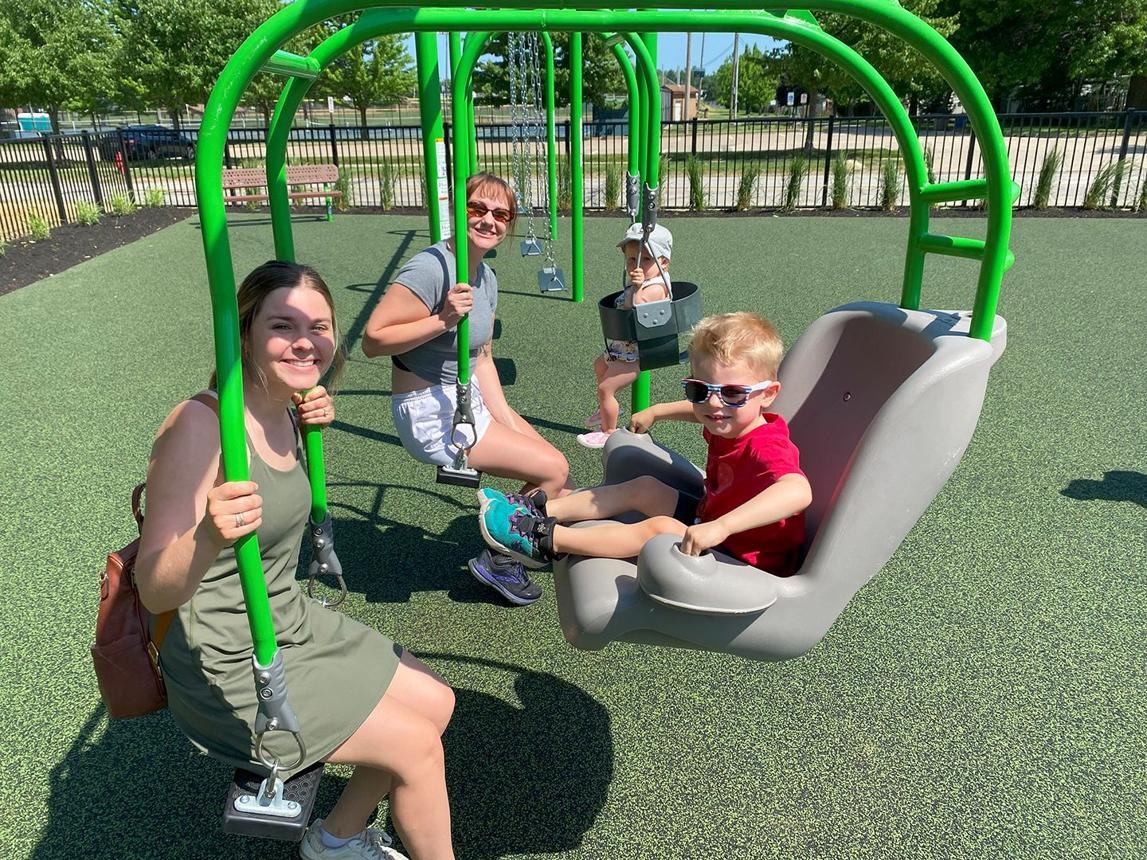
Playgrounds are important places where children explore their surroundings, build friendships, develop physical skills, and express creativity. However, traditional playgrounds do not always provide meaningful opportunities for children with different physical, sensory, cognitive, and developmental abilities.
A playground may have colorful equipment and plenty of open space yet still present barriers that prevent some children from participating.
Inclusive play design addresses these challenges by creating environments where children with diverse abilities can enjoy recreation together. Instead of separating children according to their needs, inclusive playgrounds encourage shared experiences, social interaction, independence, and exploration.
For American schools, parks, community organizations, and property developers, thoughtful playground planning involves accessibility, safety, equipment selection, and long-term maintenance.
Importantly, designing an inclusive playground means more than installing one wheelchair-accessible feature. The entire space should support participation through varied activities, accessible pathways, comfortable gathering areas, and opportunities for imaginative play.
This guide explains the essential principles of inclusive playground planning, appropriate equipment, accessibility standards, sensory experiences, budgeting, and practical strategies for creating welcoming recreational environments.
What Is Inclusive Play Design?
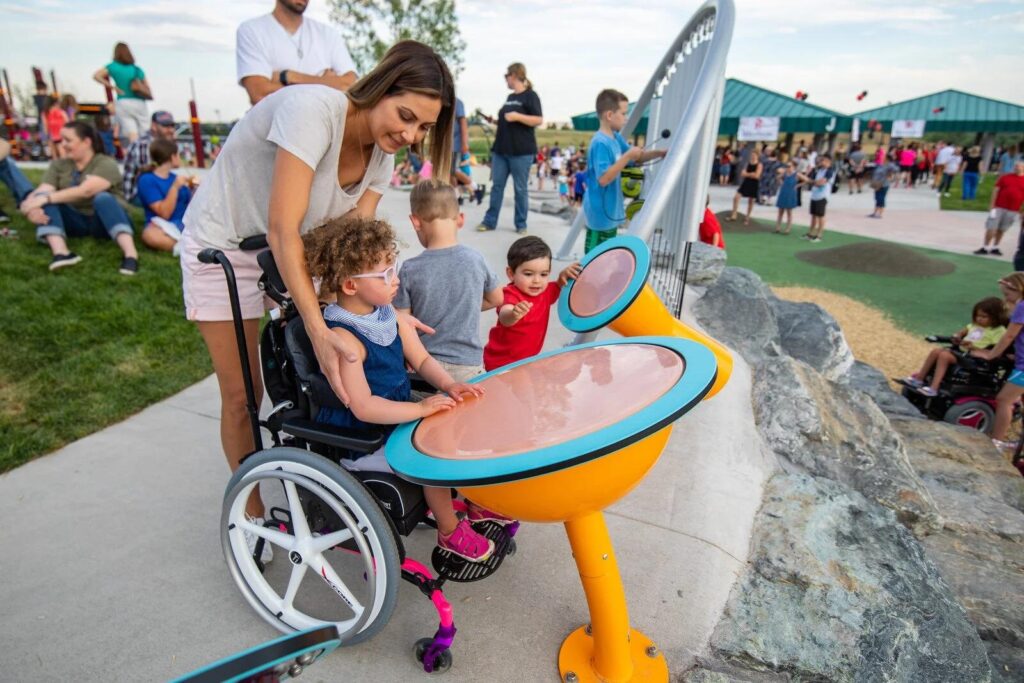
Inclusive play design is the practice of creating playgrounds and recreational environments that welcome children with different abilities, interests, and developmental needs.
Its goal is to make participation possible through thoughtful spatial planning, varied equipment, and accessible experiences.
Children should have opportunities to play independently, interact with others, and choose activities that match their comfort levels.
Inclusive vs. Accessible Playgrounds
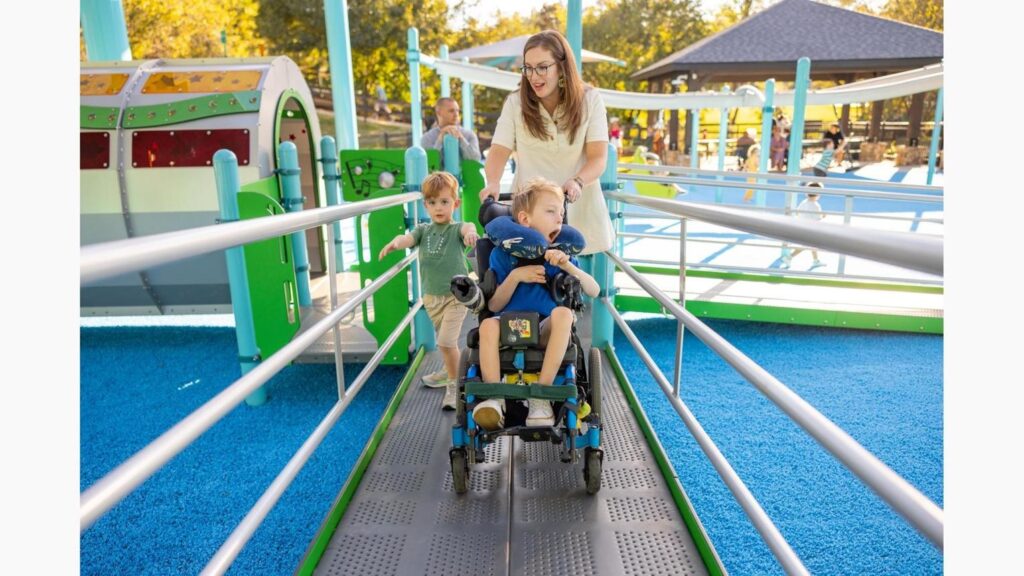
Accessibility and inclusion are closely related, but they are not identical.
An accessible playground provides features that allow people with disabilities to enter and use designated areas according to applicable accessibility requirements.
An inclusive playground goes further by considering the quality and variety of play experiences available to different users.
For example, an accessible route might lead to a playground, but children may still encounter limited activities once they arrive.
Inclusive planning considers both reaching the equipment and enjoying meaningful participation.
Why Inclusive Play Matters
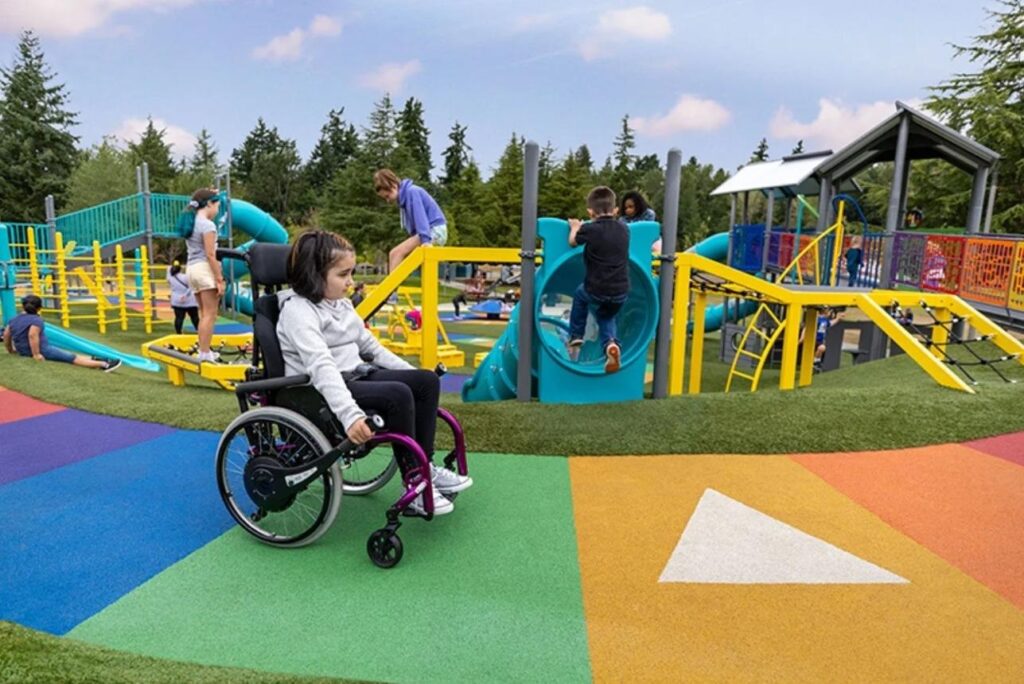
Play creates opportunities for movement, problem-solving, communication, and social connection.
When playgrounds support different abilities, more children can participate in shared activities.
These environments can also encourage understanding and cooperation among children with different experiences.
Key Principles of Inclusive Playground Design
Successful inclusive spaces begin with understanding how children interact with their surroundings.
Encourage Shared Play
Inclusive playgrounds should encourage children to interact rather than dividing activities into isolated sections.
Group swings, cooperative equipment, and accessible interactive panels can support shared experiences.
Thoughtful layouts allow children to participate together while choosing different levels of physical challenge.
Offer Multiple Ways to Play
Not every child enjoys climbing, running, or swinging.
Some prefer imaginative activities, music, gentle movement, exploration, or quiet observation.
Providing different experiences allows children to discover activities that interest them.
Support Independence and Choice
Children benefit from having opportunities to choose their activities.
Accessible pathways, understandable layouts, and appropriately designed equipment can support independent exploration.
However, supervision and assistance may still be necessary depending on the child’s needs and equipment.
Plan for Different Ages
Toddlers and older children have different physical abilities and developmental interests.
Playground designers should provide age-appropriate equipment and consider how separate activity areas connect.
Clear sightlines help caregivers supervise children across the playground.
Accessibility Requirements for Playgrounds in the USA
Public playground accessibility is an important consideration for American communities.
Understanding ADA Standards
The Americans with Disabilities Act establishes accessibility requirements for covered facilities.
The 2010 ADA Standards for Accessible Design contain specific provisions for play areas, including accessible routes and required play components.
Sections 240 and 1008 address playground accessibility and technical design requirements.
The rules depend on playground characteristics, equipment configuration, and applicable exceptions.
Accessible Routes and Elevated Activities
Accessible routes must connect the required ground-level and elevated play components.
Generally, at least 50% of elevated play components must be accessible under the applicable standards.
Some playgrounds use ramps, while others may use permitted transfer systems.
Ground-level accessible routes generally require a minimum clear width of 60 inches, subject to specific exceptions.
Designers should consult the complete standards rather than relying on a simplified measurement checklist.
Accessibility Is an Ongoing Responsibility
Accessibility does not end when equipment is installed.
Damaged pathways, displaced loose-fill surfacing, or obstructed routes can prevent participation.
Regular inspection and maintenance are essential.
Essential Equipment for Inclusive Play Design
Playground equipment should support different movement patterns, abilities, and interests.
Inclusive Swings
Inclusive swing systems may provide additional body support or opportunities for group movement.
Some designs accommodate different seating needs, while others encourage several children to participate together.
Equipment must be selected for its intended users and installed according to manufacturer instructions.
Ground-Level Activity Panels
Interactive panels can offer opportunities for children to engage while standing, sitting, or using mobility devices.
Activities may involve puzzles, tactile surfaces, sounds, or imaginative games.
Appropriate reach ranges and clear maneuvering spaces are important considerations.
Accessible Play Structures
Ramps and accessible platforms can connect children to different play activities.
Thoughtful integration allows children with varied abilities to share the same play environment.
Elevated access must still satisfy relevant safety and accessibility requirements.
Cooperative Motion Equipment
Rocking platforms and shared motion activities can encourage children to coordinate movements.
These experiences may promote social interaction and give participants opportunities to explore balance and movement.
Product selection should account for support needs, movement intensity, and intended age groups.
Sensory Play and Inclusive Playground Experiences
Sensory activities can make playgrounds more engaging for children with different preferences and needs.
Tactile Experiences
Textured panels, shaped surfaces, and interactive elements provide opportunities for touch-based exploration.
Designers should select durable materials that are comfortable and appropriate for the intended age group.
Musical Play Equipment
Outdoor drums, chimes, and other musical equipment allow children to explore sounds and rhythm.
These activities can also encourage cooperative play.
Consider equipment placement so louder activities do not overwhelm quieter areas.
Movement and Balance
Swinging, gentle rocking, and suitable rotating equipment provide different movement experiences.
Children should be able to choose activities and adjust their participation according to comfort.
Quiet Spaces
Some children benefit from areas away from intense noise and movement.
Small seating spaces, shaded corners, and calm landscaping can provide opportunities to rest.
Quiet zones should remain connected to the broader playground rather than creating unnecessary isolation.
Learning From Parks Supplies’ Inclusive Playground Approach
One example of inclusive playground planning is presented by Inclusive play design resources from Parks Supplies.
The company specializes in playground equipment, recreational spaces, safety surfaces, and other outdoor products, primarily serving Hong Kong.
Its inclusive playground page emphasizes encouraging children to participate in physical, social, and sensory experiences.
Inclusive Equipment and Shared Experiences
Parks Supplies highlights the importance of combining ground-level and elevated activities.
The company also recommends multiple openings and opportunities for children to interact throughout a play structure.
This approach illustrates how equipment arrangement can influence social participation.
Unity Hoopla Swing
The company’s Unity Hoopla Swing is designed for shared swinging experiences involving up to six users.
Its described design emphasizes body support, movement, cooperation, and opportunities for social interaction.
However, suitability for a particular child depends on individual needs and appropriate supervision.
Playground Project Examples
Parks Supplies features projects associated with the Canadian International School of Hong Kong, Hung Shui Kiu, and On Shing Terrace.
These projects illustrate different approaches to movement, climbing, swinging, and shared play.
The company’s project locations are in Hong Kong, not the United States.
American buyers should independently verify product availability and compliance with applicable U.S. standards before purchasing.
Choosing Safe and Accessible Playground Surfacing
The ground surface is one of the most important elements of playground accessibility and safety.
Impact Attenuation
Playground surfacing should provide appropriate impact protection within equipment use zones.
ASTM F1292 addresses impact attenuation performance.
The required performance depends on factors including the equipment’s fall height.
Accessibility Performance
ASTM F1951 addresses accessibility performance of playground surface systems.
A surface should support accessible movement while meeting other relevant safety requirements.
Poured-in-Place Rubber
Poured-in-place rubber systems can create relatively continuous surfaces with opportunities for colorful designs.
However, correct installation, testing, and maintenance remain important.
Engineered Wood Fiber
Engineered wood fiber can serve as playground safety surfacing when the product meets relevant specifications.
Loose-fill systems require frequent maintenance because materials shift and compact.
Regular checks are necessary to maintain both impact protection and accessibility.
Planning an Inclusive Playground Layout
An effective playground layout connects play opportunities into a coherent environment.
Create Clear Circulation Routes
Children and caregivers should be able to move comfortably between entrances, activities, seating, and other facilities.
Avoid unnecessary obstructions and abrupt changes in surface conditions.
Integrate Different Activities
Instead of placing all accessible equipment in one corner, distribute appropriate play opportunities across the site.
This encourages shared participation.
Include Comfortable Gathering Areas
Accessible seating, shade, drinking water, and nearby restrooms can improve the overall visitor experience.
Consider the needs of caregivers, older adults, and other accompanying visitors.
Design for Visibility
Clear sightlines help caregivers understand where children are playing.
Landscaping should provide comfort without unnecessarily blocking supervision.
Budgeting for Inclusive Playground Projects
Project costs depend on equipment selection, site conditions, surfacing, accessibility improvements, and installation requirements.
Prioritize Whole-Site Accessibility
A large play structure may attract attention, but accessible routes and appropriate surfacing are equally important.
Allocate funds across the complete playground rather than concentrating the budget on one showcase feature.
Consider Long-Term Maintenance
Equipment inspections, replacement components, surfacing repairs, and cleaning create ongoing expenses.
Plan maintenance funding alongside construction costs.
Explore Funding Opportunities
Communities may investigate local grants, school fundraising, charitable support, and eligible public recreation funding.
Funding conditions and application requirements vary.
Request Detailed Proposals
Ask suppliers to explain equipment specifications, installation responsibilities, safety documentation, warranty terms, and maintenance requirements.
Comparing complete proposals can improve purchasing decisions.
How to Choose an Inclusive Playground Supplier
Choosing a suitable supplier involves evaluating product quality and technical support.
Review Accessibility Documentation
Ask how products and proposed layouts support applicable accessibility requirements.
A product marketed as inclusive is not automatically sufficient for ADA compliance.
Verify Safety Standards
Review appropriate product documentation relating to playground equipment and surfacing standards.
The Consumer Product Safety Commission’s Public Playground Safety Handbook is a useful reference.
Examine Previous Projects
Project photographs and references can help demonstrate experience.
Ask whether the supplier has completed installations comparable to your proposed playground.
Confirm Local Support
For American projects, verify delivery arrangements, installation support, replacement parts, and service availability.
International suppliers may not provide the same support as domestic installers.
Common Inclusive Playground Design Mistakes
Focusing Only on Wheelchair Access
Mobility access is essential, but inclusion also involves sensory, social, and cognitive experiences.
Provide varied activities rather than relying on a single accessible route.
Separating Accessible Equipment
Placing all accessible activities away from the main playground can reduce opportunities for shared participation.
Integrate play elements throughout the space.
Ignoring Sensory Comfort
Excessive noise, harsh sunlight, and crowded layouts can make some children uncomfortable.
Include calmer choices and appropriate shade.
Overlooking Maintenance
A playground may become less accessible if surfaces deteriorate or equipment is damaged.
Establish an inspection and maintenance program before opening.
Frequently Asked Questions About Inclusive Play Design
1. What is inclusive play design?
It is an approach to playground planning that supports participation by children with different physical, sensory, cognitive, and developmental abilities.
2. How is an inclusive playground different from an accessible playground?
Accessibility focuses on meeting applicable access requirements. Inclusion considers whether children can enjoy varied, meaningful experiences together.
3. What equipment is suitable for inclusive playgrounds?
Options may include accessible ramps, ground-level activity panels, supportive swings, cooperative equipment, and sensory play features.
4. Do playgrounds in the USA need to meet ADA requirements?
Covered playgrounds must comply with applicable ADA requirements. The specific provisions depend on the facility and type of construction or alteration.
5. What is the best playground surface for wheelchair access?
Different systems can meet accessibility requirements when properly designed, tested, installed, and maintained. Review ASTM F1951 and relevant impact-protection requirements.
6. Are sensory activities important in playground design?
Yes. Sensory experiences provide different ways to explore, interact, and enjoy outdoor play. Children should have choices rather than being required to participate in every activity.
7. Can existing playgrounds become more inclusive?
Yes. Improvements may include accessible routes, suitable surfacing, additional play activities, seating, and layout changes, subject to site conditions and applicable requirements.
8. Can U.S. organizations purchase equipment from Parks Supplies?
Parks Supplies operates primarily in Hong Kong. American organizations should contact the supplier to verify international availability, installation arrangements, and applicable U.S. compliance documentation.
Conclusion
Inclusive play design helps create playgrounds where children with different abilities can explore, interact, and enjoy meaningful recreational experiences together.
Successful projects combine accessible routes, varied play equipment, sensory opportunities, suitable surfacing, thoughtful layouts, and comfortable areas for caregivers.
For American schools, community parks, and recreation planners, ADA accessibility requirements and relevant playground safety standards provide an important foundation.
However, the best inclusive environments go beyond minimum technical requirements by supporting choice, shared participation, and different ways of playing.
By involving families, consulting qualified designers, selecting appropriate equipment, and planning for maintenance, communities can create playgrounds that remain welcoming and enjoyable for years to come.

Written by Twastia Editorial Team
Twastia Editorial Team shares practical insights about website design, SEO services, Google Ads, content marketing, social media, conversion rate optimization, and digital marketing strategy.
Last updated: Oct 27, 2026
Related posts from Twastia
Explore more useful articles from twastia.com about digital marketing, SEO, websites, ads, content, and growth strategy.