Noise Walls Melbourne: Guide to Acoustic Fencing Solutions
Noise can become a significant issue around busy roads, commercial facilities, industrial properties, construction sites, transport infrastructure, and other high-activity […]
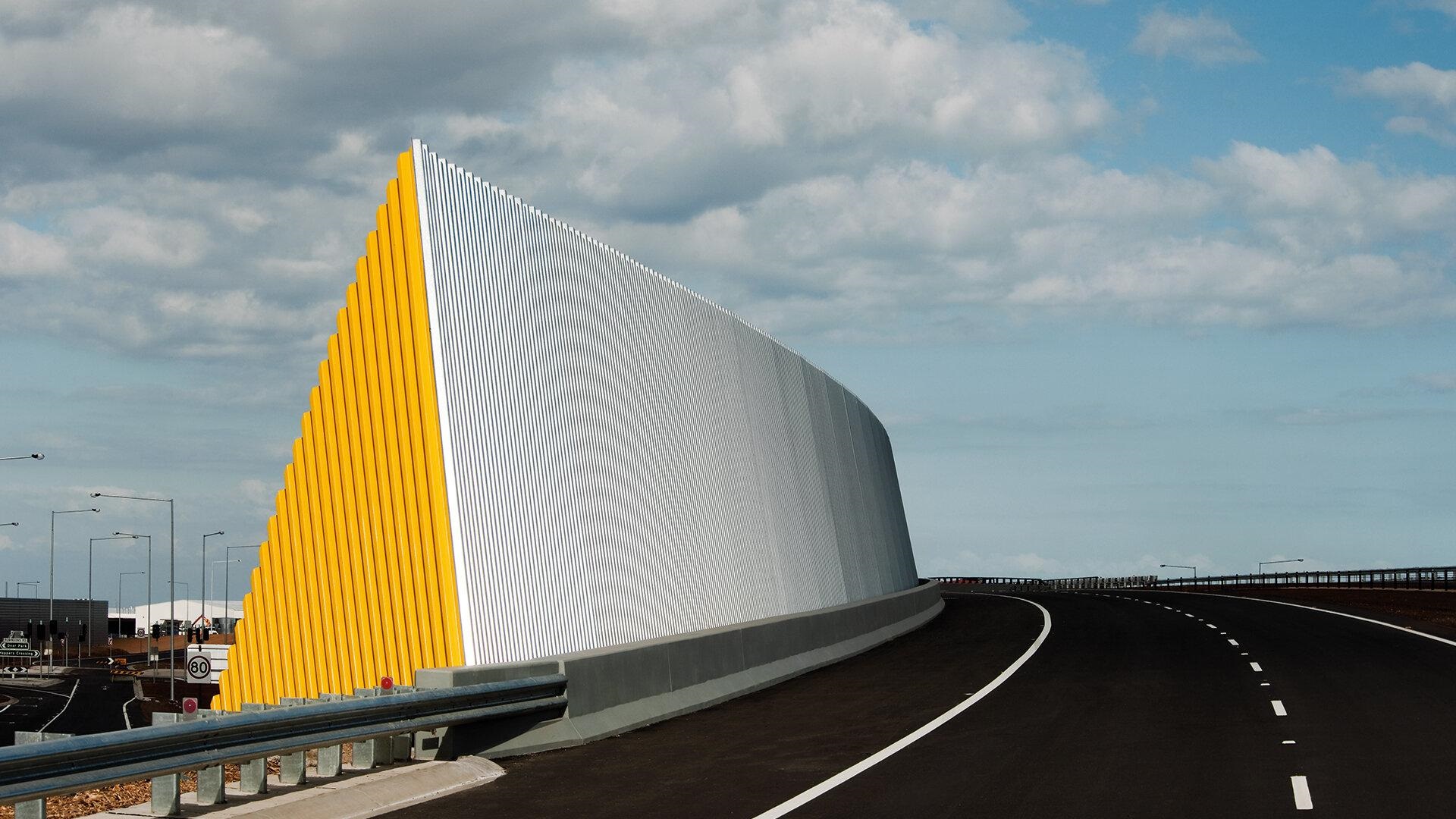
Noise can become a significant issue around busy roads, commercial facilities, industrial properties, construction sites, transport infrastructure, and other high-activity environments. When conventional fencing is not enough, a purpose-designed acoustic barrier can help reduce the amount of unwanted sound reaching nearby areas.
For anyone searching for Noise walls Melbourne, it is important to understand that effective noise control involves much more than putting up a tall fence. The barrier’s location, height, construction, materials, gaps, structural design, and relationship to the noise source all influence its performance.
Although this guide is written for a USA audience interested in commercial acoustic fencing and noise-control concepts, the focus keyword refers specifically to Melbourne, Victoria, Australia. Melbourne’s planning and infrastructure environment has its own requirements, terminology, and standards, so Australian projects should be assessed according to the applicable local regulations and professional advice.
A specialist provider such as Lee Group’s noise wall and acoustic fence service offers commercial and industrial acoustic fencing solutions, including Colorbond, timber plywood, heavy- and light-duty systems, and VicRoads-engineered options.
What Are Noise Walls?
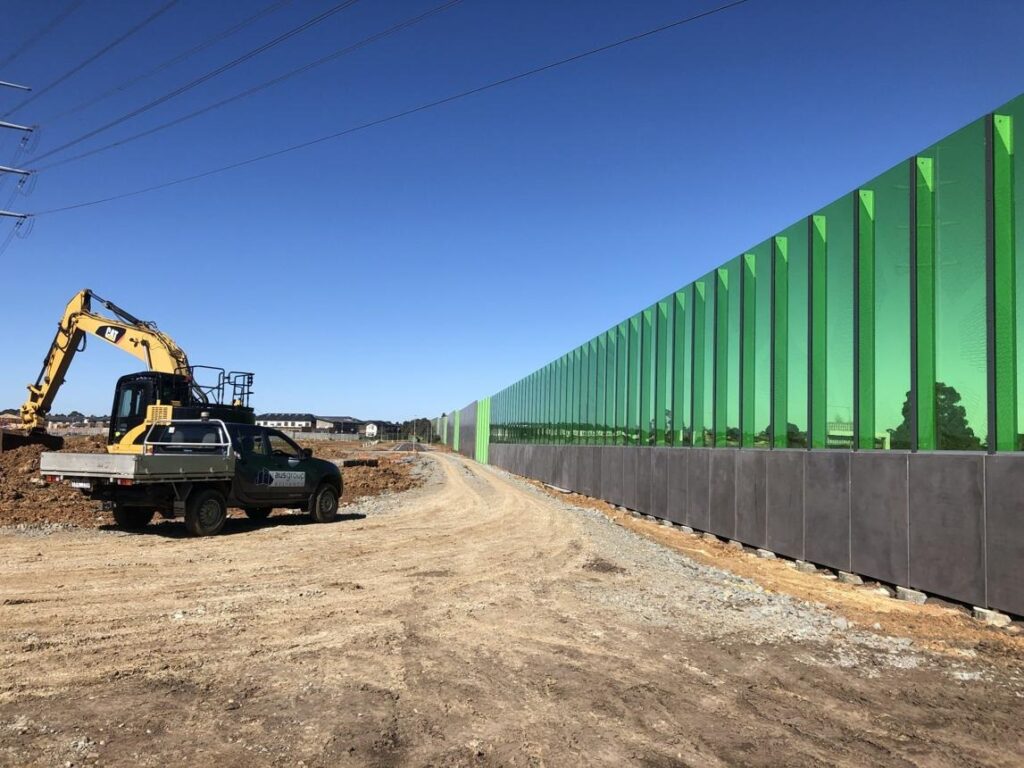
Noise walls are physical barriers designed to reduce the transmission of sound between a noise source and a receiver.
They are commonly used beside roads, rail corridors, industrial sites, commercial properties, and other locations where unwanted noise can affect surrounding areas.
The basic principle is straightforward: a sufficiently high and continuous barrier interrupts the direct path between the noise source and the area that needs protection. Sound can still travel around, over, or through a barrier, so the design needs to account for the specific site.
An acoustic fence can therefore be considered part of a broader noise-management strategy rather than an isolated product.
Victoria’s Department of Transport and Planning recognizes noise walls as an important method of managing road-traffic noise and notes that they can also become significant visual elements within urban and rural environments.
Why Are Acoustic Fences Important in Melbourne?
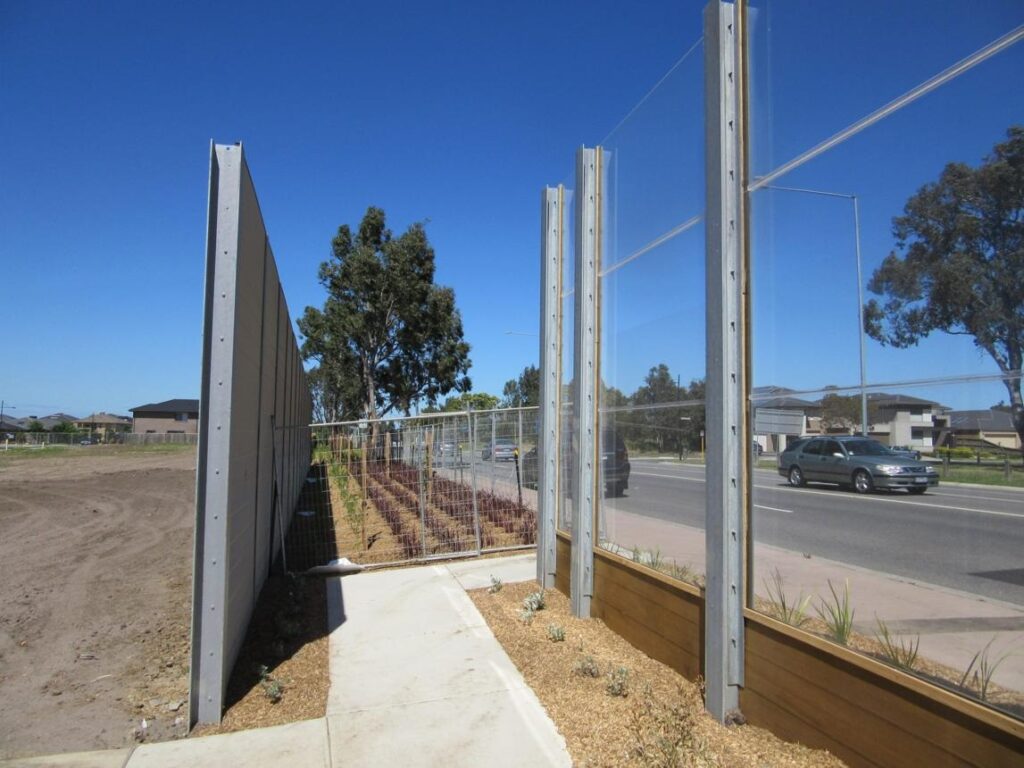
Melbourne contains major road corridors, industrial areas, commercial developments, rail infrastructure, and densely populated neighborhoods. In locations where these uses exist close to one another, managing noise can be an important part of responsible site design.
A properly designed barrier can help reduce the direct transmission of sound toward nearby properties and sensitive areas.
However, the goal is not necessarily to make an environment completely silent. Noise reduction depends on the source, frequency, distance, barrier characteristics, surrounding structures, and receiver location.
Victoria’s planning framework specifically recognizes the need to manage noise effects on sensitive land uses, including residential properties, schools, childcare facilities, aged-care facilities, and hospitals.
How Do Noise Walls Work?
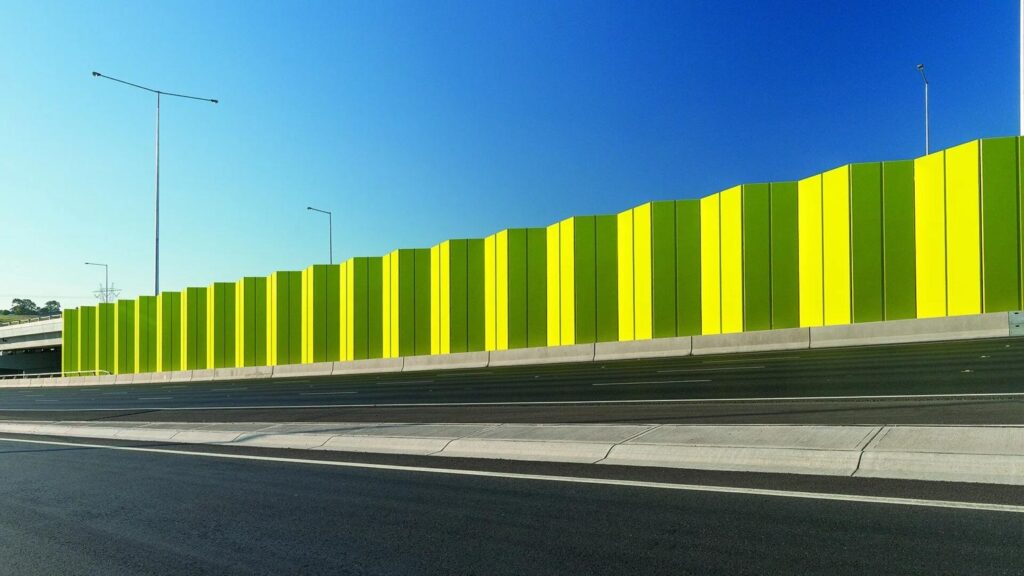
An acoustic barrier works primarily by interrupting the line of sight between the noise source and receiver.
Imagine a busy road next to a residential area. Without a barrier, sound can travel relatively directly from passing vehicles toward nearby homes. A properly positioned solid wall changes that pathway.
The sound must then travel over or around the barrier, which can reduce the sound reaching the receiver.
Height Matters
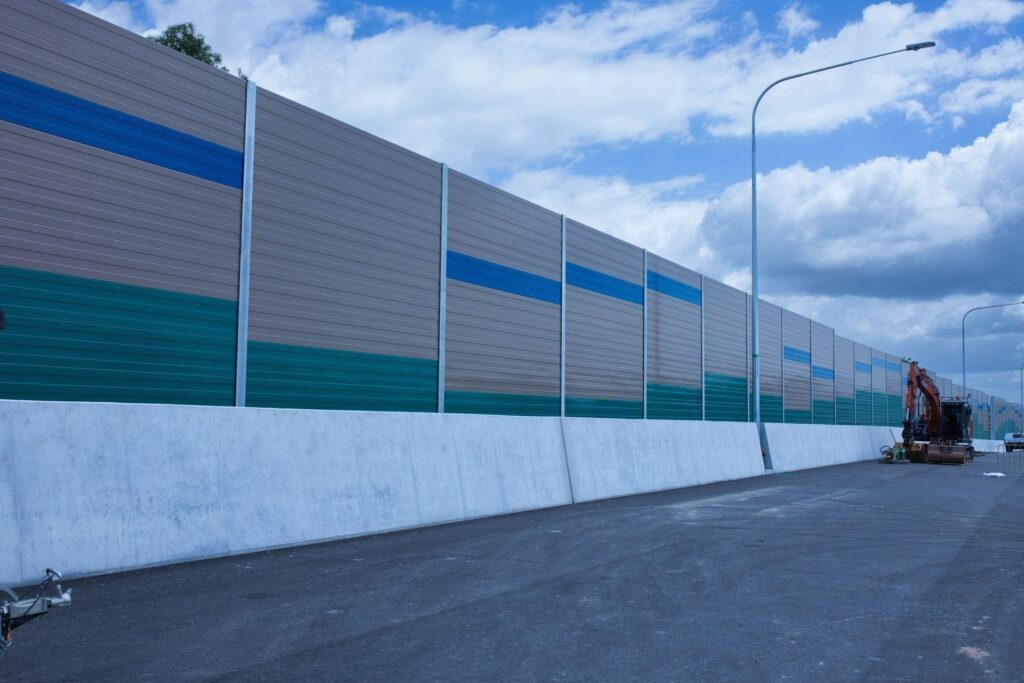
A barrier generally needs to be tall enough to interrupt the direct sound path.
A short fence may provide limited benefit if sound can easily pass over it. Increasing height can improve shielding, but the appropriate height must be determined according to the specific site and acoustic objectives.
Continuity Matters
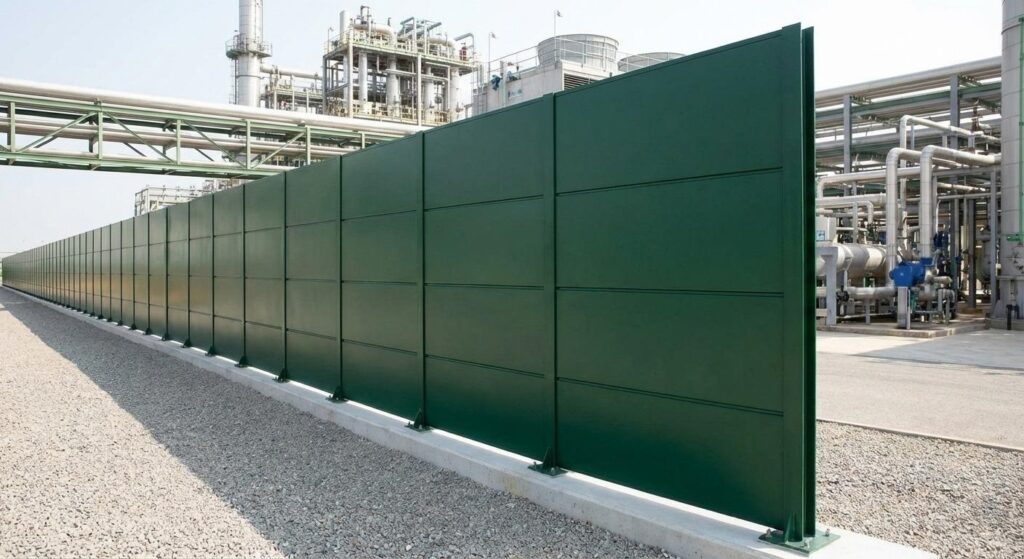
Gaps can undermine acoustic performance.
If there are significant openings between panels, underneath the fence, or around gates, sound may pass through those areas rather than being effectively screened.
This is why acoustic fencing needs to be designed as a complete system rather than treated simply as a conventional privacy fence.
Position Matters
Where the barrier is installed can influence its effectiveness.
A barrier positioned close to the noise source or close to the receiver can sometimes provide useful shielding, depending on the geometry of the site. WorkSafe Victoria similarly notes that acoustic barriers and screens should generally be positioned between the noise source and the people or areas requiring protection.
Types of Noise Walls Melbourne Projects Can Use
Different projects require different materials and construction approaches.
Colorbond Acoustic Fencing
Colorbond steel is widely used in Australian fencing and can provide a durable, low-maintenance surface.
Lee Group lists Colorbond acoustic fencing as one of its commercial noise-wall options and describes it as functional, durable, and low maintenance.
For projects where appearance matters, steel fencing can also provide a clean architectural finish.
Timber Plywood Noise Walls
Timber plywood acoustic walls provide another approach.
Lee Group states that its acoustic plywood noise walls are constructed and installed using timber and are designed to provide acoustic performance.
Timber-based systems may be appropriate where the visual character of the surrounding environment favors a more natural appearance.
Heavy-Duty and Light-Duty Systems
Not every project requires the same structural capacity.
Lee Group offers heavy- and light-duty acoustic fencing options, with its site identifying light acoustic fencing as suitable for residential and light-industrial properties.
The appropriate system should be determined according to factors such as location, wind exposure, required height, structural loads, and acoustic objectives.
VicRoads-Engineered Noise Walls
Road infrastructure can involve demanding acoustic and structural requirements.
Lee Group identifies VicRoads-engineered noise walls among its product categories and states that these systems are designed by acoustic engineers to address road-noise reduction requirements.
For transport infrastructure, the design should be coordinated with the applicable road authority, engineering requirements, and project specifications.
Acoustic Design Should Come Before Installation
One of the biggest mistakes in noise-control projects is selecting a material before understanding the problem.
Before choosing a wall, identify:
- The primary noise source
- The location of nearby receivers
- The character and intensity of the noise
- Existing buildings and structures
- Site topography
- Required barrier height
- Available installation space
- Structural requirements
- Visual considerations
- Applicable regulations
Lee Group states that it can engage qualified acoustic consultants and structural engineers to assist with the design and certification of noise-cancellation barriers.
Professional acoustic analysis can help determine whether a proposed wall is likely to achieve the intended result.
Why Material Selection Matters
Different materials have different acoustic, structural, maintenance, and visual characteristics.
A good acoustic barrier generally needs sufficient mass and continuity to prevent sound from simply passing through the wall.
But material selection should not be based on mass alone.
The system also needs to withstand environmental conditions and remain structurally sound throughout its service life.
For example, Victoria’s noise-wall design guidance emphasizes structural integrity, safety, maintainability, functionality, and aesthetics as considerations in noise-wall design.
Consider Durability
Outdoor barriers may be exposed to rain, wind, sunlight, temperature changes, and mechanical impacts.
Materials and finishes should therefore be selected with the project’s environmental conditions and maintenance expectations in mind.
Lee Group identifies galvanized steel and treated timber among materials used for durability and corrosion or wear resistance.
Noise Walls Are Not Only About Sound
A large noise wall can have a major visual effect on its surroundings.
This is particularly relevant in Melbourne, where transport infrastructure often passes through established urban and suburban environments.
A barrier may affect views from homes, roads, pedestrian paths, cycling routes, and public spaces.
Victoria’s current Noise Wall Design Guide specifically promotes context-sensitive approaches that consider motorists, pedestrians, cyclists, local communities, natural environments, and built environments.
Improving Visual Appearance
Depending on the project, designers may consider:
- Landscape integration
- Color selection
- Textured surfaces
- Architectural panels
- Transparent or translucent sections where appropriate
- Green-wall concepts
- Consistent panel patterns
Lee Group identifies customized approaches including green walls, textured concrete panels, and tinted acrylic panels for visually sensitive locations.
The right approach depends on the project’s acoustic, structural, planning, safety, and aesthetic requirements.
Noise Walls for Roads and Transport Infrastructure
Traffic is one of the most common reasons for installing large acoustic barriers.
Road noise can affect homes, businesses, schools, and other sensitive locations close to heavily trafficked corridors.
For major infrastructure projects, noise walls may be incorporated into a broader strategy that can include road design, landform, building placement, setbacks, and other acoustic measures.
Victoria’s Department of Transport and Planning explains that noise-wall projects should respond to their individual urban, suburban, peri-urban, or rural context rather than applying a single design approach everywhere.
This is particularly important when a wall is long enough to become a defining feature of a roadway.
Industrial and Commercial Acoustic Fencing
Industrial facilities can produce noise from machinery, vehicles, loading operations, ventilation systems, manufacturing equipment, and other activities.
In these environments, a barrier can be one component of a broader noise-control program.
WorkSafe Victoria recommends following the hierarchy of controls when managing workplace noise. Engineering controls, including acoustic enclosures and barriers, can be used where appropriate after considering the source and practical alternatives.
A barrier should therefore not automatically be viewed as the first or only solution.
Reducing noise at its source, isolating vibrating equipment, changing machinery, or improving building enclosures may sometimes provide greater benefits.
Planning and Regulatory Considerations
Melbourne projects need to account for applicable planning and environmental requirements.
Victoria’s planning framework aims to manage noise effects on sensitive land uses and refers to requirements under the Environment Protection Regulations.
The Environment Protection Authority Victoria also explains that the Environment Protection Act 2017 and Environment Protection Regulations 2021 establish requirements concerning unreasonable and aggravated noise from certain non-residential premises.
Requirements can vary depending on the site and type of activity.
For that reason, property owners, developers, contractors, and infrastructure managers should obtain project-specific advice rather than assuming that one wall design satisfies every situation.
How to Choose a Noise Wall Contractor
Selecting the right contractor is just as important as choosing the material.
Look for a provider with experience in commercial or industrial acoustic fencing and the type of project you are planning.
Ask About Engineering
Find out whether the contractor can coordinate acoustic and structural engineering when required.
Review Previous Projects
Relevant project experience can provide useful insight into the contractor’s ability to work in complex environments.
Ask About Installation
Understand how foundations, posts, panels, gates, access points, and other components will be handled.
Discuss Maintenance
Ask what inspections, cleaning, repairs, or replacement components may be required over time.
Lee Group states that its noise-wall process can include site assessment, acoustic modeling, material selection, foundation preparation, panel installation, and finishing.
Common Mistakes to Avoid
Installing a Barrier Without Acoustic Analysis
A tall wall is not automatically an effective noise-control solution.
Leaving Gaps
Openings can allow sound to pass directly through the barrier.
Ignoring the Foundation
Large outdoor walls can experience substantial structural loads. Foundation design needs to be appropriate for the wall and site.
Choosing Materials Only for Appearance
A visually attractive fence may not meet the acoustic or structural requirements of the project.
Forgetting the Surrounding Environment
Buildings, terrain, roads, vegetation, and other structures can influence how sound travels.
Treating the Wall as the Complete Solution
Noise may need to be addressed at the source, along the transmission path, and at the receiver.
Frequently Asked Questions
1. What are Noise walls Melbourne?
Noise walls Melbourne refers to acoustic barriers and sound-wall solutions used in Melbourne and surrounding areas to help reduce unwanted noise from sources such as roads, industrial operations, and other activities.
2. Are noise walls effective?
They can reduce noise reaching a protected area when correctly designed and positioned. Effectiveness depends on factors such as wall height, continuity, location, construction, noise frequency, and the surrounding environment.
3. What materials can be used for acoustic fencing?
Common systems can include steel, timber-based construction, concrete, recycled materials, and specialized acoustic panels. The appropriate material depends on the project’s acoustic, structural, environmental, and visual requirements.
4. Are acoustic fences suitable for industrial properties?
Yes. Acoustic barriers can be used as part of industrial noise-management strategies. However, they should generally be considered alongside source-control and other engineering measures.
5. How high should a noise wall be?
There is no universal height that works for every site. Height should be determined through acoustic and structural assessment based on the noise source, receiver locations, terrain, and required performance.
6. Do noise walls require engineering?
Large or complex noise barriers may require acoustic and structural engineering. Requirements depend on the project, location, size, materials, and applicable regulations.
7. Can noise walls also look attractive?
Yes. Modern acoustic barriers can incorporate different colors, textures, materials, landscaping, and architectural treatments. Victoria’s noise-wall design guidance specifically encourages designs that integrate with their surrounding context.
8. Can an existing fence be upgraded for noise reduction?
In some situations, an existing fence may be capable of being retrofitted with additional acoustic components. Lee Group states that it can retrofit existing fences with acoustic panels or additional layers, subject to the project requirements.
Conclusion
Effective acoustic fencing begins with understanding the noise problem rather than simply selecting a tall fence. Whether the project involves a busy road, commercial property, industrial facility, or major infrastructure development, the barrier needs to be designed around the source, receiver, site conditions, structural requirements, and applicable regulations.
For businesses and project managers researching Noise walls Melbourne, material choices such as Colorbond, timber plywood, and engineered systems can provide different combinations of acoustic performance, durability, appearance, and maintenance requirements. Specialist providers can also coordinate acoustic and structural expertise when the project demands a more comprehensive solution.
For U.S. readers, the underlying principles are equally useful when evaluating acoustic fencing in American projects: interrupt the sound path, eliminate unnecessary gaps, use suitable materials, consider the surrounding environment, and involve qualified professionals when acoustic or structural performance is critical.
Ultimately, a successful noise-wall project should balance sound reduction, structural performance, durability, appearance, safety, and long-term maintenance. That balanced approach can produce an acoustic barrier that performs its intended function while fitting responsibly into its surrounding environment.

Written by Twastia Editorial Team
Twastia Editorial Team shares practical insights about website design, SEO services, Google Ads, content marketing, social media, conversion rate optimization, and digital marketing strategy.
Last updated: Oct 16, 2026
Related posts from Twastia
Explore more useful articles from twastia.com about digital marketing, SEO, websites, ads, content, and growth strategy.